
Bukit Lawang Jungle Trekking, Sumatra Orangutan Tour: How to See Bukit Lawang Orangutans
Thinking of going to Bukit Lawang jungle trekking for the opportunity to do a Sumatra orangutan tour?
The first place everyone seems to think of when they mention wanting to see orangutans in the wild is Borneo Island. However, doing one of the Sumatran orangutan treks, rather than the Bornean one could be the better option of the two – Bukit Lawang requires quite a bit more effort to get to than the more commercialised options available in Borneo.
Bukit Lawang orangutan trekking and getting to see wild orangutans was one of the highlights of my trip to Indonesia.
In this article, I’ll tell you everything about what jungle trekking in Sumatra is like and what to expect when you book an orangutan trek in Bukit Lawang and why we should all be less reliant on palm oil, for their sake. Let’s go!

Meet Me In Departures contains affiliate links and is a member of the Amazon Services LLC Associates Program. If you make a purchase using one of these links, we may receive compensation at no extra cost to you. See our Disclosure Policy for more information.
Bukit Lawang Jungle Trekking, Sumarta
Wildlife tourism can play a huge role in the protection of the orangutans. Unfortunately, palm oil production is a lucrative business, so for starters as consumers, we need to be using less of it.
However, IF money through wildlife tourism can outweigh the need for deforestation then maybe that could help the orangutans’ plight – I can hope!
According to the WWF and IUCN – Sumatran orangutans are listed as critically endangered (there are less than 14,000 left in the wild!). Between 1985 and 2007 the orangutans here lost a whopping 60% of their forest habitat!
I was eager to see the orangutans in, what’s left of, their natural habitat as part of a Sumatra jungle trek.
Booking onto an orangutan tour offers passive interaction and education. This will hopefully spread awareness to help this endangered species.
If industries supporting the conservation of orangutans in Sumatra – like accommodation, restaurants, activities and shops and of course, orangutan trekking tours – wildlife tourism, and the tourist dollar that it brings may start to show more lucrative appeal than destroying the rainforest in favour of palm oil plantations.
If tourism brings in enough money for people to earn a decent living, perhaps there will be more focus on the importance of protecting these vital habitats for future generations. I really hope so!
A big part in swaying this is for our developed nations to stop being so reliant on industries (not just palm oil) which destroy habitats like that. It’s going to be a combined effort on everyone’s part! But an effort that is so important.
Related Article: The World’s Best Wildlife Destinations
Where Is the Best Place to See Orangutans in Sumatra?
If you’re wondering where to see orangutans in Sumatra, then the best place to see orangutans in their most natural environment is in Bukit Lawang.
The orangutans here are what’s classed as semi-wild. Since the 1970s, a rehabilitation programme has been run from here. Injured and orphaned orangutans were treated and then re-released.
The Bukit Lawang orangutans are called semi-wild as some of them had a lot of human interaction during their rehabilitation. This means they come to the forest floor and show less fear of humans – true wild orangutans will stay in the trees to feed and spend their entire lives in the canopy.
However, the success of the rehabilitation and release programme has meant that a new generation of wild orangutans has been established here. The success of this programme is a little glimmer of hope, and vital for the survival of these gentle giants.
You’ll be able to tell which are the offspring of the rehabilitated orangutans, as they won’t come to the ground – they spend their lives entirely in the trees.

Rang-Tans Plight Against ‘Dirty Palm Oil’
In recent years there’s been so much press on palm oil and how detrimental it is to the orangutan. Back in 2018, Greenpeace produced an awareness video, which was then used by UK supermarket chain; Iceland
Iceland has been a pioneer in the UK supermarket sphere, and since 2018 has refused to use palm oil in any of its own products! Bravo Iceland!
If you somehow managed to miss this short animation doing the rounds a while back, in a nutshell, it was about the plight of ‘Rang-Tan’ the orangutan and her story about ‘dirty palm oil’. If you missed the advert, then take a look at the video here.
It’s heartbreaking that these creatures are being pushed to extinction.
The jungle near Bukit Lawang, Gunung Leuser National Park, is a protected area under UNESCO, but it’s evidently clear to see how much has been cleared for palm oil plantations.
This is going to continue unless consumers change their attitudes towards products containing palm oil. Even though orangutans are a protected species in Indonesia, the government’s enforcement of these rules is minimal as palm oil brings in so much money to the country.
I know for sure, I was incredibly privileged to see wild orangutans. It would be a huge loss to the natural world if they were pushed to extinction.
Short History of the Bukit Lawang Orangutan Sanctuary
The was historically famous for The Bukit Lawang Rehabilitation Centre for Orangutans.
The Rehabilitation Centre was founded in 1973 by two Swiss zoologists. The purpose of the centre was to take care of orangutans in the region who had been injured or orphaned as a result of deforestation.
On your journey to Bukit Lawang, you will pass the massive palm oil plantations in the surrounding areas. This is a testament to how much of the local, once forested area, and the orangutan’s habitat has been commercialised.
The Bukit Lawang Orangutan Centre still exists today, however, under different ownership however, it still plays an important role in the conservation and preservation of the Buiki Lawang orangutans and eco-system.
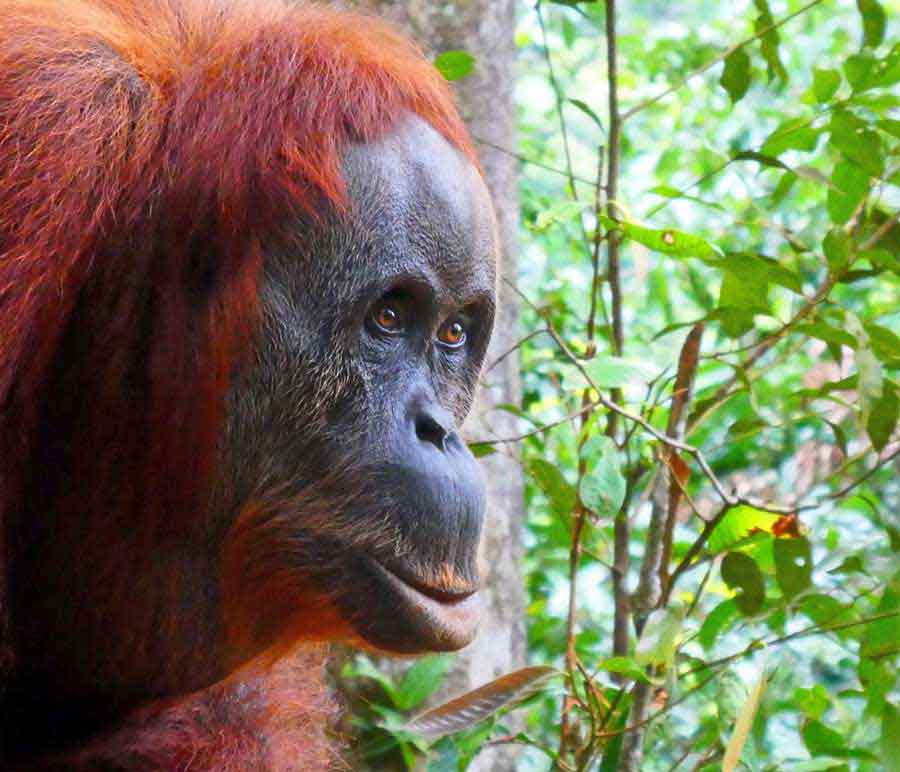
Sumatra Orang-Utan Facts
- The Malay word orangutan means “person of the forest.”. It’s clear to see how they get this name, they are perfectly adapted with their long strong limbs for life in the trees.
- The orangutan is classified as critically endangered, with the biggest threat to the species being deforestation. Over the past 75 years, the total number of Sumatran orangutans has decreased by 80%
- Orangutans are native to the rainforests of Indonesia – in either Borneo or Sumatra – and Malaysia. There are three species of orang-utan; the Bornean, the Sumatran and the recently confirmed new species Tapanuli
- An orangutan can live to be over 30 years old in the wild or captivity. They are omnivores and mostly eat a diet of fruit and plants, however, they also eat insects and bird eggs
Why Go Bukit Lawang Jungle Trekking, Sumatra
One of the main reasons to go jungle trekking in Sumatra, in this particular region, is for the abundance of wildlife. The Gunung Leuser National Park is a protected area, and although it borders palm oil plantations, the National Park is protected from deforestation.
Because of the amount of deforestation that has happened in this region, there’s a large concentration of wildlife in the National Park which call this forest home.
Aside from the orangutan of Bukit Lawang, you might also see:
- Gibbons
- Long-tailed macaques
- Thomas leaf monkeys
- Monitor lizards
- Butterflies
- Birdlife
- Stunning flowers, fauna and trees, – like the banyan trees
Among other creatures that live here, you might also spot the elusive Sumatran tiger, and native rhino and elephants!
Sumatra Orangutan Tour, Indonesia – Know Before You Go
If you’re planning your Sumatra orangutan tour, this section has some useful information to help you plan your Bukit Lawang travel.
Where Is the Bukit Lawang Jungle, Sumatra?
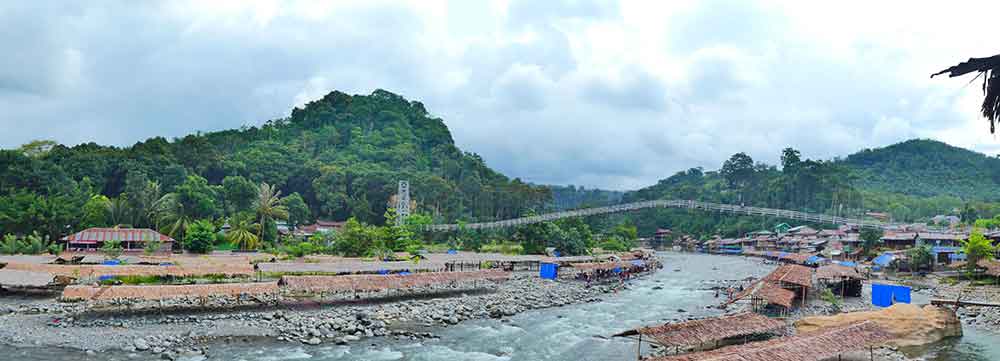
Bukit Lawang is a small town in northern Sumatra. The nearest city is Medan, which is 86km away.
Bukit Lawang is situated right on the Bahorok River and is a stone’s throw from UNESCO-listed Gunung Leuser National Park. It’s in this protected park where you’ll do your orangutan tour.
Related Article: 36 Famous Landmarks of Indonesia You Need To Visit
Getting to Bukit Lawang
If you’re trying to search for the Bukit Lawang airport, you’re out of luck. There isn’t one.
A big part of why the Bukit Lawang orangutan tour feels more authentic than the package holiday feel of some of the similar tours on Borneo is that it requires a bit of effort to get there.
The nearest international airport to Bukit Lawang is the city of Medan. Medan Airport (KNO) has direct flights from Kuala Lumpur, Jakarta, Singapore and Bangkok. Flights from these airports are reasonable and start from around $50.
The quickest way to get from Medan Airport to Bukit Lawang is a 4-hour taxi ride, and that’s on a good run! The day I travelled was a festival weekend and a national holiday. This meant it took 5 1/2 hours to get through the traffic. National holiday or not, just be prepared for a long journey.
Alternatively, you can catch the public bus. If you plan to go by bus to Bukit Lawang then make sure you arrive in Medan early in the morning. It will take you the best part of a day to do the journey.
Catch the ALS (Antar Lintas Sumatera) bus from the Medan Airport bus terminal. Look for the one that says ‘Binjai’ on it. Binjai is a city just outside of Medan en route to Bukit Lawang. It will take a couple of hours. From here catch the onward bus to Bukit Lawang.
Whether you go by taxi transfer or bus, the roads start nice and smooth; don’t be deceived, this quickly changes as soon as you leave the main towns. During this long journey, you’d be hard-pressed to get any shut-eye.
Where to Stay In Bukit Lawang
Aside from the oil plantations, the next biggest industry in the area is tourism. There’s no shortage of accommodation, all catering to the needs of visitors coming here for orangutan trekking. Here are my top Buckit Lawang accommodation picks.
Boutique Accommodation – Green Travelodge Bukit Lawang
Green Travelodge in Bukit Lawang offers accommodation with balconies and free WiFi. The lodge provides a fully equipped private bathroom with shower and free toiletries. You can also enjoy an Asian or halal breakfast and have access to cycling and a garden.

Budget Accommodation – Rainforest Guesthouse Bukit Lawang
Rainforest Guest House in Bukit Lawang offers locally-owned accommodation with free WiFi, a terrace, and a barbecue. Some rooms have a balcony or patio, and you can enjoy the on-site bar. The guest house provides water sports facilities, car hire, and activities like fishing and hiking.

How to Book Bukit Lawang Orangutan Trekking
You can book your Bukit Lawang jungle trekking experience once you’re in the town. You can do the orangutan trek for any number of days and nights.
Most people book the 2-day-1-night excursion, but if you wanted to explore deeper in the jungle, this can also be arranged.
The evening before you go on your orangutan Tour you’ll meet your guides – there are two guides per organised group – and have a quick briefing, told the park rules, the morning schedule and what to take.
How Long Are the Bukit Lawang Jungle Treks?
Jungle tours in Bukit Lawang vary from a half-day to around a week. I did the two day orangutan trek which included camping overnight in the rainforest.
The two-day orangutan trek was ample time. It allowed me to see a lot of wildlife, in addition to the orangutans and experience a night in the jungle. Waking up to the sound of the forest coming alive is something magical!
Another reason for choosing a shorter trip is to make a conscious effort to lessen the impact of humans in the forest and to help preserve the delicate ecosystem – you don’t need to explore everywhere, sometimes places are better left to nature.
How Much Do the Sumatra Orangutan Treks Cost?
The price of Sumatra orangutan trekking tours in Bukit Lawang may differ based on the duration of the trek and season.
Typically, these are the prices.
- 1 -day trek is approximately 55 USD per person
- 2-day-trek is approximately 90 USD per person
- 3-day-trek is approximately 120 USD per person
- 4-day-trek is approximately 165 USD per person
If you prefer to book tours ahead of time, then you can book the 2 Days-1 Night Jungle Tour in Bukit Lawang in advance here.
What Do the Orangutan Tours in Bukit Lawang Inlcude?
Depending on which specific tour you book, this will vary slightly. But typically for a two-day guided orangutan trek in Bukit Lawang, the price includes:
- Luggage storage
- Park permits
- Two licenced guides
- Meals, snacks and water
- Overnight camping equipment
- River rafting
What to Take on the Sumatra Orangutan Tour
For your Bukit Lawang orangutan trek, you’ll have to carry EVERYTHING with you. I took my 20L day pack, which was ample. I recommend packing light for your jungle trek in Sumatra and only taking the essentials you’re going to need.
Your accommodation will look after your luggage for you while you are on the orangutan trek.
- When you go Sumatra jungle trekking, parts of the route go through rivers. Make sure you’re wearing breathable and comfortable walking shoes that you don’t mind getting wet.
- You’re in the jungle, so unless you want to be on the menu for every critter around, don’t forget to take DEET-free Insect and Mosquito Repellent.
- The chances of rain in the jungle are high. If it’s been raining, it’s going to be slippery. A pair of lightweight antishock walking poles can really help you from falling over.
- You can not drink the water straight from the taps in Bukit Lawang (or Indonesia in general), so make sure you pack your water purification bottle which means you can fill up from the taps without getting sick.
- Take a portable power bank. You’re going to be in the middle of the jungle and if your electronics run out of power, there’s no way to change them until you get back to your accommodation.
- Pack a quick-drying travel towel for when you go swimming in the river
- For your overnight bag, pack basic toiletries, swimwear and a clean set of clothes, plus any medication
Sumatra Orangutan Trekking – Rules
The Gunung Leuser National Park is a protected area. Like with many national parks around the world, it means that there are certain rules to follow to help protect the area.
- You are not allowed to enter the park without a licenced guide
- You can not enter the park without a permit
- You are not allowed to touch the animals
- You can not be closer than 10 meters
- You are not allowed to feed the animals
- You have to carry your litter back out with you
Bukit Lawang Orangutan Trekking – What to Expect
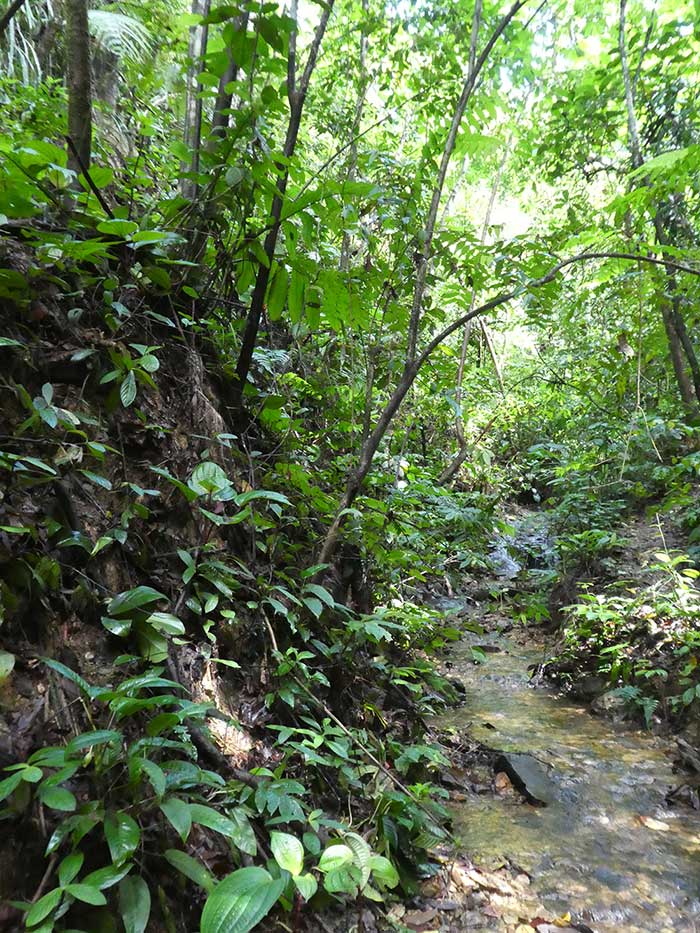
Your Sumatra orangutan trek starts early as you enter Gunung Leuser National Park. You start by meandering your way through muddy paths and shallow rivers.
Be careful of some of the steeper slopes and slippery tree roots, this is where a pair of walking poles come in useful.
You’ll have frequent stops along the way with your guide pointing out different flowers, fauna, trees, bugs, fruits, nuts as well as footprints and markings left by various other animals.
The frequent stops are also a nice break from hiking in the sticky and humid heat. I was torn between wanting to take off my long-sleeved top so I could cool down and not wanting to be eaten alive. Just make sure you have plenty of bug repellant with you.
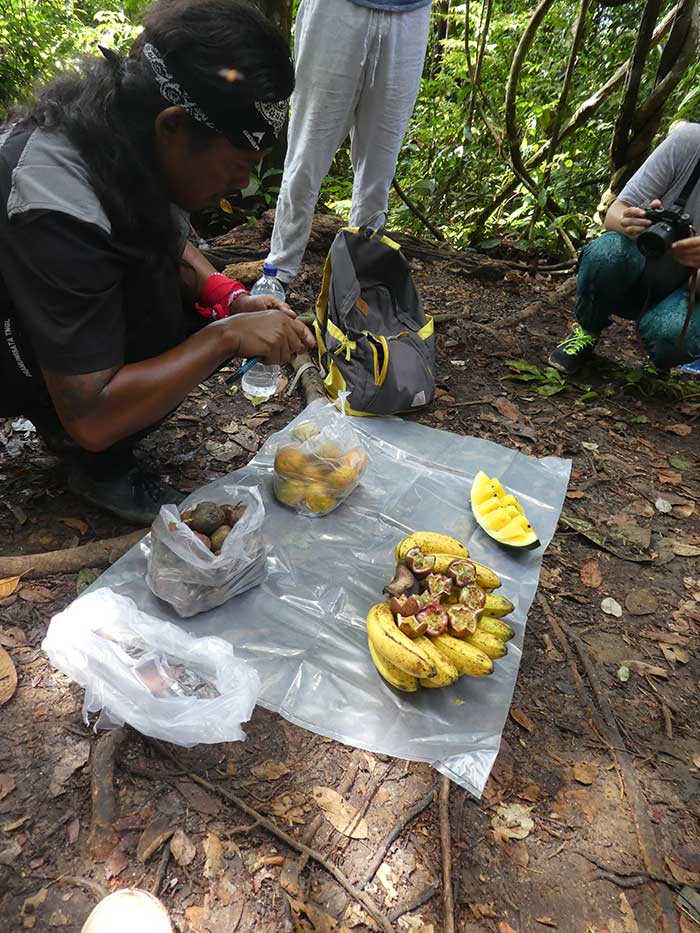
During our mid-morning break, a welcome treat was the locally grown fresh fruit. It was a mini feast of bananas, passion fruit, oranges and melon – the sugar boost was such a welcome after trekking all morning in the humid heat.
Not for the Squeamish
If you’re squeamish, then watch out for the leeches! I picked up a few of the little suckers on my ankles when I was passing through the shallow streams.
In fairness, they were small, about 2cm long, I didn’t notice them latching on until the guide flicked them off.
If you freak out over things like leeches, then don’t look down.
When I knew what to look for, I noticed that the ground around some of the streams were crawling with them! They seemed to make a beeline for anyone that stood still for more than a moment.
Leeches don’t believe in exclusivity, a few people in our group ‘collected’ them on their ankles.
Our First Orangutan Encounter
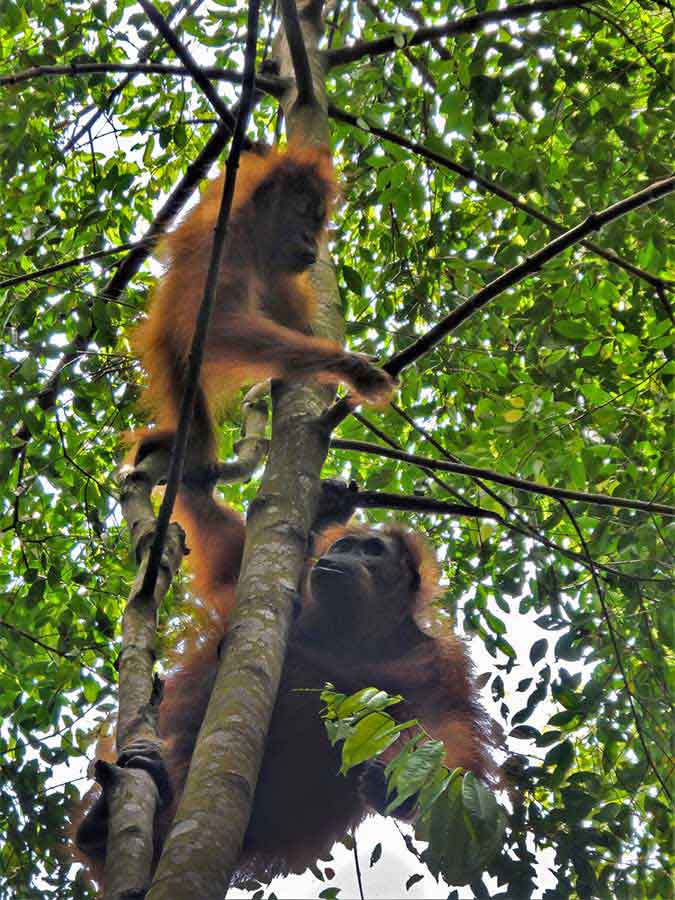
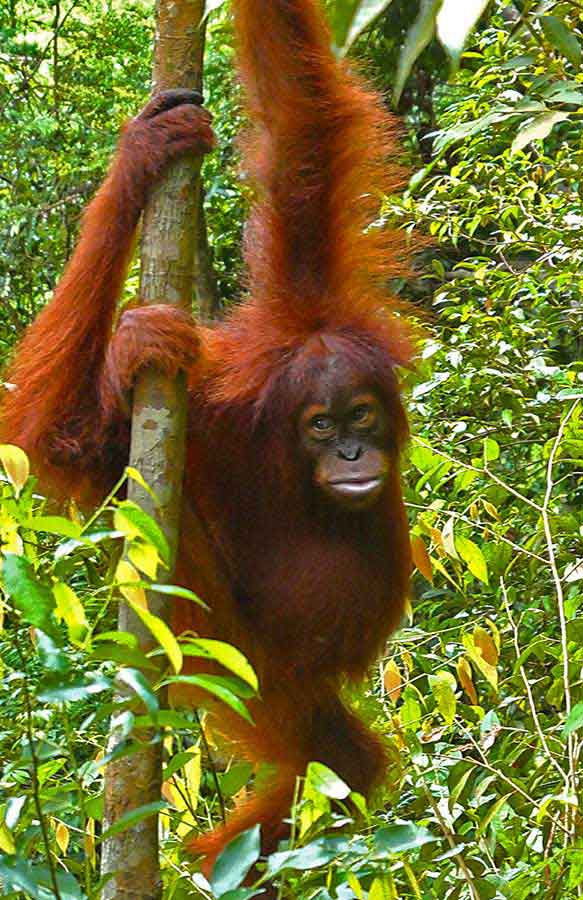
Like all wildlife, you’re never guaranteed to see it in real life. However, we were blessed fairly early on with two orangutans; a mother and a baby.
They were high up in a tree so our guide took us to a better vantage point to get a closer look. Down a ravine, precariously straddled and balanced on tree trunks, rocks and shrubs our group watched silently.
The orangutans were relaxed and foraging for food. Naturally, they would have heard us scrambling about below. For a moment, they started to come closer, and down from the tree with much more grace and elegance than us lot perched in the ravine and clambering about on tree roots.
They lost interest as soon as they realised we had nothing of interest to them.
Our afternoon carried on, navigating through the jungle of Sumatra, with more regular stops to see trails animals had left.
Jungle Camp
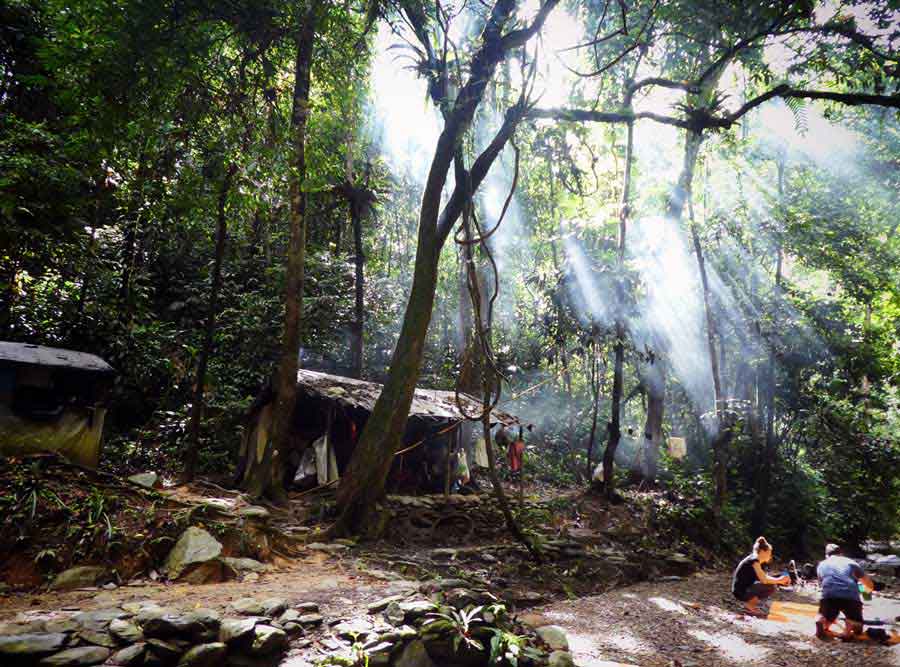
In the late afternoon, we arrived at the jungle camp.
Campsites in the jungle consist of a semi-permanent structure; a tarpaulin stretched over 4 wooden posts to form a kitchen, a river to wash in, and a hole in the ground to do your business. Certainly, no glamping here, but it was pure bliss.
Our group didn’t need much encouragement to ditch the backpacks, chuck on some bathing gear and head straight for the refreshingly cool river to wash off the day’s accumulation of sweat and mud. Reassuringly, there were no leeches here!
The cold river was so rejuvenating. After bathing, we sat relaxing on the riverbank, the late afternoon sun shining through the forest canopy whilst drinking warm cups of sweet tea. To describe the feeling in a word; blissful.
So, it’s no secret why they are called rainforests, the answer is in the name but a quick jungle downpour temporarily put a dampener on things. For all of 5 minutes.
Camp Life & Carving
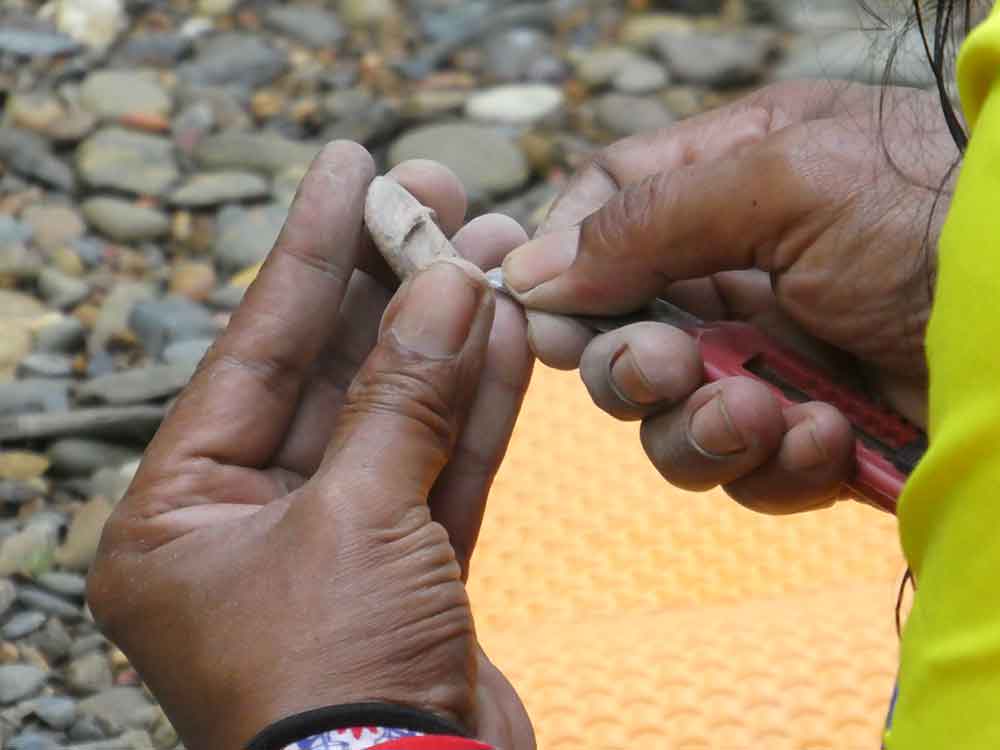
The pebbles in the area are soft, almost like smooth lumps of compacted clay. This means that they are easy to carve into with a pocket knife.
Our guide showed us how to carve an orangutan face into a pebble and after a quick demo, left us to create our own. As a testament to his evident years of practice, he made it look easy. Our attempts were a different story altogether.
The evening meal was served, a hearty curry with rice, washed down with more sweet tea while sitting around the campfire. This was followed by several rounds of cards before heading off to bed.
Nosey Neighbours
On the morning of day two of our Bukit Lawang tour, we were greeted by the sun shining through the forest canopy which looked stunning coming through the smoke from the campfire.
Our every movement was being watched by a local mob of macaques hoping to scavenge any scraps of food we may have dropped. They sat on the opposite side of the river bank waiting for their opportunity.
The overnight rain made the slopes even more slippery so hiking was a little tougher going than the previous day. I managed to stay clean for all of five minutes until I slipped in the mud!

More Orangutans
It wasn’t long into the second morning of our orangutan tour until we saw another pair of orangutans high in the tree.
As I mentioned earlier in this article, there are two types of orangutans in Bukit Lawang; ones which had been rehabilitated and wild ones.
Our guide had said that both of these orangutans had been born in the wild, so they would never come down from the trees. They don’t associate the jungle floor and humans with food. They carried on regardless and ignored our presence totally unlike the pair we saw yesterday.
Our Close Encounter
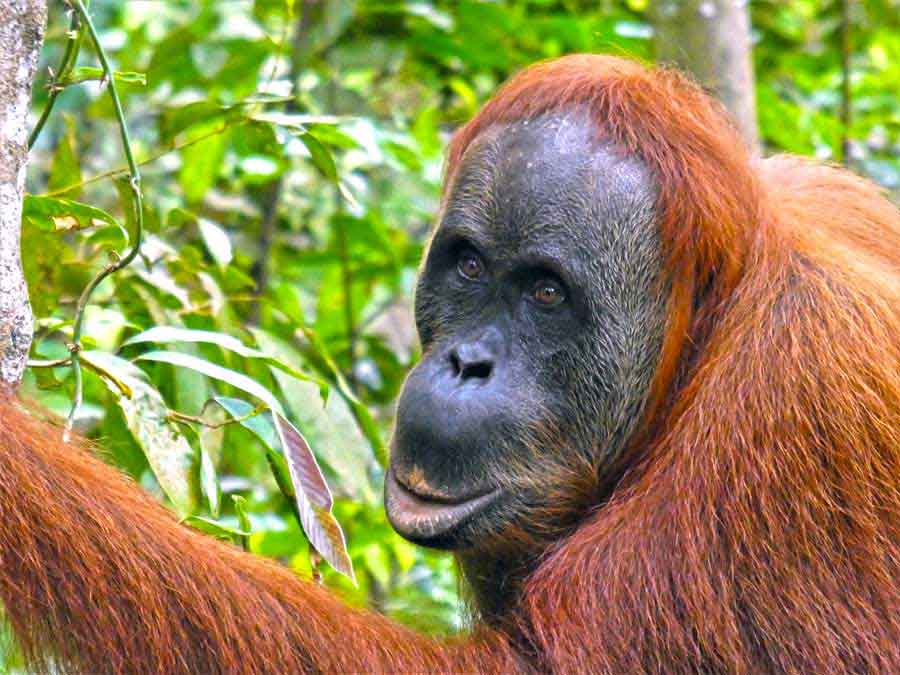
Later in the day, our guide spotted a solo orangutan in the distance walking on the jungle floor. Our guide recognised this orangutan, saying that she was an older female who had been rescued from the tourist trade and reintroduced to the wild.
Human interaction isn’t encouraged on the orangutan tour – in fact – it’s actively discouraged. However, this orangutan still associated humans with food so started to approach our group.
Our guide stopped us about 15 metres from her, then told us to crouch down and keep totally still and silent until she lost interest. It was mindblowing to be this close to an orangutan – they are huge!
A sad throwback and realisation from her previous captive life meant that she kept trying to sit and pose for us. She hung about for a short while before realising we had nothing of interest and wandered back off into the jungle. But wow, just wow, what an experience!

Orangutans Don’t Like the Rain
Like clockwork, during the afternoon the rains came. This time a much larger downpour than yesterday.
Like humans, orangutans don’t like getting wet. Equally like us, they use umbrellas! It was almost comical to see a large adult, solitary orangutan pulling the big leaves from the surrounding trees over the top of its head to create shelter from the rain.
The rain also brought out some fairly large lizards. Monitor lizards are from the same family as the infamous Komodo dragons, although thankfully not as big and nor on a mission to bite us!

Watch Out for Thieves
Thoroughly soaked, we made it to the second camp.
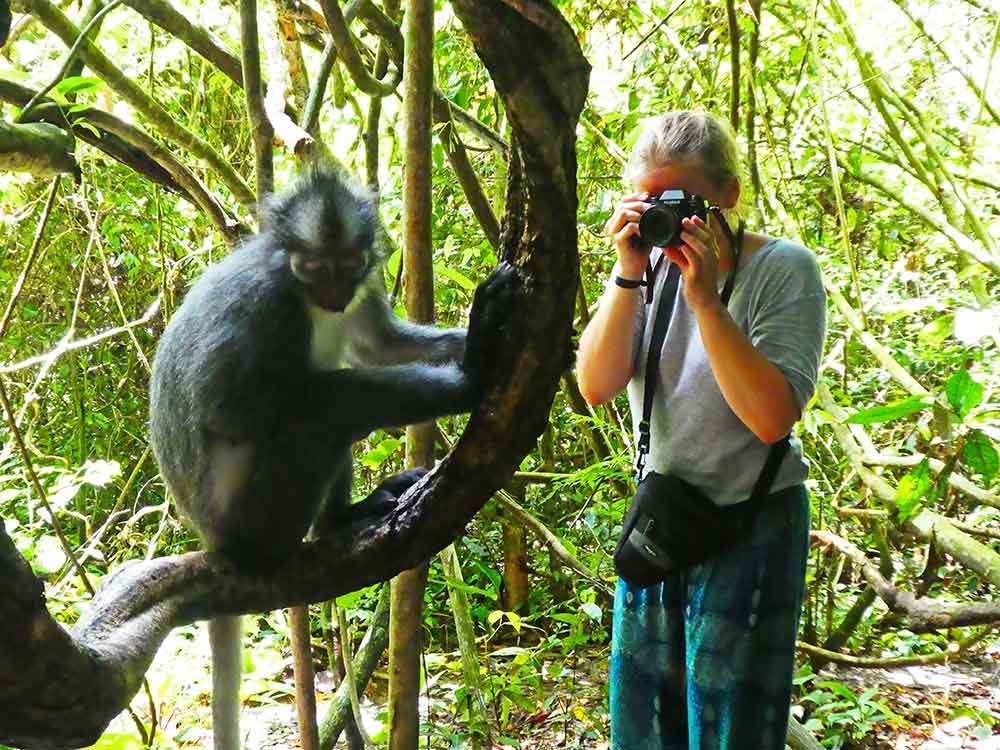
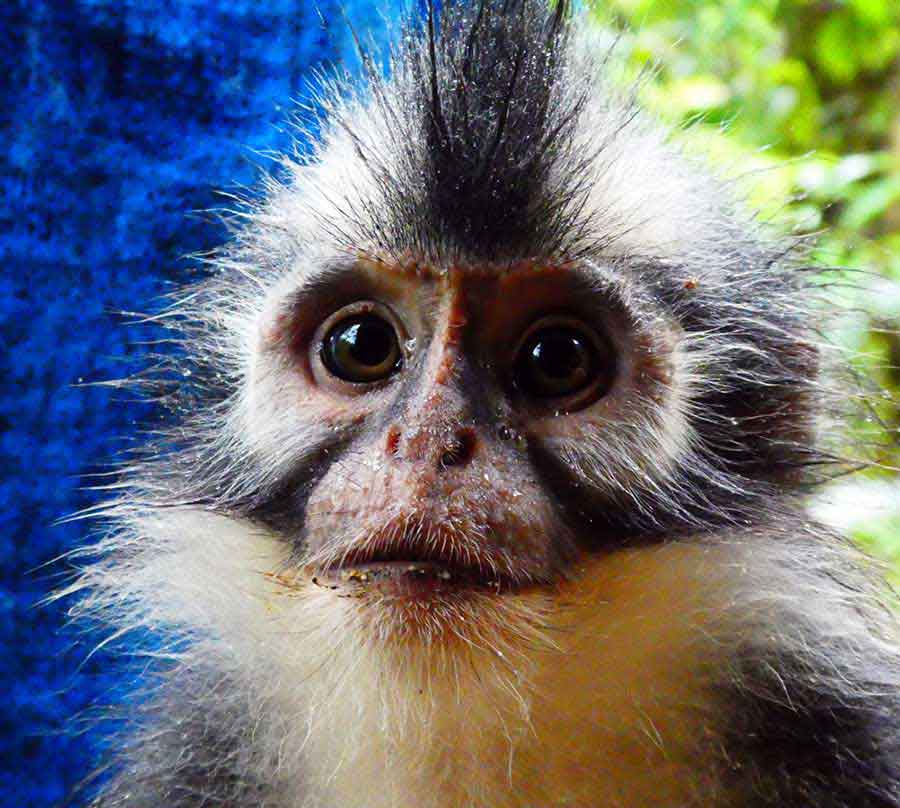
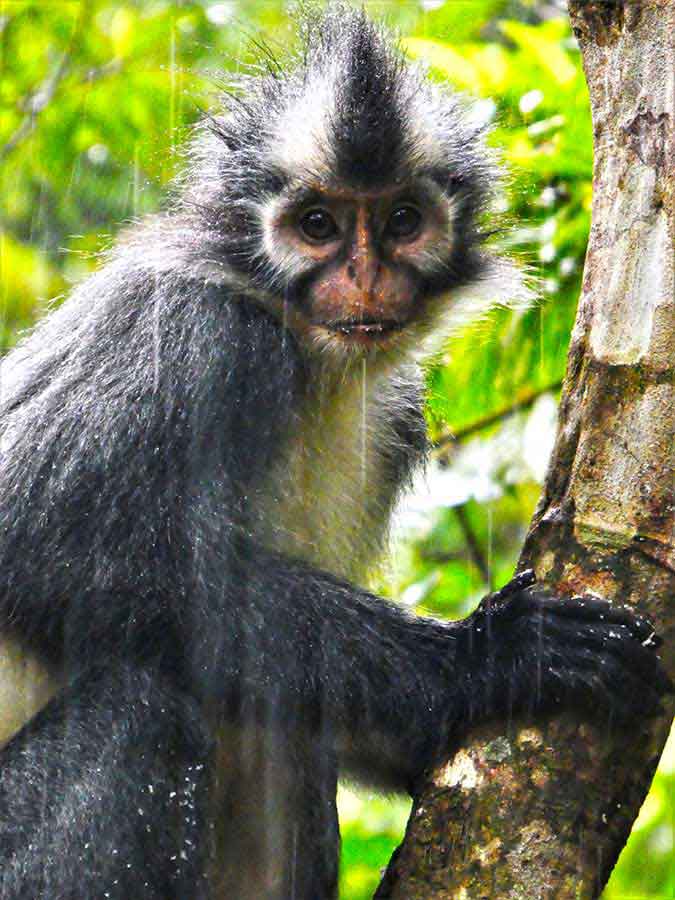
A cheeky and opportunistic Thomas leaf monkey decided to join us under our shelter. Not only wanting shelter from the rain, but it also had intentions to steal our lunch.
After sitting a short while on the sidelines, planning its attack, the Thomas leaf monkey came right into our shelter and sat for a moment before grabbing a bag of rice. Promptly it was chased off dropping the bag as it went.
Looking back at us with a very disgruntled expression that not only had the monkey lost its bag of food but then had to sit out in the rain.
Taking the Tube Back to Bukit Lawang
Being from the UK, the term ‘taking the tube’ basically means that you’re going to catch the London Underground somewhere. In Bukit Lawang, it has a totally different meaning.
We were near the end of our orangutan tour and time in the jungle, it was time to head back to camp via the river on inflated tyre inners – aka via Tube.
Five inner tyres lashed together with rope were ready to float us down the river and back to the town of Bukit Lawang.
With our rucksacks put into watertight bags and fastened on, we all clambered onto our makeshift raft, side-by-side and off we went, down the rapids, past waterfalls, through the jungle and canyons back to base.
An exhilarating way to get home and a fantastic way to finish off the Bukit Lawang trek.
We arrived back at our accommodation, exhausted but ecstatic from our outstanding experience of seeing wild orangutans in Bukit Lawang. It was a phenomenal adventure on every level. If you want to see orangutans in Sumatra, I can 100% vouch for doing it here.

Other Things to Do in Bukit Lawang
Aside from doing a Bukit Lawang jungle trek, there are quite a few things to do in Bukit Lawang. I did a two day Sumatran orangutan tour and had a couple of days either side to do other activities in the area.
Explore the Local Area
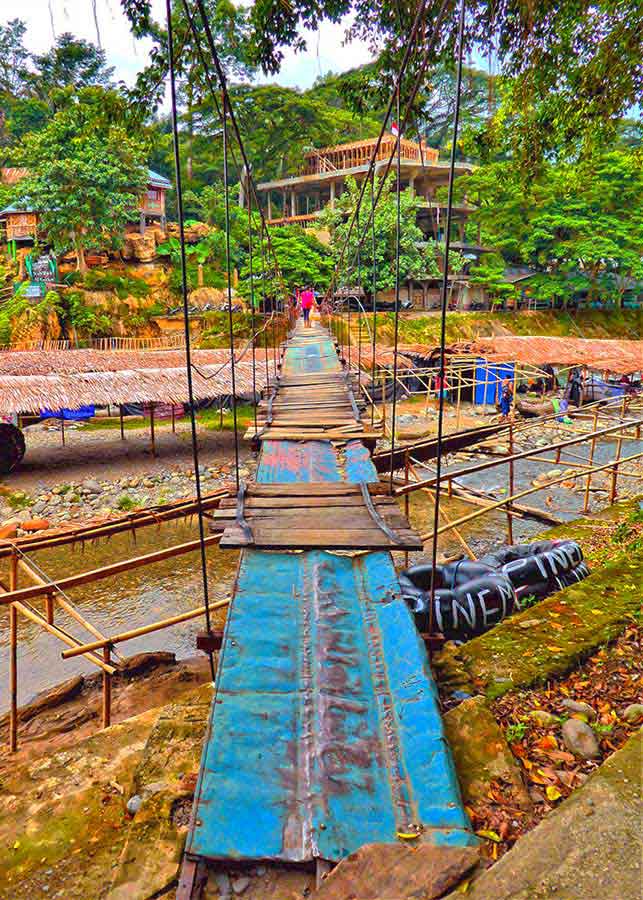
Depending on how far you want to walk, you’ll pass through plenty of forests including rubber plantations. Here you’ll see trees that still bear scars from where the bark was removed to get the latex – some still have channels dribbling the white sticky liquid out into a collection pot at the base of the trunk.
If you walk far enough you’ll reach the edges of the palm oil plantations where the jungle once stood.
When you’re out walking be careful of the gangs of cheeky and overconfident macaques occasionally blocking the path near some of the guesthouses. Generally, they’ll keep their distance however if they can see or smell food, they will steal it from you.

Visit the Orphanage
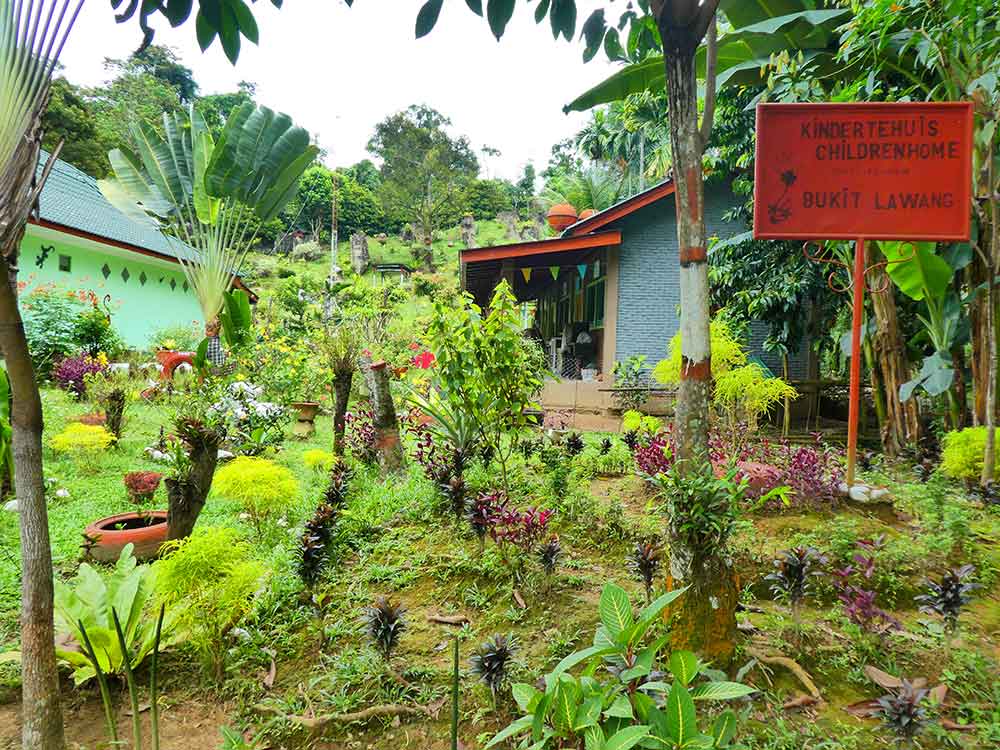
You’ll pass a very cute little cluster of colourful buildings surrounded by well-cared-for gardens.
Unfortunately, it was closed when I walked past – it was the holiday season – but I was told by a local that you could visit the children here as well as make donations.
Go Into the Bat Cave
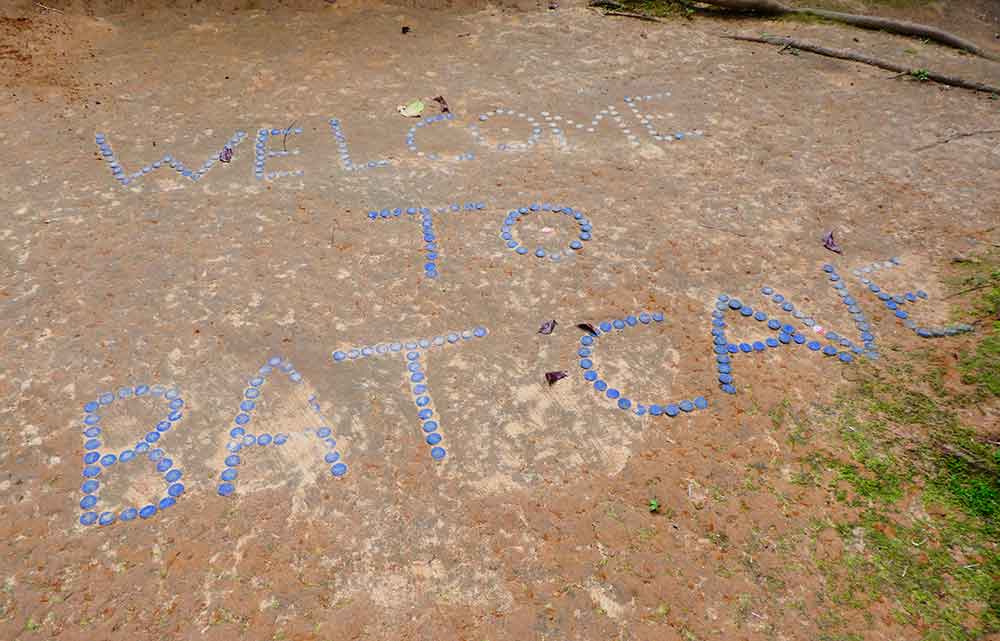
Look out the for the sign that says ‘Bat Cave’ made out of old bottle tops wedged in the ground.
The cave is up a bit of a slope, so it might be a muddy slope up to the entrance. There is a little hut outside where you’ll pay a small fee (it was equivalent to about $5 when I visited).
One of the local boys to take you inside the cave to show you the rock formations and the bats.
I recommend taking a torch with you.
People Watch
This is one of my favourite things to do – just sitting and watching how the rest of the world lives.
If you happen to be in Bukit Lawang at the weekend, there will be a hive of activity down by the river.
Find yourself a vantage point and watch what locals get up to at the weekend. The river is the hub for everything in Bukit Lawang and there will usually be dozens of children playing in the river. Tubing seems to be the most popular pass time with parents chilling on the river bank. It’s lovely to just be in the moment and watch how the locals spend their spare time.

Sumatra Orangutan Treks – FAQs
I’ve given you a ton of information about what to expect when you go to Bukit Lawang orangutan trekking.
This experience was one of the best jungle treks I’ve done, and although challenging in places, and getting leeches on my ankles, it was worth every minute of it. This section has answers to any other questions you might have about doing an orangutan tour.
Where Is the Best Place to See Orangutans in Indonesia?
If you’re wondering where to see orangutans in Indonesia, there are only a handful of places where you can see Orangutans in the wild. If you want to book one of the orangutan tours in Indonesia, the islands of Borneo and Sumatra both offer an authentic orangutan experience.
When Is the Best Time to See Orangutans in Sumatra?
The best time to see orangutans in Sumatra is during the dry season, which typically occurs from June to September. During this time, the weather is more predictable, and orangutans are more active and visible in the rainforests, making it an ideal time for wildlife viewing.
Is Bukit Lawang Worth Visiting?
Yes! Bukit Lawang is definitely worth visiting if you want to do an orangutan tour in Indonesia. It provides some of the best opportunities to see orangutans in their natural habitat. The experience of wildlife exploration and trekking in Sumatra’s lush rainforest makes it a must-visit destination for nature enthusiasts and wildlife lovers.
How Do I Get To Bukit Lawang?
To reach Bukit Lawang, fly to Kualanamu International Airport in Medan, North Sumatra, Indonesia. Then, take a 4-5 hour drive by hiring a private car, using a shared taxi, or arranging a transfer with a tour operator or guesthouse, you can also go by public bus, but you’ll need to make a few connections. The journey, despite its length, offers scenic views of the region’s landscape.
How Far Is Medan From Bukit Lawang?
Medan is approximately 86 kilometres (about 53 miles) away from Bukit Lawang. However, despite the relatively short distance, the journey from Medan to Bukit Lawang takes around 4-5 hours depending on traffic conditions and the mode of transportation chosen, such as a private car, shared taxi, or public bus.
How Long to Spend in Bukit Lawang?
I recommend spending at least three days in Bukit Lawang to fully enjoy the experience. This allows for a two-day trek to see the orangutans in the rainforest and another day to explore the area and relax before and after the trek.
Is It Easy to Book Sumatra Orangutan Treks in Bukit Lawang?
Yes, it is relatively easy to book Sumatra orangutan treks in Bukit Lawang. There are several tour operators and guesthouses in the area that offer trekking packages. It’s advisable to book in advance, especially during peak seasons, to secure your preferred dates.
Is There Malaria in Bukit Lawang?
Bukit Lawang is not considered a malarial area, but there are many mosquitoes, especially during dusk and at night, which can transmit diseases like dengue fever. Take precautions such as using mosquito repellents and wearing protective clothing.
Are There Tigers in Bukit Lawang?
Yes, the Gunung Leuser National Park in Bukit Lawang is home to the endangered Sumatran Tiger, Sumatran Orangutan, Sumatran Elephant, and many other species, making it a vital conservation area with a diverse range of wildlife.
Is the Sumatra Orangutan Tour in Bukit Lawang Worth It?
A massive yes, yes, yes! The Bukit Lawang orangutan trekking experience is a definite must-do if you are travelling to Indonesia.
It’s devastating to think these animals are so close to extinction. I knew the link between palm oil and deforestation after the high-profile campaigns, but it wasn’t until I saw the amount of deforestation happening in the region that it really hit home.
Bukit Lanwang and the Gunung Leuser National Park are a haven for so much Sumatran wildlife including the orangutans. I hope that one day, the palm plantation owners curb their greed and realise the importance of saving this habitat for future generations to enjoy.
True, Bukit Lawang, is a bit of a challenge to get to, but opting to do a Sumatra orangutan tour is 100% worth the effort. It also brings vital money into the local area, which in turn will help in establishing more ethical ways for the residents to make a living.
Jungle trekking in Sumatra was one of the most memorable things I experienced during my entire Indonesia trip, with memories that will stay with me for a lifetime. I certainly urge anyone to experience this for themselves one day.
Looking for more ideas to add to your Indonesia bucket list, here are some other great articles to help plan your trip.