
The Pljesevica Mountain Trek: On Top Of The World In The Croatian Mountains!
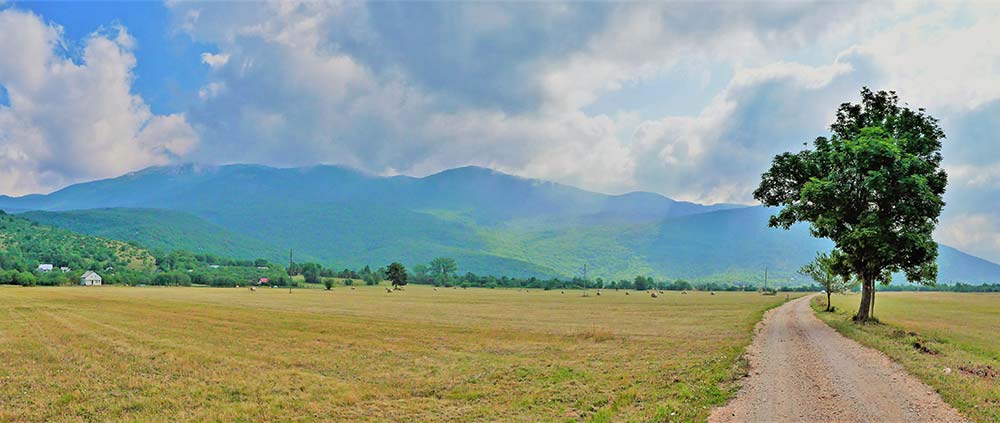
The Pljesevica Mountain trek is undoubtedly one of the best hiking trails in Croatia. A steep and windy path, meandering upwards through the countryside, forest, shrubland and jagged rocks to what feels like the top of the world in the middle of nowhere.
The reward for your efforts is a plateau with stunning panoramic views looking outwards over both Croatian mountains and neighbouring Bosnia & Herzegovina on Croatia’s most famous rock! If you love hiking, then 100% this needs to be on your Croatia Bucket List.
Because of where Pljesevica (Plješevica) is located, the hike is smack bam on the border of the two countries. This was a strategic location for a military airbase.
The summit is littered with relics from the Yugoslavia war; including derelict bullet hole-ridden checkpoints, storage containers, remnants of an old runway, cave passageways leading into the cliff face and eerie abandoned barracks. Perfect for ruin junkies and history buffs alike.
This sums up one of the best places for hiking in Croatia. Read on, to find out how to do it!
Meet Me In Departures contains affiliate links and is a member of the Amazon Services LLC Associates Program. If you make a purchase using one of these links, we may receive compensation at no extra cost to you. See our Disclosure Policy for more information.
The Pljesevica Mountain Trek – Everything You Need To Know
The Pljesevica mountain trek is a 13.6km trail situated in northern Croatia in the Dinaric Alps. As you hike Pljesevica, you’ll realise that the trail actually encompasses a few peaks. There are quite a few undulations on the trail as it climbs up and skirts around other peaks. At the summit, Gola Pljesevica reaches a height of 1646 metres. If you’re new to hiking, then download this FREE hiking checklist straight to your inbox.
What makes this one of the best hikes in Croatia is that at the peak you’ll find the stage-like rock formation and the perfectly located abandoned Balkan war remnants.
Because of the surrounding terrain, there are several other hikes and trails in the region and if you’re an avid walker, then you could spend longer around here adding them to your Croatia hiking itinerary.
Good to know: Other names for this mountain are Plješivica, Lička Plješevica and Gola Plješivica
How to do the Pljesevica hike
‘The trail is easy, just follow the trail markers’ they said.
Yeah, right! I’m not going to lie, the Pljesevica mountain trek is certainly challenging. Which played a big part in WHY reaching the top was so rewarding. As hikes go, it’s listed as ‘moderate’, whatever moderate refers to. I would class it more as an ambitious hike.
The actual trail is easy enough to follow and for the majority of the time, you just need to look out for the markers every 20 metres or so. What makes it challenging is that large parts are steep and that these steep sections go on for long chunks of time.
The Pljesevica mountain trek starts in the little village of Korenica, which is approximately 18km and along the main D1 road from the beautiful Plitvice Lakes. The start of the trail is just behind the only Chinese restaurant in the village; Kun Lun.
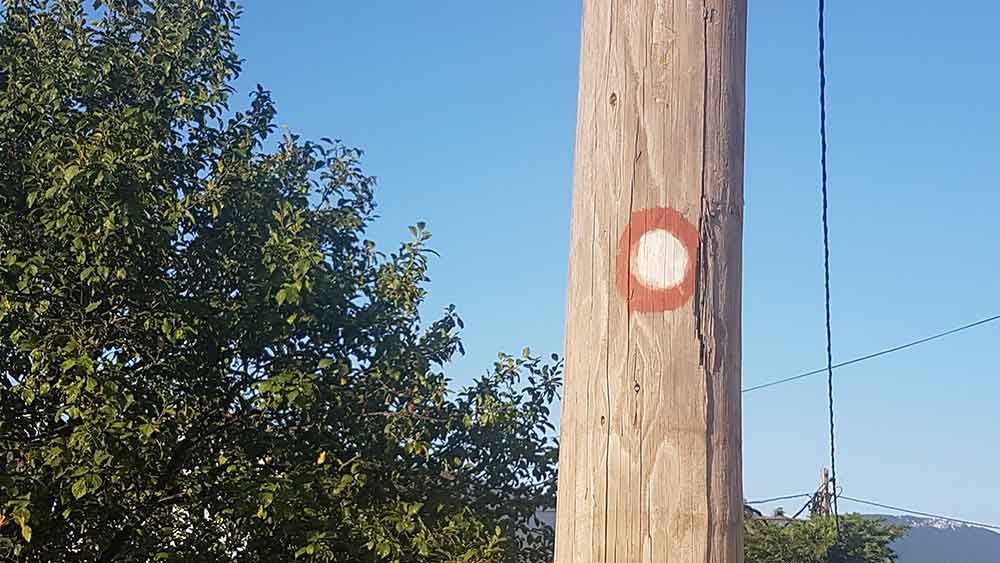
Look out for the little sign which marks the start of the Pljesevica Mountain trail. Then try to spot the red and white trail marker not far from this.
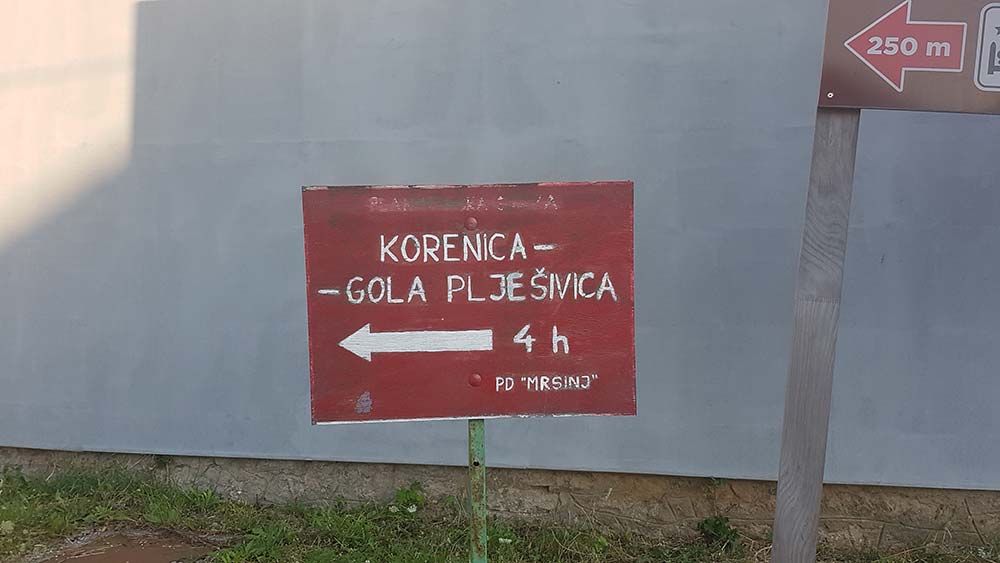
For the first section of the walk, you’ll be glad to hear that it’s through farmland and 100% flat. It starts as a tarmac road, which then turns into a gravel track. If you have a car or bike, you could drive this section and save yourself the 40-50-minute walk from Korenica village.
The inclined part of the trail starts near an old red barn. This marks the spot where one of the top hikes in Croatia begins.
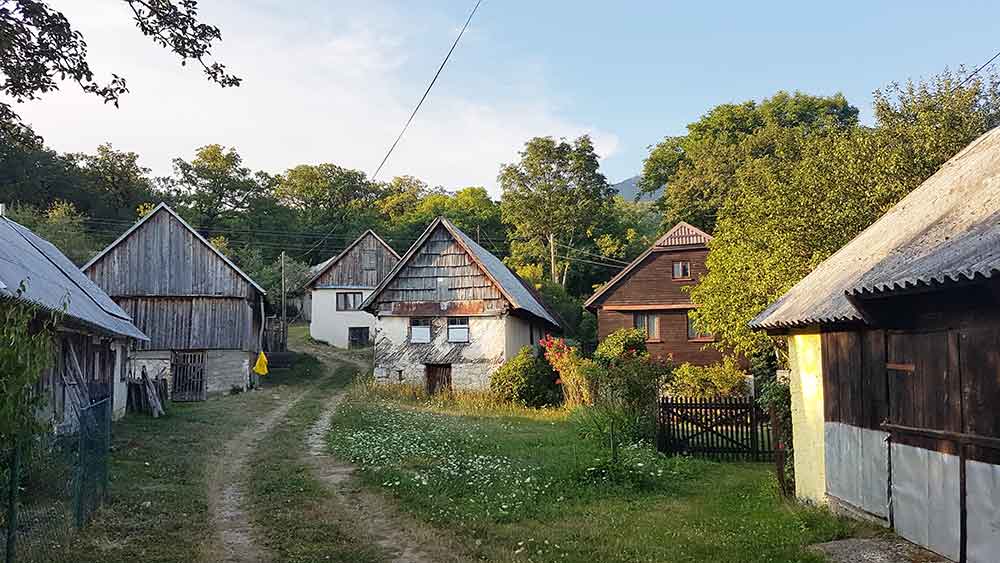
These super cute little farmhouses are at the foot of the Pljesevica Mountain hike along a slight detour.
Related Article: The Ultimate Croatia Bucket List
What to expect when you hike Pljesevica
Our little group of 4 set off later than planned. We left at around about 9.30 am. The earlier you start, the better. If you are hiking at the peak of summer, the uphill slog is tough work so take advantage of the cooler hours of the day to tackle this.
Along the trail up Plješevica mountain, one piece of advice we were given, was to never lose sight of the red and white markings – sometimes they are blindingly obvious, and other times you’ll be playing hunt the dot. Then when you find the said dot, you’ll be baffled as to which direction it wants you to go.
A little heads up!
At the time of hiking, there was a short section where trees were being cut down. We did lose the way a bit as we found some of our beloved and much-needed trail markers on trees that had been felled, which wasn’t wonderfully helpful.
If you end up walking for a long time without seeing a red and white marker, then retrace your steps (they are regular both on the route up AND the route down). If you don’t see a marker for more than 50 metres, then go back and search for one.
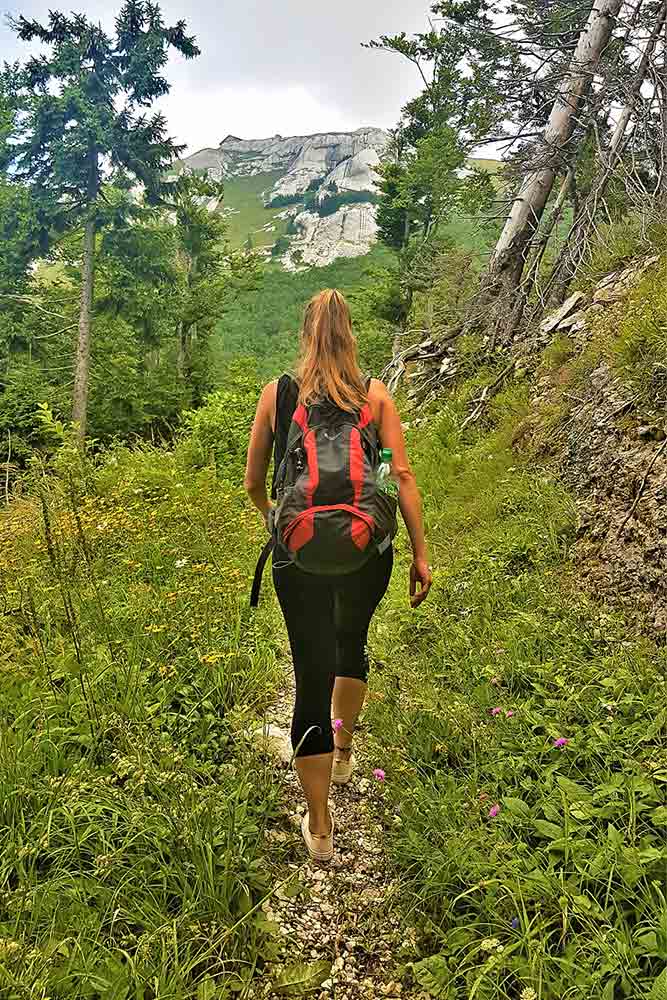
After you’ve passed the farmhouses, the Pljesevica mountain trek starts on a gradual incline. At first, it passes through low-lying shrubland along a stony path. It quickly begins to get steeper and you end up going through the forest trail.
The trail meanders up through the fresh-smelling trees getting reasonably steep in places. If you have bad knee joints, I highly recommend using a set of lightweight antishock walking poles.
You’ll cross over a couple of old roads, for a short while following an old and very overgrown one. After a short distance on the road, you’ll head back into the wooded area. This then eventually comes out to a steep, overgrown yet open expanse. You’ll know you’ve gone the right way if you look up; you’ll be following the power lines from here to the top of the mountain.
Related Article: Hiking Essentials Packing List
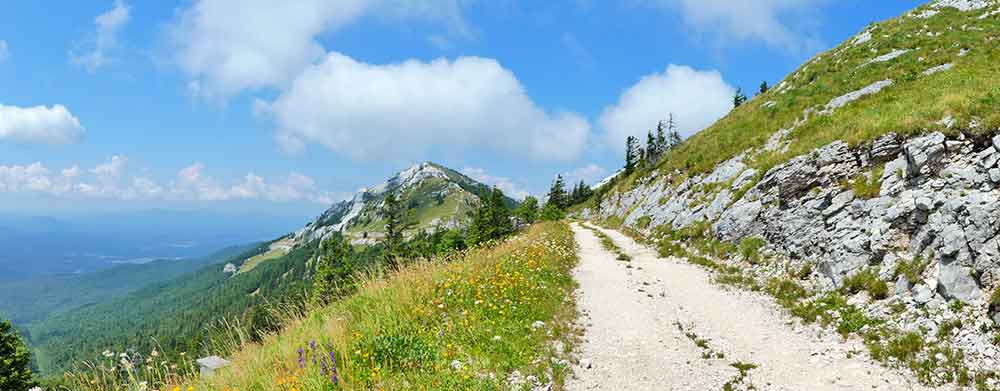
Once at the top, you’ll be met by a single gravel-access road. To the right is what looks like a gigantic aerial tower. You are heading away from this. Follow the road around and up to the top of Pljesevica. In total, expect it to take around 3-4 hours to reach the top.
Allow a minimum of 7 hours in total if you’re a fast hiker and don’t spend any time at the top. If like our group, you’re more of a casual walker, then a time frame of about 9-10 hours will allow for both a slower pace with plenty of water and photo breaks as well as a decent chunk of time at the top exploring and enjoying the view.
Set off early as it will take the majority of a day however fast you hike.
Things to be aware of on the Pljesevica hike
If you’re planning on trekking Croatia, and you’re doing any of the routes near the Bosnia and Herzegovina border, there are a few things you should be aware of.
Bears and Wolves and Snakes and stuff
So Europe as a whole doesn’t have much dangerous wildlife. However just be aware that Black Bears, Wolves and Vipers do live in this forest. A couple of days before we hiked, two groups said they had heard rustling and growling in nearby bushes, and although they didn’t see anything, they were adamant it was a bear.
Land mines
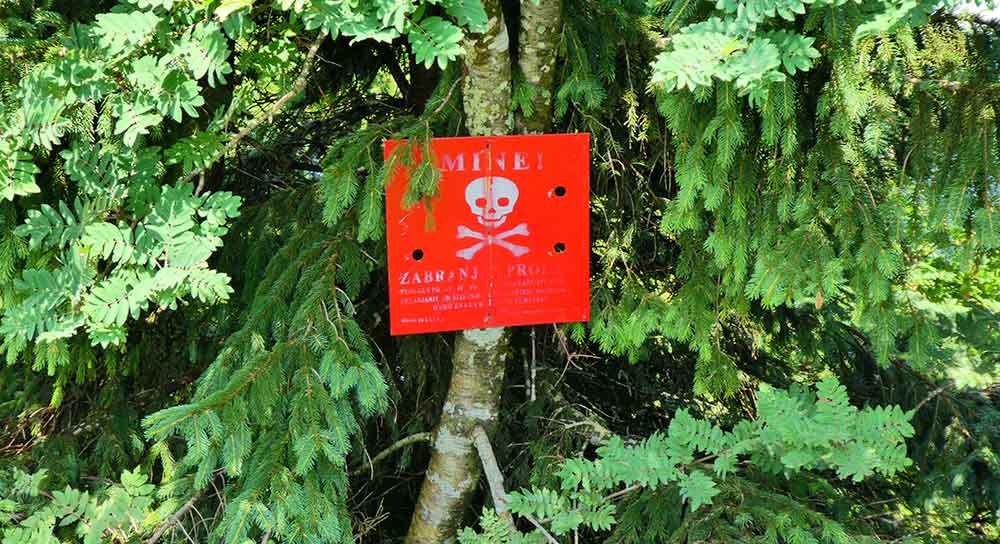
We were given this warning during our hike briefing, and it’s a warning you don’t want to take lightly. When you reach the top, as you are walking from the communication towers along the gravel road you’ll see red signs with skull and crossbones on the trees.
Essentially, this road divides the countries of Croatia and Bosnia & Herzegovina. The landmine warnings relate to the Bosnia & Herzegovina side of the mountain. There is still the potential for unexploded landmines in the forest left from the Yugoslavia war. Whatever you do DO NOT go ‘off-roading’ over this side.
Seriously, this is a genuine problem on the Bosnia & Herzegovina side, the signs aren’t just there for fun and to scare you off their land. There are ACTUAL FULLY FUNCTIONING LANDMINES dotted all over the landscape.
At the top of the hike, warning signs for land mines are dotted about on the Bosnia and Herzegovina side of Pljesevica mountain
Refugees
Sometimes the path is used as a gateway for refugees to cross over into Croatia. We didn’t see anyone else on our hike but on occasion, they were spotted on the trail. This leads to why you need to take your passport or some form of ID with you on this hike.
Police are aware of the Pljesevica trail being used as an entry point into Croatia, so they sometimes patrol the route or the site at the top. To save any hassle as to where you come from take your ID with you. I didn’t fancy a night shackled up in a Bosnian prison.
It’s Isolated
We set off as a group of 4 and apart from each other, we didn’t see anyone else on the trail. You will be very much alone. I did have phone reception for parts of the hike but as a precaution, tell your accommodation or let a friend/family member know that you are doing the trail.
Also, because there are no amenities along the way, pack everything you need. Some essentials are a waterproof and windproof jacket, a basic first aid kit, a map (paper or digital), snacks and water.
Related Article: A Thrill Seekers Guide: Adventure Destinations in Europe
The reward for your efforts – On Croatia’s most famous rock!
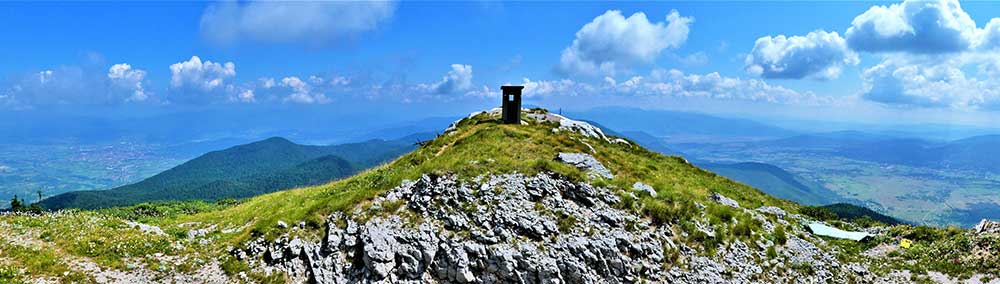
At the top, there is a double whammy of rewards. The first is the iconic, stage-like rock formation which looks out over the Croatia side of the valley below.
To get to it, there is a steep scramble down the loose rocks and boulders which are behind the abandoned barracks. Cross the grassy embankment and it will lead to the foot of the formation. You’ll have to climb up to this table-like plateau, but it’s fairly easy to climb.
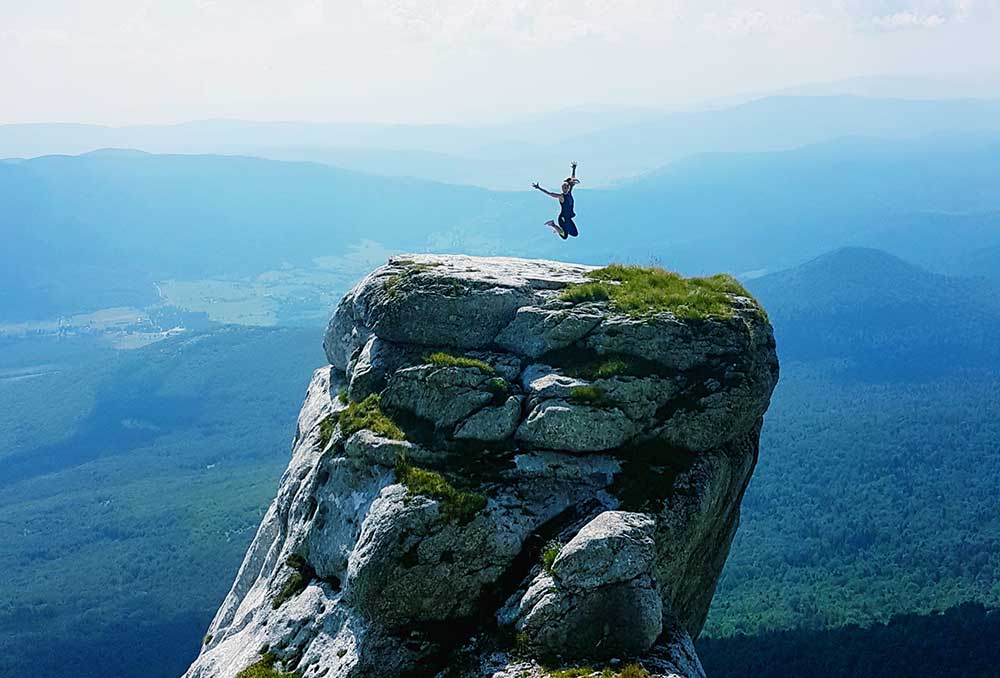
It does feel like being on top of the world up here. On a clear day, you can see the small villages down below, with the surrounding Croatia mountains in the distance and a sky that looks like it could go on forever. To feel this tiny in a massive expanse of landscape, it’s humbling, to say the least.
If you’ve been reading my blog for a while, you know I have a penchant for ruins and abandoned places. Scattered all over the top of the peak you’ll find plenty of abandoned buildings and relics from the Yugoslav war. I was in my element with the slightly eerie and derelict army barracks and a peek inside was something I couldn’t resist.
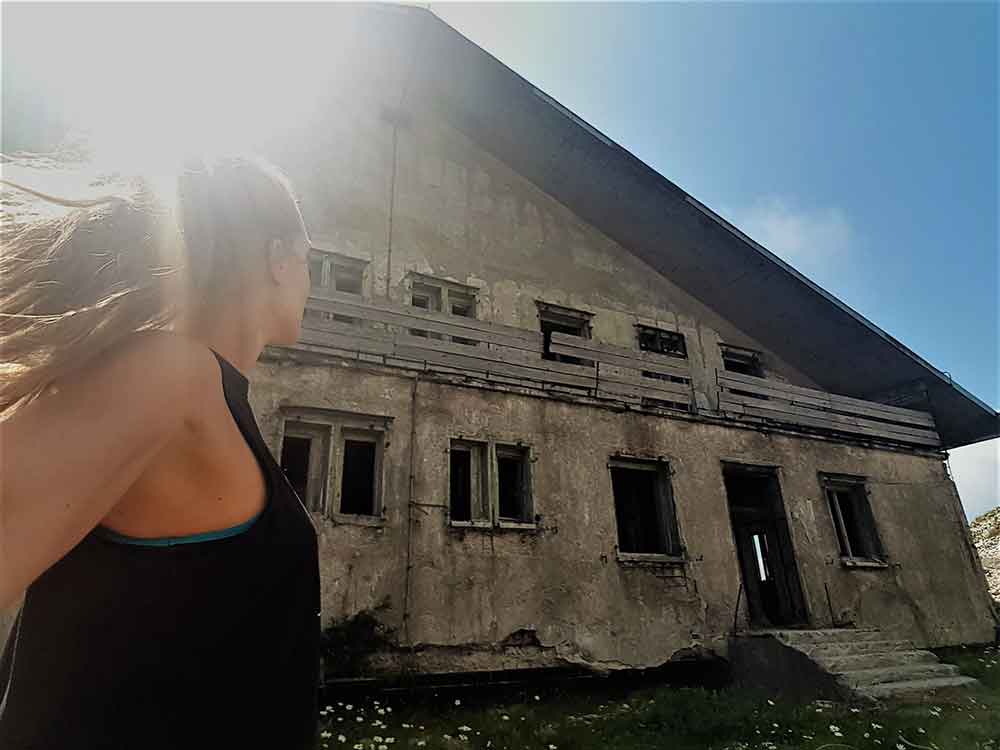
Wandering through the crumbling hallways and into living quarters, complete with rusted remains of sofas, kitchens with their upturned cookers and up the stairs to what would have been the bedrooms which were evidenced by the abandoned beds and mattresses. This truly is a little place of wonder for anyone interested in abandoned places.
My love-hate affair with Pljesevica Mountain
The Pljesevica mountain hike is probably one of the toughest trails I’ve done in recent years. It’s also one of the most rewarding and therefore best day hikes in Europe that I’ve completed.
During my time in Croatia, especially when I visited in July, I was frustrated with how hectically busy everything was. I was keen to find more off-the-beaten-track places in Croatia. In doing this hike I found a gem! It’s worthwhile heading to the mountains of Croatia to get away from the bustle for a few days.
On the way up, my lungs hated me, on the way down it was my ankles and knees that were angry. If you have knee problems, I certainly suggest using a pair of anti-shock trekking poles. But the overall feeling of accomplishment and what we experienced at the top made every bit of the pain and effort more than worthwhile.

Where to stay near Plitvice and Pljesevica?
The village of Korenica, where the Pljesevica Trail starts, is only a few kilometres away from the famous Plitvice Lakes. There are plenty of accommodation options in and around the Plitvice Lakes area. One that I can highly recommend is the family-owned Falling Lakes Eco Hostel.
Boasting not only top-notch eco-friendly accommodation, but these are also available in a range of dorms as well as private rooms. They offered decent Wi-Fi, loads of space to socialise and hang out, hot and powerful showers, a fully equipped kitchen to cook and prepare your own food, or for a small additional charge, delicious food cooked for you by the resident chef.
Don’t believe me? Take a look at these top reviews of Falling Lakes Eco Hostel, and see what others have said.
Falling Lakes also arrange shuttle bus transfers to Plitvice Lakes. They also organise a string of things to do near Plitvice lakes, such as white water kayaking near Plitvice or the nightly hike up a nearby Mrsinj Grad hill to watch the sunset.
They host regular evening activities too, such as quizzes and campfires to sit out and watch the stars (there is next to no light pollution here) as well as giving a detailed briefing for the Pljesevica mountain hike.
Check Availability on Booking
Getting to Plitvice (and Korenica)
You’ll have no problem getting to Plitvice due to a string of buses pretty much every hour going to Plitvice from Zagreb, the nation’s capital. FlixBus is one of the cheapest and most convenient ways to get around Croatia. They also offer services to Plitvice from Dubrovnik, Split and Zadar.
Plitvice and Korenica are approximately a 2 hours drive from Zagreb heading north and 1.5 hour drive from Zadar heading south.
The FlixBus drops off directly in Korenica (the village where Falling Lakes Hostel is situated, and the Pljesevica Hike starts).
An alternative to FlixBus is using the Omio app. There’s a regular connection between major cities to Plitvice Lakes. You’ll then be able to pick up either a local bus or a taxi to take you the 3.5 to Korenica village.
Check Prices: Cheap Bus Transfer By FlixBus
Related Article: Best Small Group Tours To Croatia
Essentials to pack
If you’re planning on hiking in Croatia, here are some essentials to take on your hike. A lot of these routes are very much off the beaten track, and we didn’t meet anyone really until we got to the top. There are also no amenities along the trails, so you’ll need to take everything you need with you.
Decent shoes for walking in
This is from the voice of experience, from things I WISH I had packed a pair of decent shoes. Instead, I hiked up in pair of very old, battered and treadless tennis shoes – WTF was I thinking?!?
So granted, aside from flip-flops, they were the only shoes I had. Usually, I’m a big fan of tennis shoes, lightweight, go with most clothes and are perfectly fine for 90% of the stuff I do when I’m travelling. However, on this trip, it was a seriously BAD idea.
It was mildly amusing seeing people’s reactions after the hike back to the hostel saying ‘you hiked in those! Wow!’.
Some parts of the terrain are super slippery and other parts are full of rocks – I could feel each and every single one of the rocks through the bottoms. Come to the end of the hike, my ankles and soles of my feet knew I wore crap shoes.
Water – 2 litres minimum
Even though the day we hiked was about 20C, the effort to go up is like doing a 3-hour solid step-up class. It’s intense. I’d nearly finished my water by the time we got to the top, and from there it would be at least another 3 hours before I could refill it.
There are NO FILLING STATIONS on the trail. So take what you think you’ll need, and then some!
Layers of clothing
Hiking uphill is a sweaty business, so sportswear and layers are a must! For a lot of the hike, you’ll be going through trees and shrubland. At the time of hiking (July), it was humid here. You will sweat!
At the top, it’s quite exposed, so depending on the weather, you’ll want the layers to either put on or layers to take off, as there is no shelter.
Windbreak layer
If you happen to hike on a windy day, you’ll be thankful for your windbreaker – trust me! Even in summer, the breeze can get chilly.
Walking poles
If you have them then take them. The mountains in Croatia are stunning, but parts of the hike that I REALLY wished I had my trusty walking poles with me. I had to use a stick, which helps a little, but it’s nowhere near as good!
Some parts of the trails are steep, and it takes its toll on the knees, particularly on the descent. If you have knee issues, then I highly suggest you invest in a pair of lightweight, anti-shock trekking poles.
Not convinced by how great trekking poles are? See what others have said. Read these reviews about these lightweight anti-shock hiking poles.
Plenty of snacks
I’m not a big eater while I’m hiking, so would usually be perfectly fine on dried fruit, nuts and cereal bars to graze on throughout the day. For whatever reason on this hike, I had turned into the hungry caterpillar and was ravenous for the latter part of the journey, particularly after I had munched my way through all the food I took with me. Take ample food!
Passport (or at least a copy of it)
I talked about this in the section about things to be aware of on the hike. The Pljesevica mountain hike is right on the border between Croatia and Bosnia & Herzegovina, and at times refugees will be trying to cross. Sometimes police do random checks up here. Take a copy of your passport just as a precaution to show officials if needed.
Sunscreen
Parts of the trail are shaded by trees, but at the top, you will be out in the full brunt of the sun, there is very little shelter. In the history of mankind, no one looks good donning a shade of lobster pink.
Bug repellent
A big proportion of the hike is through woodland and shrubbery; this means lots of bugs. Unless you favour being on their al-la-carte menu for these little critters, then spray up.
FAQ & Tips for Hiking Pljesevica
So I’ve gone into detail about what to expect and how to do the Plješevica mountain hike. This section has the answers to questions that frequently come up about the practicalities of doing this hike.
Where Is the Pljesevica Mountain Trek?
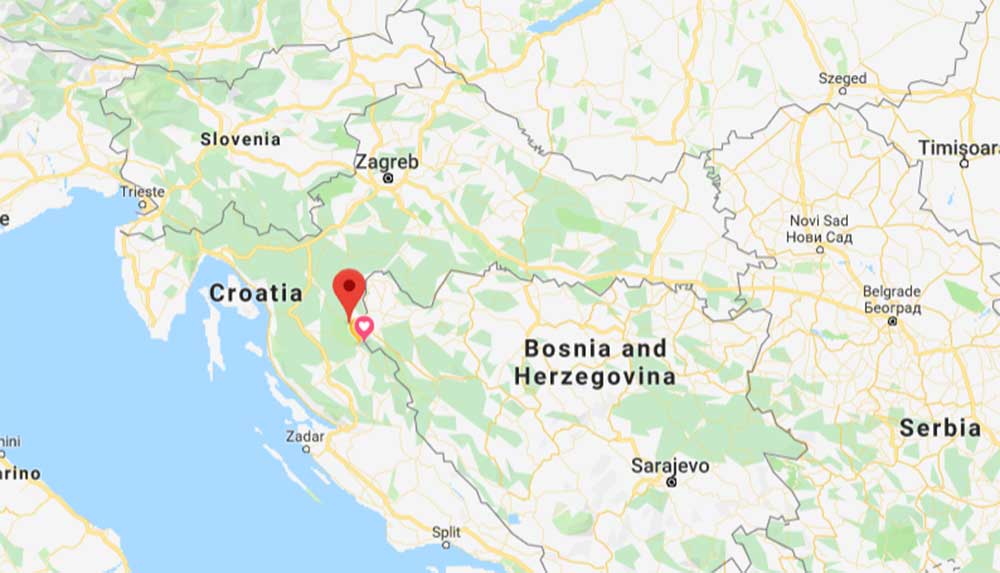
The mountain of Pljesevica is situated in the Dinaric Alps in northern Croatia. Although you reach the summit of Pljesevica, you actually go up several peaks to get to the top. It’s also located only a few kilometres away from the UNESCO-listed Plitvice Lakes. Below is a map of where the hike is located.
Plješevica karta: To give you some perspective, on the map below, the big pin is Plitvice Lakes, and the small pin is Pljesevica Mountain Hike.
How long is the Pljesevica trek?
The trail is around 13.6km trail, so making the return journey would be a little over 26km.
How difficult is the Pljesevica trek?
Although this is listed as a moderate hike, there are parts of the Plješivica mountain trail that are challenging.
How high is Gola Pljesevica?
Gola Plješevica reaches a height of 1646m
How long does it take to hike Pljesevica?
This depends vastly on the speed that you hike. If you’re a fast hiker, then to complete the round trip, allow a minimum of 7 hours. For a more relaxed hike which includes plenty of breaks and time at the top, it would take between 9-10 hours to complete.
What’s the best time of year for hiking Pljesevica?
Ideally, this hike is better from Spring through to Autumn. If you’re a keen winter hiker, just be aware that the trail is extremely remote, so I would only recommend this hike in winter for experienced hikers.
If you’re hiking during the summer, make the most of the cooler mornings, parts of the trail and in particular at the top, there is no shelter from the sun.
What else is there to do near Pljesevica?
The main draw to this area is the nearby UNESCO Heritage Listed site of Plitvicka Jezera (that’s Plitvice Lakes to you and me). If you’re planning to hike Croatia in this region of the country then the stunning albeit overcrowded tourist attraction of Plitvice lakes is nearby. There are also other routes around Pljesevica if you want to do more hiking.
Planning on doing the Pljesevica Hike?
Hopefully, you’ve learnt why this is one of the best hiking routes in Croatia. If you’re in the region, then I highly recommend you add this to your bucket list of things to do near Plitvice.
If you’re looking to get off the beaten track and experience a truly stunning hike, then I 100% recommend this.
If you enjoyed this article, you might also like…