
Why Visit Petra? 26 Reasons Petra Is Worth Visiting
Are you planning a trip to Jordan and looking for an unforgettable travel experience? Then I 100% recommend that you visit Petra.
You might be wondering what all the fuss is about, and even be asking yourself “is the lost city of Petra worth visiting?”. The short answer is yes!
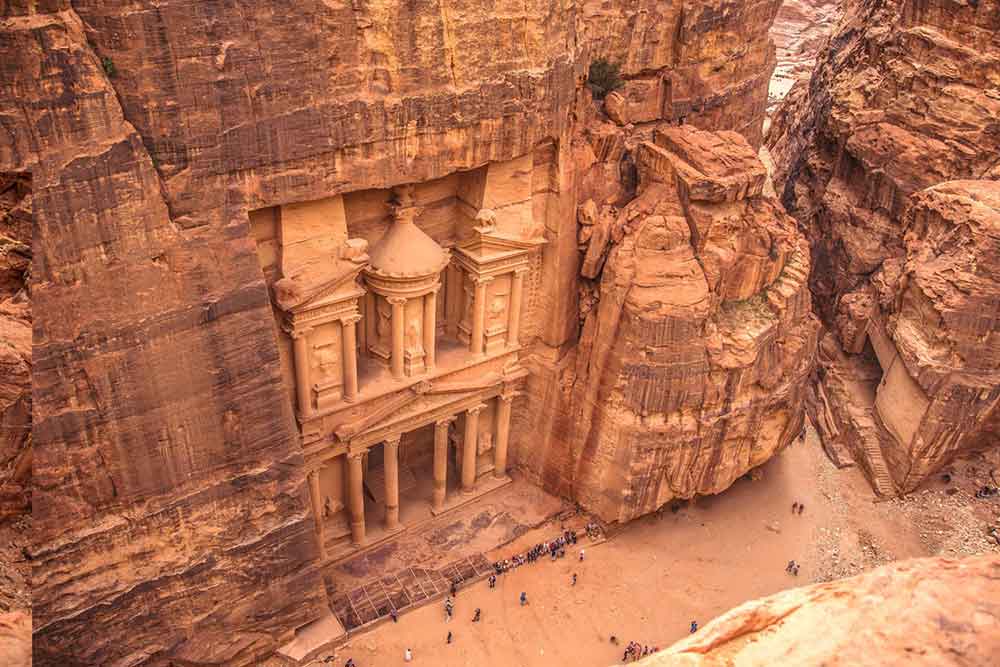
The UNESCO World Heritage Site and home to one of the world’s most iconic landmarks – The Treasury. This millennia-old oversize rock carving looks like something straight out of Tomb Raider or Indiana Jones and will take your breath away. Plus, if you get there early enough, you can have it all to yourself!
So, why visit Petra? Besides the iconic Treasury, there are so many other things to do in Petra. From exploring the ancient ruins and monuments, taking in the cliff-top views and even an abundance of seldom-visited hidden gems at Petra.
This article delves into 26 reasons why Petra is worth visiting!
Meet Me In Departures contains affiliate links and is a member of the Amazon Services LLC Associates Program. If you make a purchase using one of these links, we may receive compensation at no extra cost to you. See our Disclosure Policy for more information.
Why Visit Petra Jordan?
As awe-inspiring as The Treasury is, there is so much more to see when you visit Petra Archaeological Park. The whole site is a temple junkie’s dream. Even if you’re not a huge fan of temples, you’d be hard-pushed not to be impressed with how beautiful the millennia-old buildings carved into the rock are.
Petra usually features somewhere on people’s Jordan itinerary. It’s the most popular attraction in the country, closely followed by the Dead Sea and Wadi Rum.
The Lost City of Petra History
Fascinating fact: the original name of what we know today as Petra was ‘Raqeem’. It was the Greeks who renamed it ‘Petra,’ which means the rock.
The Nabateans were an Arab tribe, living around the desert to the east of Jordan. They first appeared in the 6th Century BC mostly living a nomadic life. By the second century, the Nabateans had developed into an organised society.
Petra became the Capital of the Nabataean Empire at about the 1st Century BC. At its peak, Petra had approximately 25,000 people living there.
Petra came under the rule of the Roman Empire until the 4th Century when an earthquake destroyed large chunks of the city. A subsequent change in trade routes meant that by the 7th Century, Petra was all but abandoned with the exception of the Bedouin people.
Even though the site is over 2000 years old, it became forgotten. It was rediscovered in 1812 by the Swiss explorer Johannes Burckhardt.
Petra was given UNESCO World Heritage status in 1985. More recently Petra was voted as one of The New Seven Wonders of the World.
Top Things to Do in Petra
- Walk down The Siq
- See The Treasury at sunrise
- Discover The Royal Tombs
- Visit the Street of Facades
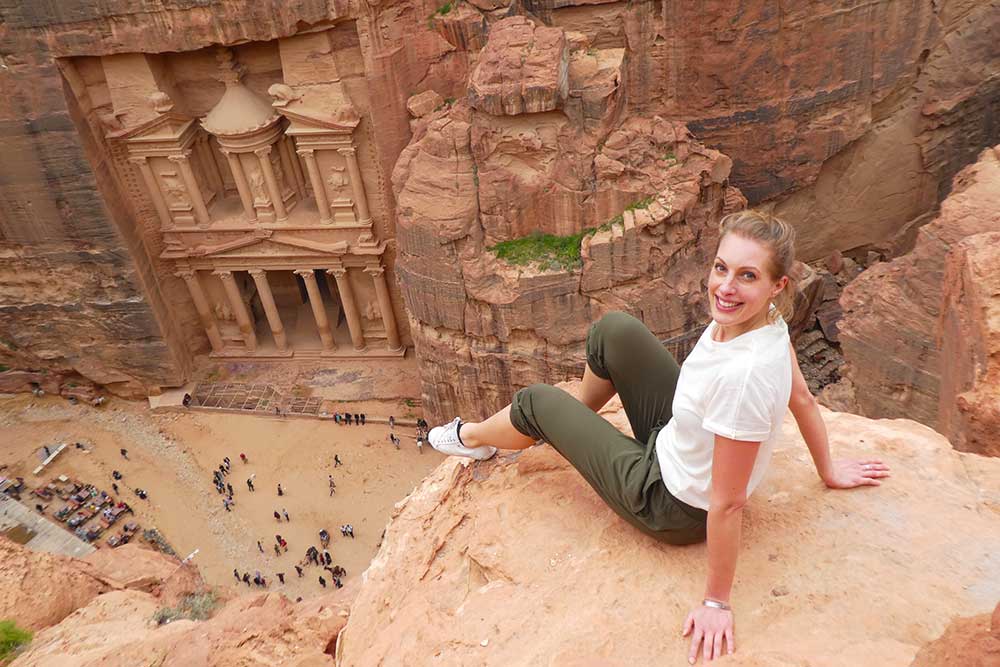
- Climb the cliff to view The Treasury from above
- Hike out to the Monastery
Read Next: The Complete 10 Days in Jordan Itinerary
Things to Know Before You Visit Petra, Jordan
If you’re planning to visit Petra, or you’re reading this article because you’ve already booked it and looking up what to see, there are a few useful things to know before you go.
For starters, to enter the archaeological park, you will need your passport or other valid identification to gain access, even if you’ve bought your ticket in advance! This section also talks about what to wear, as well as what to pack in your day bag other other useful tips for planning your Petra Jordan visit
Tickets For Petra
You can get passes for 1, 2 or 3 days. Don’t forget your passport on any of the days as they print your name on the ticket and they do check at the entry!
You can buy tickets in advance as well as at the gate or as part of an organised visit with an official petra tour guide.
Another way of purchasing a ticket if you’re coming from a neighbouring country, such as Tel Aviv in Isreal, or Cairo in Egypt is to opt for the Jordan Pass. This forms part of a visa and attraction bundle. This needs to be done BEFORE you cross the border into Jordan.
Regardless of how you buy your ticket, if you have the time, I highly recommend visiting Petra over 2 days. This gives you more time to explore everything fully giving you plenty of chillax time to enjoy and take in what you are looking at as well as hike some of the surrounding trails.
Check Availability: 2 Day Tour of Petra, Wadi Rum & The Dead Sea
Do you need a tour guide for Petra?
No. You can explore the site by yourself. However, a tour guide will show you all the highlights in the most efficient way as well as give you much more detailed information about the ruins.
Best Tours to Petra
One of the most efficient ways to tick a lot off your Jordan Bucket List and see Petra is by booking a multi-day tour that includes lots of other attractions in the country. Here are the best small group tours with transportation included.
The Petra Visitor Centre
If you didn’t buy your ticket in advance, then you can do it at the Petra Visitor Centre. There’s also an informative little museum here as well as that all decent WiFi.
Surrounding the Petra Visitor Centre you’ll also find overpriced yet mediocre eateries and souvenir shops. Unless you’re desperate for either of these, then bypass all this.
There is also a useful luggage hold where you can store larger items (like a suitcase or backpack) for a whole day.
How to Visit Petra – Map Vs App
You will get given a good old-fashioned paper map at the ticket shop when you enter the Petra archaeological site. However, there is also a nifty little app, called ‘Visit Petra’.
This official app has a digital map, a route planner showing the terrain, and loads of information about what to see in Petra. It’s free to download and available from Google Play or Apple Store.
If you don’t have roaming data, then you’ll find WiFi hotspots around the archaeological site.
Things to Take With You, When you Visit Petra
When you visit Petra, there are a few essentials that I highly recommend packing.
- Sun cream, even with the wind chill it’s quite exposed, in particular at the top of High Place of Sacrifice and the trails surrounding that area.
- Something warm, particularly if you arrive in the morning before the sun rises. The walk down the Siq is breezy and with the sun too low in the sky, it’s a chilly walk.
- Wear layers. If you’re wondering what to wear to Petra, take clothing that’s suitable for breezy exposed areas. Also, the scorching sun in the day time and getting hot from hiking take means you should wear comfortable clothes that can be layered up.
- If you’re a female traveller to Jordan, there are also a few other things you should bear in mind. The Middle East is much more conservative than what we’re used to in the west, so try to dress respectfully. Read more about what to wear in Jordan as a woman in my detailed guide.
- Decent walking shoes – a no-brainer, it’s a ruin site. Unless you have specific hiking-style sandals, leave the strappy wedges at home. Lots of the ground is uneven.
- Water, and lots of it. Take a large water bottle. There are shops and vendors at regular intervals in the busiest tourist places in Petra. However, sometimes these are sporadic, especially off the beaten path.
- A map, whether it’s the paper version, a GPS system, or the App. It doesn’t matter, but the archaeological site is big and if you do go off the beaten track it’s quite easy to get lost.
- Finally, don’t forget snacks, to keep your energy levels up, and the hangry at bay. There are food places in the park, but it’s busy at peak times.
Related Article: The Complete Jordan Packing List
Why Visit Petra? 26 Reasons Petra Is Worth Visiting
Visiting Petra Jordan is an experience of a lifetime and should be on every traveller’s bucket list. The iconic image of The Treasury is probably the first thing you think of at Petra, however, there are loads of other fascinating places to visit in the UNESCO World Heritage Site. If you’re wondering what to do in Petra besides the Treasury, then read on:
1. The Gateway – Bab Al Siq
Bab Al Siq is probably the first epic thing you’ll see when you visit Petra. Basically ‘Bab’ in Arabic, translates to ‘gateway’. You are at the Gateway to the Siq and the main trail into the archaeological park.
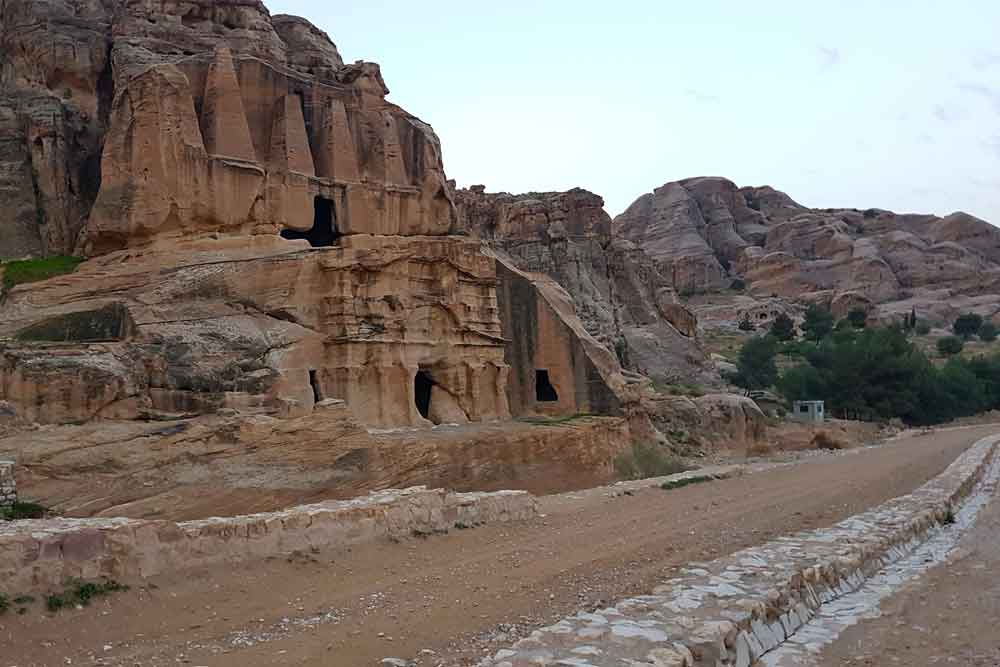
Here you’ll see a number of smaller temples and monuments you’ll pass as you walk from the park entrance to the Siq. Check out the three HUGE square monuments carved out of the rock. These are called Djinn blocks.
You’ll also notice the Obelisk tomb, a temple with four pyramids on top of it.
2. The Dam
Yes, it kinda looks like a brick wall – it is! It was originally built by the Nabataeans to protect the city from floods and then renovated in the 1960s. Its purpose was to redirect the seasonal flood waters into a nearby tunnel.
You can see some of the irrigation system carved into the cliff face and running alongside the wall in the Siq.
3. The Siq
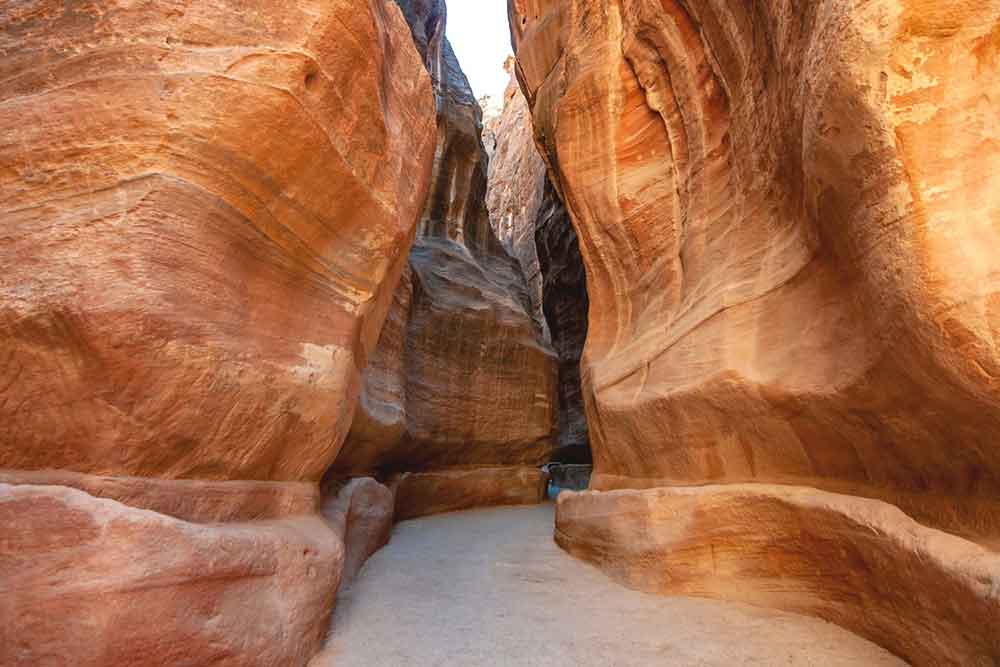
Probably the second most iconic landmark at Petra is The Siq. This is the gateway into the city of Petra. You can see the remnants of a once huge gatehouse/arch (only the crumbling foundations are left now) at the entrance.
The majority of the immense rock formation is mostly naturally formed, with its sheer walls stretching up well over 90m above. This meandering 1.2km channel varies in width from around 3m-12m, just breathe in as the horse carts come rattling past.
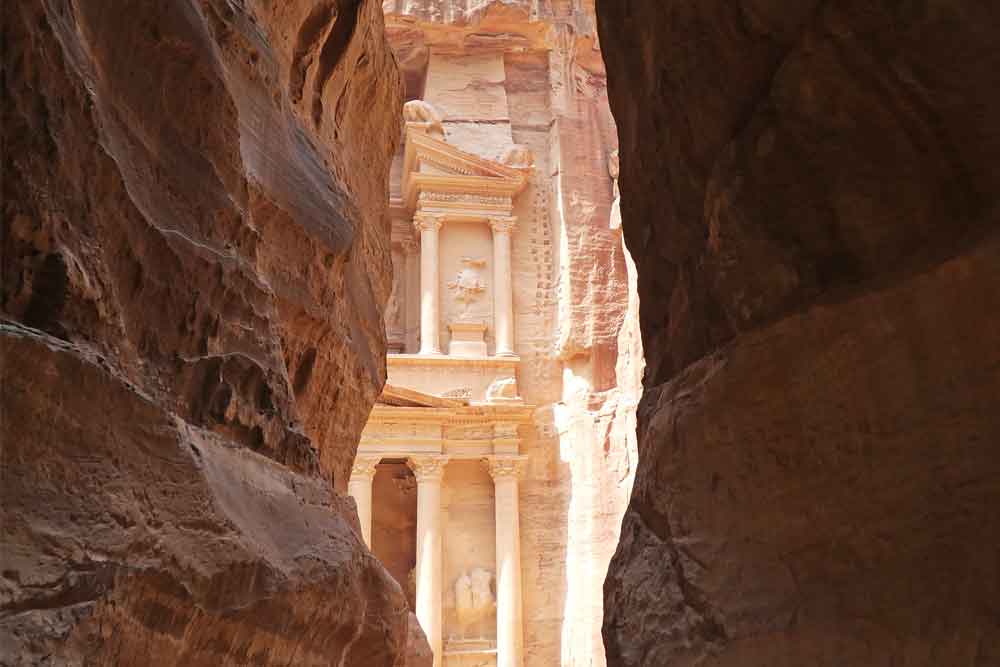
The Siq opens up onto The Treasury, however, it’s an absolute tease. The Siq meanders its way along and with each turn, you expect to see the iconic view of the Treasury through the crack in the Siq.
With every bend, there’s a slight disappointment, that you haven’t reached yet. It’s 100% worth the wait when finally, you get your first jaw-dropping glimpse of The Treasury for the first time. This view is one of the most beautiful places in Petra.
4. The Treasury (Al Khaznah)
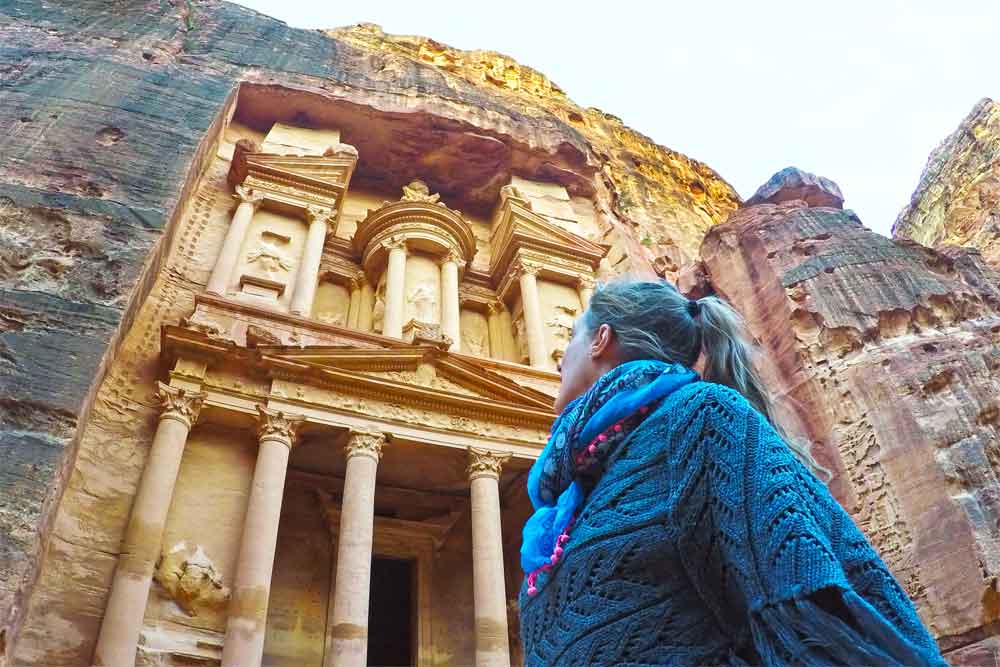
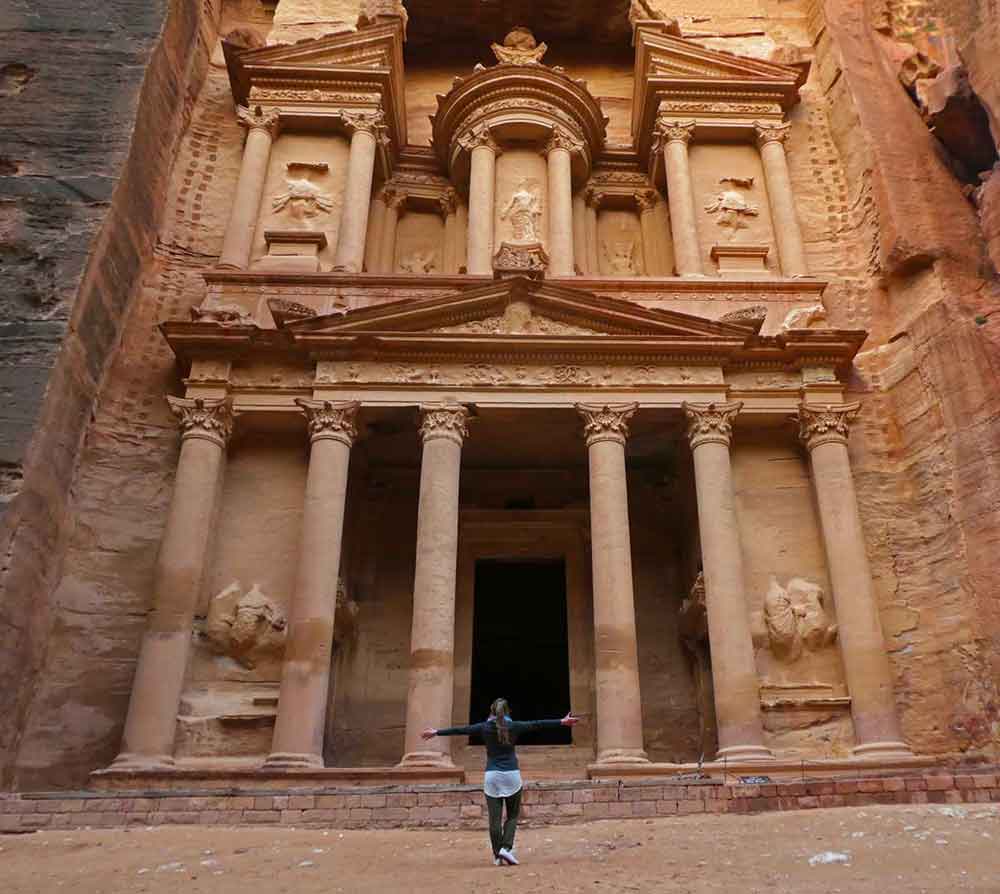
Even before you arrive, you will instantly get that seen-before feeling of The Treasury. As you exit the Siq the stunning facade of Treasury will be looming over you in all her glory. This is one of the most iconic places to visit in Petra.
At around 40 metres in height, covered in intricate columns, friezes, and statues carved into the red sandstone it’s blatant why so many films have used this as their backdrop.
One of the sole reasons to arrive insanely early when you visit Petra will be to have The Treasury pretty much to yourself, minus a few other budding photographers, a few vendors and camels. At peak times you are sharing this place with what feels like the rest of the world.
You can’t go inside but according to the guidebooks there are three chambers inside, the actual use of the building was unknown and there are rumours of there being a burial chamber underneath.
5. The Street of Facades
Unless you head back out of the Siq or climb up one of the look-out points and cliff-top walks (I’ll talk more about look-out points later), the only route you can take is to the right and along the wider opening to The Street of Facades. Aptly named due to the number of carvings in the rock face these are said to be burial grounds.

6. The Theatre
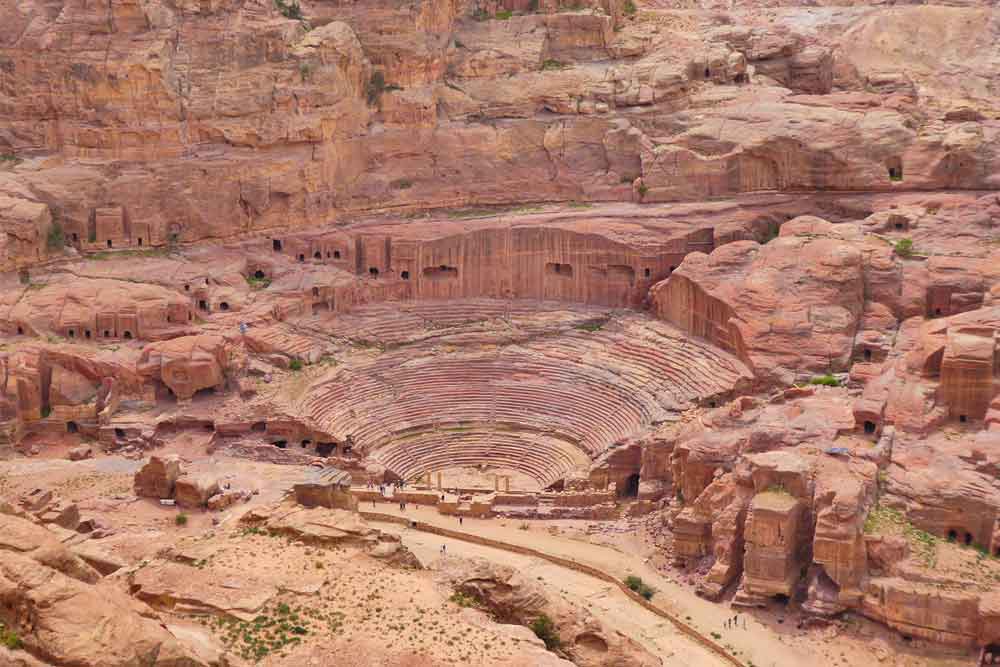
On your left-hand side, you won’t be able to miss the gargantuan theatre carved into the side of the cliff. Unlike other ancient theatres in Jordan like the ones at Jerash or in Amman, you cannot go inside and climb over it.
At its peak, 4000 spectators could have been seated in this auditorium. Imagine the acoustics in this place.
Just to the right of the Theatre is the pathway you’ll need to take to get to The High Place of Sacrifice.
Related Article: Visiting the Ruins of Jerash, Jordan
The Royal Tombs
There are five Royal Tombs located fairly close to each other. They each have a different purpose.
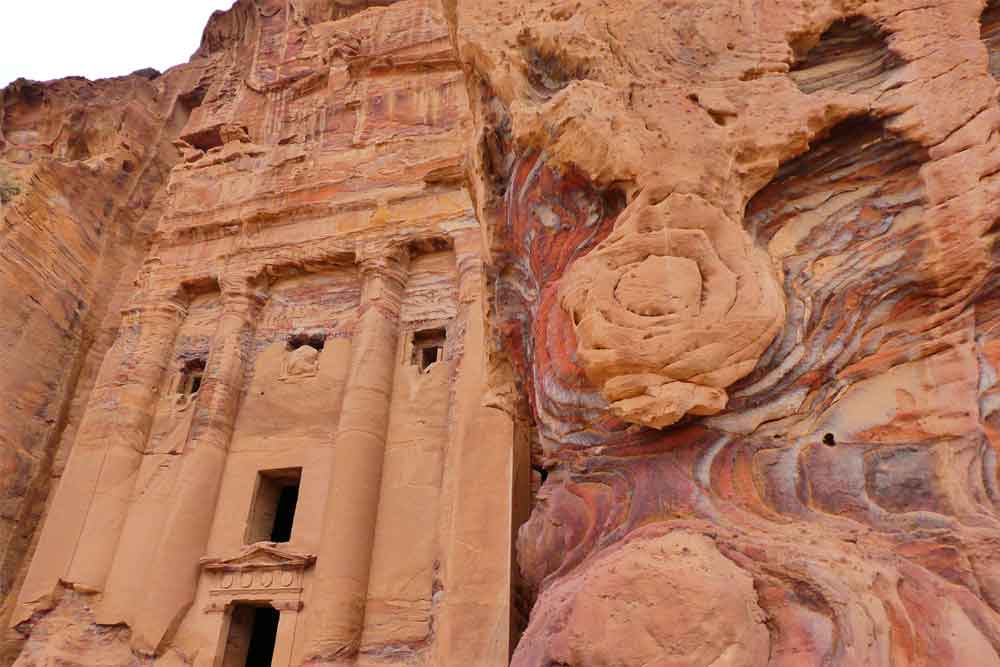
7. Urn Tomb
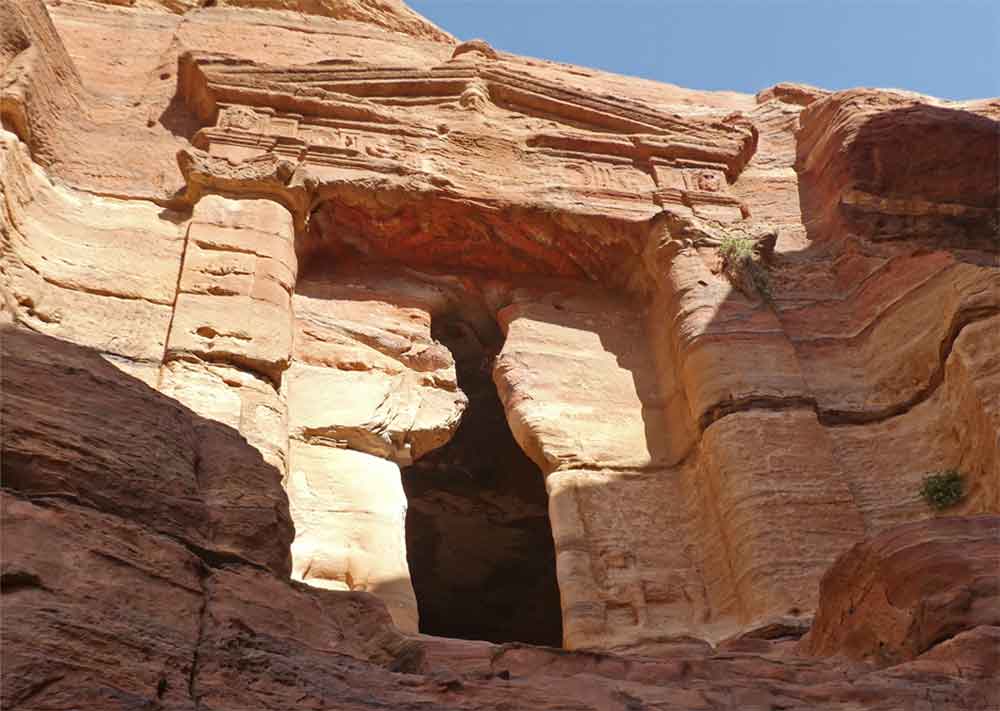
Standing in the collonaded courtyard outside this temple and then look up. About halfway up, you’ll see three hollows which go into burial chambers. You can’t go inside the chambers, but you can go inside the main building.
This Tomb gets its name from the ‘Urn’ at the top, it can be tricky to make out the shape close up, but from a distance, you can clearly see it.
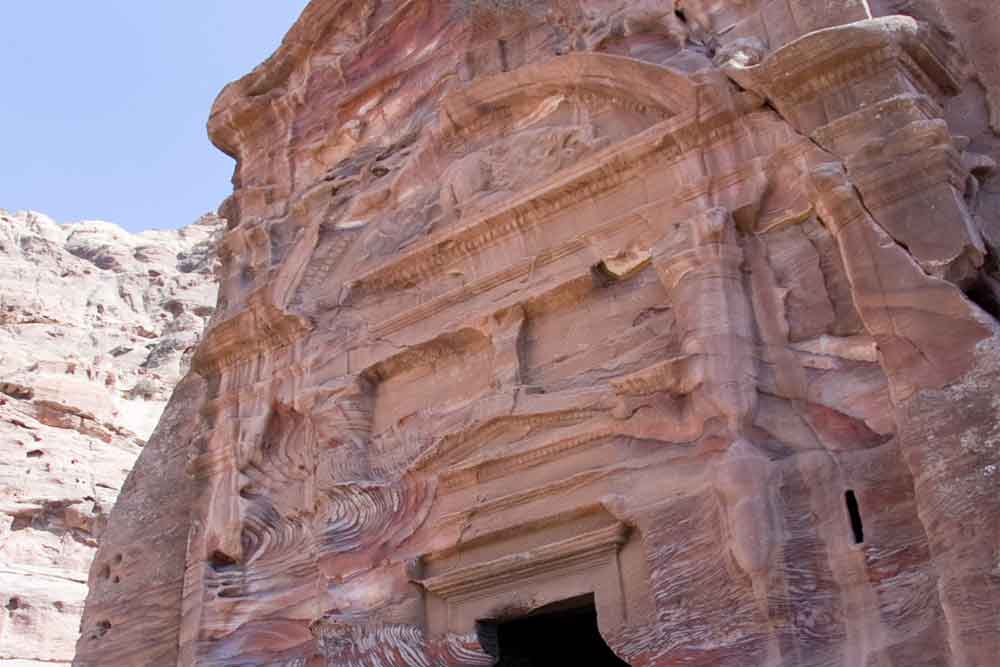
8. Silk Tomb
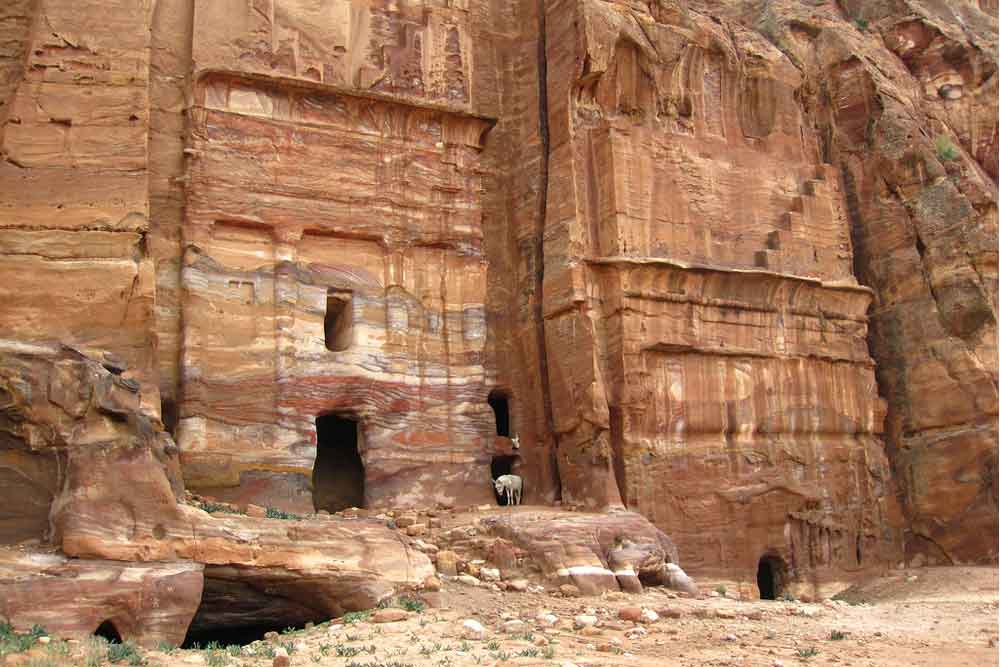
Along from the Urn Tomb is the Silk Tomb. Out of the four Royal Tombs, the colours in the sandstone, in swirls of reds, oranges, purples and yellows are the most impressive. And this is where the Tomb gets its name.
9. Corinthian Tomb
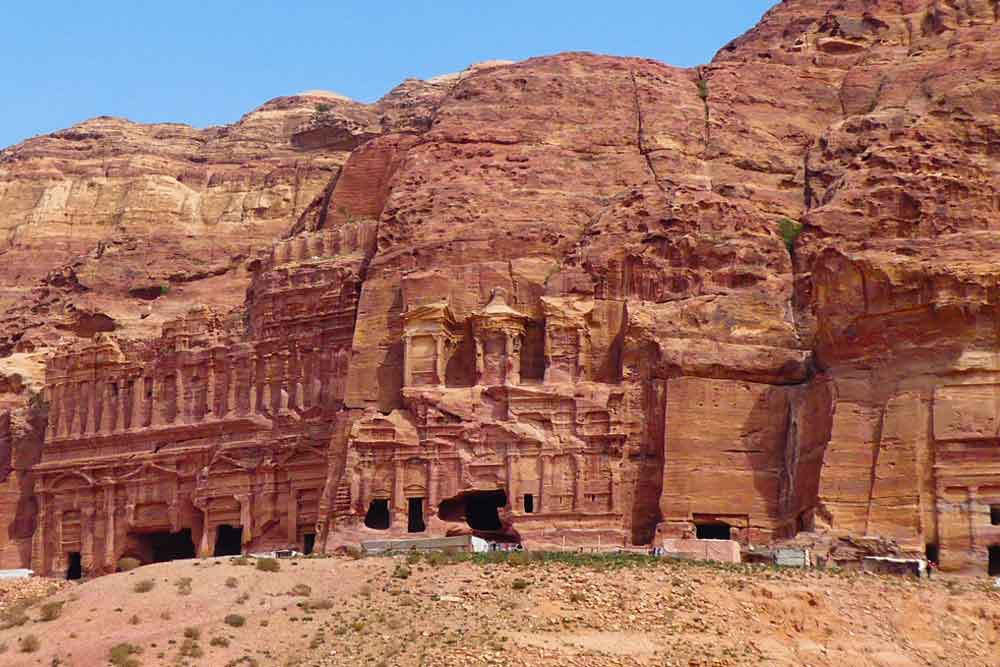
Next in line is the Corinthian Tomb. Once upon a time, the Corinthian Tomb would have made a stunning little sister to The Treasury, but alas, it’s now a shadow of its former glory due to erosion over the centuries.
Inside you’ll find four rooms which were used for various ceremonies after worshippers had been cleansed in one of the four basins outside of the temple.
10. Palace Tomb
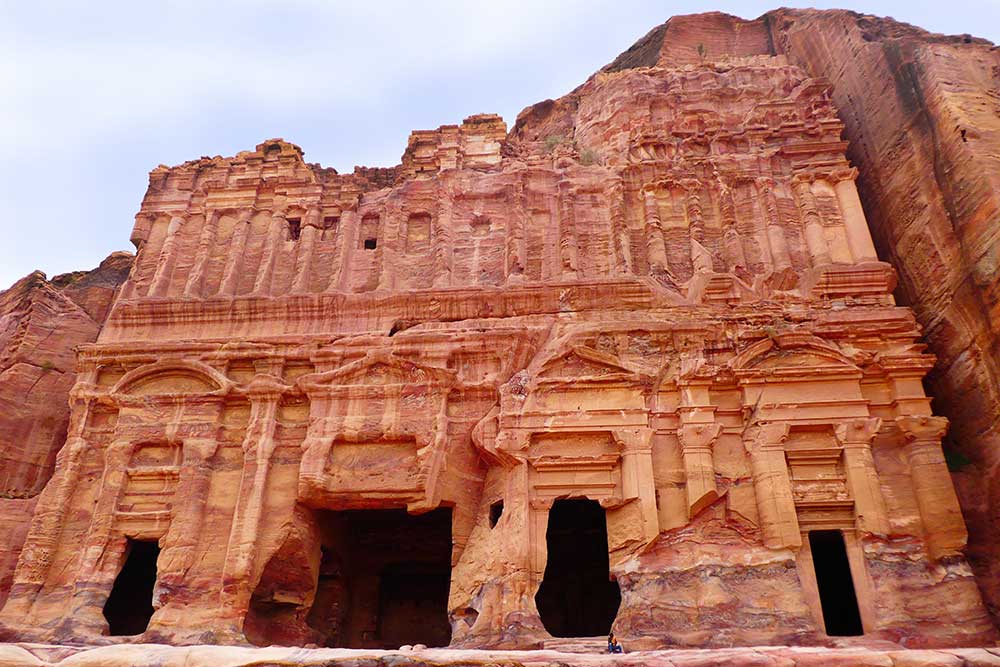
The last of the four Royal Tombs is the Palace Tomb. Because of the multitude of columns and massive five-storey facade, it’s easy to see why it’s been called this.
The biggest of the Royal Tombs is just shy of 50 metres in width and height. With four gates each leading to a burial room, separated between 12 decorated columns on the bottom layer, and another 18 pillars on top, its own mini-dam and water reservoir – impressive stuff.
11. The Sextius Florentinus Tomb
Named after Sextius Florentinus (what a name!) who in 129 AD was the governor of the Arab state, this tomb sits further north and away from the string of four Royal Tombs. Similar in fate to the Corinthian Tomb, it’s quite badly eroded but you can make out columns with triangular decoration on top as well as inscriptions in the Latin language.
12. The Nymphaeum
At the start of the Collonaded Street, you’ll find the Nymphaeum. If you’re not familiar with Nymphaeums around Jordan, such as the one at Jerash Ruins then a little explanation of what it is.
A Nymphaeum is basically a heavily decorated public water fountain. The one at Jerash is in better condition than the one here in Petra, BUT you can still make out some of the details.
What makes this one just as worthy is the ancient 450 year old juniper tree situated next to it!
Related Article: 50+ Must-See Landmarks in Asia
13. The Colonnaded Street
No ancient city would be complete without a cobbled and Colonnaded Street and ruins of Petra is no exception.
It was originally built by the Nabateans and would have been the equivalent of today’s Oxford Street in London. Basically for shopping, trading and socialising – not much has changed really since then. In 106 BC the Romans rebuilt it to the 6-metre width you see today.
Look out for the set of stairs leading to the courtyard to the left-hand side, this was the market area and THE central hub and back then referred to as the heart of the city.
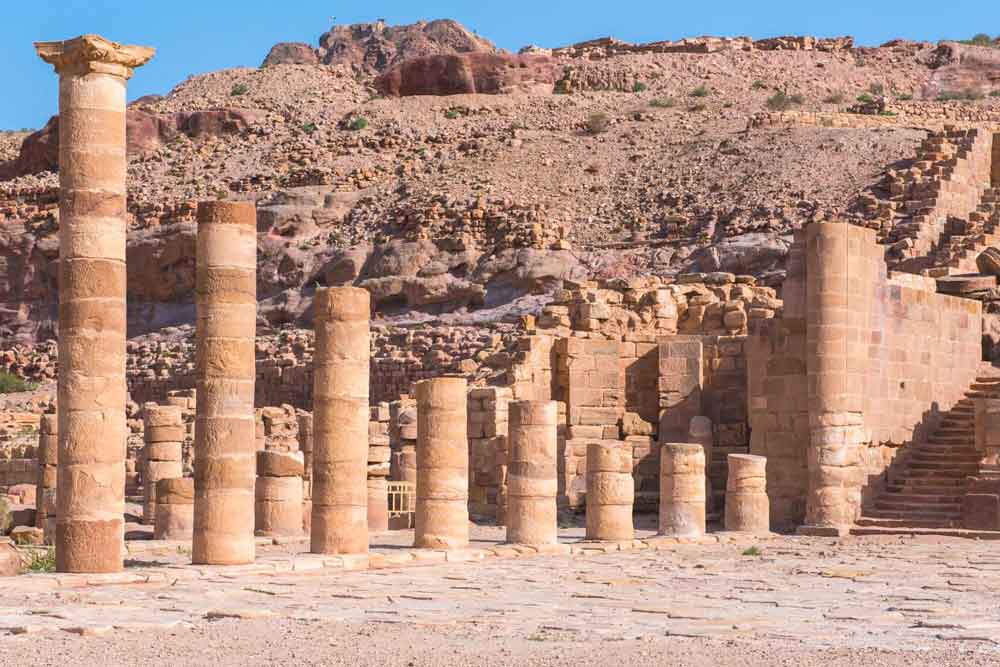
14. The Great Temple
A sprawling ruin of fallen columns, floral carvings, stairs and crumbling walls, The Great Temple can be fully explored with no shortage of stuff to look at. It’s the largest ruin in Petra archaeological park.
There are pretty decent write-ups of what everything here actually is, but check out the cute hexagonal paving stones in the courtyard, the mini amphitheatre and the intricate carvings dotted all over the ruin.
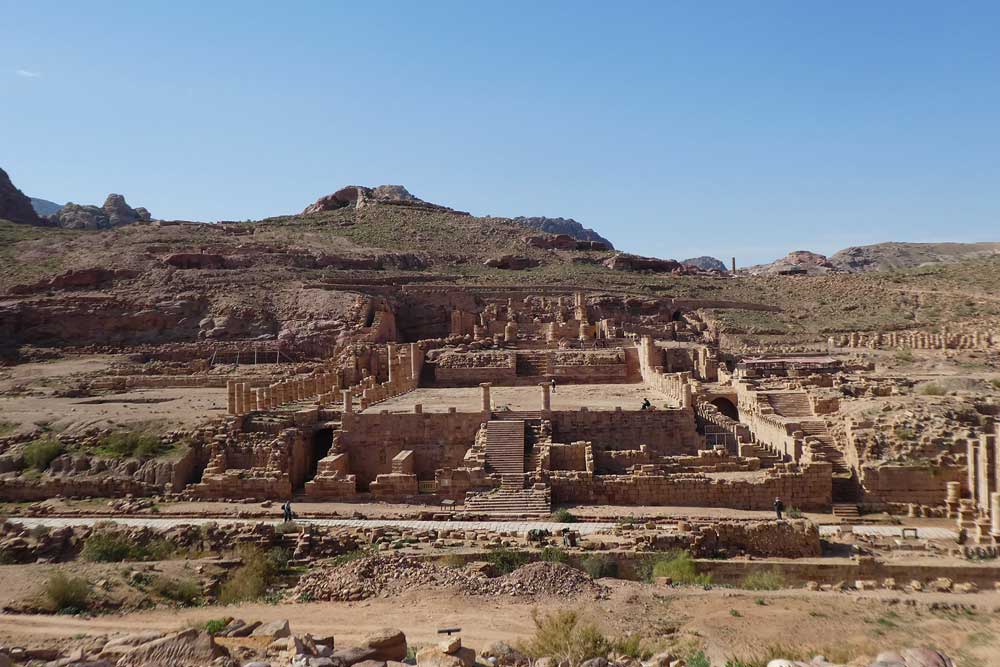
15. The Winged Lion Temple
Until the 1970s, the Winged Lion Temple was hidden under hundreds of years of desert debris. You’ve got to use quite a lot of imagination to see anything that resembles a Winged Lion which sits on the corners of the columns and gives the temple its name.
Surrounding the ruins is what looks like a Temple graveyard – lots of pieces, some with intricate carvings on, collectively like some sort of impossible giant jigsaw puzzle.
Archaeological notes on the boards nearby describe this Temple as being quite a marvel before its destruction by an earthquake in 363 AD.
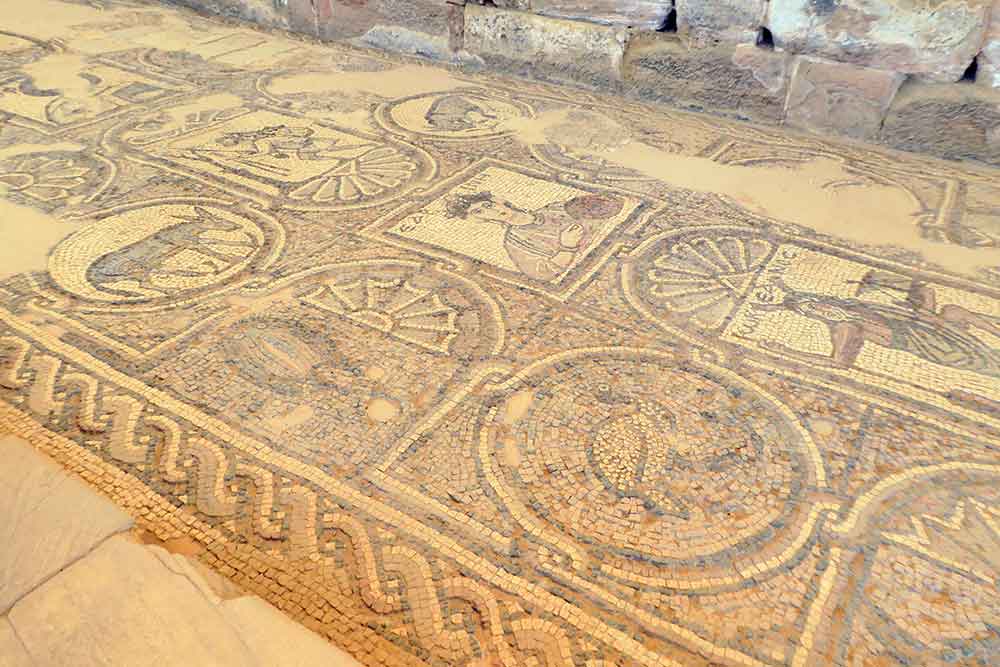
16. The Byzantine Church
Comparatively small from the outside, but what this Church in lacks in size, it makes up for in awesomeness!
Send your focus to the floor and check out the beautifully preserved mosaics that run along the sides of the room. There is so much detail in them; geometric shapes, food, animals, aquatic life, the four seasons and gods.
17. The Blue Chapel
Just slightly further up the hill from the Byzantine Church is the Blue Chapel. It’s a small ruin, but just look at the pretty blue columns!
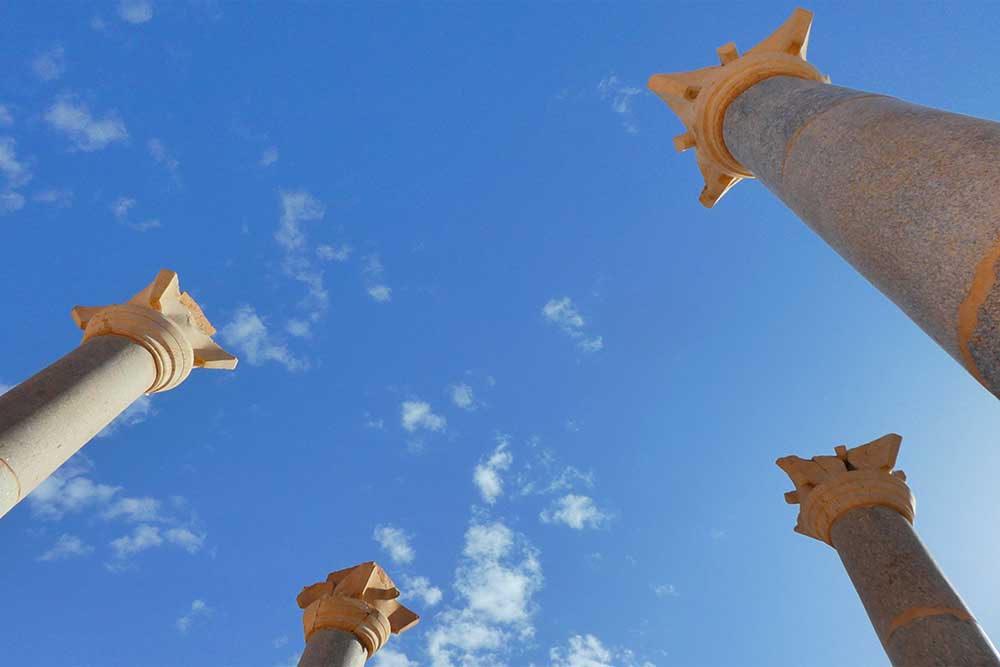
18. The Temple of Qasr al-Bint
A short walk from The Great Temple and you’ll see the temple of Qasr al-Bint. A giant archway looms above, 23m above. I hope it doesn’t collapse. Think of this temple as a court surrounded by walls with seating inside and side chambers.
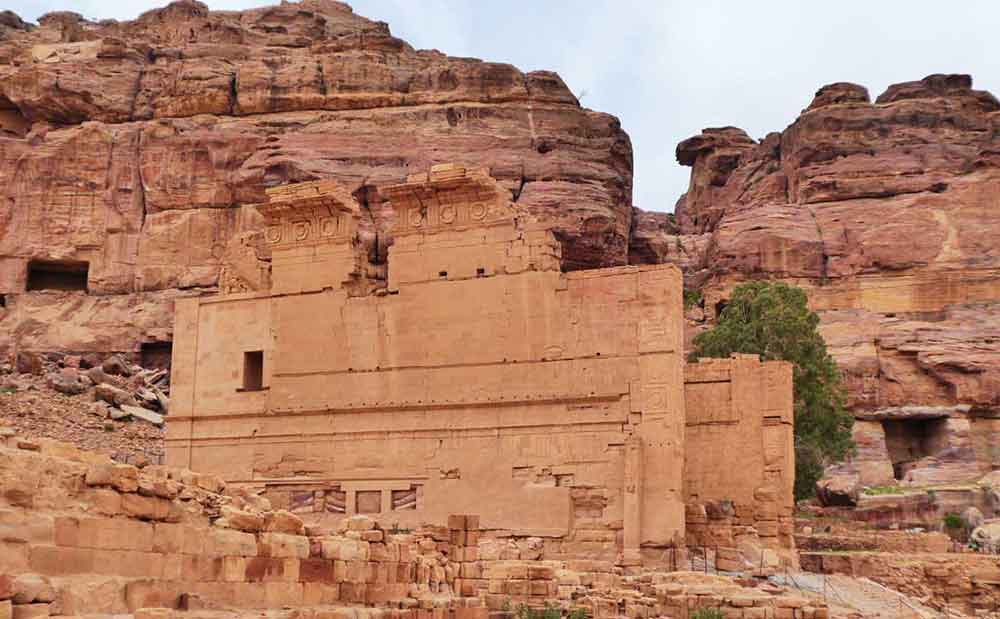
19. The Lion Triclinium
A slight tangent en route up to the Monastery, with a bit of a shuffle and squeeze to get there, the Lion Triclinium is set in a gully. It’s a small tomb with a single doorway fronted with two very weathered-looking lion carvings.
20. The Monastery (Ad Deir)
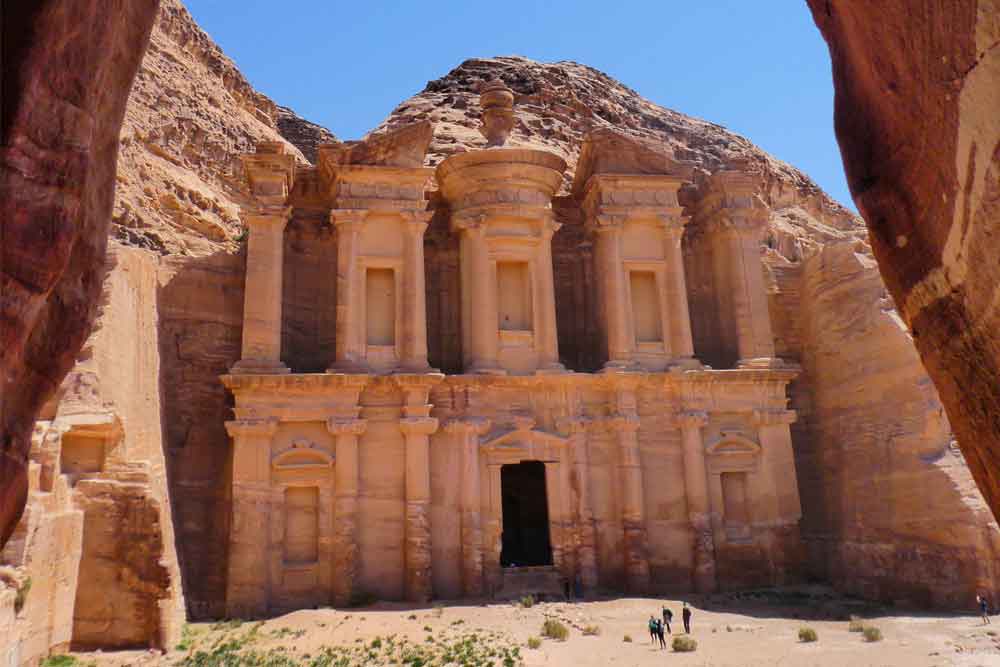
The Monastery is out on a bit of a limb, and similar to the High Place of Sacrifice I mention next, does require lung and leg power to get there. The 730 ancient steps, meandering through the valley will lead you out to a plateau where the Monastery sits. This is another one of the most famous places in Petra.
Out of the three stunning buildings in Petra (I’m referring to The Treasury and The Corinthian Temple). The Monastery is the biggest Petra temple. Intricately carved columns in the rock, sitting in an open expanse against a contrasting bright blue sky, it’s picture perfect.
You can’t go inside, but you can stick your head in. You’ll see a couple of benches and an Altar, if you squint enough you might be able to see the crosses carved in the back wall. Hence the name ‘Monastery’.
21. The High Place of Sacrifice
Depending on how good your knees and lungs are, persevering up this steep climb will give you probably the best view in the park. They don’t call it ‘High Place’ for no reason!
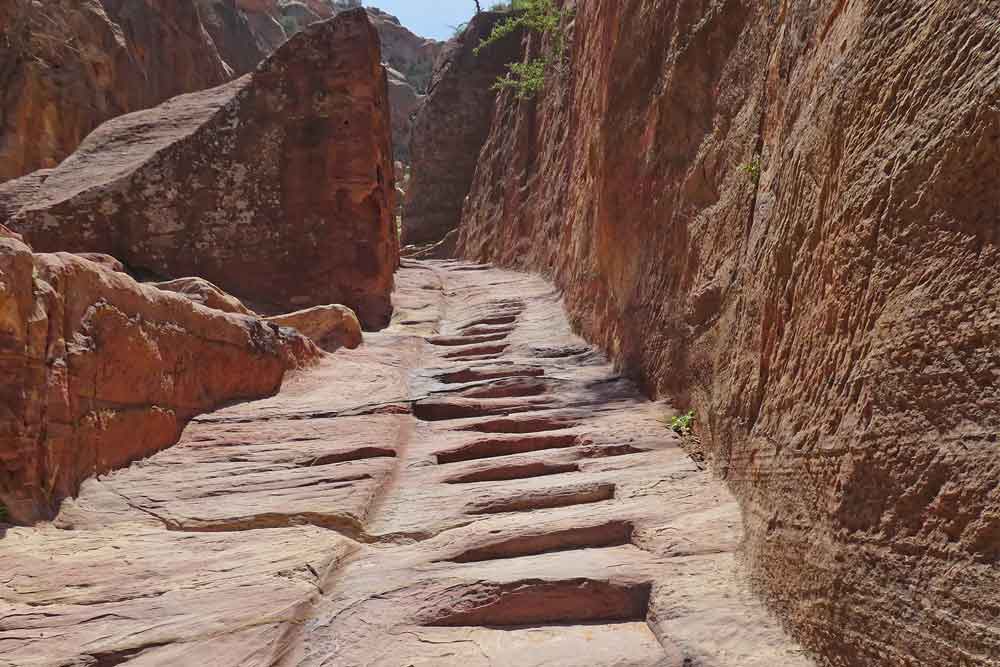
To get here, head up the route behind the Theatre. The path you follow forms part of the original Nabataean route, check out how worn the sandstone steps are in places.
At the top, you’ll find a flat expanse where on top of a rock, two obelisks stand. The obelisks like a lot of Petra, are carved directly from the surface of the rock.
On a plateau, you will find a rectangular ‘benched’ area and an altar. Look out for the little drain where blood would once have flowed.
Spend some time up here just to chill and admire the view. Because the High Place of Sacrifice is a little bit off the beaten track with a steep climb up a lot of tourists who only visit Petra for one day don’t do this hike.
Even at peak time, it’s quieter than most other places within the archaeological park. This is one of the best places to see Petra from above. The 360 Panoramic views of Wadi Farasa valley are outstanding. If you love deserts and want to explore more, then take a trip to the Wadi Rum Desert after your time in Petra.
22. The Lion Fountain
Head away from the High Place of Sacrifice and start to climb down the winding route on the other side of the cliff, heading away from the main archaeological park. While heading down the ancient carved stairways don’t miss the Lion Fountain carved into the rock. Althugh worn, the shape of the lion is still really evident.

23. The Garden Triclinium
Keep winding your way down into the Wadi Farasa valley and you’ll be greeted by a collection of slightly off-the-beaten-track temples in this area. This trail leads you past some lesser visited Petra ruins. The first is the Garden Triclinium.
It’s thought this temple wasn’t used for burials, but for water-related activities. Check out the reservoir in front of the temple! However, I wouldn’t advise drinking or swimming in it, better still just don’t touch it at all.

24. Tomb of The Roman Soldier
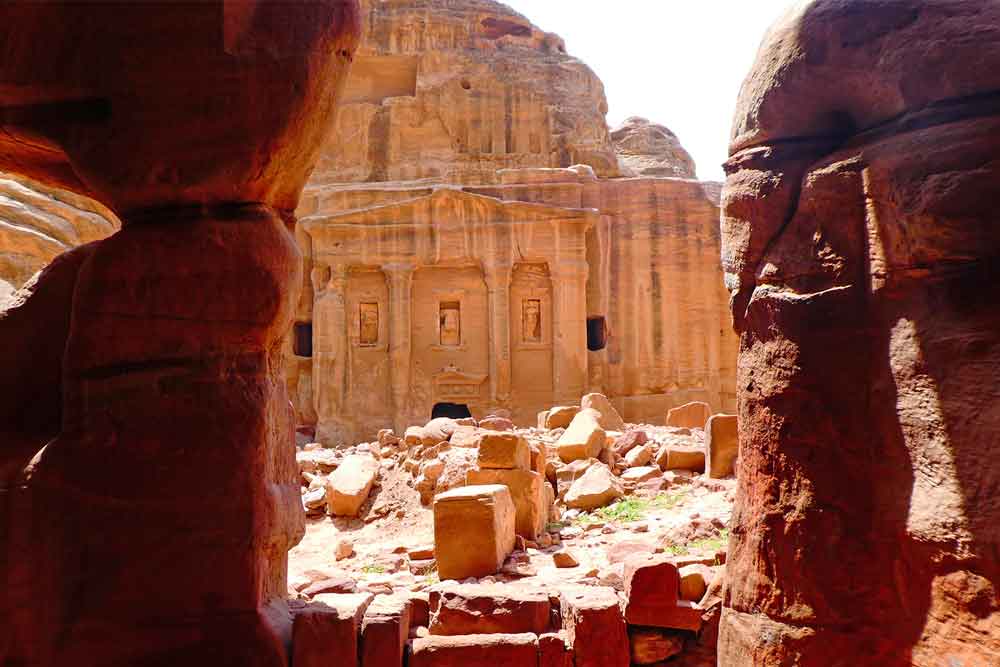
Just along from the Garden Triclinium, you’ll find the Tomb of the Roman Soldier. This ruin takes its name from the three statues in the niches which are of military soldiers. The area is scattered with temple and tomb parts, it’s thought that originally this tomb was part of a much larger and long ceased exit temple complex.
25. Petra by Night
On Monday, Wednesday and Thursday nights, you can come back after hours to visit Petra and see The Treasury by candlelight.
You don’t get to explore the rest of the site. Following the trail of 1500 candle-lit lanterns from the entrance, along The Siq will lead you to the open area in front of The Treasury where mats are laid down to listen to the musicians and singers.
At the end of the show, they illuminate The Treasury with coloured lights. Yes, it’s a bit cheesy, and if Disneyland did Jordan, this is pretty much what it would look like. To visit Petra at night, you need to buy a separate ticket. More information can be found on the official Petra website.
Book Here: Petra by Night from Amman

26. The Treasury Lookouts – For FREE!
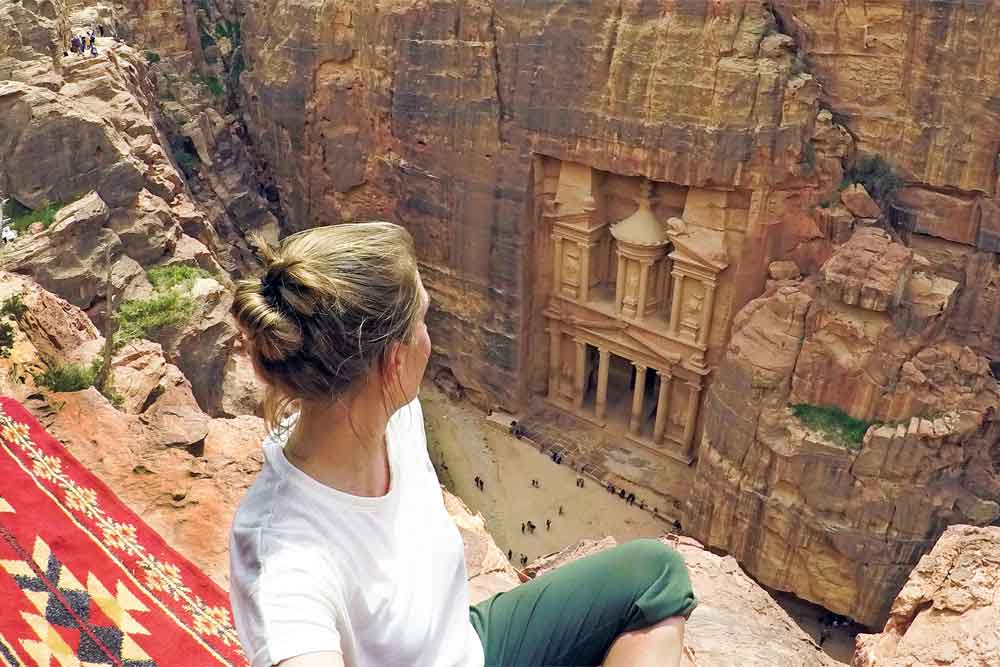
One of the best souvenir pics you can take when you visit Petra, is an overhead shot, looking down on The Treasury. As you come out of the Siq and stand in the clearing in front of The Treasury, no doubt within a matter of minutes or seconds you’ll get approached by someone offering you a photo on a camel, a ride on a camel or a view from on top. The touts are relentless.
Basically, from this clearing, there are two routes to either side of the cliff where you can go up – for a fee. I never did find out exactly how much it was, they kept quoting different amounts to expect to bargain with them.
You can do it for FREE though, take the steps from around the back of The Sextiux Florentinus, officially it’s called Al-Khubtha Trail. It’s steep, but it’s also easy to follow the path up to the top which then eventually levels out into a grassy area. The well-trodden path is signposted to a little cafe in a tent at the top looking down over the Treasury. Sit and have a cup of mint tea while admiring the view.
Even More to Petra
Aside from what I’ve listed here, there are numerous other tourist attractions in Petra. If it wasn’t for my time restriction, I could have easily spent an extra day at Petra and explored even more of the off-the-beaten trails and revisited some of the ruins at different times of the day to see them at different levels of sunlight.
Petra is up there with some of the best temple complexes I’ve visited and I’d come back again in an instant. It was every bit as magnificent as I hoped it would be.
Visiting Petra FAQs
I’ve gone into detail about the fabulous things to see at Petra. This section has the answers to questions that frequently come up about visiting the archaeological park.
Where to stay near Petra?
The nearest town is Wadi Musa. There’s accommodation to suit every budget here, the town is about a 25-minute walk to the park entrance (or you could book a taxi). However, there are some hotels directly outside the park gates which are useful for the early morning start. Here are the top choices for accommodation next to Petra.
Best Top Rated Hotel Near Petra – Mövenpick Resort Petra
A 5-star resort located directly at the entrance to the Petra archaeological park. This luxury resort with an oriental flair for Middle Eastern fabrics and textures.
If you’re looking for something more affordable than the luxury Mövenpick Resort, then take a look at the top rated Petra Guest House or Petra Moon Hotel instead.
How old is petra?
Petra was founded in about 312 BC . It was once the capital of the Nabatean Empire. The archelogical ruins date back to over 2000 years and is one of the oldest cities in the world.
How to Get To Petra?
Petra is THE most visited tourist attraction in Jordan, so there are options for travel from pretty much everywhere in the country. If you’re wondering how to go to Petra, there are plenty of options.
Depending on where you are travelling from you can get to Petra easily as a single day trip or multi-day visit from te cities of Amman and Aqaba. You can also organise a trip to Petra if you’re staying at one of the high end accomodations in Wadi Rum (they have tour desks to book onward excustions from).
You can even travel to Petra from Egypt and Israel! If you’re wondering how to reach Petra from neighbouring countries, then my advice is to book a tour with the transportation included. Check the various tour options here.
When is The Best Time To Visit Petra?
Petra in Jordan is an all-year-round destination – however, it can reach sweltering temperatures in the peak of summer (36°C!) and there is very little shelter at the site to escape the rays.
The best season for Petra is during spring (March–May) and autumn (September to November. Chances of rain are higher towards the start of the year, and the desert can get very cold at night during the beginning and end of the year. On average though, temperatures are pleasant and warm during the daytime – around 18-25°C.
What Time Does Petra Open?
The gates to Petra open at 6 am, all year round. The best time to go Petra if you’re after those stunning Insta-snaps with no one else in them, is just after they’ve opened. I suggest you arrive at the gate before this time. Leave it to a more humanly hour, and the place is rammed.
In the summer months, the park closes at 6 pm and during the winter it closes at 4 pm.
Can I do a small group tour of Petra?
There are loads of options for tours of Petra. Here are some of the best small group tours. If you’ve got extended time in Jordan, then you can also take an excursion out to Little Petra.
Is Petra safe?
You might be wondering if is it safe to visit Petra. The answer is yes. Like any tourist destination, the biggest thing to be aware of is pickpocketing or falling for a scam/paying a hiked price for something.
I did my trip to Petra while I was backpacking solo throughout Jordan, and as a solo female traveller, overall I found the country to be incredibly safe. However, take the usual precautions and leave valuables at the hotel.
Where Can I Find a Map of Petra?
This map of Petra shows all the places I mentioned in this article. Depending how long you have, will depend on the route you take.
Do the most popular attractions early on in the day (The Treasury and Monastery) and then go back and do some of the more off-beaten-track places when the crowds are at their peak.
So, Is Petra Worth Visiting?
So, is Petra worth visiting? Yes! Petra is an incredible destination that should be on everyone’s bucket list, and one of the main reasons to visit Jordan. With its breathtaking monuments, stunning desert landscape and fascinating history there are plenty of things to explore in Petra.
Whether you’re looking for a peaceful stroll around the ruins or something more adventurous like climbing up the Al-Khubtha trail, Petra has something for everyone. After reading this article, why not start planning your own trip? The journey will definitely be worth it!
Visiting Jordan? Then you might be interested in these articles…