
An Epic 5 Days Road Trip in Aragón Itinerary
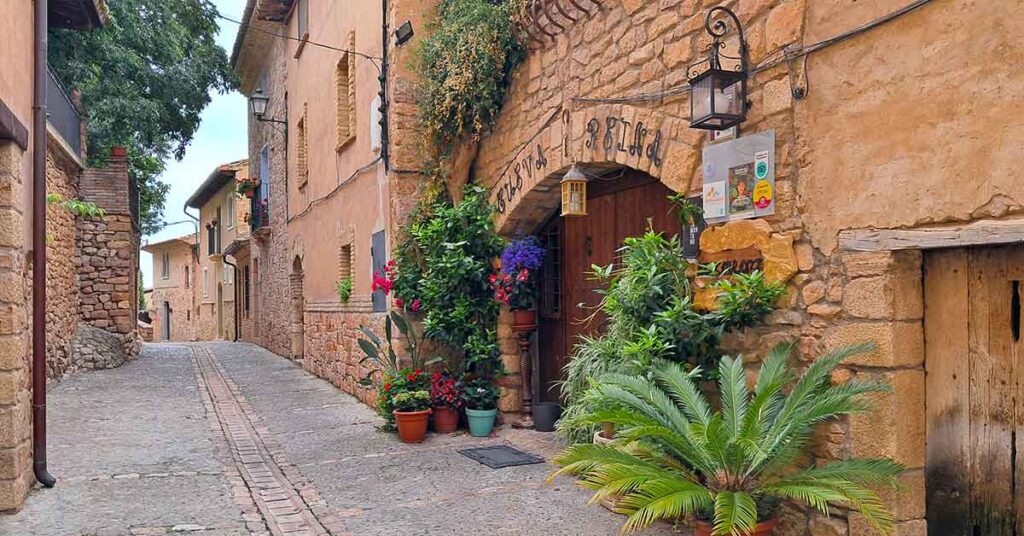
Planning your trip to the north of Spain and want to experience natural beauty and adventure sports? Then you’re going to love this 5 days road trip in Aragón itinerary!
This was my first visit to the Aragón region of Spain. Aside from a few web searches to see what the area looked like I had zero expectations – but wow, they were exceeded in every way!
The region has beautiful hilltop fortified cities, winelands, and diverse landscapes. You’ll find a mix of alpine forests, snow-capped mountains and turquoise rivers making it one of the best places in Europe for adventure sports.
It’s also a relatively overlooked region, which means you can escape the crowds from the more popular Spanish destinations and enjoy a more authentic and peaceful experience.
Read on to find out more about doing this Aragón road trip.
Meet Me In Departures contains affiliate links and is a member of the Amazon Services LLC Associates Program. If you make a purchase using one of these links, we may receive compensation at no extra cost to you. See our Disclosure Policy for more information.
Where Is Aragón in Spain?
Aragón is a region of Spain located in the northeastern part of the country. It is bordered by France to the north, Catalonia to the east, Valencia to the south, and Castilla-La Mancha, Castilla y León, and Navarra to the west.
The capital city of the Aragón region of Spain is Zaragoza.
Aragón is easily accessible from popular cities in Spain including Barcelona, Madrid, Valencia and San Sebastian making it a great option to tag on to a longer road trip in Spain.
The region is known for its diverse landscapes making Aragón an absolute dream for adventure sports enthusiasts and nature enthusiasts.
5 Days Aragón Itinerary
- Day 1: Zaragoza, Aragón’s Capital City
- Day 2: Murillo de Gállego and Loarre´s Castle
- Day 3: Bubal, Buesa and Ordesa National Park
- Day 4: Sierra de Guara, Somontano DO Winery and Alquezar
- Day 5: Alquezar and Transfer back to Zaragoza
Aragón Road Trip Map
Click on the map for the interactive version.

I’ve partnered with Turismo de Aragón and Spain Nature Travel to bring you this travel guide. This article is based on the destinations and experiences I took part in. All views and opinions are my own.
Getting Around Aragón
This itinerary would be challenging if you’re limited to using public transport. The best way to get around Aragón is by car. Roads in Aragón are mostly in good condition and well-maintained.
There are plenty of car rental places in Zaragoza where this itinerary starts.
If you don’t want the hassle of hiring a car and driving yourself for this itinerary, then check out Spain Natural Travel, who specialise in small group tours around the region.
Day 1: Zaragoza, Aragón’s Capital
This itinerary starts in the region’s capital of Zaragoza. Although you could spend a few days here with plenty of things to see, you’ll be able to hit all the highlights of Zaragoza in one day.
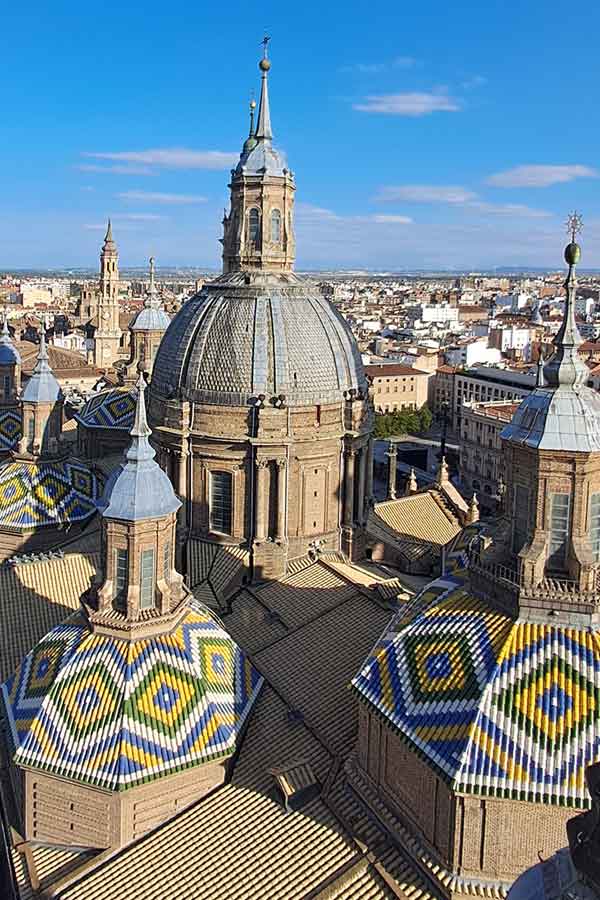
Start your Zaragoza itinerary at the Basilica of Our Lady of the Pillar – one of the most famous landmarks in Aragón. Visit the roof to see the colourful tiles and domes. This stunning church is located right on the Plaza del Pilar.
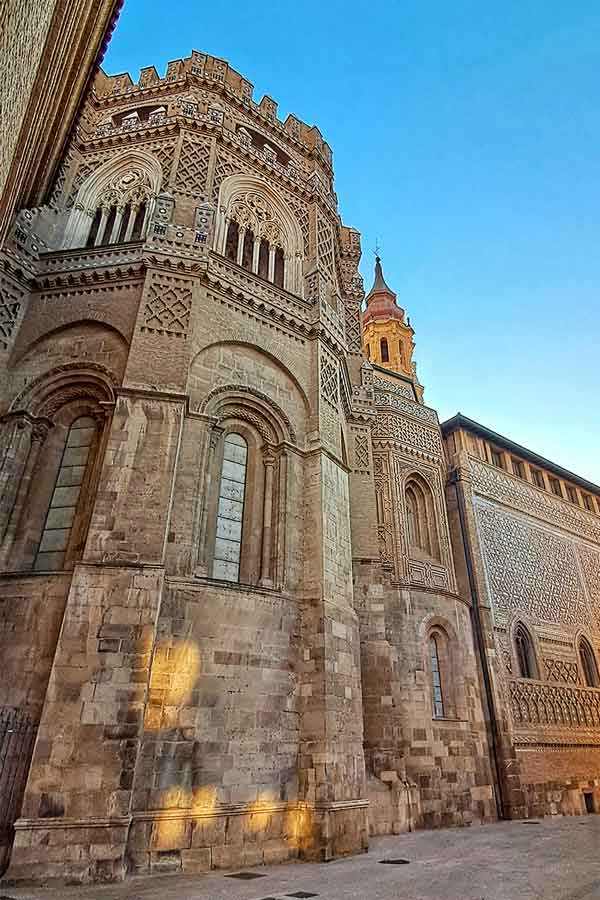
Just next door, check out La Seo Cathedral for its unique Gothic and Mudejar architecture.
From here take a slight detour and walk to the Puente de Piedra (Stone Bridge) for great views of the Ebro River and the city.
Head back towards the old town and out to the Aljafería Palace, a beautiful Moorish fortress, to explore its intricate designs and manicured gardens – you might want to take a taxi if you’re pushed for time.
Alternatively, if you’re interested in learning more about the history of the area, then I recommend checking out the Caesaraugusta Forum Museum. Here you’ll find Roman ruins that tell the tale of Zaragoza’s ancient past – if you don’t want to visit the museum, then you can also see the various Roman ruins dotted around the Old Town.
For lunch, I recommend the Zaragoza Central Market. Here you can eat your way around the different stalls and taste local delicacies.

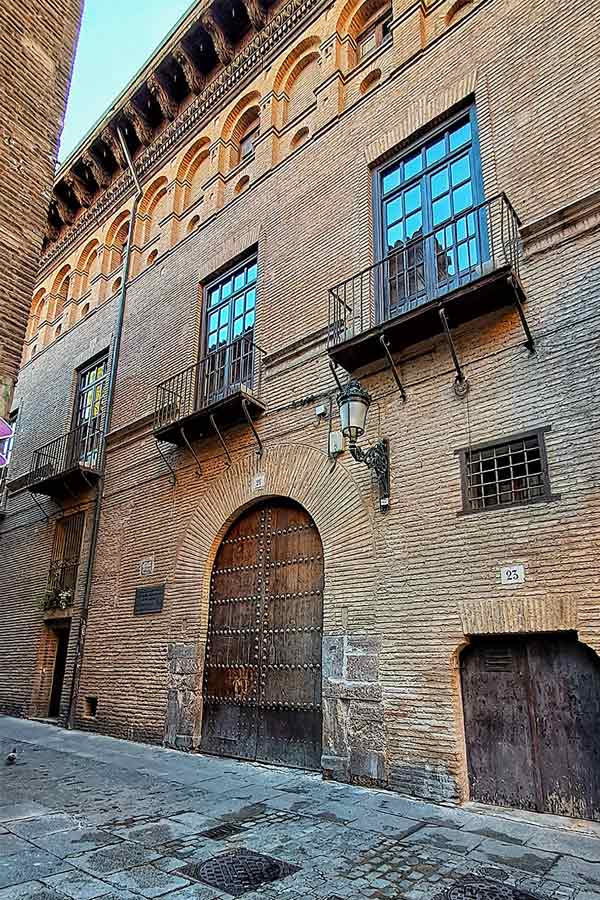
After lunch, visit the Goya Museum to see works by the famous painter.
In the evening, head to the popular El Tubo District. This area is packed with tapas bars and restaurants, perfect for a delicious meal and experiencing local nightlife.
We ate at Restaurante Montal. When you enter, it looks more like a deli counter selling everything from cheeses to breads, sweet treats and preserves. There is a restaurant where you can order tapas-style dishes.
There is also a wine merchant at the back of the store. Go through here and head upstairs to find their a la carte restaurant (booking essential to eat here) set inside a gorgeous atrium building of an old palace.
Things to See in Zaragoza
- Basilica of Our Lady of the Pillar
- La Seo Cathedral
- Plaza del Pilar
- Puente de Piedra
- Aljafería Palace
- El Tubo District
- Caesaraugusta Forum Museum
- Roman Ruins
- Goya Museum
- Zaragoza Central Market
Where to Stay in Zaragoza
The most efficient way to visit Zaragoza is to stay somewhere central.
I stayed in the 4-star Hotel Alfonso, right in Zaragoza’s old town and shopping area, close to the Pilar Basilica. It has modern rooms, a swimming pool, and a restaurant with a buffet breakfast. It’s a comfortable place to base yourself for exploring the historical centre.
📖 Further Reading: Is Zaragoza Worth Visiting?
Day 2: Murillo de Gállego and Loarre´s Castle
If you’re doing this as a self-driving tour, then arrange your car rental for today.
Start the day early and head north towards the pretty town of Murillo de Gallego. It takes around 1 hr 15 minutes to make the 110 km scenic drive.
Driving in Spain outside of the major cities is straightforward. Roads are well maintained, and a lot are traffic-free, especially in rural areas. That said, before you set off, check out these useful tips for your solo road trip.
Rafting in the Gállego River
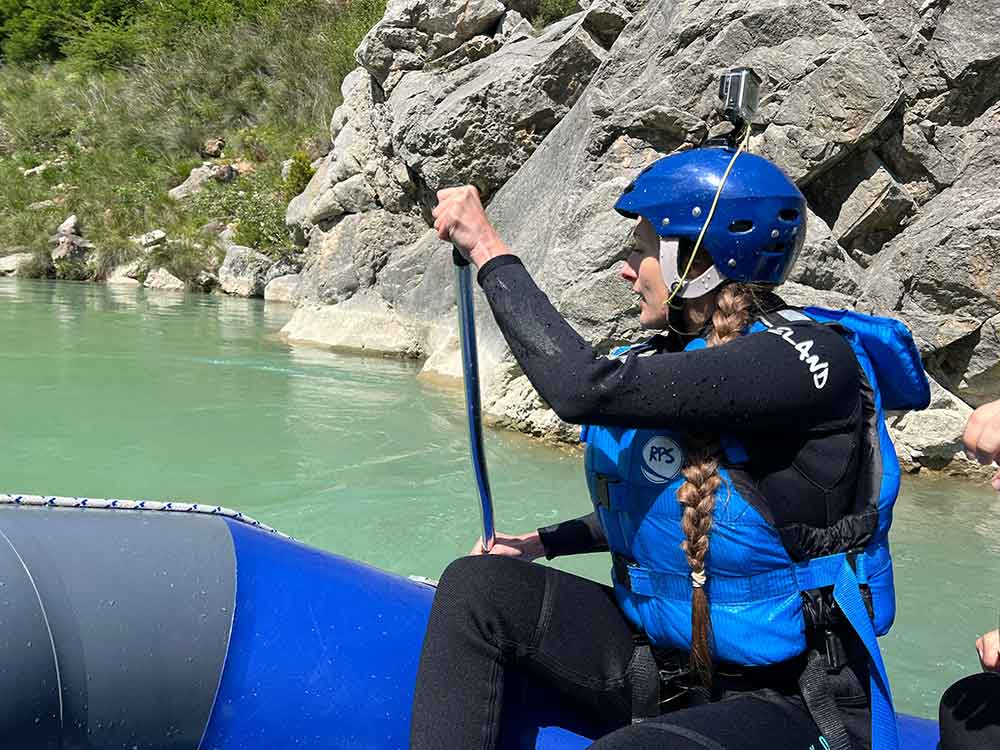
The hilly village sits right on the bank of the Gállego River – a gorgeously coloured turquoise river. Because of this river, the area is a hub for whitewater rafting.
The rapids here are classed as medium to low difficulty so are perfect if you’ve never done whitewater rafting before.
We went with UR Pirineos, which has specialised in active tourism in the area for the past 25 years. The water is chilly – my biggest worry was getting cold! – I was glad we were each given a full-body wetsuit!
After getting kitted up in our buoyancy jackets and helmets, we set off to the start point where we were given a safety briefing and practised the different commands before setting off downstream.

We passed a range of rapids as well as calmer parts of the river where you’ll get the chance to take in the beautiful scenery – you’ll also have the opportunity to get out of the raft and float, aka body raft, down the river at some points.
The rafting session lasted about 2 hours – which is plenty of time to work up an appetite for lunch!
👉 Insider Tip: The facilities at UR Pirineos are excellent with hot showers and secure storage. Don’t forget to bring a towel and a plastic bag to put your wet stuff in.
For lunch, we went to Bar Restaurante Casa Rufino. It’s a short drive from UR Pirineo. From the outside, this restaurant looks unassuming – don’t be fooled! The food here was delicious, portions were huge and they came served with local wine.
Loarre’s Castle
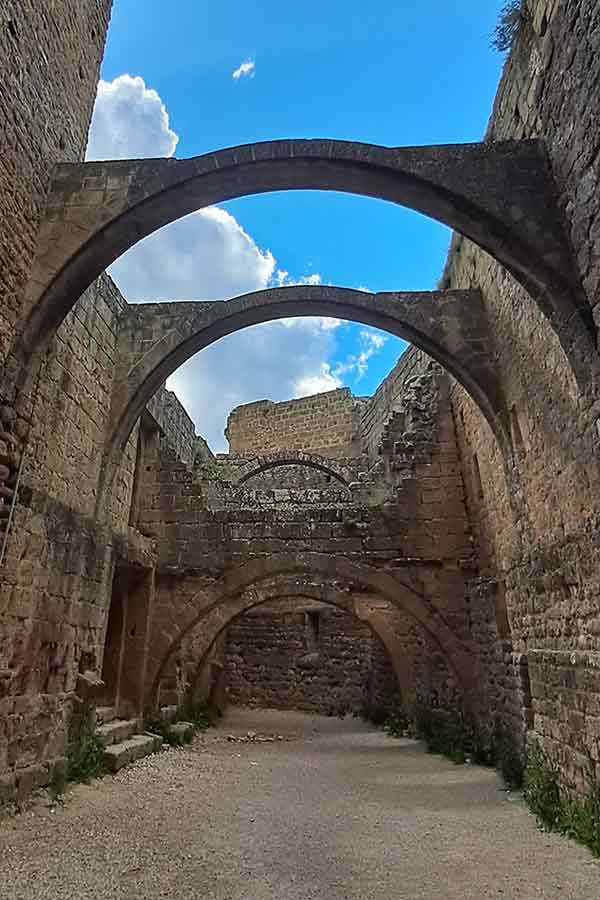
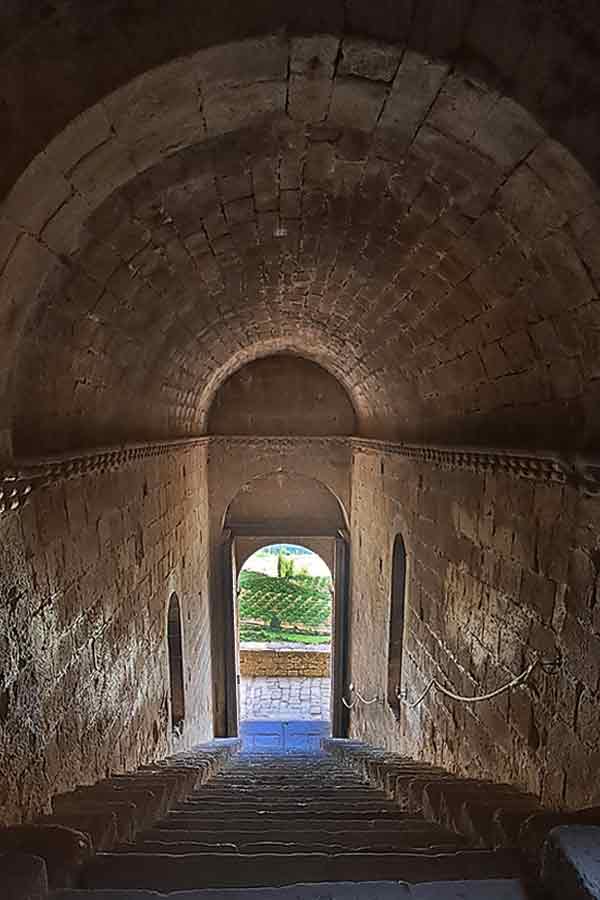
With energy levels restocked the next stop of the day is at Loarre’s Castle. This scenic 13 km drive takes you up a winding road to an impressive 11th-century fortress perched on a rock.
You can explore the castle by yourself, however, if you time your visit right, then take advantage of one of the guided tours where you can learn more about the castle and its history.

If you do choose to explore by yourself, make sure you watch the short movie in the information centre to give you a little more insight – there’s no signage or information boards in the castle. There was an option of a scannable QR code with an audioguide – although I couldn’t get this to work.
One thing you’ve probably realised if you’ve read my blog for a while is that I’m slightly obsessed with ancient ruins so as you can imagine, I was in my element exploring this crumbling Romanesque castle.
San Juan de la Peña Monastery
Leaving Loarre’s Castle, your next stop is San Juan de la Peña Monastery. The monastery is about 65 km from the castle, although the winding roads make for a picturesque 1hr 20 journey.
You might recognise this monastery from Ridley Scott’s movie “Kingdom of Heaven,” along with the nearby Santa Cruz de la Serós.
The building features a beautiful mix of Romanesque and Gothic styles with detailed carvings and frescoes built into the rock.

Jaca
From the San Juan de la Peña Monastery your final stop of the day is to the fortress city of Jaca. The 26km drive will take you around 30 minutes.
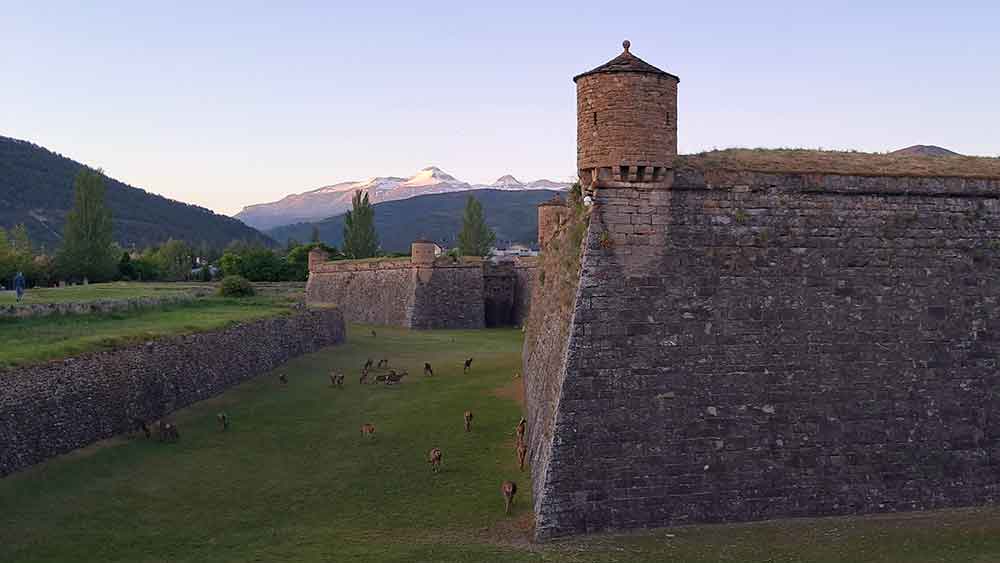
Jaca is home to a 16th-century fortress known as the Ciudadela de Jaca. This star-shaped fortress meant that the city could easily be defended from invasion from any direction. Today it’s home to the Museum of Military Miniatures as well as a colony of deer which live in the grassy moat.
If you have more time in the city, then it’s also worth visiting the 11th-century San Pedro Cathedral and the Diocesan Museum as well as the town’s 15th-century clock tower.
Jaca is also a stop along the Camino de Santiago pilgrimage route. Keep your eyes peeled and you might be able to spot the iconic shell symbols dotted around the city.
Where to Stay
We stayed at the 4-star Eurostars Hotel Reina Felicia in Jaca. The decor was modern and because the hotel is a short walk from the town centre, it’s in a peaceful location.
Rooms were well equipped, and most had great landscape views. There’s on-site parking as well as an on-site restaurant serving up a decent mix of local and international foods. I had the local sauteed mushroom for starters, Chinese noodles for my main and a cheesecake to finish.
Day 3: Bubal, Buesa and Ordesa y Monte Perdido National Park
The first stop on today’s itinerary is at Hoz de Jaca, which is located northwest of Jaca. The drive will take you around half an hour and pass through gorgeous Alpine landscapes – I remember thinking it looked like Switzerland or Austria, not Spain!
You could almost imagine Maria von Trapp twirling her way about around this incredibly photogenic town.

Extreme Swing and Zip Line, Bubal/Hoz de Jaca
What Hoz de Jaca lacks in size – the town has a tiny population of just 74 inhabitants! – it makes up for in sheer awesomeness.
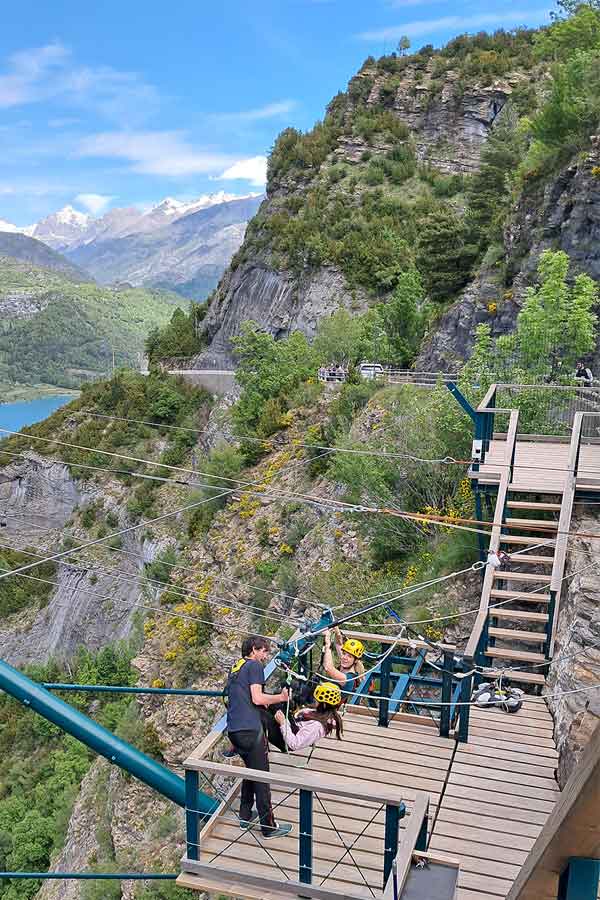
Hoz de Jaca is home to the fastest zip line in the world – Tirolina Valle de Tena. If that wasn’t enough to get your adrenalin pumping then you’ll also find the Extreme Swing, which drops you 150 metres above the Bubal Reservoir.
If you’ve got a fear of heights, then you might want to watch other riders from the safety of the various viewing platforms which overlook the swing and zip lines. However, sometimes watching (and listening to the screams) can be more nerve-wracking than the actual jump.
For those after that adrenalin rush, I 100% recommend doing both of these attractions. I loved it and would totally do them again in an instant!
The payment booth, and also the counter where you’ll get given your harness and helmet, is a short walk from the start of the zipline and swing. Although there are no height or age restrictions, you will get weighed before you ride and must be between 40-120 kg to take part.

Buesa
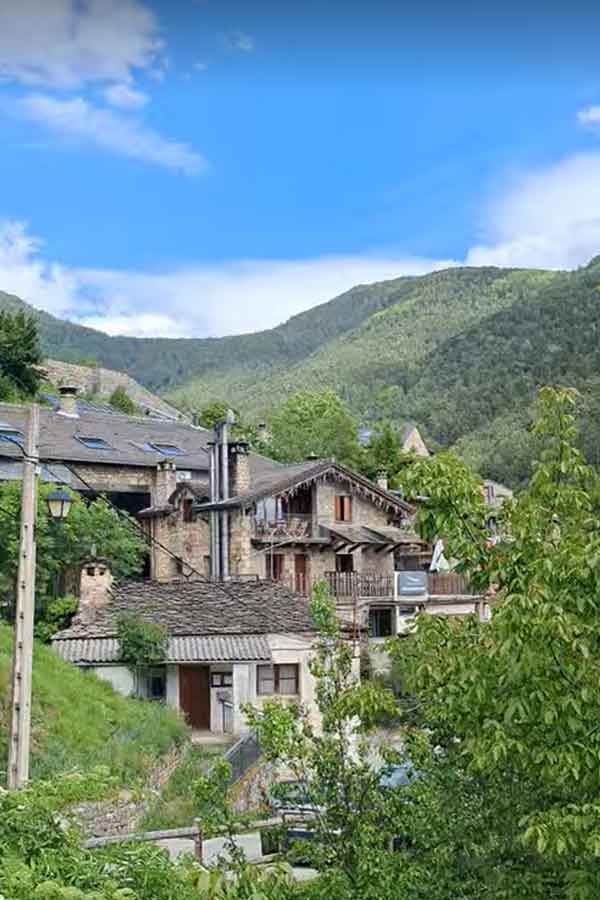
From Hoz de Jaca take the 40 km drive to Buesa. The drive is worth it alone as the road twists through the scenic landscape.
You’d never guess that this gorgeously humble little village is home to one of the most innovative restaurants in the area. Balcon del Pirineo Restaurant serves up delicious food with stunning views of the Pyrenees.
This family business has preserved the ancestral process of grilling on oak wood and specializes in Pirinera beef, certified meat. This place is a meat lover’s dream.
But they’ve embraced a modern way of dining and have two cat-faced electronic waiters who bring food out of the kitchen and directly to the tables – I’ve only seen these in Japanese restaurants before!

I’m a vegetarian – so, of course, I wasn’t overly excited about eating here at first – especially as most places that specialize in meat usually fob veggies off with some lame dish they’ve thrown together with any vegetable scraps they can find.
Whatever magic the chef worked in the kitchen needs to be bottled and sold. I ate some of the tastiest food I had on the whole trip to Northern Spain – from grilled peppers, tomato salads with different cheeses and nuts, mushrooms in garlic, fresh bread with olive oil, and baked camembert with egg, and mixed grilled vegetables. All washed down with local wine!
I couldn’t help but gorge myself silly on all this – there was even a hint of food envy at the melted camembert from some of the fellow meat eaters in the group!
If you’re in the area – 100% make sure you eat here! Book in advance, it gets busy, and wear trousers with an elasticated waist!
Ordesa y Monte Perdido National Park
I’m not sure who decided that going on a bumpy 4×4 ride directly after so much food was a good idea, but here we are.
Ordesa National y Monte Perdido Park is a UNESCO World Heritage site and unarguably one of the most beautiful places to visit in Aragón, Spain.
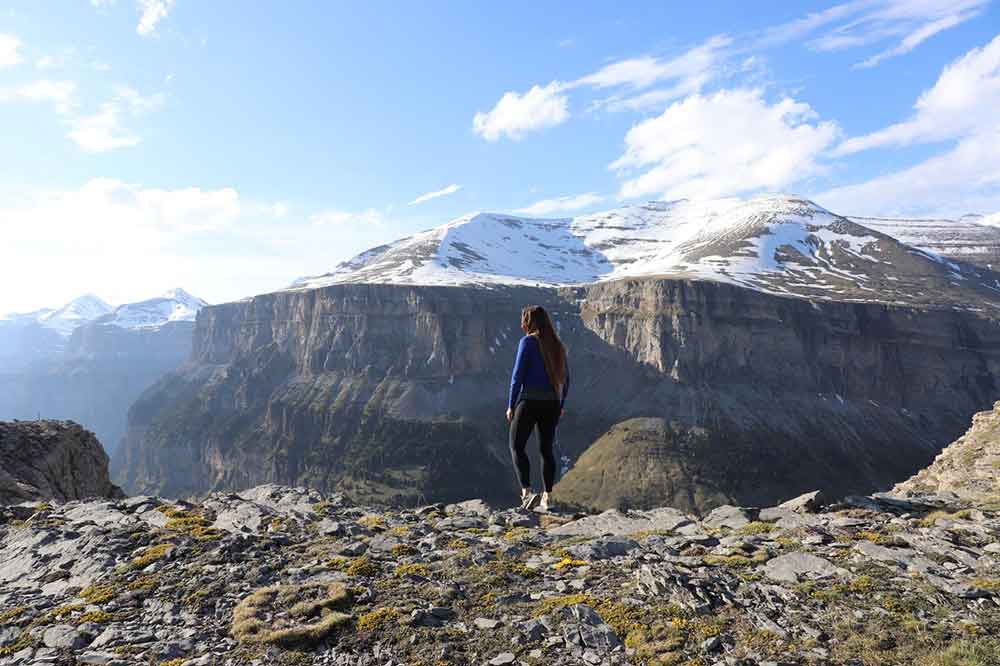
You cannot drive into Ordesa y Monte Perdido National Park, instead, you have to book with an official 4X4 guide who is licenced to drive here. We went with Ordesa Taxi 4×4.
Our 4-hour excursion allowed us to explore some of the park’s most dramatic landscapes and stunning viewpoints. At each stop, and along the way, our guide told us about the history and geology of the park.
We also did a fair bit of marmot spotting – mostly just seeing a fuzzy brown tail scuttle away in the distance.
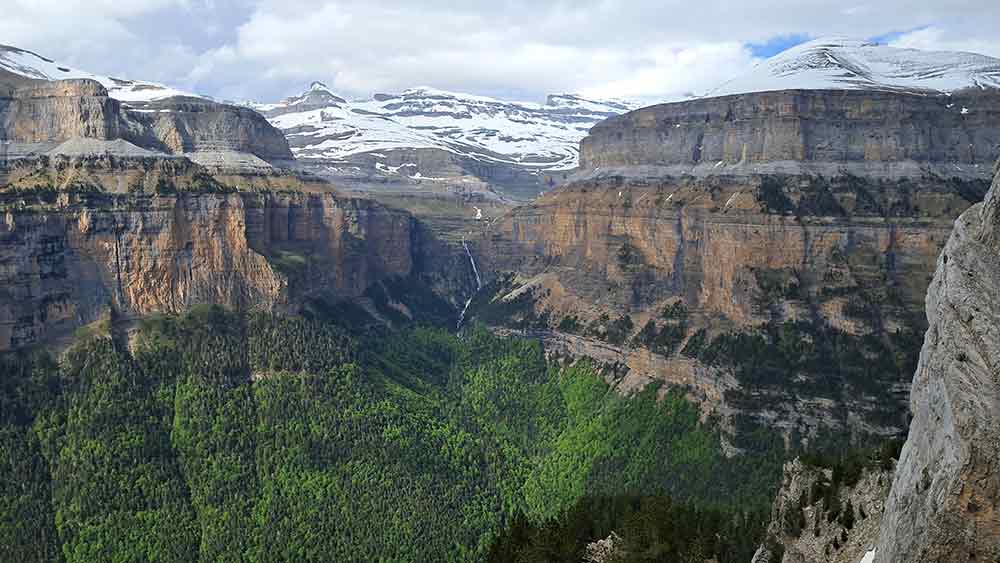
👉 Good to know: You’ll stop off at various viewpoints along the way. Make sure you take a jacket, there was a constant breeze, as well as slightly cooler air. Also, because of the altitude at the final stop, you might feel a little breathless while you’re walking to the lookout point.
After this awesome day, make the 50-minute drive to Boltaña, the final stop for today.
Where to Stay
This is by far one of the most beautiful hotels I stayed in during my trip around the north of Spain.
This 5-star Hotel Monasterio de Boltaña sits next to the Ara River in a 17th-century Monastery. It has panoramic views looking out over the Ordesa y Monte Perdido National Park.
Facilities include an onsite à la carte restaurant, sun terrace, outdoor pool and 16th-century chapel. There’s also a fitness centre and spa facilities.
Day 4: Sierra de Guara, Somontano DO Winery and Alquézar
Today was an insanely early start. If anyone knows me, I’m not a morning person, unless it involves catching a flight, or doing something particularly awesome – the opportunity to go canyoning in the Sierra de Guara was enough to entice me out of bed at such an early hour.
Canyoning in the Sierra de Guara
We’d arranged for an early breakfast (make sure you ask for this the day before) and had a 50-minute drive from Boltaña to Lecina.
Today we would be exploring the Barranco de Basender area in a dry slot canyon. We arrived in Lecina – which is where we met our canyoning guide from Vertientes Aventura who would be taking us through our paces.
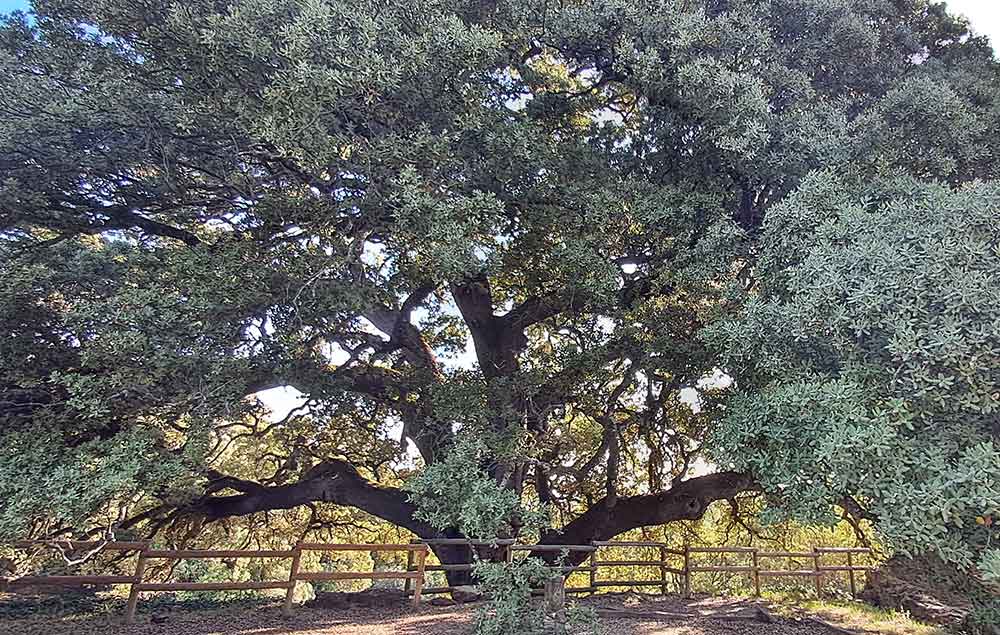
Before we got kitted up and set off, we stopped off at what has been titled in 2020 as “the best tree in Spain”, and then in 2021 as “the best tree in Europe”. The gigantic Lecina’s Holm Oak tree is said to be over 1000 years old!
The Basender is a small tributary that flows into the River Vero.
We could see the river in the canyon below as we walked to our start point. Because it was springtime, there were plenty of flowers which our guide pointed out, he also stopped to tell us about the terrain, types of fossils and how the canyon was formed.
The part of the canyon we were navigating featured various descents through narrow stretches of rock which the river had once carved out. The routes down were a mix of abseiling and climbing.
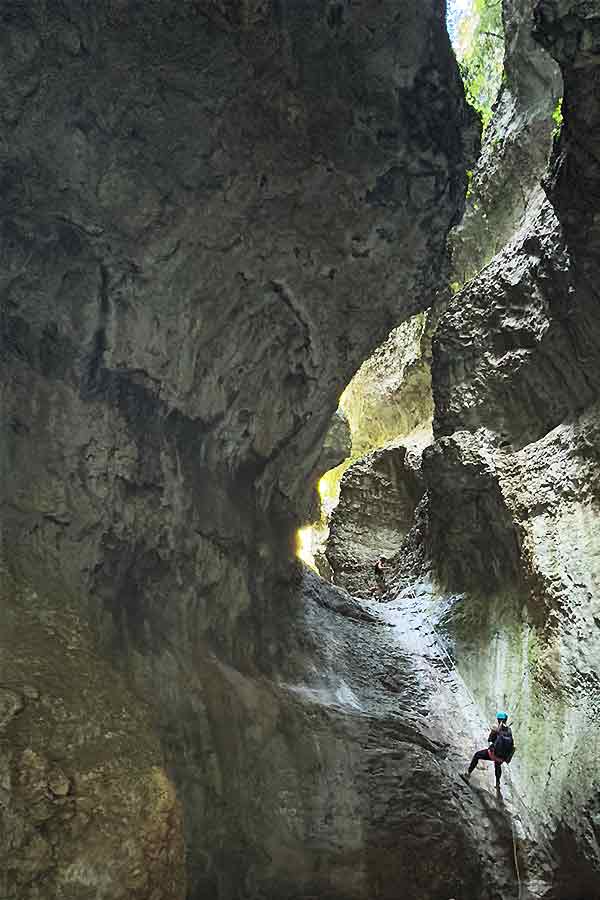
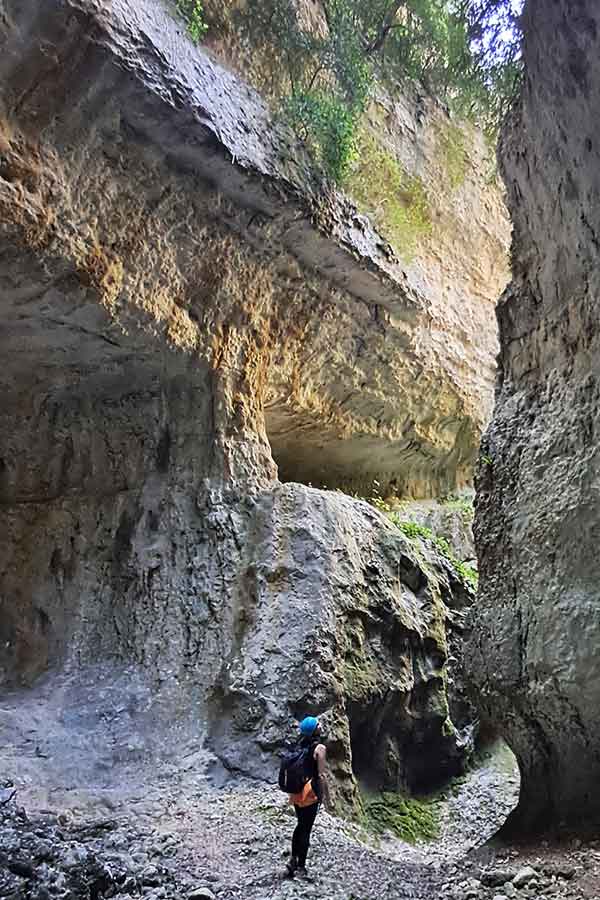
Canyoning was another one of my highlights of this trip – it was a perfect blend of adrenalin and nature. Some parts of the route opened up into giant chasms with light shining down, and trees poking in from above – it felt totally tranquil down here.
After our final descent, we had a couple of river crossings – shallow rivers, but too deep to step across on stones.
The easiest way was to take our shoes off and wade through the very cold water – the clutz that I am, while taking my shoe off, I managed to throw it in the river defeating the purpose of keeping our shoes dry. There was a brief panic as I watched my shoe float down the river – thankfully I managed to catch it.
With one soggy foot – we finished our canyoning experience and sat on a sunny rock eating our packed lunch.
Lunch was over, and all that was left was the hike back up to the top of the canyon where we would meet the rest of the group who had opted for eBiking.
Somontano DO Winery, Barbastro
The north of Spain not only has outstanding wine but also some phenomenal architecture to house the wineries in – and Somontano DO Winery is one of these.
The drive from Lecina to Barbastro took around an hour.
The iconic glass and steel building was designed by the architect Jesús Marino Pascual. His inspiration for the shape of the building was the backdrop of the Pyrenees.

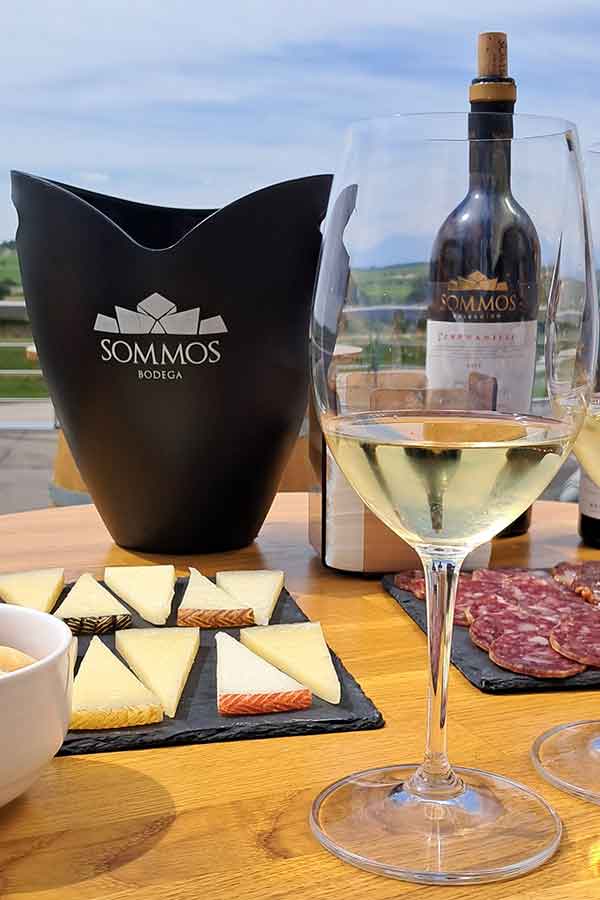
We started with a guided visit of the winery – before entering you’ll need to wear a very fetching hair covering as well as a white overall. Our tour took us behind the scenes of the happenings at the Sommos Bodegea where we got to see inside this beautiful building.
The wine process here works on gravity, so our tour took us down into the depths of the building.
Of course, at the end of the tour, we got to try a selection of wines. Although I’m a red wine girl at heart, I could certainly see myself sipping away on several glasses of their signature whites.

Alquézar
The final stop of our trip to Aragón was the postcard-perfect hilltop town of Alquézar.
👉 Insider Tip: Alquézar is only a 15-minute drive from Somontano DO Winery, so if you are doing this itinerary as a self-drive tour, then I recommend going to Alquézar first, dropping off the car, and then taking a taxi to the winery to enjoy the experience fully.
Alquézar is a gorgeous cobblestoned town. Aside from wandering around the pretty streets and taking in the view, one of the top things to do here is the Walkway of Alquézar.
This 2-kilometre circular route takes you down into the valley below the town. It follows a trail along the river, passing little beaches, small waterfalls and cliffside bridges along the way all under the shade of the trees.
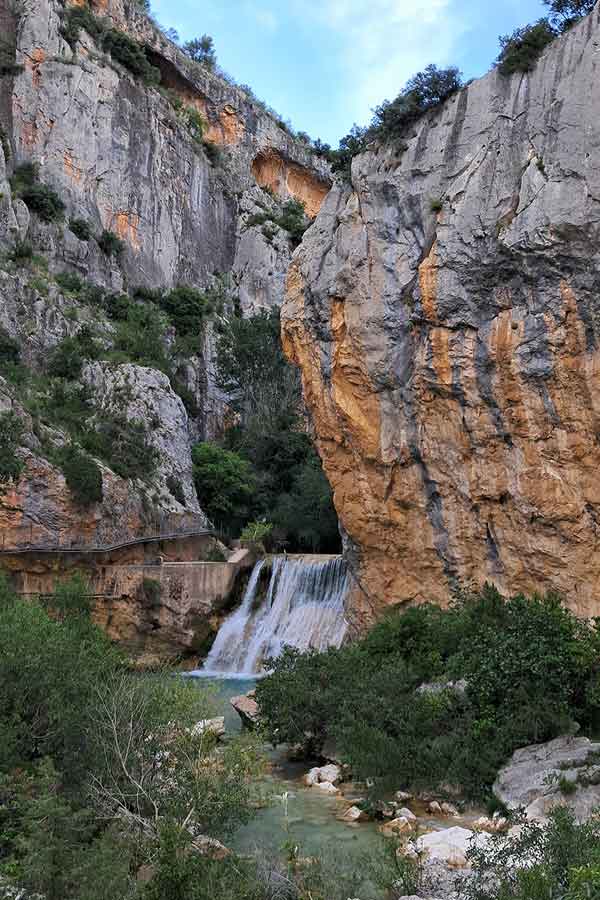

It’s a great way to stretch your legs after all that driving.
One thing to note – it’s quite a steep walk down, although this is mostly with wooden stairs, the route up is a steep uphill climb.
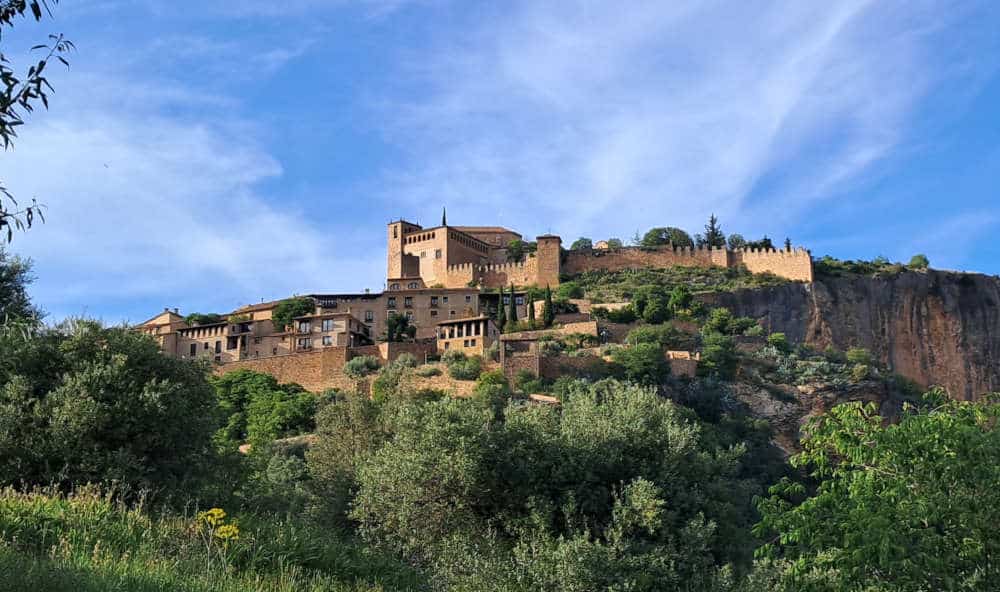
We finished the day with dinner on the terrace at Restaurante Casa Jabonero. They serve up tasty local dishes – I recommend their goat cheese salad!
To finish, we had a shot of a local spirit called pacharán (in Spanish) or patxaran (in Basque). It’s a sloe berry flavoured liqueur with an Anis base usually served as a digestif. Depending on the region, they might even add coffee or cinnamon to the mix.
If you’ve ever had sloe-gin, it tastes similar to that, although a little more herbal, and finishes off the night perfectly.
Where to Stay
I stayed at the 3-star Hotel Villa de Alquézar.
The hotel is located in the heart of the village and is a restored historic building which still oozes plenty of its original charm.
The rooms are huge and offer gorgeous views from the balconies. I had a balcony overlooking the pool, with the hills in the background.
Day 5: Alquézar and Transfer back to Zaragoza
On the final day of our trip around the region of Aragón, we had a guided tour of the town.
We spent the morning learning a little more about this charming medieval settlement with our guide showing old black-and-white photographs of what Alquézar used to look like – aside from what people are wearing, it hasn’t changed that much!
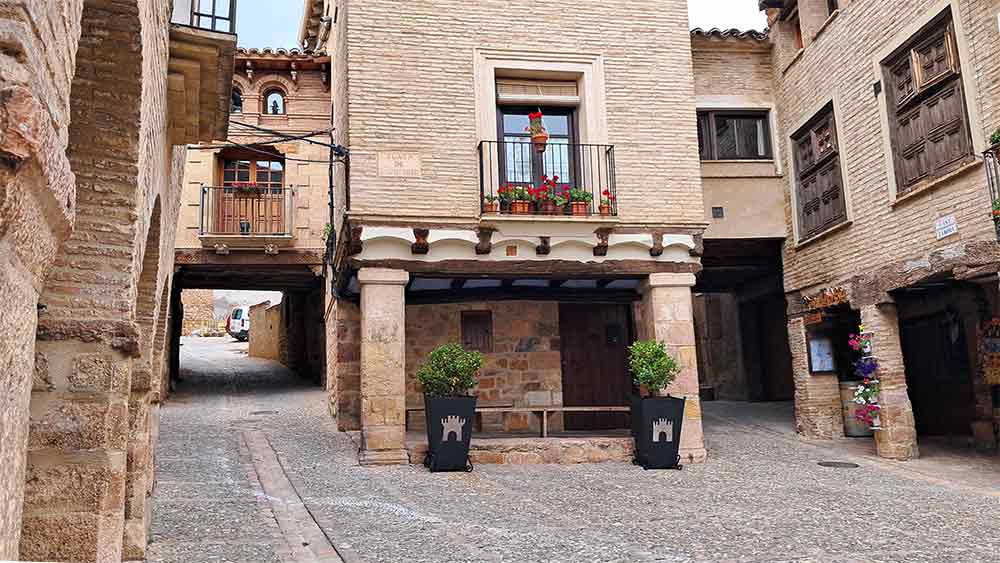
Whilst in Alquézar, don’t miss the Casa Fabián Museum.
This old family home has been turned into a museum where you can see how people in the town used to live and work. It’s filled with different artefacts of a bygone era, many handed down through the family or donated by locals to the museum for preservation.
You’ll notice outside and above the door is a boar hoof is nailed. This was seen as a way to deter witches or a warning to anyone with ill intent that a hunter lived there.
One thing you’ll see in this small museum is how self-sufficient the people of Alquézar were. Everything was produced locally and mostly by hand, or with the use of basic machinery.
Across the eight different rooms, you’ll learn about various aspects of life. Opening times are limited so you need to book in advance if you want to visit – entry is included with a guided walking tour, book this at the town’s Tourist Information Centre.
After the tour, it’s time to head back to Zaragoza.
From there, you can continue your journey to other cities in Aragón or travel to different places in Spain.
And this wraps up an amazing trip through Aragón.
Although this was my first trip to the region, I know it certainly won’t be the last.
Aragón Road Trip Itinerary FAQs
What Is the Best Time to Take a Road Trip in Aragón?
The best time to visit Aragón for a road trip is during the spring (April to June) and autumn (September to November). These seasons have mild weather, fewer tourists, and beautiful landscapes with either spring flowers or autumn foliage.
What Should I Pack for My Trip to Aragón?
Aragón is an outdoor lover’s dream, so pack comfortable clothing for hiking and canyoning, and sturdy walking shoes. If you’re planning on going white water rafting – which I 100% recommend – then a bathing suit or bikini and shoes you don’t mind getting wet. Also take a hat, sunscreen, and a reusable water bottle. It’s also worth having a warm jacket and windbreak layer as the weather can be changeable.
Are the Roads in Aragón Suitable for Driving?
Yes, the roads in Aragón are generally in good condition and well-maintained. However, some rural areas may have narrower or winding roads. You can self-drive this itinerary, or if you don’t want the hassle of hiring a car, then use a company like Spain Natural Travel who specialise in small group tours around the Aragón region.
Can I Rent a Car in Aragón?
Yes, you can rent a car in Zaragoza, where this itinerary starts. For the best prices use a comparison website and book in advance.
What Are Some Must-See Historical Sites in Aragón?
In this itinerary, I’ve included some of the must-see historical sites in the region. These include the Basilica del Pilar in Zaragoza, Loarre Castle, San Juan de la Peña Monastery, and the medieval village of Alquézar.
What Adventurous Activities Can I Do in Aragón?
During my trip I went whitewater rafting in the Gallego River, extreme swinging and zip lining in Hoz de Jaca, and canyoning in Sierra de Guara. I also highly recommend taking a 4×4 tour of Ordesa y Monte Perdido National Park.
Final Thoughts on This Aragón, Spain Road Trip Itinerary
If you weren’t sure if Aragón is worth visiting, I hope I’ve shed some light on this very much underrated part of Spain. Whether you’re interested in adventure sports, history, and outstanding scenery, Aragón ticks all those boxes and more.
This itinerary is just the start; if you have time, then I recommend extending your trip to dive deeper into this amazing region. I know I’ll certainly be back to explore more.
Ready to discover more about Aragón or the north of Spain? Check out more articles to start planning your trip!
Basque Country and North Spain
- An Epic 5 Days Road Trip in Aragón Itinerary
- 15 Best Things to Do in Aragon, Spain
- Is Zaragoza Worth Visiting? Everything You Need To Know
- The Best Things to See in Zaragoza, Spain
- Is San Sebastian Worth Visiting? The Pros and Cons
- San Sebastian Food Tour Review With Devour Tours
- Is Bilbao Worth Visiting? 12 Reasons To Visit Bilbao