
28 Best Things to See in Zaragoza, Spain
Zaragoza might just be Spain’s most underrated city. And if you’re on the hunt for the best things to see in Zaragoza, this is where to start.
I spent over a month travelling around the north of the country, and I was pleasantly surprised by Zaragoza.
Most people skip right past it in favour of Barcelona or Madrid (understandable, sure), but that’s exactly what makes Zaragoza worth a stop. Fewer tourists. Fewer queues. A much more laid-back, authentic experience.
If you’re planning a trip through northern Spain and want something a little different, this guide is for you. Especially if you love architecture, palaces, old towns and stuffing your face with ridiculously good food.
In this top things to do in Zaragoza guide, I’ll take you through the stops that actually made me want to stay longer. Whether you’re squeezing in a quick detour or building out your full Zaragoza itinerary, this list will point you toward the stuff that’s actually worth your time.
Meet Me In Departures contains affiliate links and is a member of the Amazon Services LLC Associates Program. If you make a purchase using one of these links, we may receive compensation at no extra cost to you. See our Disclosure Policy for more information.
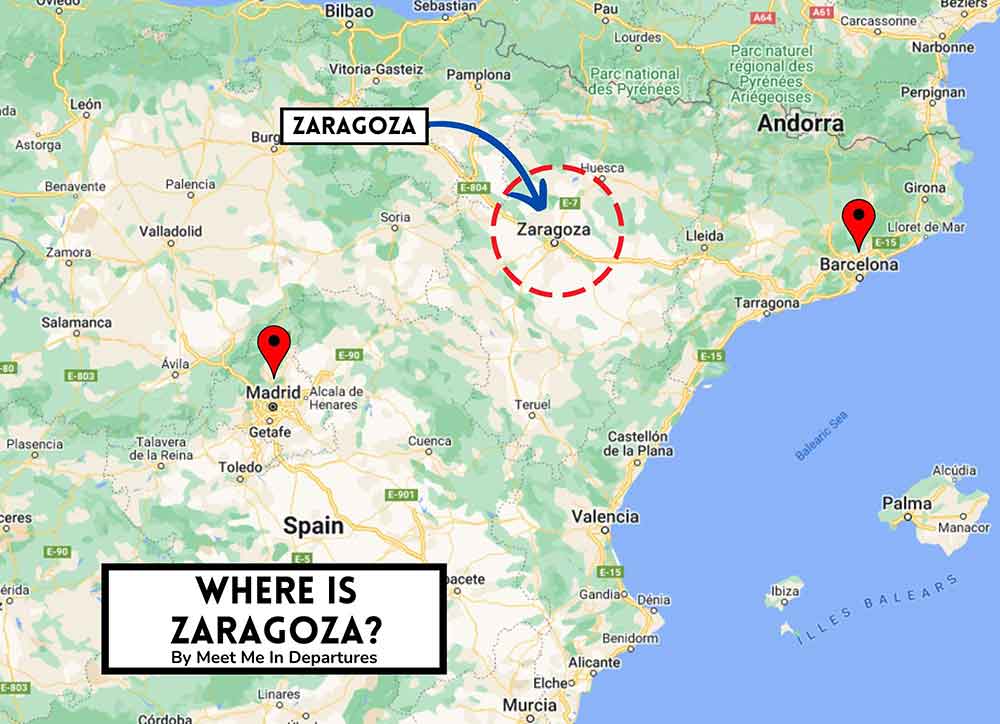
Where is Zaragoza?
Aragon is a region in northern Spain, and its capital is Zaragoza.
Zaragoza sits almost smack in the middle between Barcelona and Madrid, which makes it a perfect stopover if you’re travelling between the two big cities.
The River Ebro runs through the city and gives you easy access to riverside walks, viewpoints and a break from the usual concrete sprawl.
It’s also a brilliant choice if you’re travelling solo and looking for a more authentic Spanish experience.
Zaragoza has that “real life still happens here” feeling. It’s not overly polished for tourists. That means you get to enjoy the local rhythm of the place: cafes full of locals, tapas bars without English menus, and sights that feel like discoveries rather than bucket-list checkboxes.
I’ve partnered with Turismo de Aragón and Spain Nature Travel to bring you this travel guide. This article is based on the destinations and experiences I took part in. All views and opinions are my own.
Is Zaragoza Worth Visiting?
Absolutely. Zaragoza is 100% worth a visit.
I was genuinely surprised by just how many great things there are to do in Zaragoza. I could have easily spent longer there than I did. (Although… let’s be honest, that just gives me a solid excuse to go back.)

Good To Know
If you’re still on the fence, I’ve put together a full post on my top reasons to visit Zaragoza. It’s especially handy if you’re planning your first trip or trying to figure out whether it’s worth squeezing in between the big-name cities.
Can I Visit Zaragoza on a Day Trip?
Yes. Although you’d be pushed to see everything I mention in this guide. That said, with just a day in Zaragoza, you’ll still be able to tick off a good handful of highlights and get a feel for the place.
Ideally, I’d say plan for at least 2 days in Zaragoza if you want to explore at a more relaxed pace and not feel rushed.
Travel to Zaragoza is easy, especially if you’re coming from Barcelona or Madrid. It’s well connected by high-speed trains, so even a day trip is doable.
How to get to Zaragoza
- From Madrid to Zaragoza: The high-speed train leaves from Atocha Station and arrives at Zaragoza Delicias. Journey time is around 1 hour and 20 minutes.
- From Barcelona to Zaragoza: Trains depart from Barcelona-Sants and arrive at Zaragoza Delicias. The journey takes about 1 hour and 30 minutes.
Planning Tip
I always use Omio for booking my trains in Spain; it’s the most user-friendly app I’ve found. You can compare every provider in one place and even check bus routes if the train times don’t quite work. Super handy for finding the cheapest or most convenient option without hopping between a dozen websites.
Best Things to do in Zaragoza, Spain
1. Basilica de Nuestra Señora del Pilar
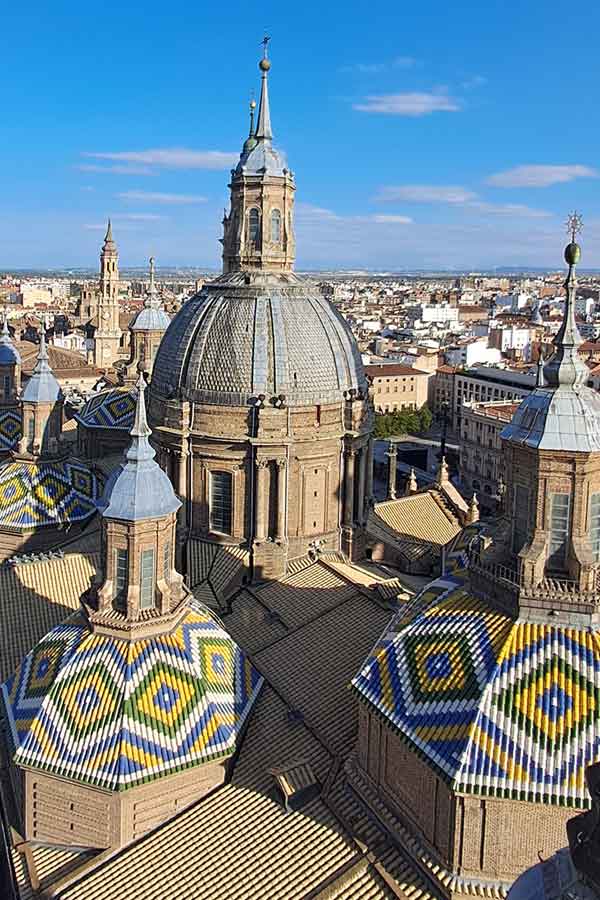
This massive Baroque church sits right on Plaza del Pilar, and it’s hard to miss. Not just because of its size, but because it’s genuinely beautiful. The colourful domes and towers give it a bold, striking look. It’s completely different to most churches you’ll come across elsewhere in Spain.
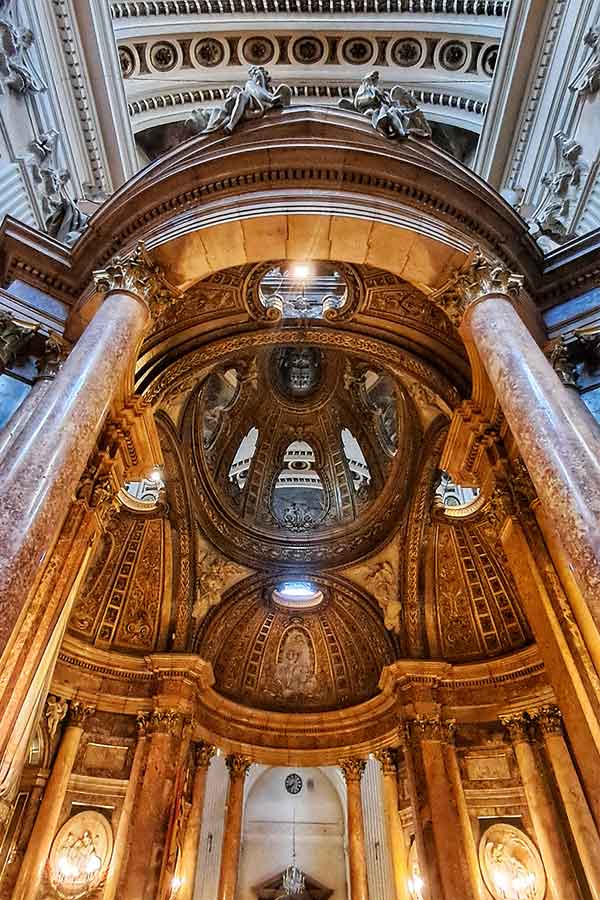
The inside’s worth a look before you head up to the roof. There’s a small statue of the Virgin Mary perched on a pillar that people have been queuing up to see for centuries, whether it’s for religious reasons or just pure curiosity.
You’ll also find frescoes by Francisco de Goya, which is fitting considering he was born just outside Zaragoza. And prepare yourself for a whole lot of gold. Subtle isn’t really the vibe here.
Once you’ve had a wander through the interior, head up to the rooftop for the best part. From above, you get a proper look at the colourful domes and intricate tilework, plus some of the best views over Zaragoza, historic buildings and the Ebro River.
2. Palacio de la Aljafería
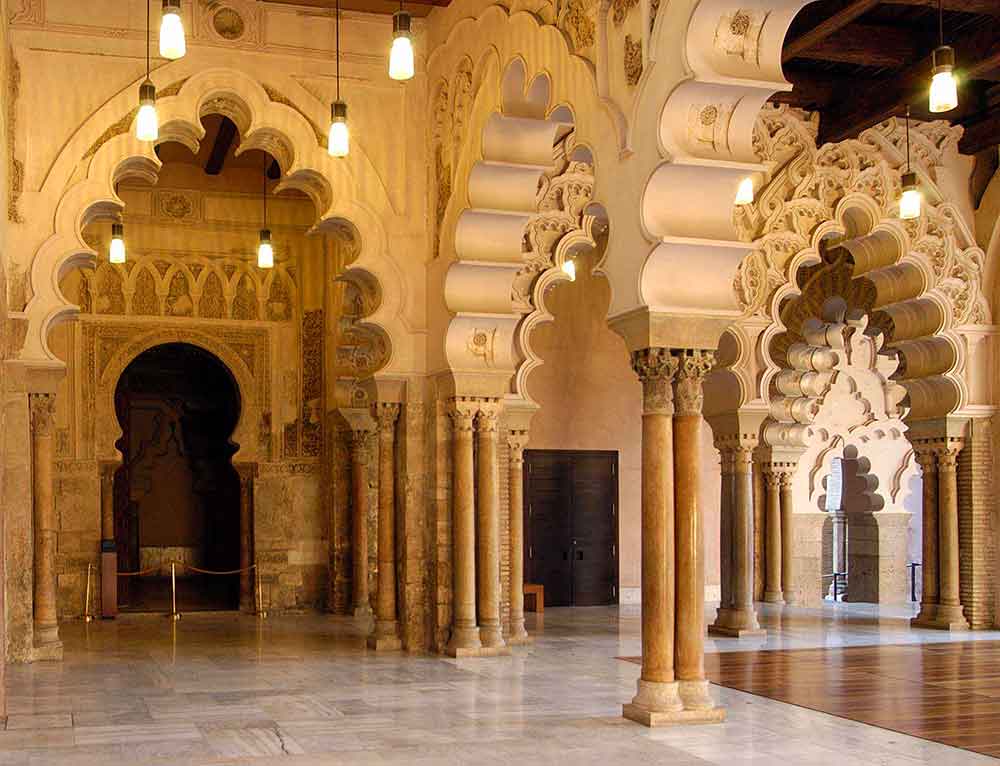
The Palacio de la Aljafería is one of Zaragoza’s most iconic buildings, and definitely worth carving out time for.
Built in the 11th century, it blends Islamic and Christian design, so expect intricate arches, quiet courtyards and detailed ceilings that make you stop and stare. It was originally the home of Zaragoza’s Arabic ruler, and now it houses the Cortes of Aragon (aka the regional parliament).
Make sure you check out the Golden Hall, the small mosque and chapel, and the Patio of Santa Isabel. Even if you’re not usually into historical buildings, it’s hard not to be impressed.
If you like a bit of background while you explore, join one of the guided tours. It gives the place more context and makes it feel a lot less like just walking through another old building.
Future Travel Planning
If you’re a fan of this style of architecture and want to see one of the best examples of Mudejar design in Spain, then I 100% recommend adding the Alhambra Palace in Granada to your travel bucket list.
3. Catedral del Salvador
One of the more interesting facts about Zaragoza is that it has not one, but two cathedrals sitting basically next to each other. That’s not something you see every day.
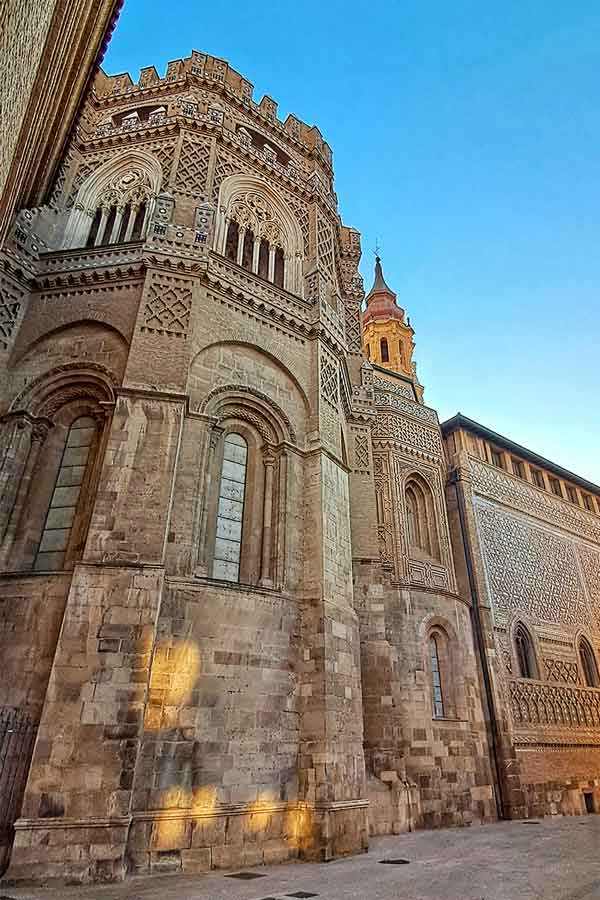
La Seo, officially called Catedral del Salvador, has one of the most layered backstories of any religious building I’ve visited.
It started out as a mosque, built to face Mecca, back when this part of Spain was under Muslim rule. When it later became a Christian cathedral, they didn’t change the orientation, which is why it still feels slightly off-kilter compared to other churches.
The building itself is a mash-up of styles: Gothic, Renaissance, Baroque and Mudéjar (which is Arabic-influenced and full of detailed brickwork and tile). It’s this mix of cultural layers that earned it UNESCO World Heritage Site status.
If you’re into architectural quirks or just like places with a bit of historical depth, La Seo’s well worth a proper look.

4. Arco del Dean
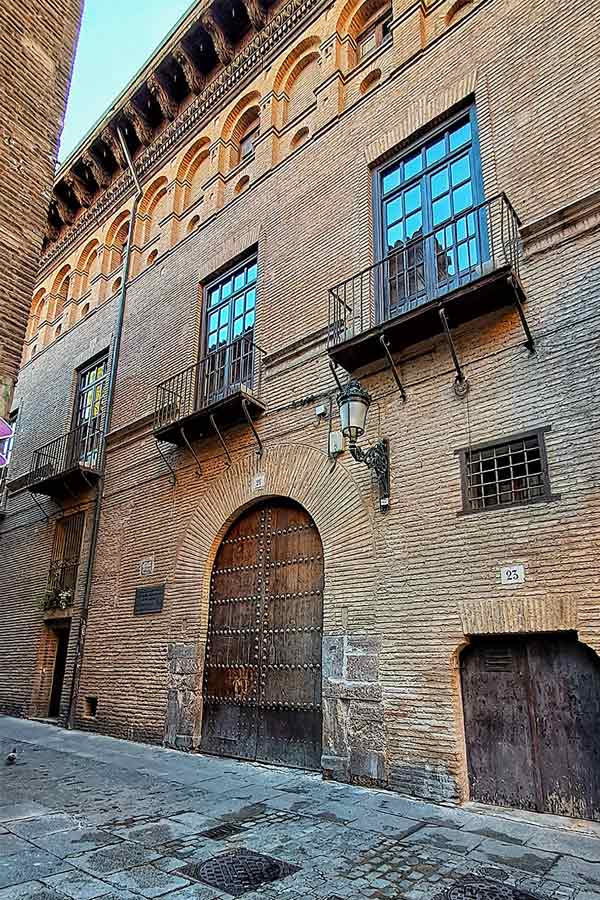
The Arch of the Dean sits just around the corner from La Seo Cathedral, and it’s easy to miss. It connects the cathedral to the former house of the Dean and dates back to the 13th century, although parts of it were rebuilt in the 16th century.
It’s a quirky little spot that feels a bit like a secret walkway. If you follow the side streets around the back of Catedral del Salvador, you will eventually stumble across it. The mix of Mudéjar and Gothic design gives it a slightly unusual look, especially compared to the grand architecture on the main square.
It does not take long to see, but it is worth a quick detour if you enjoy spotting smaller historic details that give Zaragoza its character.

5. The Old Town and Puente de Piedra
A lot of Zaragoza’s top tourist attractions sit inside the city’s historic Old Town, so this is where you’ll probably spend most of your time.
The Puente de Piedra is a great way to enter the area. It crosses the Ebro River and leads you straight into the oldest part of Zaragoza. The bridge we see today has had a few rebuilds over the centuries, but it still lines up with the route of the original Roman crossing.
The four lion sculptures were added in the 1990s, and they give it a bit of character, even if they feel slightly out of place at first glance.

Zaragoza Old Town Walking Tour
Explore Zaragoza with an English-speaking local guide on a small group tour.
If you only have a day in Zaragoza, the old town is the area to focus on. Everything is close together, easy to walk between, and full of atmosphere.
If you are short on time or just prefer someone else to handle the history side of things, a small group walking tour is a good option. They cover the main sights quickly and give you a better sense of how Zaragoza has changed over the centuries.
6. La Lonja de Zaragoza
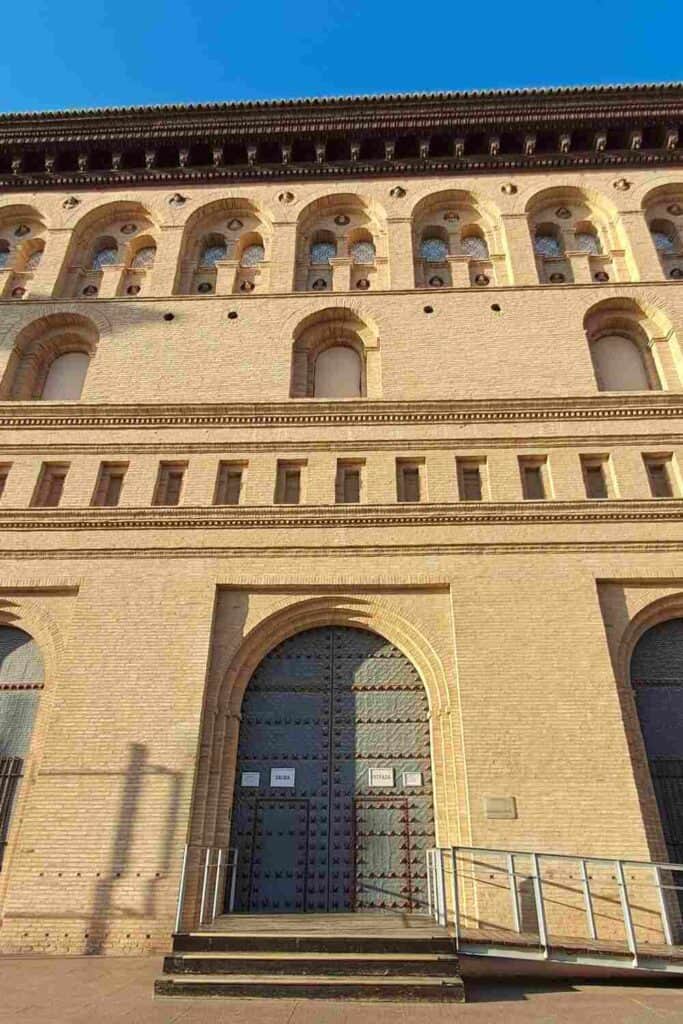
La Lonja de Zaragoza is often described as one of the best examples of Aragonese Renaissance architecture, and honestly, it is worth stopping for.
It was built in the first half of the 16th century as an indoor market for local traders, inspired by the grand Palazzos in Florence. These days, it is used as an exhibition space for the Town Hall.
What I really liked about La Lonja is how utterly covered in tiny details it is.
The facade has row after row of patterned brickwork and arches, and if you look up at the upper windows, you will spot dozens of carved faces staring back at you. Some are smiling, some look miserable, and some look like they regret being carved at all. It is a fun little detail that most people walk straight past.
If it is open when you visit, step inside. The vaulted ceilings are genuinely impressive, and the whole space feels calm and cool, especially compared to the busy square outside.
7. Mercado Central de Zaragoza
Zaragoza’s Central Market opened in 1903 and was inspired by the old Les Halles market in Paris. It is a gorgeous structure, all metal framework and glass, and it stands out immediately from the newer buildings around it.
Inside, there are more than seventy stalls selling everything from fresh fruit and vegetables to local cheeses, cured meats and flowers.
You can easily lose track of time if you enjoy browsing food markets. I ended up walking around it twice because I kept spotting things I missed the first time and couldn’t decide what I wanted to try.
There are also a couple of takeaway counters and a small snack bar, so if you get hungry while exploring, you can grab something quick without leaving the market. It is not fancy food, but it does the job, and it is great for a cheap bite.
Good To Know
If you are a foodie, it is worth joining a Zaragoza food tour during your visit. It gives you a good introduction to the regional produce and takes the guesswork out of deciding what to try.

8. El Tubo for Tapas
If you are into food, El Tubo is where Zaragoza really comes alive. It is a small network of narrow streets in the city centre, packed with tapas bars that start buzzing as soon as the evening rolls in.
You cannot visit Zaragoza without at least one night of wandering through El Tubo and hopping between bars.
Even as a vegetarian, I never felt like I was missing out. There were plenty of cheeses, tortillas, croquetas and random little bites that kept appearing on counters.
I didn’t have a clue what a lot of the dishes were, and at times, just pointed at whatever looked good and hoped for the best. Most of the time, it worked out well.
Zaragoza food and wine tour
Spend the evening trying a selection of local favourites and discover spots you might not find on your own.
Best Tapas Bars in El Tubo
- Restaurante Montal: A mix of tapas bar, deli and restaurant with a beautiful vaulted ceiling and a solid selection of snacks.
- Casa Lac: One of Zaragoza’s oldest tapas bars, serving both traditional and modern plates with a focus on fresh local ingredients.
- Taberna Doña Casta: Famous for its croquetas, including several vegetarian options. It is cosy, busy and always worth a stop.
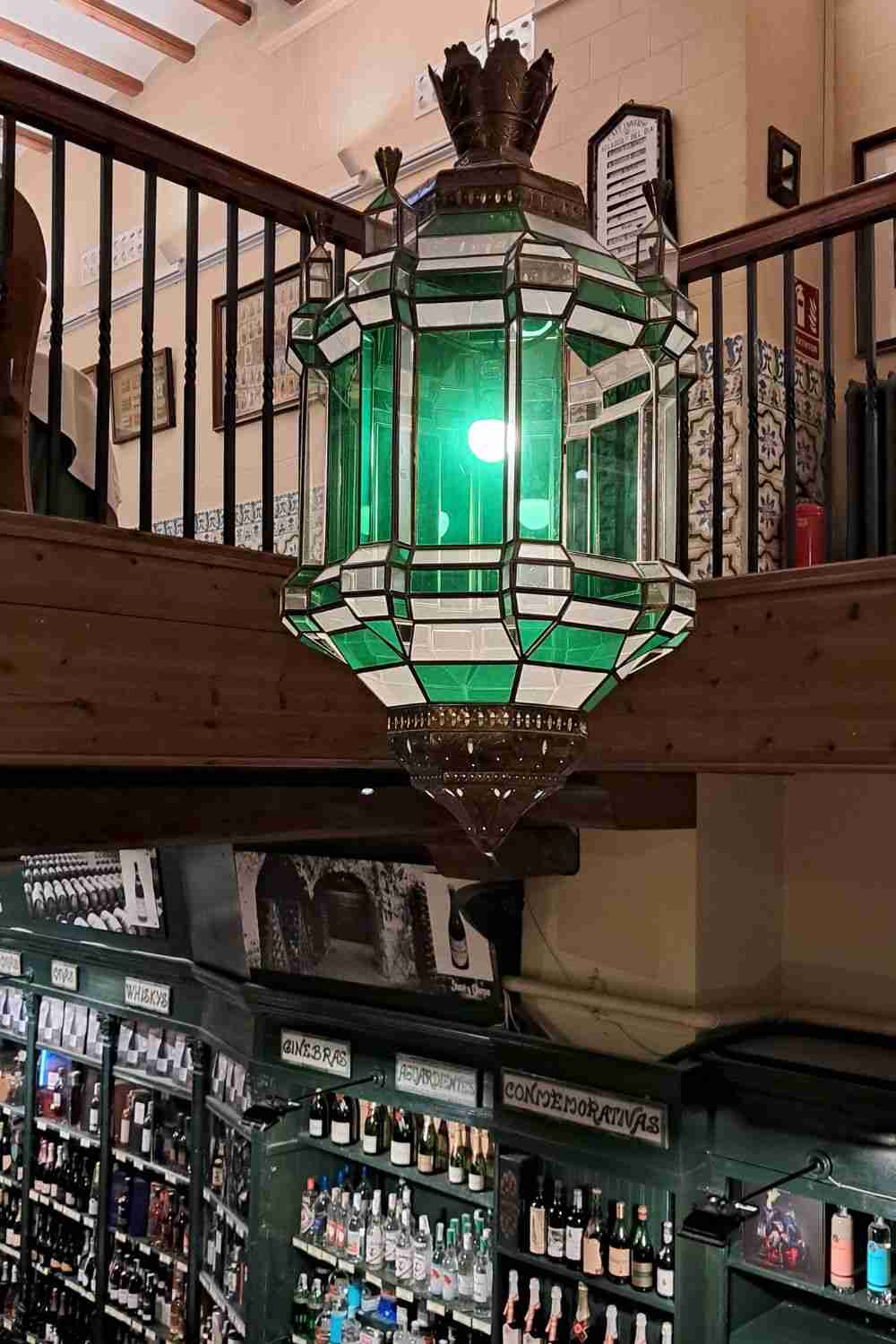
9. Zaragoza Museum
If you enjoy museums, Zaragoza has a good mix to choose from, and they are all different enough that you will probably find one that suits your interests.
The Zaragoza Museum is the main one and is worth a stop. You get a bit of everything here, from Roman and prehistoric archaeology to ceramics, regional costumes and a solid art collection, including works by Goya. It is a great all-rounder, especially if the weather turns.
Other Popular Museums in Zaragoza
If you want to branch out beyond the main museum, here are a few quick options:
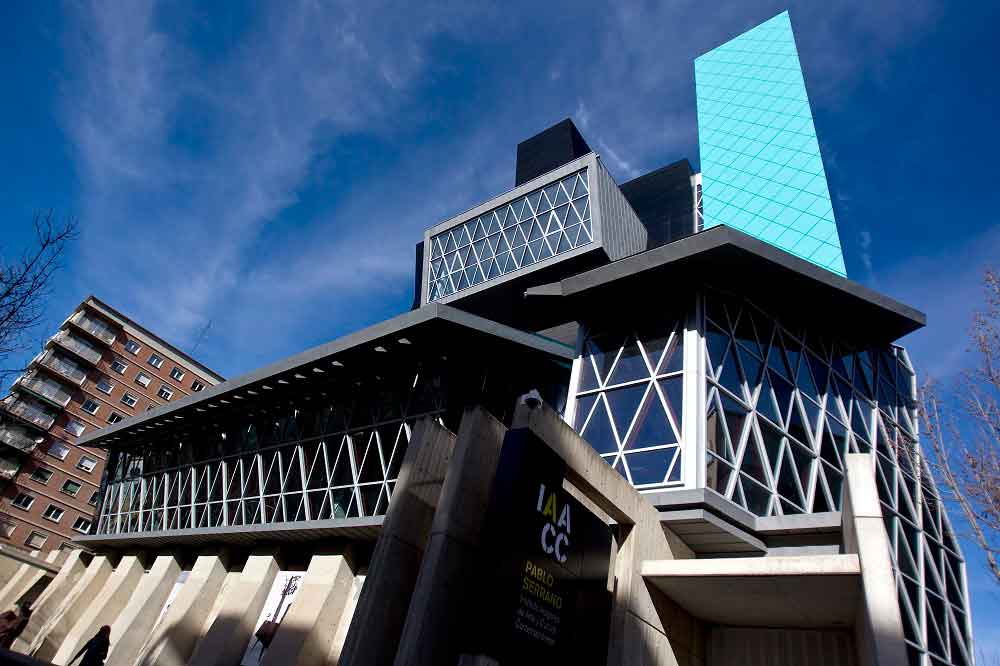
- IAACC Pablo Serrano: Modern and contemporary art in a striking building. Best if you prefer bold sculptures or newer works.
- Alma Mater Museum: Focuses on Zaragoza’s religious history. Quiet, relaxed and good if you like slower-paced exhibitions.
- Caesaraugusta Baths Museum: Small but interesting Roman bath remains. Easy to fit in if you prefer short, focused museums.
If I were to choose just one, I would go for the Zaragoza Museum. It gives you the broadest overview of the city, and it is the easiest to enjoy, even if you are not usually a big museum person.
10. Goya Museum
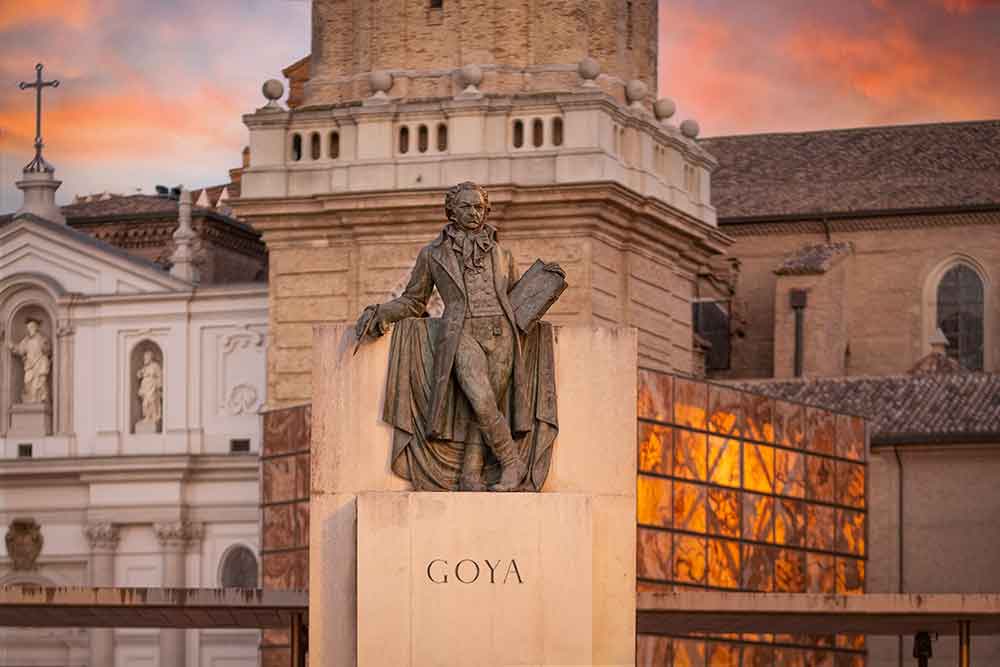
Francisco Goya, one of Spain’s most influential artists, was born just outside Zaragoza, so the city having its own Goya Museum makes perfect sense.
Inside, you will find a mix of his paintings and prints, along with a few rooms that explain his life and how his style developed.
There are more than one thousand pieces on display from the eighteenth to the twentieth century, so even if you are not a Goya expert, there is enough variety to keep things interesting.
It is also a manageable size. You can see everything without feeling like you need a full afternoon or a lie down afterwards.
Good To Know
At the time of writing (early 2026), the Goya Museum is temporarily closed for renovations. If you still want to see some of his work during your visit, there is a temporary Goya exhibition at the Aljafería Palace. It is smaller than the full museum collection, but it gives you a decent introduction to his style.
For the latest updates on reopening dates or temporary exhibitions, the most reliable place to check is the museum’s Instagram account, as they are posting updates there more regularly than on the website.
11. Museo del Foro de Caesaraugusta
In the first century BC, Zaragoza was known as Caesaraugusta under Roman rule. The name eventually evolved into the Zaragoza we use today, but the Roman roots are still easy to spot if you know where to look.
The Museo del Foro de Caesaraugusta displays the remains of the city’s Roman forum. The ruins were uncovered in the 1980s and include parts of the market area, canals, sewers and water pipes.
There is also a short video and some multimedia displays that help you picture what the city would have been like two thousand years ago.
The museum is right in front of La Seo Cathedral, inside an amber coloured, modern glass building. It looks a bit out of place compared to its surroundings, but you will not miss it.
12. Roman Amphitheatre of Zaragoza
If you have read my blog for a while, you will know that I am a little bit obsessed with ruins.
I can happily spend hours wandering around broken pillars and half-reconstructed walls, so of course I was excited to find out that Zaragoza is a great place to see Roman ruins in Spain.
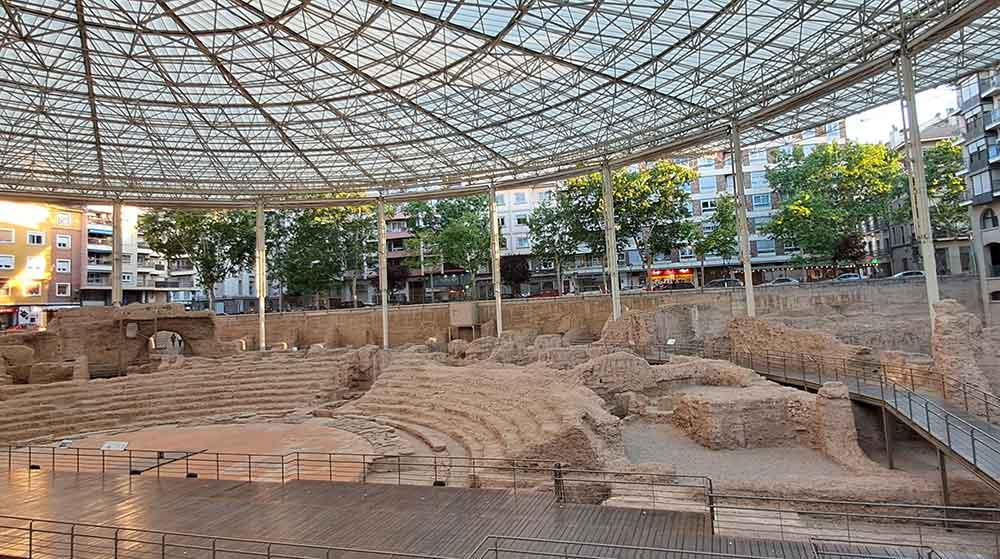
The Ancient Roman Amphitheatre is one of the biggest and best examples in the city. Even from street level, it looks impressive, but it is worth going inside the Caesaraugusta Theatre Museum to get a better sense of the scale.
The museum is well laid out, and the displays explain how the theatre would have looked and functioned. They are in both Spanish and English, and they make the whole site a lot easier to understand, especially if you are not already familiar with Roman architecture.
The museum itself is not huge, which I liked because you can take your time without feeling trapped in a maze of endless panels and timelines. It is a good mix of actual ruins, reconstructions and short explanations that give you enough context without making you feel like you are doing history homework.
Good To Know,
Zaragoza has several Roman sites scattered around the old town. Check out the Roman Route from Zaragoza Tourism if you’re a fan of archaeological sites.
13. The Roman Walls
Back when Zaragoza was still Caesaraugusta, the city was surrounded by thick defensive walls that stretched for about three kilometres and had more than one hundred towers.
Most of the walls have disappeared over time, but a few sections have survived in the historic centre.
You can find the remaining stretch just west of Plaza del Pilar, behind Avenida Cesar Augusto.
It is free to see and only takes a minute to check out. It is a nice little reminder of how big the Roman city once was, even if most people walk straight past without realising what they are looking at.
14. Parque Grande José Antonio Labordeta
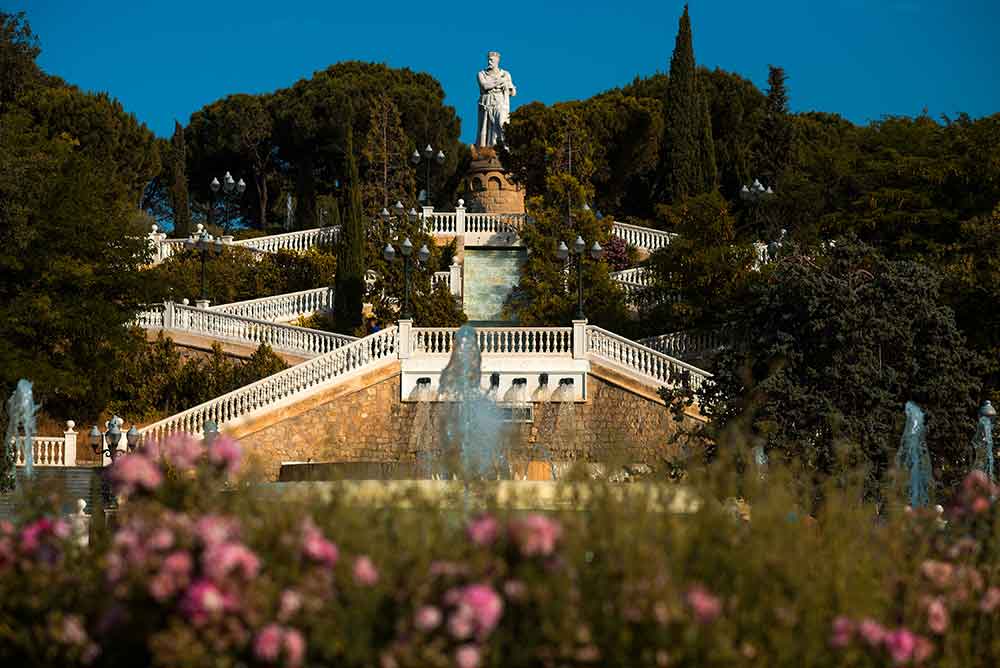
This is one of Zaragoza’s biggest green spaces and a solid choice if you want a bit of quiet away from the main streets. It covers around forty-four hectares, so there is always room to find a peaceful spot without feeling like you are sitting on top of anyone.
It is an easy place to sit with a book, have a small picnic, or just watch the world go by for a while. It has that safe, open feeling that makes it a comfortable place to take a break if you have been exploring all day.
You can also rent a bicycle or visit the Botanical Gardens, and there are two small museums inside the park, one for ceramics and one for ethnology. There are more than twenty sculptures and monuments scattered around, too, so even a quick wander through gives you plenty to look at.
15. Kayak on the Ebro River
The Ebro River cuts right through the centre of Zaragoza and is the second-longest river in the Iberian Peninsula. Its delta is one of the biggest wetland habitats in the Mediterranean, so it is an important part of nature as well as a major part of the city.
If you still want to be out in a green space but sitting under a tree with a book is not really your thing, heading out onto the water is a great option. You can explore the river by kayak and see Zaragoza from a completely different angle.
Ask at the Tourist Information centre what tours are available. Some focus on spotting native bird species along the riverbanks, while others are more about the city’s history and how the river shaped it.
16. Monasterio de Piedra
This immaculately preserved Cistercian monastery is around eight hundred years old and sits in the middle of a natural park filled with shady trees, waterfalls and walking paths.
It was originally built by monks on land donated by King Alfonso II, then later turned into a hotel and spa in the mid eighteen hundreds, which is quite a plot twist for a monastery.
If you are after a bit of pampering or just want a peaceful escape from the city, this is a great option. The setting feels calm and secluded, and the surrounding park is lovely to explore.
17. Museo Pablo Gargallo
The Museo Pablo Gargallo is dedicated to the sculptor Pablo Gargallo, who was born in the nearby town of Maella. The museum is inside the Argillo Palace and has more than one hundred and seventy of his works, including sculptures, sketches and engravings.
It is a good option if you enjoy modern sculpture or want something a bit different from the bigger museums in the city. It is also a manageable size, so you can visit without giving up a full afternoon.
18. The Origami Museum
For fun things to do in Zaragoza, the Origami Museum is one of the most unexpected. I genuinely did not expect to find a full museum dedicated to paper folding in Zaragoza, of all places, but it turned out to be a really good way to spend a couple of hours, especially on a rainy day.
Inside, you enter a world of folded paper sculptures and some of the most intricate designs you will ever see.
This is the first museum of its kind in Europe, and the collection has grown over the last sixty years thanks to local origami groups who clearly take paper folding very seriously. The result is one of the biggest and best collections of origami in the world, which is not something I thought I would ever write.
It is on the top floor of the Centro de Historias, and it is a fun break from the usual history and architecture you find elsewhere in the city.
Top Things to Do Near Zaragoza
Apart from all the great things you can see in the city, Zaragoza is also a great base for further exploration of Aragon.
Here are my top suggestions for day trips from Zaragoza.
19. Go White Water Rafting
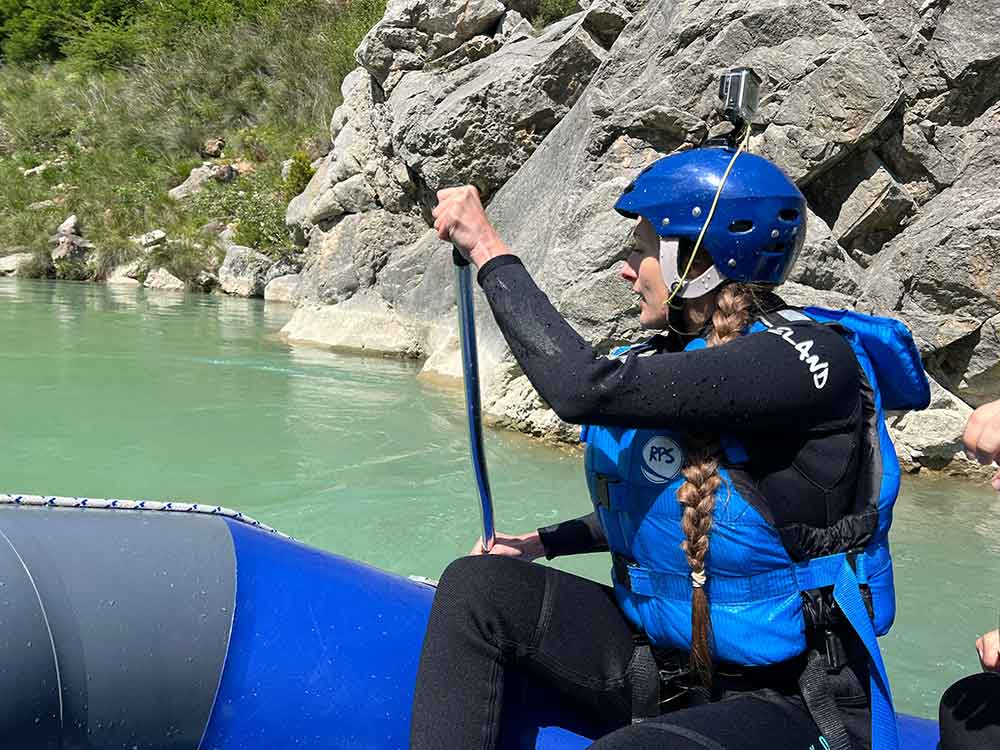
The village of Murillo de Gállego, a hub for adventure sports, is perfect for rafting with its turquoise river and hilly surroundings.
The rapids in the Gállego River are of medium to low difficulty, great for beginners. We went with UR Pirineos, a company with 25 years of experience.
Sessions last about 2 hours, and all equipment is provided. If someone in your group doesn’t want to raft, they can explore the village or hike the nearby trails.
20. Visit the Hill Top Village of Alquézar
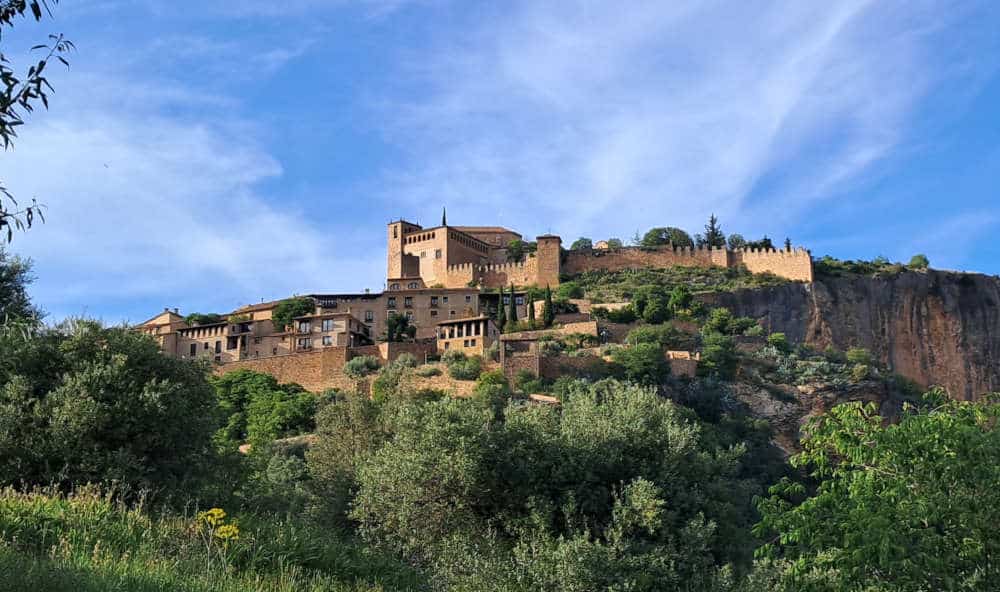
The hilltop village of Alquézar is one of the most beautiful places in Aragon.
Once you arrive, you immediately see why. The village sits on a ridge above the canyons, and the views go on for miles.
The streets are all cobblestones and warm stone buildings, where you end up taking more photos than you planned because every corner looks like it belongs on a postcard.
My favourite part of visiting Alquézar was the Walkway of the Alcázar. It follows the river along the edge of the cliff and dips in and out of small pools and shady spots.
It is an easy route to follow, although the route down and back up is steep, and it feels a bit like you have stumbled onto a hidden path. I ended up stopping a few times just to watch the water and enjoy the quiet.
If you have a free day in Zaragoza, this makes a brilliant day trip. You get scenery, history, a bit of light adventure and a proper break from the city all in one go.
21. Castle of Loarre
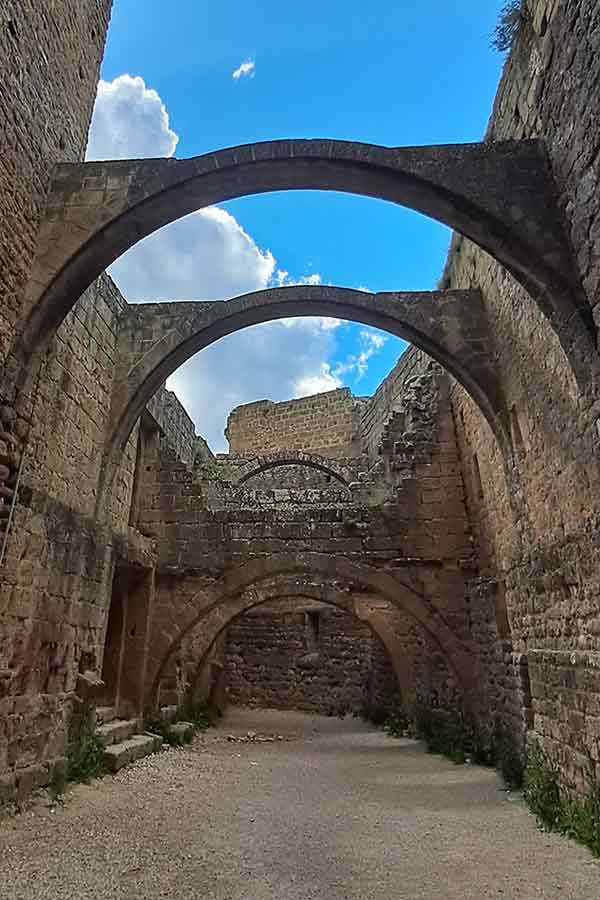
The Castle of Loarre is a semi-restored eleventh-century fortress that sits on top of a rocky outcrop with wide open views across the Huesca hills. If you like castles, this one is seriously impressive, and it is a great contender for anyone planning a trip around castles in Europe.
You are free to wander through the rooms, towers and courtyards on your own, although I would recommend joining a guided tour if you want to make sense of what you are actually looking at. There is not much signage inside the castle, so it can feel confusing trying to figure out what you’re looking at.
If you miss the tour, the information centre has a short film that gives you a decent overview before you head in.
22. Wine Tasting in Somontano
If you are a wine drinker, you will love Somontano.
I am a big red wine fan, so I will happily take any excuse to visit a vineyard. It usually guarantees I get to try the best of the best, and Somontano did not disappoint. The wines here are phenomenal, especially the reds, and tasting them at the source with pairings makes them even better.
The Somontano DO Winery is an eye-catching glass and steel building inspired by the Pyrenees. It looks modern and a bit futuristic, which makes a fun contrast to the traditional cellars you find in other wine regions.
Take the guided tour if you can. You get to see behind-the-scenes production areas and learn about their gravity-fed wine process. It is genuinely interesting, even if you are mostly there for the tasting at the end.

23. Ordesa y Monte Perdido National Park
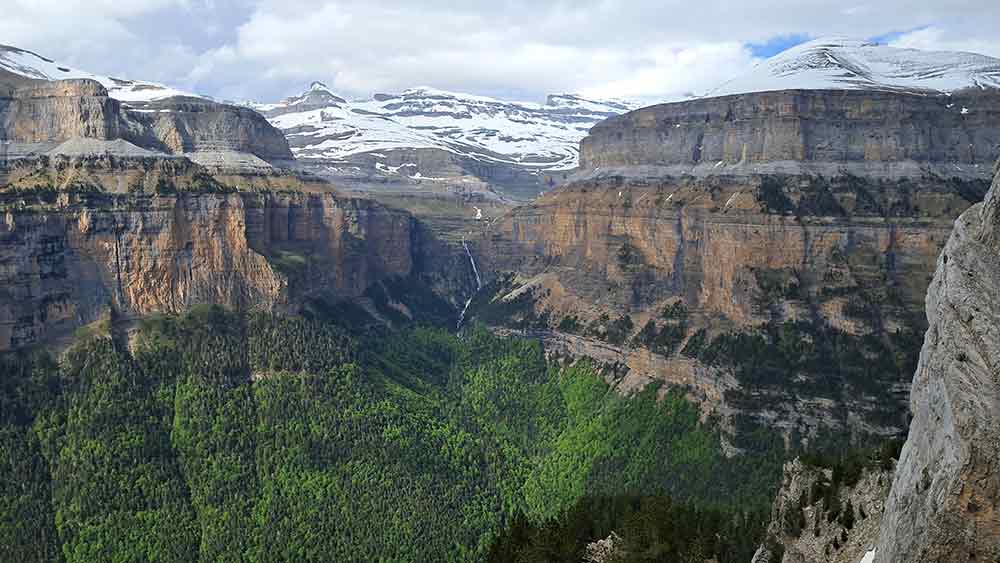
Ordesa y Monte Perdido National Park is a UNESCO World Heritage Site around 90 miles (about 145 kilometres) north of Zaragoza, and it is home to some of the most dramatic mountain scenery in northern Spain.
The cliffs, deep valleys and huge open views genuinely make it feel like you have stepped into a completely different part of the country.
You cannot drive through the park in your own car, so to reach the higher viewpoints, you need to go with a certified driver. We booked a four-hour trip with Ordesa Taxi 4×4, and it was a brilliant way to experience the park.
They take you up to a series of lookouts, each with slightly different angles over the valleys and rock formations. The guide also talks you through the history and geology in a way that is easy to follow, which makes the whole thing a lot more interesting than trying to figure it out by yourself.
Good To Know
It gets cold at the top, even in summer, so bring a jacket. The temperature drops quickly, and the wind can be sharp once you are standing on the exposed viewpoints.
24. Jaca Citadel
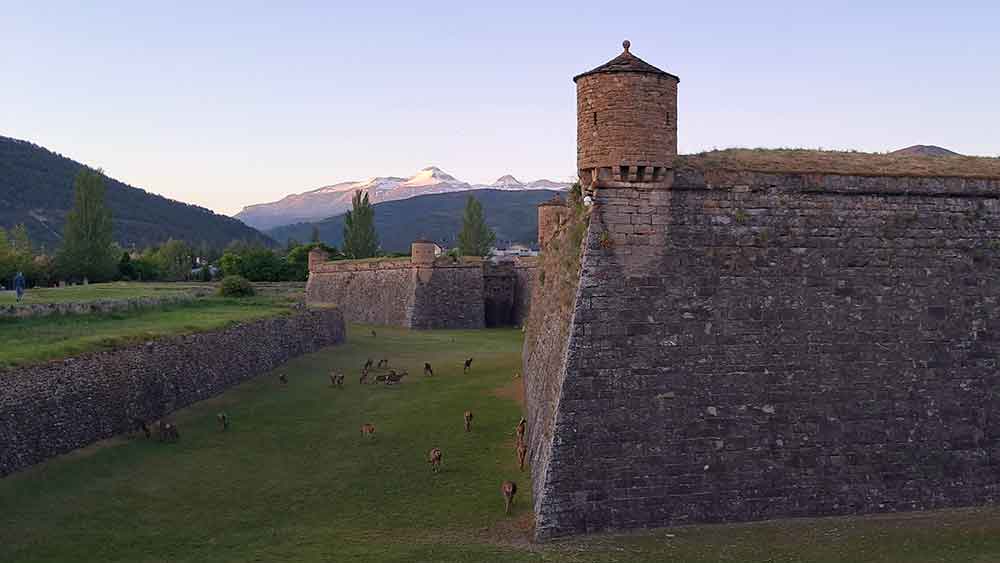
The Jaca Citadel (or Ciudadela de Jaca) is a sixteenth-century star-shaped fortress in the town of Jaca. It was built to defend the area from all directions, and the design is impressive even if you are not usually into military architecture.
These days, the main draw is the Museum of Military Miniatures, which has detailed models showing different historic battle scenes. It is surprisingly interesting, even if you only pop in for a short visit.
The citadel sits right in front of the snow-capped mountains, and the grassy moat is now home to a small herd of deer.
Although I wouldn’t take a trip out here to specifically see the fortress, it is a fun little extra to see, especially if you are breaking up a longer journey.
25. Monastery of San Juan de la Peña
This stunning medieval site wedged under a rock ledge is the Monastery of San Juan de la Peña. The building blends Romanesque and Gothic styles, with carvings and frescoes built directly into the rock face and forest all around it.
Inside, it feels like you have stepped into a Tolkien novel. The cloisters in particular look like something straight out of Rivendell, especially with the arches tucked beneath the rock and the soft light filtering in.
Although locals have known about it forever, it picked up wider fame after appearing in the 2005 film Kingdom of Heaven. If you enjoy visiting filming locations or places that feel a bit mythical, this one is an easy win.
The whole area is also great for walking. There are plenty of trails around the monastery that take you through the forest and up to viewpoints, so you can make a full day of it if you enjoy being outdoors. Getting there involves a scenic winding drive, and the journey is almost as impressive as the monastery itself.

26. Ride Europe’s Longest Zipline and The Big Swing
If you are even slightly into adrenaline activities, this is an easy recommendation.
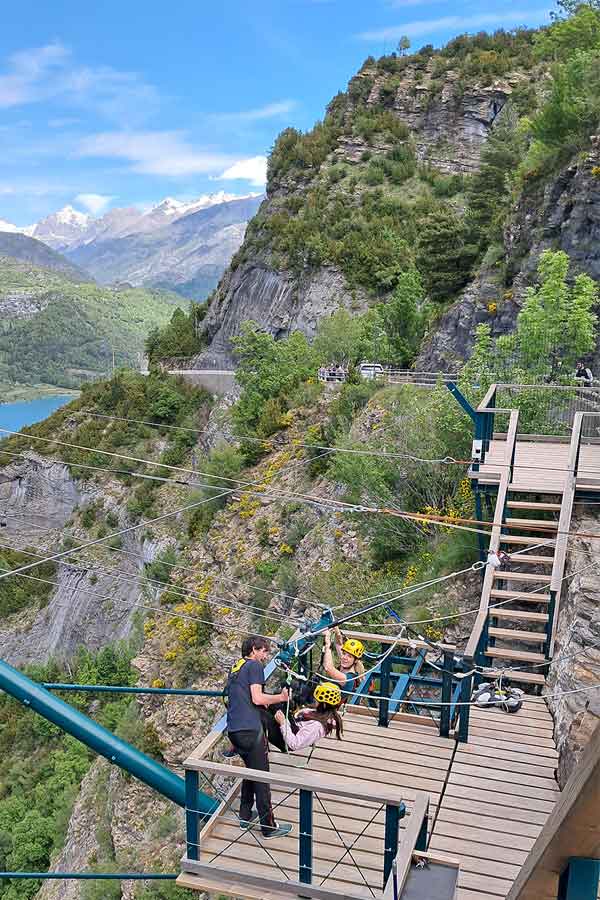
In the small mountain town of Hoz de Jaca, just northwest of Jaca, you can try two of Aragón’s wildest attractions.
As someone who loves a bit of adventure, I was never going to say no to this. The idea of flying over a reservoir and willingly throwing myself off a platform sounded exactly like my kind of day out.
The Tirolina Valle de Tena zipline is one of the longest in Europe and also one of the fastest. You soar across the Bubal Reservoir at around one hundred and fifty metres above the water, and the views are incredible.
If you want to take things up a level, there is the Big Swing. It is a huge drop from the same height, and it absolutely gives you that “heart falling out of your body” moment as you’re pushed off the platform. You will probably swear, you might question your life choices, but it is so good once you are actually swinging out over the reservoir.
27. See Lecina’s Holm Oak, “The Best Tree in Europe”
If you are hunting for hidden gems in Aragón, you can add the ancient Holm Oak of Lecina to your list.
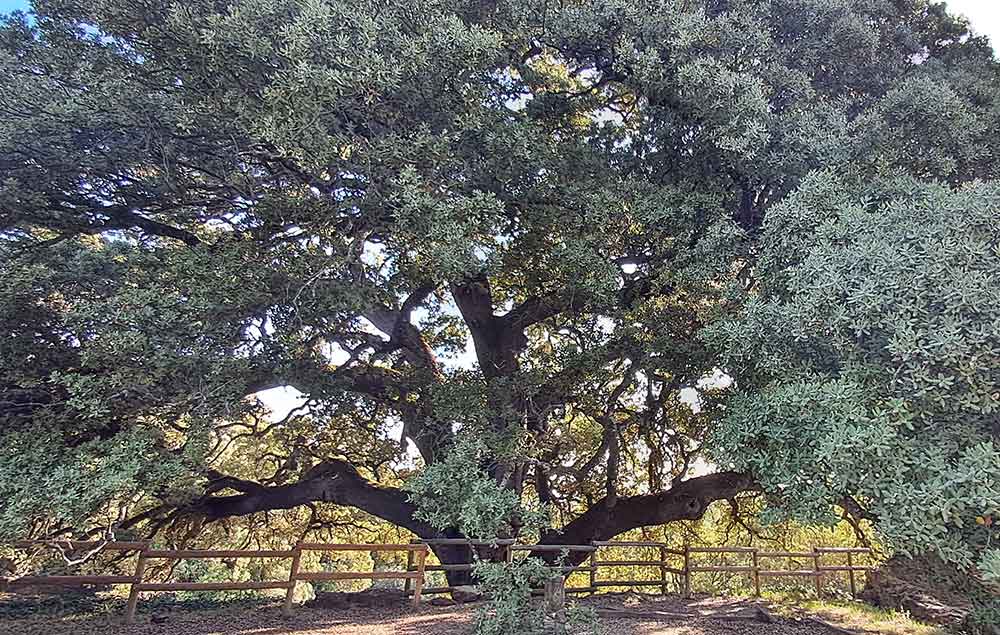
It won “Best Tree in Spain” in 2020 and then casually levelled up to “Best Tree in Europe” in 2021, which is quite the achievement for something that has stood in the same spot for more than one thousand years.
Seeing it in person is a bit surreal. It is huge, gnarled and looks like it has lived through about a zillion lifetimes. There is a small information panel nearby that explains its history, although the tree itself does a pretty good job of telling you it has been here forever.
I probably would not travel across Aragón just to see it because, at the end of the day, it is a tree. But if you are already in the area, it is well worth stopping for. The setting is stunning, completely surrounded by countryside and silence, and the whole thing feels strangely humbling.
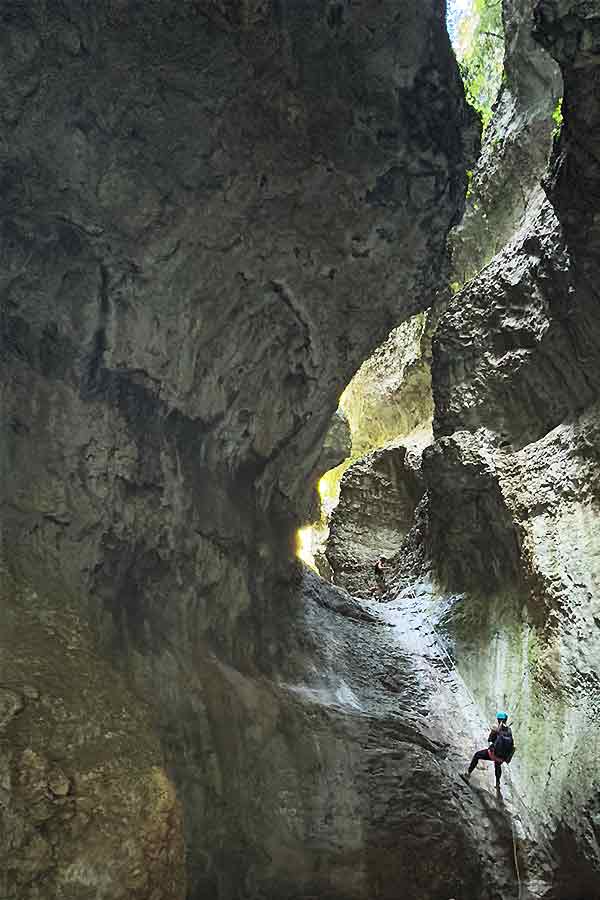
28. Canyoning In The Sierra de Guara
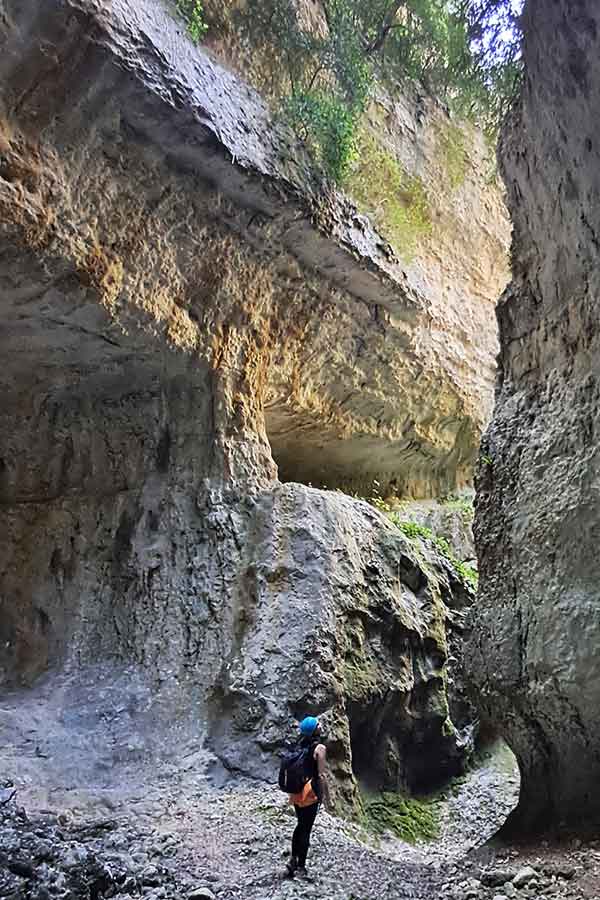
If you want another adrenaline fix, go canyoning in the Sierra de Guara near Lecina. I absolutely loved this. It is messy, physical, ridiculous in places and one hundred per cent my kind of adventure.
The Barranco de Basender is a dry slot canyon that feeds into the River Vero, and it feels like nature built it specifically for people who enjoy climbing, squeezing, sliding and generally throwing themselves at rocks.
You will be rappelling down drops, scrambling through tight gaps and doing a fair bit of awkward bum-shuffling along the canyon floor. You will also come back bruised, dirty and weirdly proud of yourself.
If you have the right gear and experience, you can do it on your own. I had neither, so I went with Vertientes Aventura. They provide the equipment and a guide who knows every twist of the canyon.
Wear clothes you do not mind ruining because they will get scraped, snagged and soaked if you’re wading through the river. It is absolutely worth it, though.
Where to Stay in Zaragoza?
For the best experience in Zaragoza, I recommend staying somewhere central.
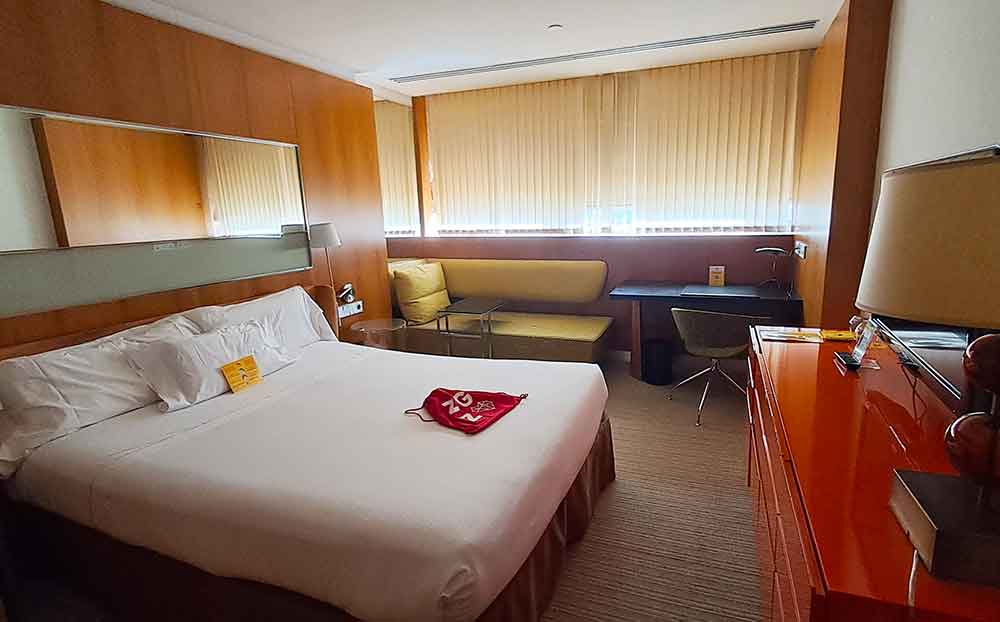
I stayed at the 4-star Hotel Alfonso, right in the old town and shopping district. It is only a few minutes’ walk from the Basilica del Pilar, so you can nip out, explore, come back, and head out again without feeling like you are crossing the city every time.
The hotel itself is a bit of a surprise. It is ultra-modern, but they have given everything a retro twist, which makes it feel stylish without trying too hard.
The rooms are comfortable, the rooftop pool is a great bonus for cooling off after a long day, and the buffet breakfast is exactly what you want before diving back into sightseeing.
It is an easy and convenient base for exploring Zaragoza.
Things to See in Zaragoza FAQs
Where Is Zaragoza Located?
Zaragoza is in northeastern Spain, in the region of Aragón. It sits almost exactly halfway between Madrid and Barcelona, which makes it an easy and convenient stop if you are travelling between the two cities.
How Far Is Zaragoza From Madrid?
Zaragoza is about 320 kilometres northeast of Madrid. The high-speed train takes roughly one and a half hours, which is ideal if you want to visit Zaragoza in a day. Driving takes around three hours, and the route passes through some very pretty stretches of countryside.
What to Do in Zaragoza in One Day?
If you only have one day in Zaragoza, focus on the essentials. Start at Plaza del Pilar to see the Basilica and La Seo Cathedral, then explore the old town. After that, check out the Roman walls and visit the Goya Museum.
What is Zaragoza Best Known For?
Zaragoza is best known for the Basilica del Pilar, its impressive Roman ruins, its great food scene and its strong connection to the artist Francisco Goya. It is a city with a mix of history, culture and genuinely good local cuisine.
Want Even More Ideas for What to See in Zaragoza and beyond?
If this guide has helped you get your bearings on what to see in Zaragoza, you are only just getting started.
The city is packed with history, food, architecture and all the Roman ruins you could ever want, but the rest of Aragón and northern Spain have just as many spots worth exploring.
Whether you want more medieval villages, more outdoor adventures, or you are already eyeing up your next wine region, there is plenty to dive into.
So if you are planning a longer trip around this part of Spain, have a look at the articles below. They will give you even more ideas, help you figure out where to go next and hopefully inspire a few detours along the way.
Basque Country and North Spain
- An Epic 5 Days Road Trip in Aragón Itinerary
- 15 Best Things to Do in Aragon, Spain
- Is Zaragoza Worth Visiting? Everything You Need To Know
- The Best Things to See in Zaragoza, Spain
- Is San Sebastian Worth Visiting? The Pros and Cons
- San Sebastian Food Tour Review With Devour Tours
- Is Bilbao Worth Visiting? 12 Reasons To Visit Bilbao