
Is Bilbao Worth Visiting? Yes! Here’s Why
If you’re planning a trip around northern Spain, you might be wondering: is Bilbao worth visiting?
After spending over a month exploring the region, including multiple stops across the Basque Country, I can confidently say yes. I even met up with my sister here to celebrate her birthday. It was the perfect mix of incredible food, walkable history, and an easy-going alternative scene. There’s enough delicious food and nearby nature to keep even the most restless solo traveller happy for days.
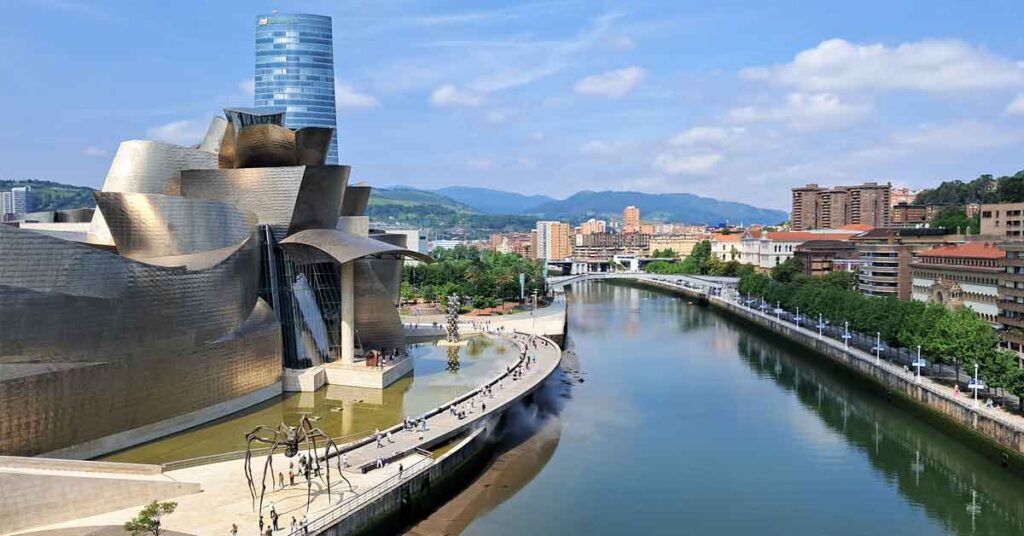
Tucked into a bowl of green hills and straddling the Nervión River, Bilbao is located in northern Spain, about 20 kilometres from the coast. It sits right at the heart of the Basque Country, a place that feels distinctly different from the rest of Spain.
In this post, I’ll show you exactly where Bilbao is located in Spain, with a helpful map to orient yourself, as well as 12 compelling reasons to visit Bilbao, including one of the most striking museums in Europe. I’ll also touch on a couple of drawbacks so you can plan your trip with your eyes open. Spoiler: the pros absolutely win.
Whether you’re all about art, food, or finding your next underrated city break, Bilbao might surprise you. You’ll land expecting a quick stop and leave wondering why you didn’t stay longer.
Meet Me In Departures contains affiliate links and is a member of the Amazon Services LLC Associates Program. If you make a purchase using one of these links, we may receive compensation at no extra cost to you. See our Disclosure Policy for more information.
Is Bilbao worth Visiting?
Yes. It absolutely is.
I spent well over a month travelling around northern Spain and the Basque region, moving between coastal towns, mountain villages, and a few bigger cities. Bilbao kept pulling me back.
Partly because it’s a brilliant transport hub, which makes hopping around the region easy, but also because I hadn’t finished with it. There were still galleries to see, streets to wander, and restaurants I’d bookmarked but not yet tried.
What I liked most is how easy it is to explore on your own terms.
You can walk pretty much everywhere, wander through the Old Town, dip into a museum, stop for pintxos when you fancy it, and never feel like the city is working against you. It’s lively without being chaotic, which makes it an easy place to settle into for a few days, even if you’re navigating it solo.
It’s worth saying, though, that this is northern Spain. Prices are noticeably higher than in the south. Accommodation, especially, can sting a little. Still, for what you get in return, it feels justified.
Where is Bilbao, Spain Map
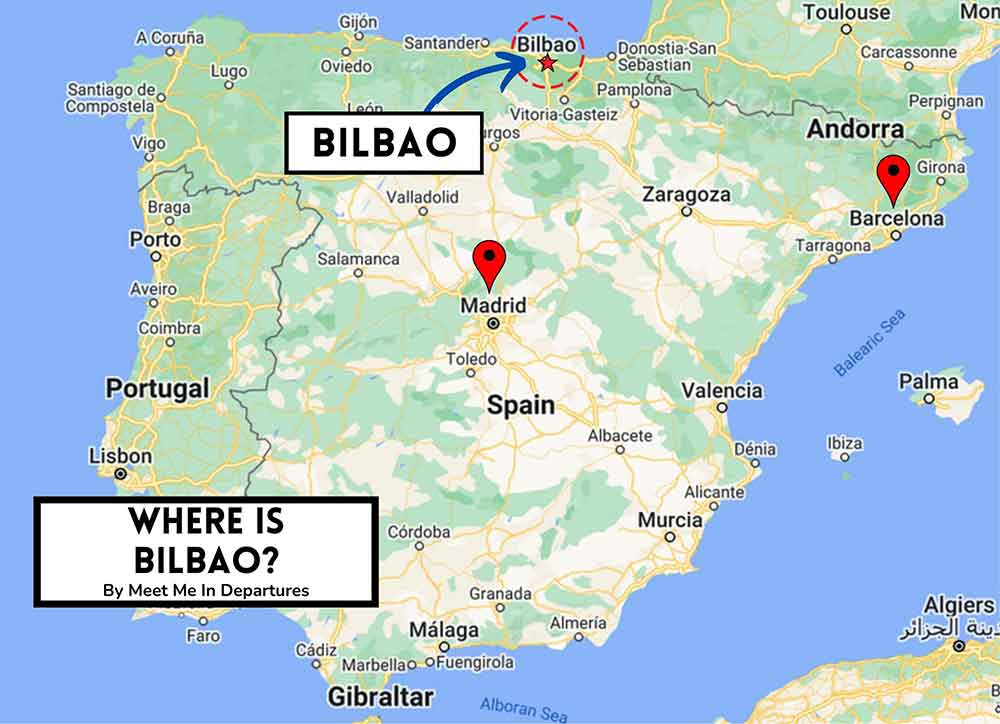
If you’ve struggled to place where Bilbao is, you’re not alone. It’s up in northern Spain, in the Basque Country, much closer to the French border than the typical southern hotspots.
Bilbao isn’t directly on the coast. It sits about 20 kilometres inland along the Nervión River, tucked into a valley surrounded by green hills.
On the Bilbao map below, you’ll also see it’s positioned near some other great cities like San Sebastian, Pamplona, and Santander, which makes it a brilliant base for exploring the region.
Although it’s in Spain, the Basque Country has its own language and strong cultural identity. It feels different from the south, and that shift is part of what makes arriving here so interesting.
12 Great Reasons to Visit Bilbao
1. Home of the Guggenheim
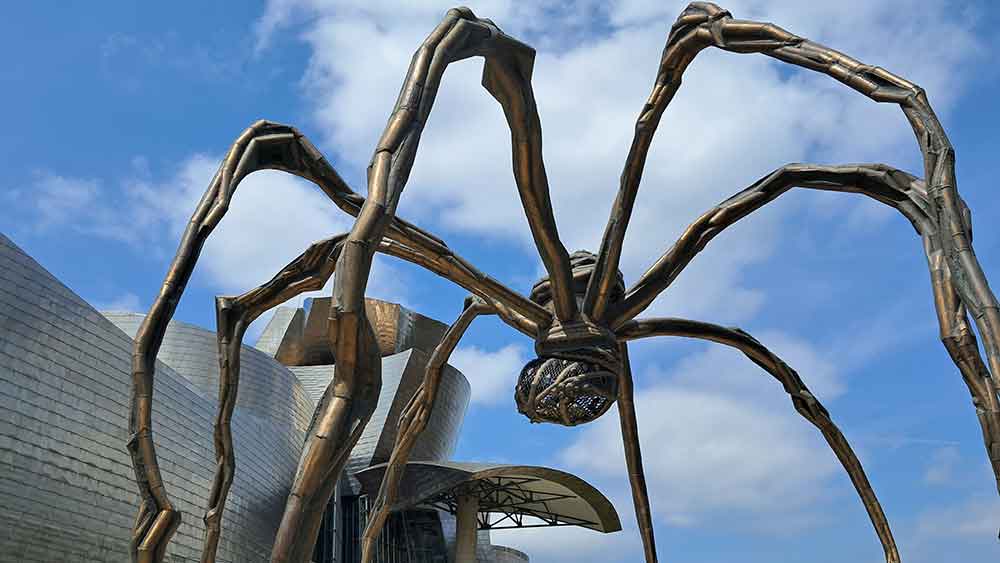
One of the top things to see in Bilbao is the Guggenheim Museum. And honestly, if you only see one thing while you’re here, make it this.
The building alone is worth it. Designed by Frank Gehry, it’s all sweeping curves and reflective titanium that changes depending on the light. It sits right on the river and somehow manages to feel both futuristic and completely at home there. Even if you don’t step inside, it’s impressive.
Now, full disclosure. I was an art student, and modern art, and I have had a complicated relationship. A lot of it just didn’t click for me. I’ve stood in front of pieces thinking I’m sure this is clever, but I have absolutely no idea what’s going on. That said, there are some genuinely brilliant works inside the Guggenheim.

Guided Guggenheim Visit
You can 100 per cent do the Guggenheim solo. I did. But if you’d rather not stand there wondering whether you’re missing something important, this small group VIP tour gives you proper context. You skip the line, move at a relaxed pace, and get real insight from an official local guide.
The standout for me is Richard Serra’s installation, The Matter of Time. It’s the huge spiralling steel structure you can actually walk through. You might recognise it from Dan Brown’s novel Origin. It’s massive, slightly disorientating, and surprisingly calming once you’re inside it. It’s one of those rare pieces of modern art that you don’t have to overthink. You just feel it.
2. Excellent Food and Wine
If you’re mapping out the best places to visit in Spain with food in mind, Bilbao deserves serious consideration. For a city its size, the quality is consistently good, and you don’t have to dress up or book months in advance to eat well.
Apart from the Guggenheim, Bilbao is famous for its food, and for a lot of people, that’s exactly why Bilbao is worth it.
For my sister’s birthday weekend, we basically dedicated ourselves to pintxos (pronounced pin-chos), bar hopping around Casco Viejo. You order a drink, grab a couple of bites from the counter, stand at the bar, chat, then move on. Repeat as necessary. It’s relaxed, social, and very easy to lose track of how many stops you’ve made.
Some of the combinations are surprisingly creative. I loved Gure Toki and El Globo, and between us we managed to sample far more than we’d planned. That’s the danger. Pintxos might look small, but they add up quickly.
Bilbao is also famous for Txakoli (pronounced chak-oh-lee). It’s a lightly sparkling, dry white wine that’s poured from a bit of height to give it some air. Slightly sharp, very refreshing, and far too easy to drink.
And if you want something sweet, the Basque cheesecake is non-negotiable. It’s burnt on top, soft in the middle, and nothing like the heavy cheesecakes you might be used to.
Bilbao Food Tour and Wine Tasting
Short on time or not sure where to start? Join a small group food tour and let a local show you exactly what Bilbao is famous for, without the trial and error.
What Food Is Bilbao Known For
- Pintxos
- Traditional Basque cheesecake
- Txakoli wine
- Fresh produce from Mercado de la Ribera


3. Tons of Outdoor Activities
I’m a huge fan of anything outdoorsy, so Bilbao suited me down to the ground.
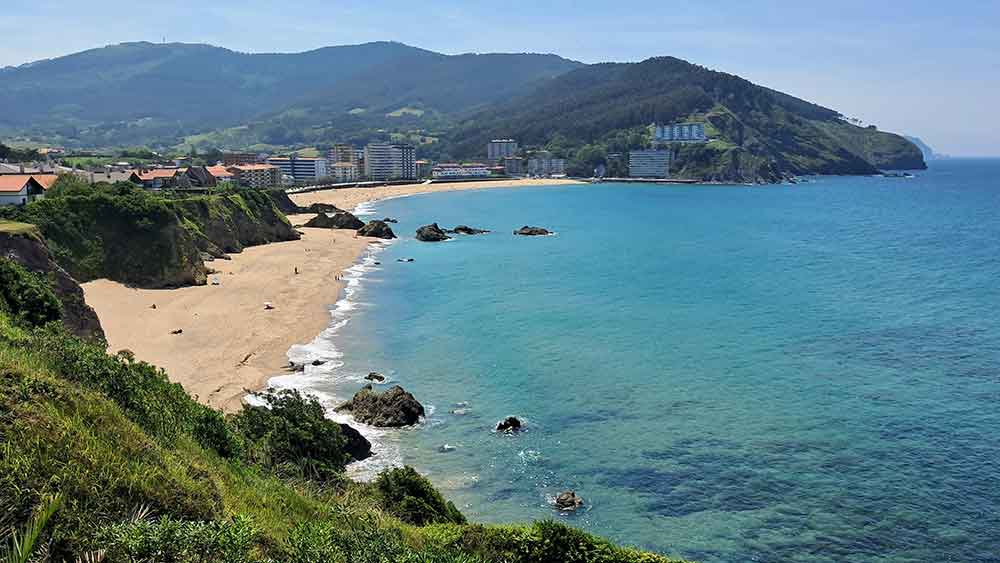
The city is surrounded by green hills, which means you’re never far from a walking trail. You can head up Mount Artxanda for one of the best views over the city, or venture further out onto coastal paths if you fancy stretching your legs properly.
The Camino de Santiago Norte passes through Bilbao, so you’ll often meet people who are partway through the route. When I was there, a lot of hostel common rooms were full of hikers swapping stories and comparing how far they’d walked that day. It gives the city a nice sense of movement without feeling chaotic.
Because Bilbao is so compact, it’s easy to get out into nature without turning it into a full logistical mission. The Nervión River runs right through the centre, so kayaking, rowing, or stand-up paddleboarding are all options. And with the coast only about 20 kilometres away, surfing, swimming, and snorkelling are well within reach.
4. Plenty of Interesting Architecture
For a city that looks compact on the map, Bilbao manages to pack in an unexpectedly wide range of architecture.
You can start in medieval streets and end up staring at cutting-edge design within the space of a short walk.
Some of the most historic places to visit in Bilbao are in Casco Viejo, the Old Town. Within it, you’ll find the Siete Calles, the original Seven Streets that form the heart of the neighbourhood.
This area is mostly pedestrianised, so you can wander easily without weaving between cars. It’s packed with narrow lanes, old stone façades, decorative balconies overhead, and lively squares that still feel very much used rather than preserved for show.
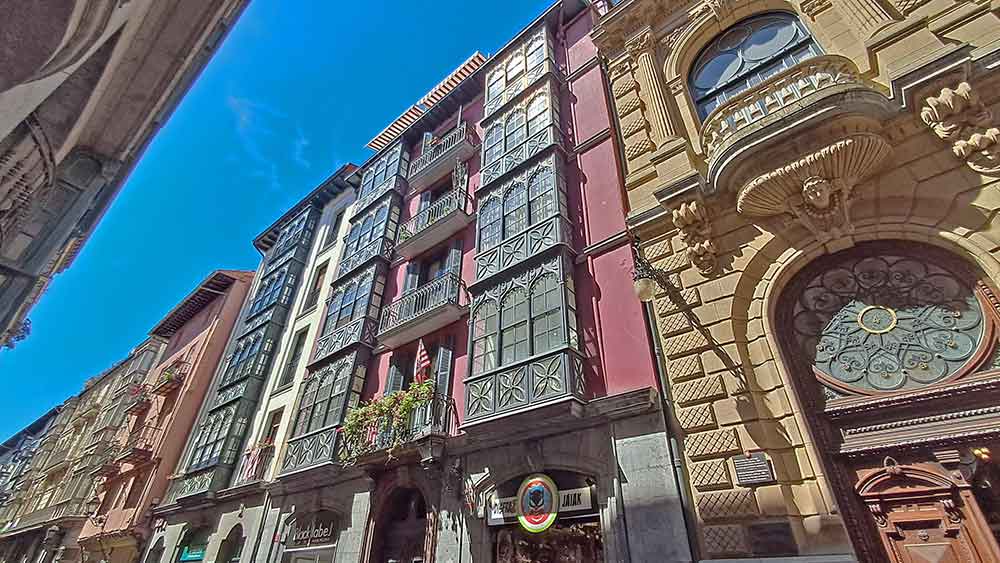
Things to See in Bilbao Old Town
- Santiago’s Cathedral
- Church of San Antón
- Archaeological Museum
- Basque Museum
- Bidebarrieta City Library
- Plaza Nueva
Then head back towards the river, and the contrast becomes obvious.
The Guggenheim’s sweeping curves dominate the skyline, and the Zubizuri Bridge adds a sharp, modern edge across the water. The mix of old and new doesn’t feel forced. It just feels like Bilbao being Bilbao.
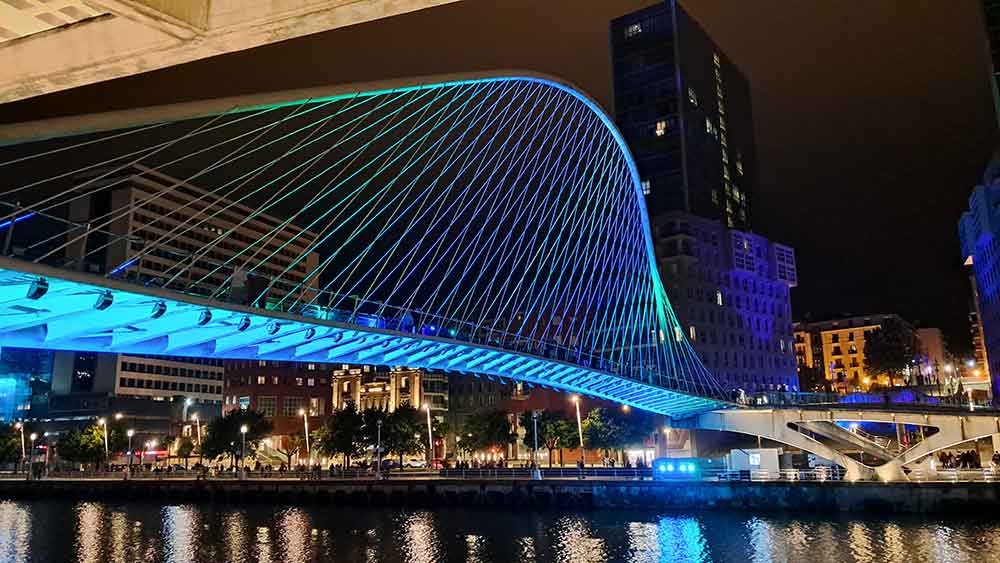
5. Easy Base for Day Trips
Bilbao is brilliant for a weekend, but it really works as a base for further exploration of the Basque Country.
Transport links are straightforward, buses and trains are easy to figure out, and you don’t need to rely on guided tours to see the highlights. I did everything independently and never felt stuck or limited.
If you’re planning a day trip from Bilbao, here are some of my favourites:
- San Sebastian: Worth visiting for the beaches and the food alone. There’s plenty of stuff to see in San Sebastian, from La Concha Bay to the pintxo bars in the Old Town.
- Vitoria-Gasteiz: Smaller and greener, with a lovely historic centre that’s easy to explore at your own pace.
- Rioja Alavesa: Rolling vineyards and excellent wine. Ideal if you want countryside views without a long journey.
- San Juan de Gaztelugatxe: My favourite. Yes, it’s the dramatic rocky islet from Game of Thrones. I caught a bus from Bilbao and was at the start of the hike surprisingly quickly. No tour needed. Just follow the path, climb the steps, and take your time with the views. It feels remote, but it’s completely doable on your own.
- Getxo: A relaxed coastal town with beaches and grand old mansions.
- Bizkaia Bridge: An impressive piece of engineering that’s easy to pair with a coastal wander.

6. Lots of Green Spaces
Bilbao might be surrounded by hills, but it’s surprisingly green within the city itself, too. You’re never far from a park, a plaza, or somewhere to sit outside with a coffee and reset for a bit.
The Nervión River has wide pedestrian walkways running alongside it, which makes wandering aimlessly feel like a solid plan rather than wasted time. Parque Doña Casilda is probably the best-known green space, with shady paths and fountains, and there are plenty of smaller pockets of greenery dotted around the centre.
It doesn’t feel crammed or concrete-heavy, which I appreciated. There’s a balance between city energy and breathing room that makes it easy to slow down when you need to.
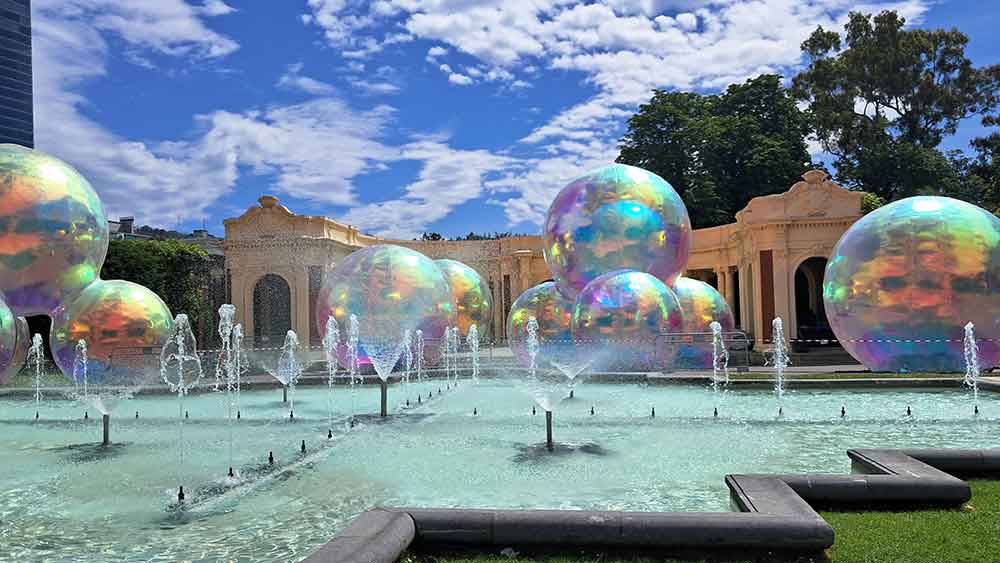
7. Interesting Museums (Beyond the Guggenheim)
If the weather turns or you just fancy a slower afternoon, Bilbao has far more museum options than you might expect. And no, I’m not talking about the Guggenheim this time.
If you’re wondering what to visit in Bilbao beyond the obvious, here are a few worth your time:
- Bilbao Fine Arts Museum: This one genuinely surprised me. The collection spans from medieval pieces to contemporary works, so you’re not stuck trying to interpret a blank canvas for two hours. Even better, it’s free to enter, which always helps.
- Diocesan Museum of Sacred Art: Not usually my go-to category, but this one is impressive. It houses thousands of religious artefacts dating from the twelfth to the twentieth century, along with some much older archaeological finds. The inner courtyard alone is worth a wander.
- Archaeological Museum: A solid choice if you want to understand the region properly. It walks you through Basque history from prehistoric times onwards, and it’s well laid out without being overwhelming.
- Basque Museum: If you’re curious about the language, traditions, and identity of the Basque Country, this is a good place to start. It adds context to everything you see around the city.
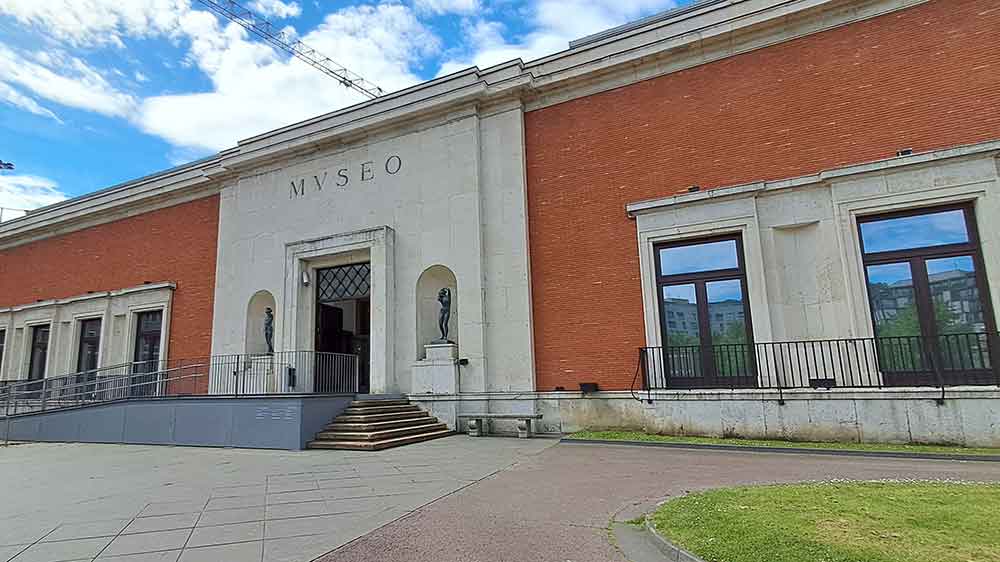
8. Packed Events Calendar
Bilbao isn’t just about museums and food. There’s something happening here all year round, and if you get your timing right, you can land in the middle of something pretty special.
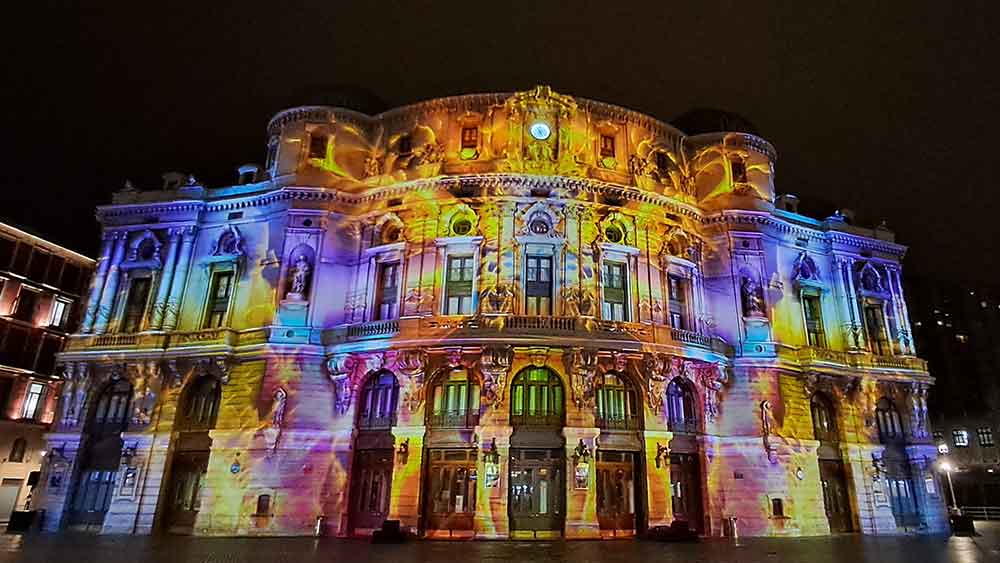
When I was there in June for my sister’s birthday, the city was also celebrating its birthday (it’s 724th one) during Gau Zuria, which translates to White Night. That’s not exactly a small milestone.
The whole city turned into an open-air stage. Historic buildings were lit up with huge projections, there were sound installations tucked into side streets, and interactive pieces dotted around plazas and along the river. We spent hours just wandering and stumbling across different performances. It felt completely in keeping with the city. Forward-thinking, cultural, and confident enough to turn its own streets into the main event.
Other big highlights include Aste Nagusia, a week-long festival packed with concerts, parades, and cultural events, and Bilbao BBK Live, which draws major international music acts and completely shifts the city’s energy for a few days.

Good To Know
If you’re planning your visit, the easiest way to see what’s on is by checking the official Bilbao tourism board. Dates move around slightly each year, and there’s usually far more going on than you’d expect.
9. Street Art
Coming from Bristol, which is basically synonymous with Banksy, I’ve always had a bit of a soft spot for street art. Especially the kind that says something. Political, social, slightly provocative. If a city invests in public art, I’m paying attention.
Bilbao absolutely delivers on that front. If you’re wondering where to go in Bilbao to see some of the best murals, start with the colourful houses between Zuberoa Avenue and Baiona Street. The artwork here isn’t just decorative. Some of the pieces feel layered and intentional, rather than just a splash of colour on a blank wall.
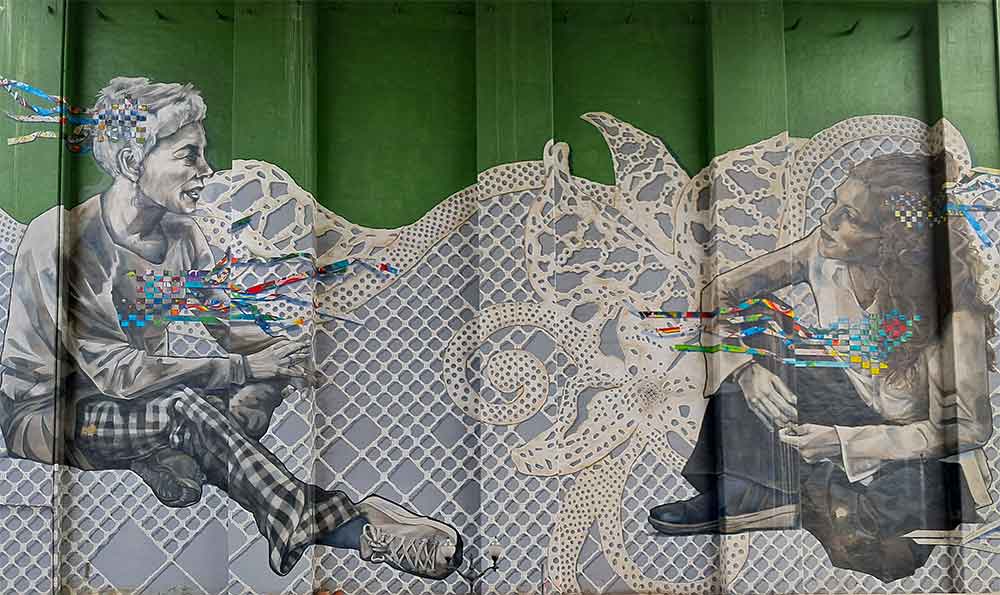
One of my favourite finds was a huge mural called Giltza, tucked under the Salbeko Zubia bridge on the opposite side of the river from the Guggenheim. It’s bold, detailed, and easy to miss if you don’t know it’s there.
Insider Tip
Insider tip: the best view of Giltza is from the steps above the elevators beneath the Salbeko Zubia. If you don’t fancy climbing the stairs, take the elevator up and walk back down. Much easier, same payoff.
10. Excellent Shopping
Bilbao is considered one of the better cities for shopping in the Basque region. Now, I’ll admit straight away, I’m not flying somewhere for the sole purpose of browsing designer stores.
If big brands and high-street names are your thing, head to Gran Vía de Don Diego López de Haro, usually just called Gran Via. It’s the main shopping street, and you’ll find all the familiar names there.
If you prefer something with a bit more character, Casco Viejo is far more interesting. There are independent boutiques, small artisan shops, and a few retro and vintage spots tucked into the side streets. I travel with hand luggage only, so buying anything bulky is usually a terrible idea, but I did enjoy wandering and seeing what was on offer.
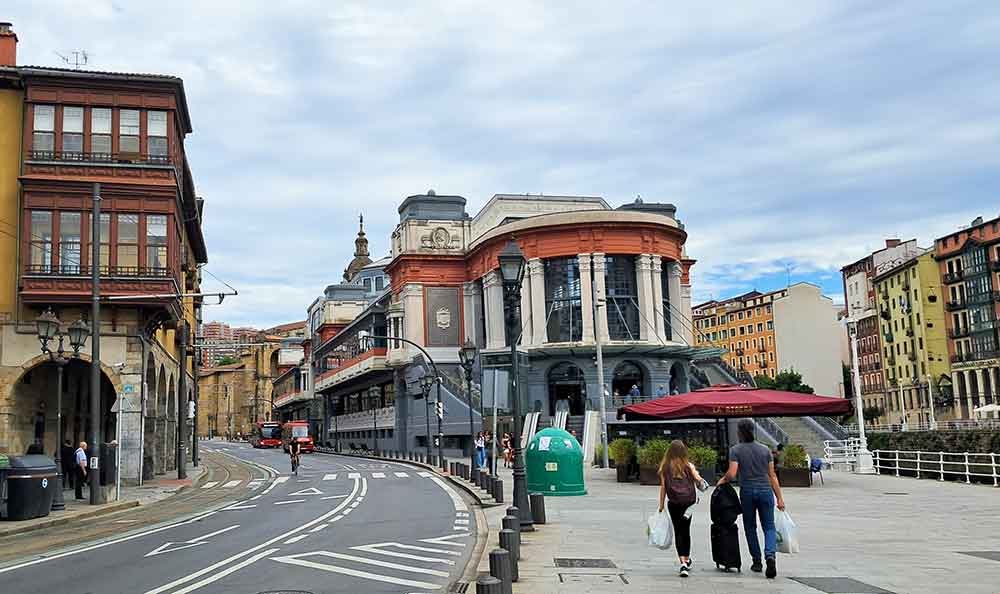
Where I really come alive, though, is food shopping. Mercado de la Ribera is my kind of place. It’s bright, lively, and packed with stalls selling fresh produce, cured meats, seafood, cheeses, and local specialities.
Even if you’re not planning to cook, it’s worth walking through just to see what’s on display. If I’m choosing between a designer handbag and a good chunk of local cheese, I know which one’s coming home with me.
11. Basque Country Has Its Own Heritage
I live in the south of Spain, so arriving in Bilbao felt like landing in a completely different country. It didn’t feel like the Spain I’m used to at all. The architecture, the food, even the pace of life had a different edge to it.
One of the biggest differences is the language. Basque is actually the oldest language in Europe, and what makes it fascinating is that it isn’t related to Germanic, Romance, Italic, Slavic, Celtic, or any other European language family. It stands entirely on its own, which explains why it looks nothing like Spanish.
You’ll notice it straight away. Street signs are written in both Spanish and Basque, shop fronts often use Basque names, and you’ll hear it spoken casually in cafés and markets. It’s a small detail, but it shifts the whole atmosphere and makes Bilbao feel culturally distinct rather than just another Spanish city.
12. Easy To Get To
One of the reasons this Bilbao visit felt so straightforward was that it was genuinely easy to get there and get around.
Bilbao has its own airport, Bilbao Airport (BIO), with regular connections from across Spain and Europe. If you can’t find a direct flight, San Sebastian and Vitoria-Gasteiz are both about an hour away and also have airports, which gives you a bit more flexibility when planning.
I used a mix of local buses, regional buses, and trains while I was there, and everything felt simple to figure out. Timetables were clear, stations were easy to navigate, and I never felt like I was stuck waiting somewhere sketchy or confusing. I travelled on my own, at different times of day, and it felt safe and manageable the whole time.
Because it’s close to the French border, you can also easily build a wider trip around it. Spend a few days in Bilbao, then hop across into France or explore more of northern Spain without turning it into a logistical headache.

Cons of Bilbao
1. The Weather Can Be Unpredictable
Let’s address the obvious downside. The weather.
Bilbao gets a lot of rain. Not quite as much as San Sebastian, but still significantly more than most of the rest of Spain. If you’re picturing endless Mediterranean sunshine, adjust your expectations slightly.
On average, the city sees rain on around 128 days a year, adding up to roughly 1.2 metres, or 47 inches, annually. The rainiest stretch runs from October to January, with November and December being particularly damp.
When I visited in June, I expected warm, stable summer weather. Instead, I got a mix. Some days were hot and humid, others were cold and wet. On more than one occasion, I experienced rain, wind, and bright sunshine all within a few hours. The word I’d use is unpredictable.
By the end of the trip, carrying a rain jacket had become standard. If you’re packing for northern Spain, I recommend bringing layers rather than just sunscreen.
2. Bilbao Is Expensive
If you’re travelling on a budget, it’s worth knowing that Bilbao isn’t the cheapest city in Spain. It’s not quite as eye-watering as San Sebastian, but it’s definitely pricier than what I’m used to in the south.
The biggest difference was accommodation. When I was there with my sister, we splashed out on a really nice apartment for her birthday, which felt justified at the time. But on the other visits, when I was passing through on my own, I stuck to dorm rooms.
Even those weren’t exactly cheap. In June, which is peak season, I was paying around €45 a night for a four-bed dorm. That’s similar to what I’ve paid in places like Amsterdam or London. I didn’t expect that in northern Spain.
Food, on the other hand, was fairly moderate. A main meal in a restaurant was usually around €15 to €18, and a coffee hovered around €3.50. That’s pretty comparable to Madrid or Barcelona, so nothing outrageous.
Pintxos were generally between €3 and €5 each, and a glass of wine was about €3 to €4. Very reasonable, especially when the wine is good. No complaints there.
So, Who Would Enjoy Bilbao?
So, is Bilbao worth it? Yes. I’d absolutely recommend visiting Bilbao, especially if you’re someone who enjoys a city with a bit of substance behind it.
You’ll probably love it if you’re a:
- Food enthusiast who plans their days around what and where to eat
- Fan of the outdoors who likes having hills, hikes, and coastline within easy reach
- Culture lover looking for a city break packed with art, architecture, and a strong local identity
It’s not a sun-lounger-and-sangria type of destination. It’s more about wandering, tasting, exploring, and occasionally getting caught in the rain. If that sounds like your kind of trip, you’ll get on very well here.
Is Bilbao Worth Visiting? FAQs
Is Bilbao Safe for Solo Female Travellers?
In my experience, yes. I travelled independently, used buses and trains, and explored during the day and evening without problems. As with any city, stay aware of your surroundings, but overall, it felt comfortable and manageable on your own.
What Is Bilbao Famous for?
Bilbao is famous for the Guggenheim Museum, its pintxos culture, and its strong Basque identity. It’s also known for bold architecture and easy access to outdoor adventures.
What Are the Best Places to Visit in Bilbao?
Start with the Guggenheim Museum, then explore Casco Viejo for historic streets and pintxos bars. Add a walk along the Nervión River and a visit to the Fine Arts Museum for balance. Bilbao blends old town charm with bold modern architecture.
Is Bilbao Worth Visiting for a Week?
Yes. A week gives you time to explore the city properly and take day trips around the Basque Country. If you only have a weekend, you’ll still see the highlights, but a few extra days let you slow down.
When Is the Best Time to Visit Bilbao?
May to September is ideal for warmer weather and outdoor events. That said, rain is possible year-round. October to January is noticeably wetter. If you prefer fewer crowds and don’t mind layering up, late spring or early autumn works well.
Is Bilbao Expensive to Visit?
Bilbao is more expensive than southern Spain, particularly for accommodation. Expect a bed in a shared dorm room to be €45+ in peak season. Food prices are similar to Madrid or Barcelona. Pintxos and wine remain reasonably priced.
How Do You Get to Bilbao?
Fly into Bilbao Airport (BIO) or use nearby airports in San Sebastian or Vitoria-Gasteiz. Trains and regional buses connect Bilbao well to the rest of northern Spain.
Planning a Trip to Bilbao? Here’s Your Next Step
So now you’ve figured out that Bilbao is worth visiting. Good decision.
It’s an easy city to do independently. You don’t need complicated plans, guided tours, or military-level organisation. You can wander, dip into museums, hike if the weather behaves, eat very well, and build the days around what interests you. If you like culture with a bit of edge and places that feel distinct rather than generic, Bilbao is for you.
The next step is looking at how Bilbao fits into the bigger picture. It works brilliantly as a base for exploring more of northern Spain, and there’s plenty nearby that deserves your time.
Have a browse through my other guides on the Basque Country and northern Spain to start shaping the rest of your route. You’re already up there. You might as well make the most of it.
Basque Country and North Spain
- An Epic 5 Days Road Trip in Aragón Itinerary
- 15 Best Things to Do in Aragon, Spain
- Is Zaragoza Worth Visiting? Everything You Need To Know
- The Best Things to See in Zaragoza, Spain
- Is San Sebastian Worth Visiting? The Pros and Cons
- San Sebastian Food Tour Review With Devour Tours
- Is Bilbao Worth Visiting? 12 Reasons To Visit Bilbao