
How to Plan a Trip to Sri Lanka?
If you dream of exploring exotic places and looking for an adventure-packed destination, I’m going to tell you exactly how to plan a trip to Sri Lanka!
Recently, an opportunity came up to visit Sri Lanka. The country had been on my bucket list for years, but for a multitude of reasons, hadn’t made it there yet. The only snag – it was a very much last-minute decision.
Usually, I’d spend weeks, sometimes even longer, preparing for a trip. This time, however, with just a few days left before my flight, I had to navigate the visa process, complete entry forms, and figure out what to pack and more.
Now, having been there and done that, I’ve put together this Sri Lanka trip planning guide, so you won’t have to go through the same whirlwind preparation I did.
Whether it’s your first time visiting or you’re just looking for some handy tips, I cover everything you need to know about planning your trip in this Sri Lanka travel guide.

Meet Me In Departures contains affiliate links and is a member of the Amazon Services LLC Associates Program. If you make a purchase using one of these links, we may receive compensation at no extra cost to you. See our Disclosure Policy for more information.
5 Things to Know Before Going to Sri Lanka
If you don’t want to read all of this travel guide for Sri Lanka, here’s the lowdown on the most important things to know before your trip.
- Visa Requirements: Most travellers need to apply for a visa or Electronic Travel Authorization (ETA) before arriving. You can do this on arrival, but it’s more expensive – it’s best to do it in advance. You can also fill out your arrival form online in advance.
- Currency: The Sri Lankan Rupee (LKR) is the official currency. It’s a closed currency, which means you won’t be able to get hold of any before your arrival. There are ATMs and currency exchange at the airport – although this isn’t always the best rate.
- Language: Sinhala and Tamil are the official languages, but you’ll also find that English is widely spoken, especially in tourist areas and signage is often written in English.
- Safety: Sri Lanka is generally a safe country for travellers. However, check the official government travel advice from your home country before you go.
- Health: Malaria is not a problem in Sri Lanka, but dengue fever can be. Use mosquito repellent and stay in accommodations with protective netting if possible. Before your visit to Sri Lanka, it’s a good idea to read up on any vaccinations you might need.


Is Sri Lanka Worth Visiting?
Hopefully, if you’re in the stages of planning a holiday to Sri Lanka, you’ve already decided that it’s worth visiting! But if you’re on the fence, let us assure you that Sri Lanka is definitely a destination worth adding to your travel bucket list.
If you’re a fan of gorgeous beaches, interesting heritage and history, diverse landscapes, and delicious cuisine, I think you’re going to love Sri Lanka.
Preparing for a Trip to Sri Lanka
This first section covers all the useful things to know before visiting Sri Lanka.
When Is the Best Time to Travel to Sri Lanka?
Sri Lanka has two distinct monsoon seasons, which might impact your travel plans.
The good thing about there being two wet seasons is that there’s always somewhere dry in the country whatever time of year you plan to visit.
As a rule of thumb, though, the best time to visit Sri Lanka is from December to March. This is the dry season on most of the coast, and it’s also when you’re least likely to experience rain in Sri Lanka’s cultural triangle – Anuradhapura, Polonnaruwa and Dambulla.
How Many Days Is Enough to Visit Sri Lanka?
These types of questions are always tough, especially as my preference is always for slow travel – however, I totally get that if you’re limited by time, spending one or more months exploring the country isn’t an option.
Ideally, allow a minimum of 10 days in Sri Lanka. This would allow you to see some of the main highlights, including Sigiriya and Dambulla, Kandy, Galle and Colombo.
A two-week itinerary would allow you to see a bit more and include some relaxation time at a beautiful Sri Lankan beach town on the Indian Ocean. If you have three weeks or longer in Sri Lanka, you’ll be able to see all the major sights without feeling too rushed.
Check out this Sri Lanka trip itinerary for 10 days.
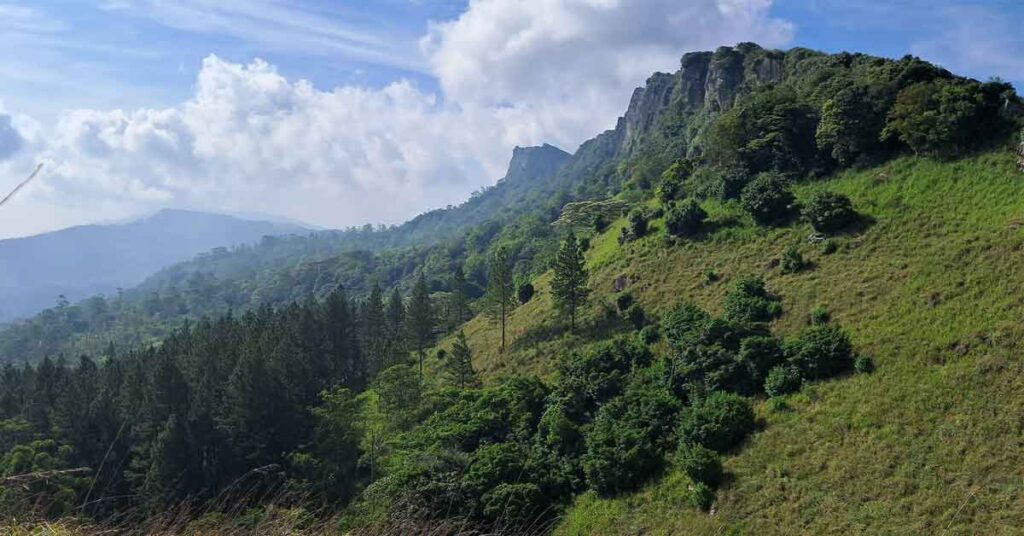
How to plan a trip to Sri Lanka?
Figuring Out Where to Go in Sri Lanka
After you’ve figured out the time scale for your trip, it’s time to think about the most efficient way to explore Sri Lanka.
Depending on what you’re interested in seeing, you may want to start by flying into Colombo City and travelling up to the cultural triangle. From there, head south to Kandy and then continue down the west coast towards Galle.
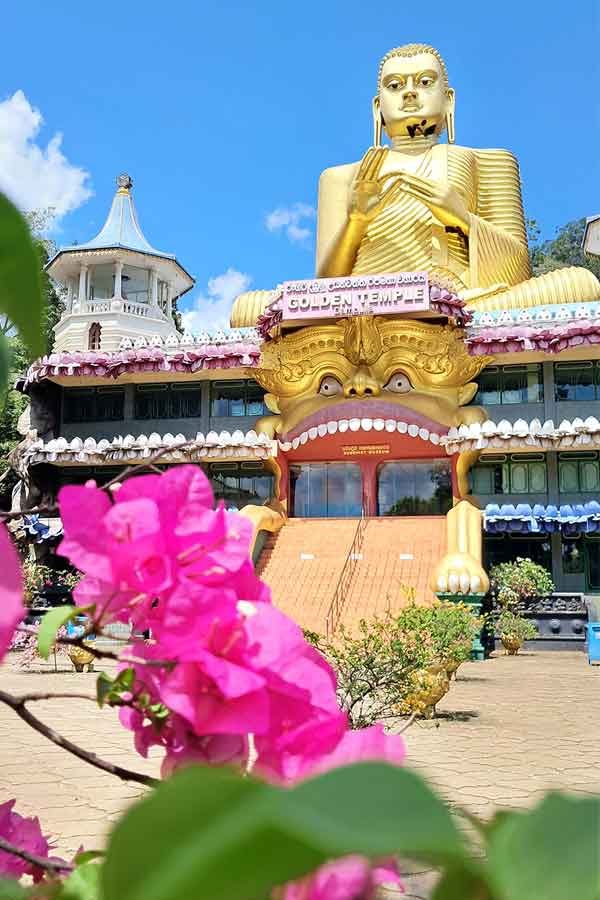
Here are some of the best things to see in Sri Lanka that you might want to add to your itinerary:
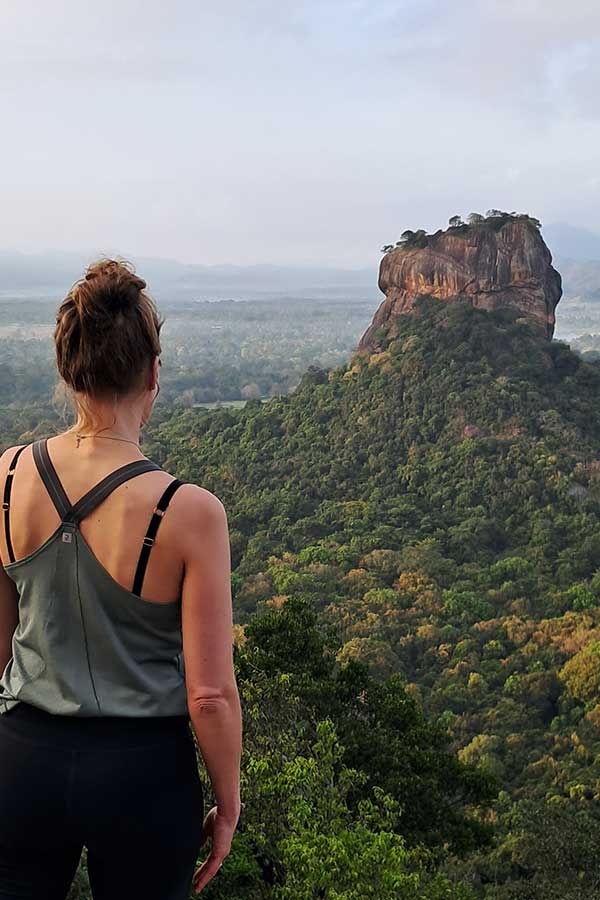
- The ancient cities of Anuradhapura, Polonnaruwa and Sigiriya
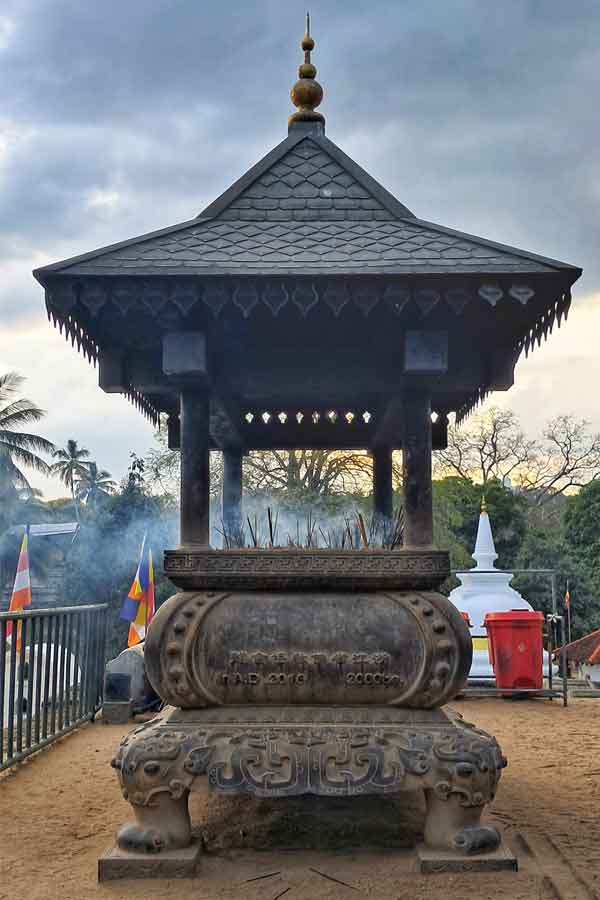
- The Temple of the Tooth in Kandy
- The tea plantations in Nuwara Eliya
- Yala National Park for a chance to spot elephants, leopards and other wildlife
- Ella’s famous Nine Arch Bridge for stunning views of the surrounding landscape
- The beautiful beaches in Mirissa and Unawatuna
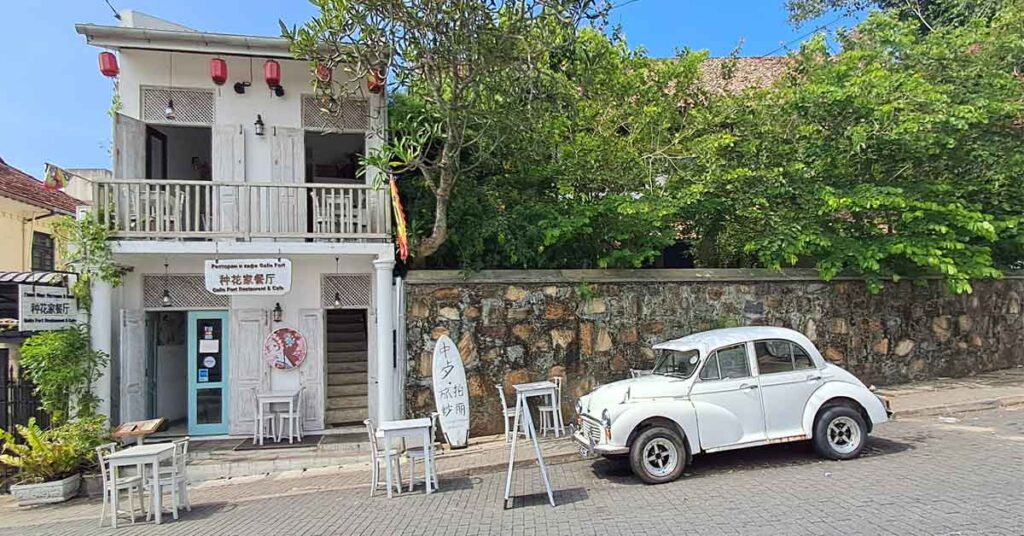
- The UNESCO world heritage site of Galle Fort
If you prefer someone else to do the brainwork of planning, check out this 2 week backpacking Sri Lanka itinerary for some inspo.
How to Get to Sri Lanka?
Sri Lanka has two international airports, one in Colombo (CMB) and one in Mattala (HRI).
Most flights going to Sri Lanka from major cities around the world will land in Colombo. If you’re coming from a nearby country like India or Maldives, you may find it more convenient to fly into Mattala.
You can also enter Sri Lanka by boat via various ports around the country, including Colombo, Galle and Trincomalee.
Can We Travel to Sri Lanka by Road?
Sri Lanka is an island. The closest country is India.
There is no bridge which connects India to Sri Lanka, however, there are ferry crossings between the two countries.
How Long Does It Take To Get to Sri Lanka?
This depends on where you’re starting from.
To give you a rough idea, here are some popular routes:
- London to Sri Lanka: Approximately 12.5 hours
- New York to Sri Lanka: Approximately 18 hours
- Sydney to Sri Lanka: Approximately 11.5 hours
- Qatar to Sri Lanka: Approximately 5 hours
- Delhi to Sri Lanka: Approximately 3.5 hours
There are also direct flights from major cities in Europe, Asia and the Middle East.
How to Travel Around Sri Lanka?
Sri Lanka has a pretty decent infrastructure. You can travel around the country via trains, taxis/private cars. and tuk-tuk.
There’s no single best way to get around Sri Lanka, and I recommend using a mix of transport options.
By Train
The train system in Sri Lanka is one of the most scenic and affordable ways to travel around the country. The trains can often be crowded, but they offer a unique experience as you pass by lush green landscapes and traditional villages.
Some popular train routes include Colombo to Kandy, Ella to Nuwara Eliya, and Galle to Matara.
By Taxi or Private Car
For a more comfortable and convenient option, you can hire a taxi or private car to travel around Sri Lanka. This is especially useful if you are travelling in a group or with family.
Make sure to negotiate the price beforehand and agree on an itinerary before starting your journey.
By Tuk-Tuk
Tuk-tuks are great for shorter distances. They are small three-wheeled vehicles that can navigate through traffic easily and are a fun way to explore the cities.
Make sure to always negotiate the price before getting in and agree on a price beforehand to avoid any misunderstandings.


What to Eat in Sri Lanka
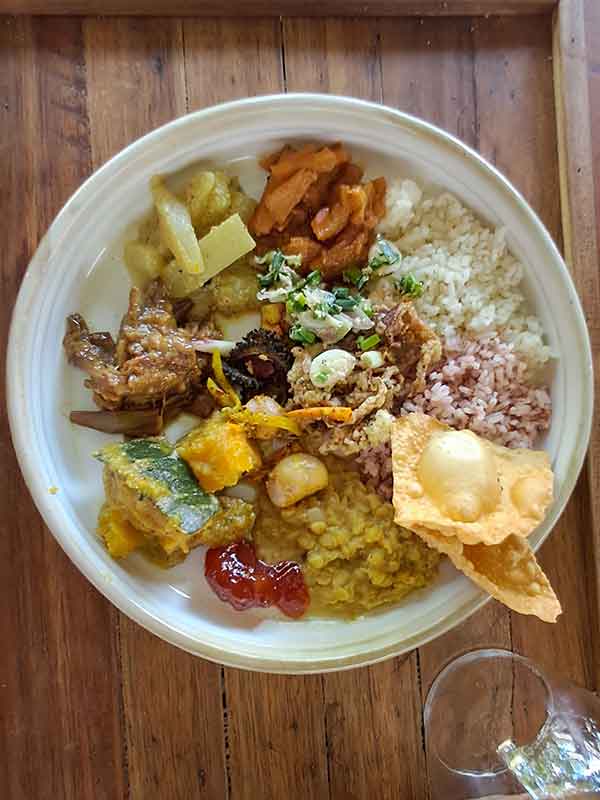
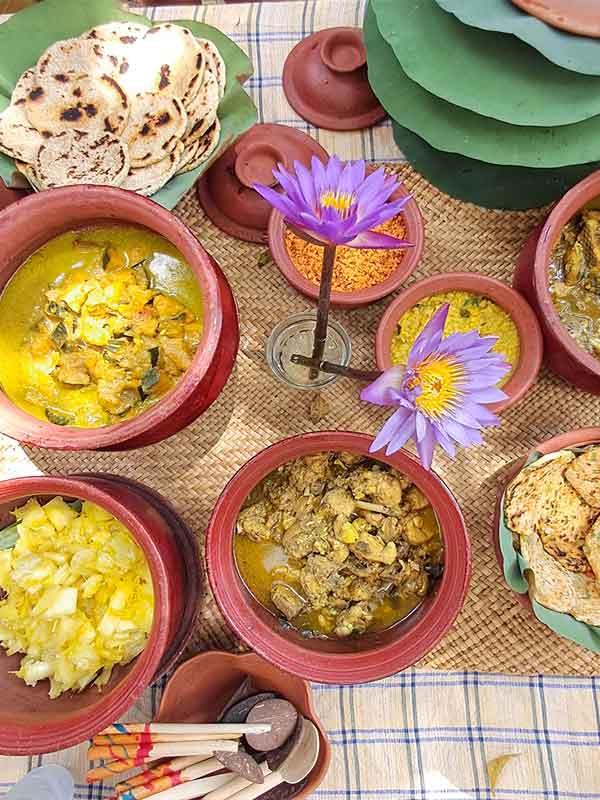
One of the things I loved about Sri Lanka – ok, so there were many things I loved – was the food, especially as so much of it was naturally veggie-friendly.
As a lifelong vegetarian, Asia never fails to disappoint when it comes to options and flavours.
One word of warning if you’re sensitive to chillis – the food can be on the hot side! so keep that in mind if you’re not a fan of spice.
Some popular dishes I recommend you try include:
- Hoppers: A thin crispy pancake served with coconut sambal and curries.
- Dhal curry: Made from lentils and spices, this is a staple dish in Sri Lanka.
- Kottu: A stir-fry dish made with roti (flatbread), vegetables and eggs.
- String hoppers: Thin rice noodles steamed together to make a flat bread-like dish, served with curries and coconut sambal.
- Coconut sambal: A delicious side dish made from grated coconut, onions, chilli and spices.
- Roti: A flatbread that can be filled with a variety of fillings like vegetables, cheese or chocolate.
- Pineapple curry: A unique and tasty dish made with pineapple, curry spices and coconut milk.
- Watalappan: A sweet dessert made from coconut milk, jaggery (palm sugar), eggs and spices like cinnamon and cardamom.
- Fruit: Sri Lanka has an abundance of delicious tropical fruits such as mangoes, papayas, pineapples and the super-sweet mini bananas
Is Sri Lanka Expensive to Visit?
The cost of travelling to Sri Lanka varies depending on your travel style.
Accommodation options range from budget guesthouses to luxurious five-star resorts – homestays are a great way to save money and support local initiatives.
Transportation costs can also vary depending on whether you choose to take the local train or hire a private driver.
Your trip cost will also depend on the activities you choose to do – entrance fees for popular attractions like Sigiriya Rock Fortress and national parks can add up.
Working out Your Sri Lanka Travel Budget
I felt that the cost of travel to Sri Lanka was on par with places in Asia, like Bali and Thailand.
If you were on a tight budget, then you could easily survive on the equivalent of $30 per day including street food, dorm-style accommodation and using public transportation.
If you’re looking for mid-range options, you can expect to budget for around $80 per day – that will give you a night in a basic guest house, a short journey by private transportation (remember to negotiate prices before the journey) and a few extra activities.
If you plan to stay in a high-end luxury hotel – then prices start in the $100s per night.
Use this travel cost calculator here to work out how much to budget for a trip to Sri Lanka

What To Pack for Sri Lanka
There are a few essentials you’ll want to bring when you visit Sri Lanka.
Pack for a hot and humid tropical country, the weather is warm all year round – except for the hill regions which can get cool.
For more details, read my ultimate guide on what to wear in Sri Lanka, which also includes a downloadable packing list.
Some other things to remember:
- Bring a good pair of walking shoes for exploring the cities and hiking trails
- Sun Protection – Use 50SPF, the sun is strong
- Insect Repellent – I’m a magnet for mosquitos, and although I had insect repellant, I went one step further and opted to wear long linen trousers for most of my trip.
- A travel umbrella – when it rains it pours in Sri Lanka
- Take a large sarong for visiting temples – you’ll need to cover your shoulders and knees to enter the Buddhist temples – you’ll also have to remove your shoes
- Small day bag for carrying a water bottle, money, mobile, and other small things you might need on a day trip

Staying Connected in Sri Lanka
For most travellers, staying connected is important.
WiFi was available in most of the accommodations I stayed at.
If you’re venturing off-the-beaten-path, then your best option is to buy a local SIM card – you can do this at the airport.
Alternatively, get an international SIM like Airlo.
Travel Insurance for Sri Lanka
Travel insurance is essential when you travel to any country.
Even though Sri Lanka is relatively safe for travellers, it’s always better to be prepared for any unexpected situations.
Make sure your insurance covers medical emergencies as well as theft and loss of personal items.
It’s also a good idea to check if your policy includes coverage for adventure activities like surfing and hiking.
I used Safety Wing insurance during my trip.
Other Useful Tips for Planning a Trip to Sri Lanka
- Water – Don’t drink tap water in Sri Lanka, it isn’t safe. Either invest in a good filtering water bottle or buy bottled water.
- Money – The Sri Lankan Rupee (LKR) is the currency used in Sri Lanka. ATMs are readily available throughout the country and in most places I was able to pay by card.
- Tipping – Tipping is a common practice in Sri Lanka, especially in the service industry.
- Toilets – Sri Lanka has regular western toilets in tourist places, however, you’ll probably also come across squatty pottys in more rural areas – take your own toilet paper, and hand sanitiser!
- Temple Etiquette – As mentioned, when visiting temples in Sri Lanka, it’s important to dress modestly, cover your knees and shoulders and remove your shoes before entering. Additionally, avoid turning your back to the Buddha eg, when taking photos or selfies.
- Elephants – Sri Lanka is known for its elephants. You might see what’s referred to as a domesticated elephant which you’ll recognise as they are usually shackled at the ankles. Please do not support these and instead go to the national parks to see them in the wild.
How to Plan a Trip to Sri Lanka FAQs
How Long to Spend in Sri Lanka?
This depends on your travel style and interests. Ideally, you’d want your Sri Lanka trip to last anywhere from 10 days or more. This will allow you to see the main highlights. There’s plenty to do in the country, so if you have more time, you’ll be able to explore more off-the-beaten-path destinations.
When is the Best Time to Visit Sri Lanka?
Sri Lanka has two main monsoon seasons, which affect different parts of the country at different times. Generally, the best time to visit is from December to March when the weather is dry and sunny on both coasts. The second best time is from April to September, but you’ll need to be prepared for some rain during this time.
Do I Need a Visa to Travel to Sri Lanka?
Yes – although there are a few exceptions. You can get this when you arrive in Sri Lanka, but it’s cheaper to get it in advance.
How to Get Around Sri Lanka?
Getting around Sri Lanka is fairly easy. I recommend using a mix of trains, tuk-tuks and private hire cars depending on where you are going.
What’s the Cost of a Trip to Sri Lanka?
Sri Lanka is generally a budget-friendly destination. Accommodation and food are relatively inexpensive, and you can find good deals on activities and transportation.
Your Sri Lanka trip cost will vary depending on your spending style. You could get by on as little as $30 a day if you’re on a budget or spend upwards of $100 a day if you’re looking for luxury experiences.
Where’s the Best Place to Travel in Sri Lanka?
If you’re travelling in Sri Lanka, chances are you’ll want to hit up some of the highlights. Some must-visit destinations include:
Unawatuna Beach
Sigiriya Rock Fortress
Yala National Park
Kandy
Final Thoughts on How to Plan Sri Lanka Trip
Sri Lanka is a diverse and beautiful country with so much to offer. Whether you’re looking for relaxation, adventure, or cultural experiences, you’ll find it all in this tropical paradise.
With the right planning and preparation, you can make the most out of your trip to Sri Lanka and create unforgettable memories.
This travel guide to Sri Lanka is just the beginning. If you wanna make your Sri Lanka trip plan even better, why not read more of our articles to start planning your stay?