
What to Wear in Sri Lanka: Female Packing List
Trying to figure out what to wear in Sri Lanka? I totally get it.
It is hot. It is humid. The kind of sticky heat where you feel like you need a shower by 9 am.
When I visited in May, mostly around the central and southern areas, I knew I’d be hiking in the highlands, jumping on safaris, wandering through temples with no air con, and trying not to get absolutely devoured by mosquitoes. If there’s one person in a group who gets eaten alive, it’s me.
I also travel light. Everything had to fit into my 40-litre backpack, which is basically carry-on size. No lugging suitcases. No “just in case” outfits. Just practical pieces that actually worked.
I wore every single item on this list. Some pieces were lifesavers. A couple I could have left at home. And the one thing I forgot that I desperately wished I had.
So after testing everything in real life, from sweaty train rides to tea plantations and temple visits, I pulled together this Sri Lanka packing list for female travellers who want to stay cool, respectful, and bite-free without overpacking.
Inside, you’ll find the breathable linen trousers I basically lived in, the oversized shirt that doubled as my temple cover-up, and what I would skip next time.

Meet Me In Departures contains affiliate links and is a member of the Amazon Services LLC Associates Program. If you make a purchase using one of these links, we may receive compensation at no extra cost to you. See our Disclosure Policy for more information.
How to Dress in Sri Lanka as a Woman: Quick Guide
Short on time? Here’s the quick answer to what clothes to wear in Sri Lanka.
Stick to lightweight, breathable fabrics like cotton and linen, choose loose-fitting pieces to handle the humidity, and pack something to cover your shoulders and knees for visiting temples.
Sri Lanka is hot and humid for most of the year, so natural fabrics are your best friends. I practically lived in loose linen trousers because they kept me cool, protected my legs from the sun and jungle bugs, and still felt comfortable in the heat.
Tight fabrics just cling when it’s sticky, and nobody needs that on holiday.
In most tourist areas, you can wear pretty much what you like. But when visiting religious sites or heading into more rural areas, slightly more coverage is the safer and more respectful choice.
Blending In vs Standing Out
Sri Lanka is fairly relaxed when it comes to clothing, especially in beach towns and cities. However, outside the main tourist hubs, local women generally dress a little more conservatively.
That doesn’t mean you need to overhaul your wardrobe. It just means ultra-revealing or very tight outfits will make you stand out more than you might want to.
A bit of extra coverage, especially in rural areas or the highlands, not only feels more respectful but also helps you avoid becoming a mosquito buffet. I’d personally rather be slightly warm than covered in itchy bites.
Breathable layers you can add or remove easily are always smarter than restrictive or very short pieces.

What Do Women Wear in Sri Lanka?
You’ll see local women in Sri Lanka wearing everything from traditional saris to modern Western-style outfits.
In cities and beach towns, jeans, t-shirts, maxi dresses and casual summer outfits are completely normal. It’s not a strictly conservative country, and you won’t feel like you need to be covered head to toe.
From what I saw while travelling around the country, women in Sri Lanka generally seemed to have more freedom over what they wore compared to places I’ve visited in parts of the Middle East or North Africa, where dress norms can feel much more structured.
Tourist areas in Sri Lanka are especially relaxed.
That said, context matters. What works on the beach might feel out of place in a rural village or at a temple.
How Do Local Women Dress?
In everyday life, most local women in Sri Lanka tend to dress:
- In saris for work, religious settings, or formal occasions
- In loose trousers with longer tops or tunics
- In maxi dresses or skirts that fall below the knee
- With shoulders generally covered outside beach areas
- In practical, breathable fabrics suited to the heat
You’ll notice clothing is rarely skin-tight or overly revealing, especially outside major cities.
You absolutely do not need to dress like the local woman. But if you prefer blending in over standing out, slightly looser and longer pieces will feel more aligned with what I personally observed most women wearing day to day.
And honestly, in that humidity, you’ll probably be more comfortable anyway.
❌ What Not to Wear in Sri Lanka
There isn’t a strict Sri Lankan dress code for tourists, but reading the room goes a long way.
If you’re unsure, the slightly more covered option is usually the smarter one.
Avoid wearing:
- Strappy tops and very short shorts when visiting temples. Shoulders and knees need to be covered, so if it wouldn’t pass in a cathedral back home, it probably won’t pass here either.
- Anything with Buddha prints or religious imagery. Even if it looks artsy and harmless, it is considered disrespectful.
- Clothing with offensive slogans, crude graphics, or political statements. Save it for Glastonbury.
- Very tight or extremely revealing outfits in rural areas. Beach towns are one thing. A small inland village is another.
- Shoes that require a full engineering degree to remove. You’ll be taking them off constantly at temples, sometimes on very hot ground. Simple wins.

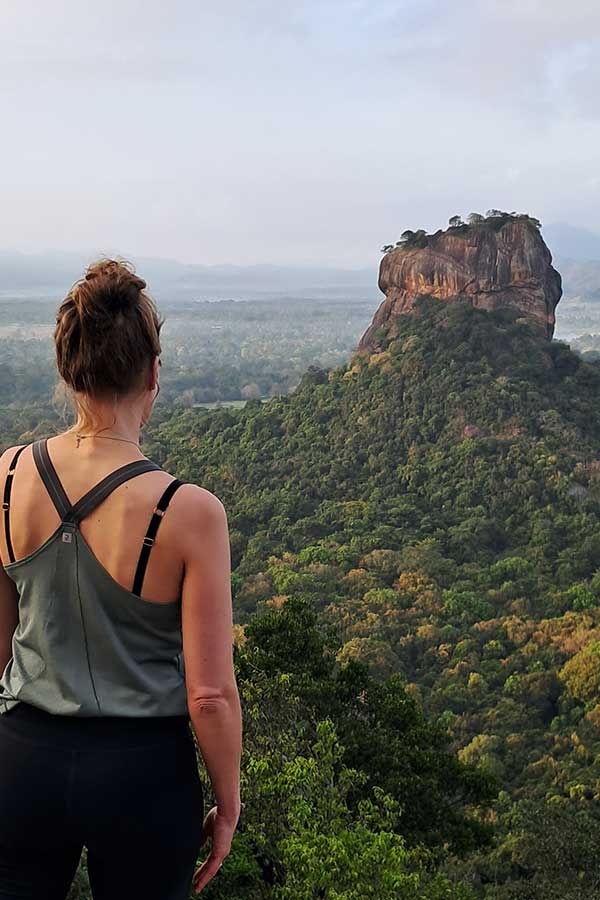
Things to Pack for Sri Lanka: By Activity
Sri Lanka isn’t a one-outfit kind of destination.
One day you’re sweating on a safari, the next you’re climbing up to a tea plantation viewpoint, and then you’re barefoot outside a temple trying not to burn your feet.
Before you start to pack, it’s a good idea to plan what you want to do in Sri Lanka.
Here’s what actually works for each type of activity.
What to Wear on Safari in Sri Lanka
One of the top things to do in Sri Lanka is wildlife spotting.
So if you’re heading out on safari, here’s what you can wear in Sri Lanka that actually makes sense.
Safaris can last several hours, often in direct sun. Even if it feels hot when you get in the jeep, you’ll be grateful for lightweight long sleeves once the sun starts beating down or when you’re driving through dusty areas.
- Lightweight, breathable clothing in neutral colours like beige, khaki, olive or white
- Long-sleeved tops and full-length trousers to protect against the sun and insects
- A hat or cap to protect your face from direct sunlight
- Sunglasses and proper sunscreen
Avoid bright colours and anything neon. You’re there to spot wildlife, not distract it.

Trousers vs Shorts
I’d personally choose loose trousers over shorts.
Yes, it’s warm. But it’s also buggy.
What to Wear to a Temple in Sri Lanka
Both men and women need to cover their shoulders and knees, so it’s worth having something lightweight you can throw on quickly rather than planning your whole day around it.
Here’s how to dress in Sri Lanka for temples or sacred sites:
- A t-shirt or blouse that covers your shoulders
- Trousers, a maxi skirt, or a dress that falls below the knee
- A shawl, scarf, sarong, or oversized shirt for quick coverage
- Shoes that are easy to slip on and off
- Socks, if you have them, especially for hot or rough temple floors
You will need to remove your shoes before entering. Some temple courtyards get incredibly hot underfoot, and that’s when you’ll be grateful for socks.
Avoid tight, sheer, or very revealing clothing.
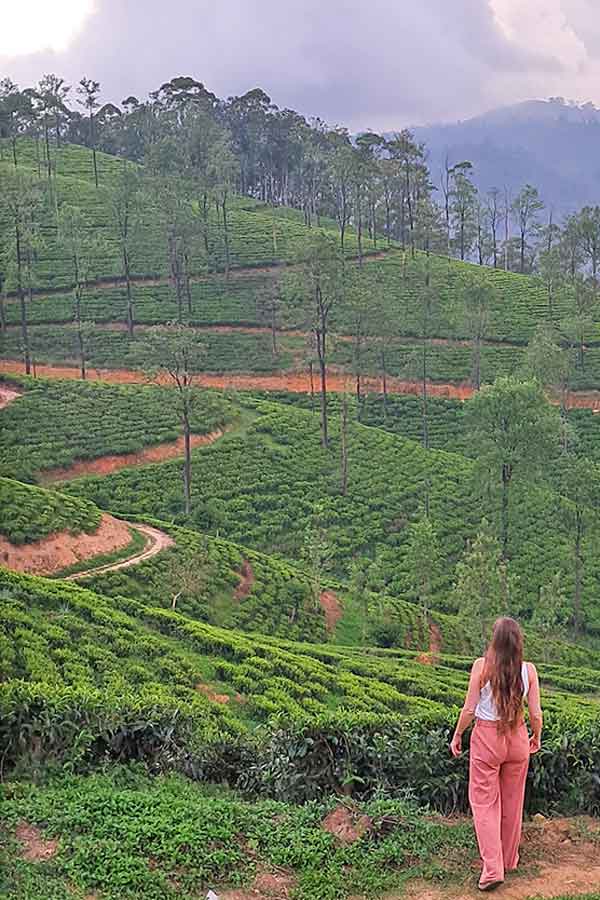
What to Wear in the Tea Plantations and Highlands
If you’re heading to Ella, Nuwara Eliya, or anywhere in the hill country, pack layers.
Mornings and evenings can feel noticeably cooler, especially at higher elevations. During the day, it’s still warm, but hiking trails can be muddy or uneven.
I’d recommend:
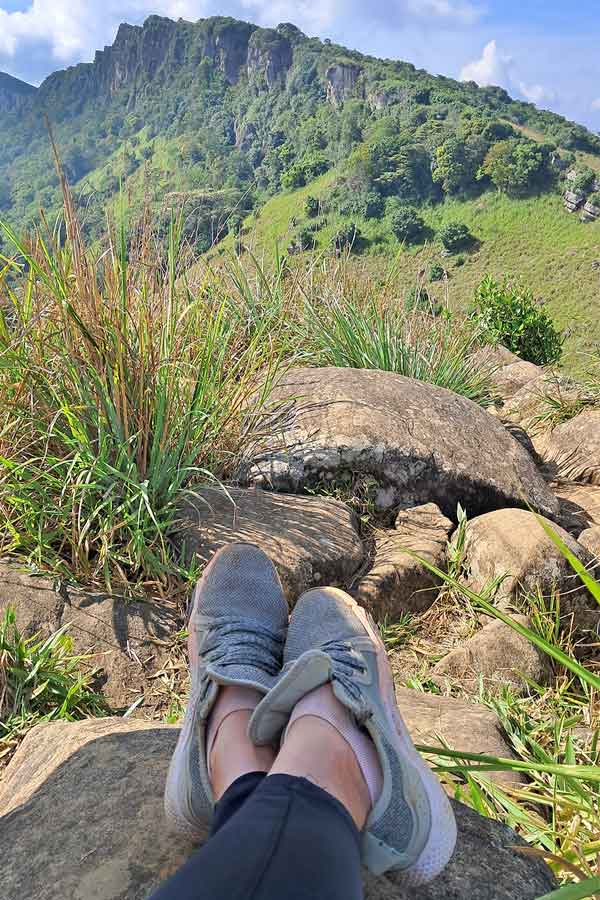
- Comfortable walking shoes or trainers
- Lightweight trousers or leggings
- A breathable t-shirt
- A light jumper or layer for early mornings
Also, leeches are a thing in some jungle areas. Full-length trousers are your friend.
This is also the only time on my trip that I wish I had a pair of longer socks!
What to Wear at the Beach
Beach towns like Mirissa, Unawatuna and Arugam Bay are very relaxed.
You can wear:
- Swimsuits and bikinis at the beach or pool
- Loose beach dresses or shorts
- Flip flops or sandals
That said, once you step off the sand and into town, it’s worth throwing on a t-shirt or cover-up. Wandering into a café in just a bikini top is technically possible, but it’s not always appreciated.
A lightweight cover-up solves everything.
What to Wear in Cities Like Colombo
Colombo feels modern and surprisingly cosmopolitan, so you’ve got more flexibility here.
You’ll see a mix of Western outfits and traditional clothing, and most summer pieces are perfectly fine.
If you’re exploring Colombo, wear:
- Loose trousers or a midi skirt
- A breathable t-shirt, blouse, or tank with a light layer
- A comfortable summer dress
- Trainers or supportive sandals for walking
- Sunglasses and a hat for the heat
It’s still hot and humid, so breathable fabrics matter more than anything else.
What to Wear in Jungle or National Park Areas
If you’re exploring jungle trails, staying at eco lodges, visiting national parks, or doing waterfall hikes:
- Full-length trousers
- Long sleeves, if possible
- Walking shoes
- Insect repellent
Humidity can be intense, so quick-drying fabrics are helpful. You might feel slightly warmer covering up, but it beats being covered in bites later.


Packing List for Sri Lanka
Here’s my practical guide on what to pack for Sri Lanka; this is exactly what I took for a 12-day trip.
I travel light. Always.
Everything here fitted into my 40-litre backpack, which is roughly the same size as a carry-on suitcase.
Backpack Vs. Suitcase
You absolutely can take a suitcase, but I personally prefer a backpack. Roads can be uneven, some accommodations require short walks down dirt tracks, and occasionally you’ll find yourself heading to a jungle lodge where wheels just aren’t helpful.
For this trip:
✔️ I did a clothes wash halfway through
✔️ Packing cubes were my saviour
If you’re staying longer, just adjust the quantities slightly. The key is choosing versatile clothes that you can mix and match rather than packing more outfits.
Also, leave a little space in your bag. You’ll find plenty of beautiful clothing in Sri Lanka that you might want to bring home.
Before packing, adjust this list based on:
- The length of your trip
- The type of luggage you’re bringing
- Whether you plan to wash clothes mid-trip
Clothing
This is what worked for me for 12 days:
- Underwear: x12
- Socks: x12 (I’d only packed trainer socks, so definitely add a couple of longer pairs for jungle hikes)
- Bras: x2 regular, x1 sports bra
- Sleepwear: x1
- Swimwear: x1
- Sarong: x1
- Tops: x6 (a mix of short-sleeved t-shirts, tanks, and a couple of lighter strappy tops)
- Leggings, or joggers: x2
- Linen trousers: x2
- Shorts: x1
- Dresses or skirts: x1
- Long-sleeved floaty shirt: x1 (for cooler evenings, temple cover-ups, and sun protection)
- Lightweight rain jacket: x1
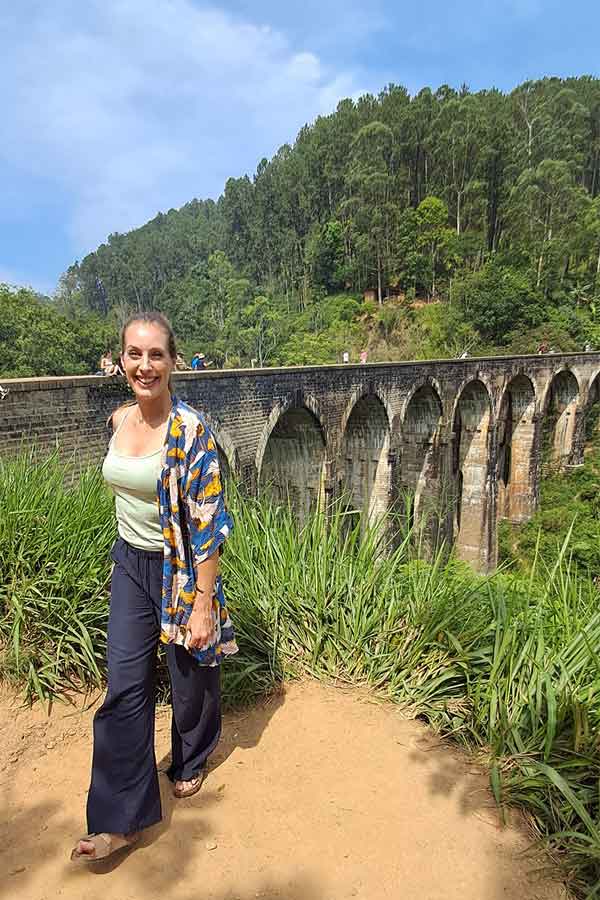
My linen trousers were easily my most-worn item; nothing fancy, just high-street ones. They worked for temples, hiking viewpoints, train journeys, and evenings out.
Shoes
- Flip flops
- Hiking boots or walking shoes (my gym trainers were completely fine for hiking, including around Nine Arches Bridge)
- Birkenstocks or supportive sandals
- White trainers (I only wore these once and could have skipped them)
Footwear Guide: What to Wear and When
You do not need five pairs of shoes.
- Flip flops for beaches and quick outings
- Trainers or walking shoes for hikes, tea plantations, and longer exploring days
- Easy slip-on sandals for temple visits
- Supportive sandals for city walking
If I packed again, I’d skip the extra white trainers and stick to one solid pair of walking shoes.
Accessories
- Wide-brimmed hat or cap
- Sunglasses
- Safari hat (optional, but I used mine more than expected)
- Day pack
- Small crossbody or over-shoulder bag
Toiletries
I used miniatures for everything to save space.
- Toothbrush and toothpaste
- Shampoo, conditioner, body wash
- Deodorant
- Face moisturiser and face wash
- Basic makeup
- SPF 50 sunscreen
- Insect repellent
- Hand sanitiser
- Small pack of tissues
- Feminine hygiene products
- Nail file
- Hairbrush, hair ties, bobby pins
- Mini first aid kit: paracetamol, diarrhoea tablets, hydration salts, antiseptic wipes, plasters
Other Essentials
- Passport and photocopies
- Visa and arrival form (I completed mine online before departure)
- Travel insurance
- Pen and notebook
- Cash and credit or debit cards
- Driving licence if renting a car
- Reusable water bottle
- Snacks
- Travel umbrella
Electronics
- Universal power adapter (Sri Lanka mostly uses UK Type G plugs)
- Phone and charger
- eSIM or local SIM
- Portable charger
- Camera and charger
Miscellaneous
- Microfibre travel towel
- Canvas tote bag
- Dry bag or plastic bags for wet clothes
- Eye mask and earplugs
What to Wear in Sri Lanka: Month by Month
Sri Lanka’s weather is not as simple as picking a month and calling it a day. It also depends on where you’re actually going.
You could be sunbathing on the south coast while another part of the country is dealing with full monsoon chaos. So it’s worth checking the forecast for the specific regions on your itinerary, rather than just searching the weather for the whole country and hoping for the best.
It’s warm all year, which makes packing easier. But the hill country and tea regions like Ella and Nuwara Eliya are noticeably cooler, especially in the mornings and evenings.
Below is a simple month-by-month breakdown to help you decide what to wear in Sri Lanka for your trip.

What to Wear in Sri Lanka in January
- Average Temperature: 27°C (81°F)
- Average Rainfall: 81mm
- Clothing Recommendations:
- Light, breathable fabrics such as cotton and linen.
- Short-sleeved tops, shorts, skirts, sundresses
- A light jacket or shawl may be needed for cooler evenings in higher elevations.
What to Wear in Sri Lanka in February
- Average Temperature: 27°C (81°F)
- Average Rainfall: 74mm
- Clothing Recommendations:
- Same as January, light and breathable fabrics are best.
- Bring a waterproof jacket or umbrella as February marks the start of the monsoon season in the northeast.
What to Wear in Sri Lanka in March
- Average Temperature: 28°C (82°F)
- Average Rainfall: 88mm
- Clothing Recommendations:
- Light and breathable clothing.
- Bring a light rain jacket or umbrella, as March is when the rainy season begins in the southwest regions of Sri Lanka.
What to Wear in Sri Lanka in April
- Average Temperature: 29°C (84°F)
- Average Rainfall: 113mm
- Clothing Recommendations:
- The weather starts to get hotter in April, so pack comfortable clothing.
- Bring a light rain jacket or umbrella as the monsoon season continues in both the northeast and southwest regions.
What to Wear in Sri Lanka in May
- Average Temperature: 29°C (84°F)
- Average Rainfall: 199mm
- Clothing Recommendations:
- Similar to April, pack lightweight clothing.
- Bring a rain jacket, waterproof poncho and umbrella as May is the peak of the monsoon season in both regions.
What to Wear in Sri Lanka in June
- Average Temperature: 29°C (84°F)
- Average Rainfall: 150mm
- Clothing Recommendations:
- The monsoon season starts to subside, but the weather is still hot and humid – take breathable clothing.
- Bring a rain jacket or umbrella just in case of occasional showers.
What to Wear in Sri Lanka in July
- Average Temperature: 29°C (84°F)
- Average Rainfall: 124mm
- Clothing Recommendations:
- July marks the end of the monsoon season in the southwest, so pack for warm and humid weather.
- However, I still recommend bringing a rain jacket or umbrella, as there can still be a chance of showers.
What to Wear in Sri Lanka in August
- Average Temperature: 29°C (84°F)
- Average Rainfall: 144mm
- Clothing Recommendations:
- Similar to July, take clothing suitable for hot weather.
- It probably won’t rain, but pack a travel umbrella just in case.
What to Wear in Sri Lanka in September
- Average Temperature: 29°C (84°F)
- Average Rainfall: 253mm
- Clothing Recommendations:
- September marks the transition to the northeast monsoon season. The weather can be humid.
- However, also bring a light rain jacket or umbrella as occasional showers can occur in the northeast region.
- Additionally, I recommend packing long-sleeved tops and pants to protect against mosquito bites.
What to Wear in Sri Lanka in October
- Average Temperature: 28°C (82°F)
- Average Rainfall: 361mm
- Clothing Recommendations:
- The northeast monsoon season is in full swing, so pack lightweight and quick-drying clothing.
- Take a good rain jacket and umbrella. There can be heavy rainfall during this month.
- Long-sleeved tops and pants are used to protect against mosquitoes. Also, take insect repellent.
- If you plan on visiting higher elevations, I recommend wearing some warmer clothing as the temperatures can drop significantly here.
- This is one of the best seasons for hiking, so take comfortable hiking shoes if you plan on exploring nature trails.
What to Wear in Sri Lanka in November
- Average Temperature: 28°C (82°F)
- Average Rainfall: 287mm
- Clothing Recommendations:
- The northeast monsoon season continues in November, so light and quick-drying clothing is best.
- Take a rain jacket or umbrella.
- Pack some long-sleeved tops and trousers to protect against mozzies.
- A warm pullover for visiting higher elevations, as the temperatures can drop.
What to Wear in Sri Lanka in December
- Average Temperature: 27°C (81°F)
- Average Rainfall: 229mm
- Clothing Recommendations:
- December marks the end of the northeast monsoon season, but there may still be occasional showers, so I still recommend a rain jacket or umbrella.
- Insect repellent and sunscreen.
- Pack clothing that can be layered up for the changing weather conditions.
What to Wear to Sri Lanka FAQs
Is Sri Lanka safe for solo female travellers?
Generally, yes. Plenty of women travel solo in Sri Lanka and have a great time, but you’ll want your usual street smarts. Expect occasional unwanted attention, keep an eye on your stuff in busy areas, avoid walking alone late at night, and use trusted transport. Also, check the current official travel advice before you go.
When is the best time to visit Sri Lanka?
It depends on where you’re going. For the south and west coasts (plus the hill country), December to March is usually the driest, sunniest window. For the East Coast, May to September is often best. The in-between months can be wetter, so plan by region, not by vibes.
What do female tourists wear in Sri Lanka?
Female tourists in Sri Lanka usually wear lightweight, breathable clothing like linen trousers, maxi dresses, loose tops, and shorts in beach areas. In cities and tourist hotspots, dress is fairly relaxed. Just remember to cover your shoulders and knees when visiting temples or religious sites.
Can you wear shorts in Sri Lanka?
Yes, you can wear shorts in Sri Lanka, particularly in beach towns and cities. Just avoid wearing them inside temples or religious sites, where knees need to be covered. If you are heading into rural areas, slightly longer styles may feel more comfortable.
Can I wear a bikini in Sri Lanka?
Yes, bikinis are perfectly fine at beaches and hotel pools. Once you leave the beach area, it is best to throw on a cover-up or t-shirt. Walking through town in just swimwear is technically possible, but not always appreciated.
What is the Sri Lankan dress code for temples?
For visiting temples in Sri Lanka, men and women are required to cover their shoulders and knees. Loose trousers, maxi skirts, or dresses below the knee work well. You must also remove your shoes before entering, so simple footwear makes life easier.
What do people wear in Sri Lanka?
You will see a mix of traditional and Western clothing in Sri Lanka. Local women wear saris, tunics, maxi dresses, and loose trousers. In cities, modern outfits are common, but overall styles tend to be practical, breathable, and modest.
Is it safe to wear jewellery in Sri Lanka?
It is generally safe to wear jewellery in Sri Lanka, but keep it simple. Avoid bringing expensive or sentimental pieces. Like anywhere, wearing flashy valuables can attract attention, especially in crowded areas.
Now Your Sri Lanka Packing List is sorted, let’s plan the Fun Part
Packing for Sri Lanka is surprisingly straightforward once you understand the balance.
Lightweight and breathable for the heat, a little modest for temples, and practical enough to handle everything from beach days to jungle walks.
For the most part, the dress code is relaxed, and people are welcoming. The only time your outfit really matters is at religious sites, so keep something handy to cover your shoulders and knees.
And if you’re anything like me and seem to be the main course at every mosquito buffet, a bit of extra coverage will save you from spending your evenings scratching.
Now that you’ve got your packing sorted, it’s time to start planning the rest of your Sri Lanka adventure. Have a look at the guides below and map out your route.