
What to Buy in Morocco: 23 Best Souvenirs & Prices
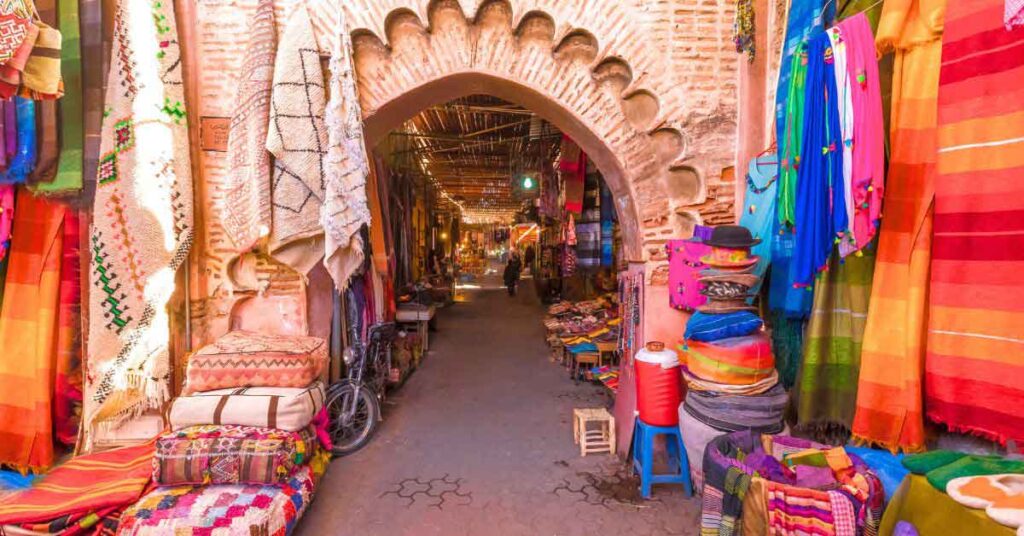
If you’re wondering what to buy in Morocco and how much to pay, prepare yourself. The souks are chaotic, colourful, loud, occasionally a bit pungent, and completely impossible to resist. It’s very easy to overspend in your first hour if you don’t have a rough idea of prices.
I travel solo and tend to plan everything myself, which means I’ve made enough shopping mistakes to know which Moroccan gifts are genuinely worth your suitcase space, and which are overpriced imports made for tourists.
After multiple trips to cities like Marrakech and Fes, and more haggling sessions than I can count, I’ve learned exactly what to buy in Morocco without getting completely carried away. That means knowing when something is fairly priced at 40 dirhams, and when 400 dirhams might actually be justified.
From handwoven rugs and beautiful woven scarves to argan oil, spices, ceramics and those intricate metal lanterns you’ll regret not buying, this guide covers the best souvenirs from Morocco, realistic price ranges, and where to shop for the good stuff. I’ll also share practical tips on navigating the souks, spotting handmade quality, and negotiating respectfully, because yes, you will need to haggle.
So if you’re planning a DIY trip and want meaningful, authentic finds rather than generic trinkets, here’s exactly what to look for and what to budget.
Meet Me In Departures contains affiliate links and is a member of the Amazon Services LLC Associates Program. If you make a purchase using one of these links, we may receive compensation at no extra cost to you. See our Disclosure Policy for more information.
Best Souvenirs from Morocco: Quick Guide
If you don’t want to read the full guide and just need the highlights, here’s the short version.
After several solo trips, plenty of wandering through the souks, and more than a few price comparisons, these are the Moroccan gifts I’d genuinely recommend looking out for. I’ve included what to buy in Morocco and how much to pay in the main guide, but this is your quick checklist of the best souvenirs to keep an eye on.
📍 Authentic gifts from Morocco 📍
- Moroccan rugs and carpets
- Leather goods
- Argan oil
- Spices and dry goods
- Tagines
- Lanterns
- Ceramics and pottery
- Moroccan jewellery
- Djellabas and kaftans
- Moroccan mint tea and teapots
- Olive oil
- Scarves
- Handmade leather slippers (babouches)
- Homemade soap
- Zellige tiles
- Hammered metalworks
- Musical instruments
- Thuya wood boxes
- Blankets
- Rose water and rose oil
- Moroccan pastries and gourmet food
- Fossils and minerals
- Kohl eyeliner
What Not to Buy in Morocco
Not everything in the souks is quite as handmade as they claim to be.
On one trip to Fes, I watched a demonstration of scarves being made, and the shop proudly told us everything in the store was handmade on site. Later, I was looking through the piles of scarves, and I spotted a couple of Made in China labels they had clearly forgotten to remove.
When I pointed it out, the mood shifted fairly quickly.
The point is not that everything is fake. Far from it.
Morocco has incredible craftsmanship. But do check what you are buying. Look for small imperfections, ask questions, and if something feels off, just walk away.
I would also be cautious with suspiciously cheap saffron, fossils with no real background, and anything that looks identical in five different stalls.
Can You Bring Moroccan Souvenirs Home?
In most cases, yes. You can bring home Moroccan souvenirs like rugs, ceramics, spices, textiles and argan oil without any issues.
Where you need to be careful is with anything sold as an antique or archaeological piece. If it looks like it belongs in a museum or sounds like it has been dug up somewhere important, it is best left behind unless you have proper export paperwork.
Most normal market purchases are absolutely fine. Just check your own country’s customs rules before buying anything expensive, edible, or unusually old. It takes five minutes and saves a headache later.
24 Top Things to Buy from Morocco
1. Moroccan Rugs and Carpets
Best Place To Buy
Approximate Cost
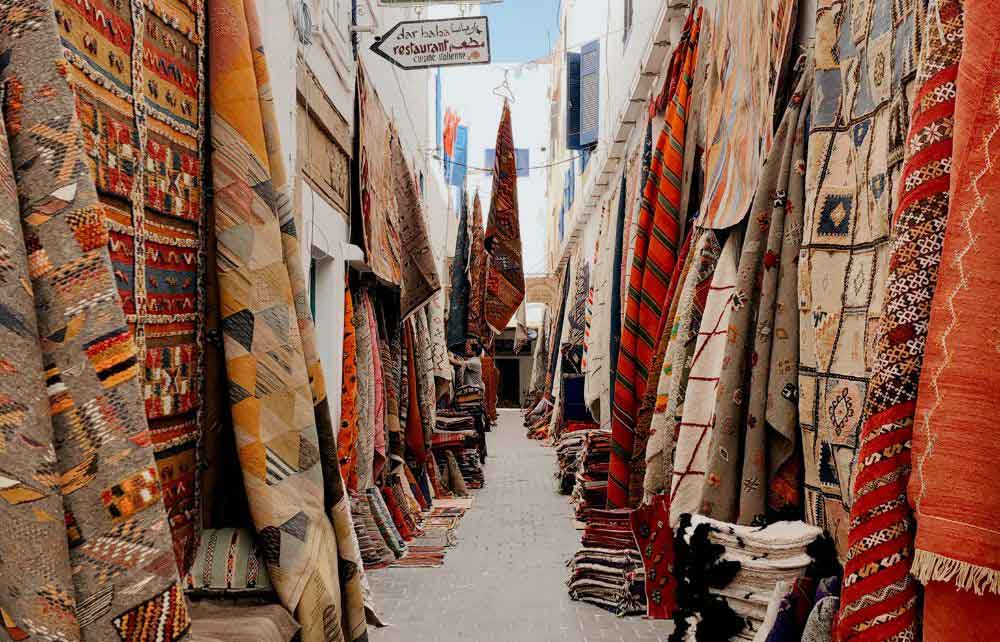
If you buy one big thing in Morocco, it will probably be a rug.
Moroccan rugs are famous for their bold colours and geometric patterns, often with symbols that reflect regional or tribal traditions. Some are thick and shaggy, others flat-woven and lighter, so there is something for most tastes.
You are not fitting one in your carry-on. Unless it is the size of a placemat. Most vendors can arrange shipping to your home, and they are very used to doing so.
On one of my tours in Marrakech, the guide showed us how to check the underside of a rug to see if it was genuinely hand-knotted. Flip it over and look for tight, consistent knots.
The more knots per square inch, the better the quality. It sounds obvious once someone tells you, but it is surprisingly easy to forget when you are being shown fifty rugs at once.
2. Leather Goods
Best Place To Buy
Approximate Cost
Moroccan leather has a strong reputation for quality, and it has been tanned using traditional methods for centuries. The most famous place to see this in action is the Chouara Tannery in Fes, which is one of the oldest tanneries in the world.
When I visited, it was peak summer. We went fairly early in the day, but it was already warm. You are handed a sprig of mint at the entrance, and it is not decorative. It is survival equipment.
I tried very hard to focus on the mint, but honestly, there is only so much a tiny leaf can do.
The smell is vile, and exactly what you would expect from vats of animal hides sitting in the heat. It is fascinating to see, but it is not subtle.
You will find everything from jackets and handbags to belts and pouffes.
Small caveat from me. I’m a vegetarian. Yes, technically, vegetarians can wear leather. It just makes me slightly uncomfortable, plus I really don’t like the smell, so I was’t in the market for a jacket. But if you are, Morocco is one of the better places to buy one.

3. Argan Oil
Best Place To Buy
Approximate Cost
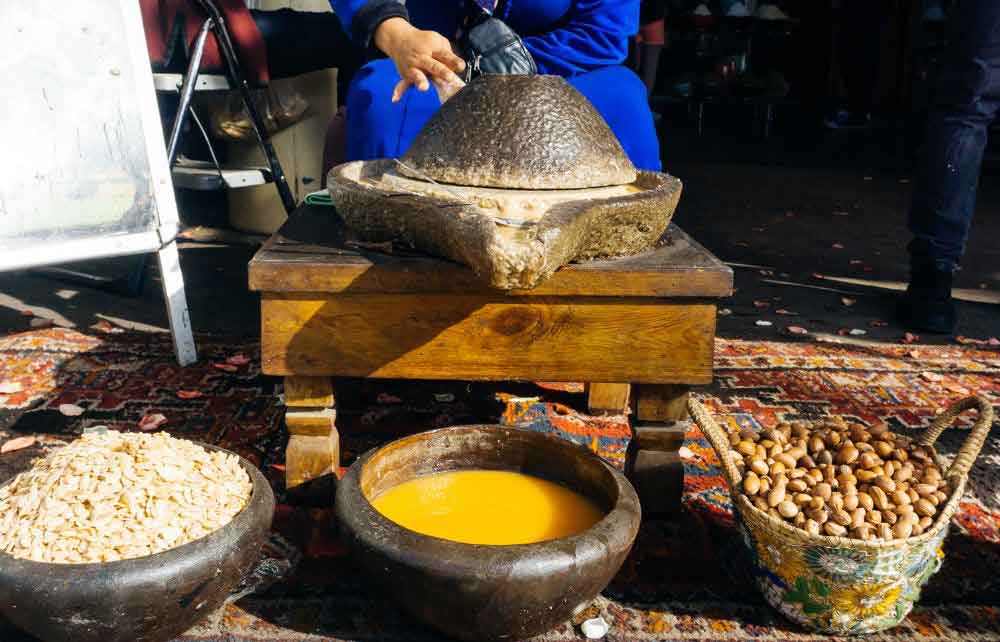
Often called “liquid gold”, argan oil is one of Morocco’s most famous exports, and for good reason. It is used both in cooking and in beauty products, and you will see it everywhere from market stalls to small roadside cooperatives.
On my very first trip to Morocco, this was one of the things I brought home. I’m a big fan of souvenirs that actually get used rather than shoved in a drawer and forgotten. I used it on my skin, as a massage oil, and mostly in my hair to tame the frizzy, flyaway ends that seem to appear the moment there is any humidity involved.
There are two types, cosmetic and culinary, so make sure you are buying the right one. The edible version is darker and has a slightly nutty smell, while the cosmetic version is lighter and absorbed more quickly.

Ethical Travel Tip
I recommend buying directly from a women’s cooperative if you can. You are more likely to get pure oil, and your money goes straight back into supporting local employment rather than a middleman in the souks.
4. Spices and Dry Goods
Best Place To Buy
Approximate Cost
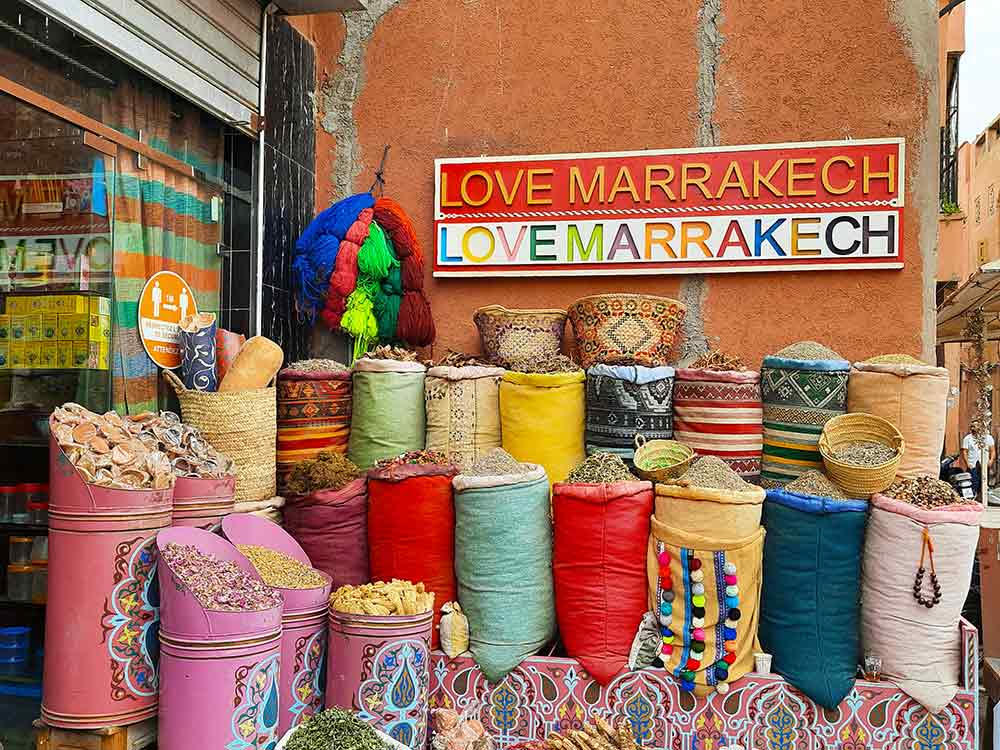
You will usually smell the spice stalls before you see them. There is no gentle introduction.
If you are travelling with hand luggage only, or backpacking and counting every gram like I usually am, spices are one of the easiest things to bring home. They are lightweight, easy to pack, and you can buy small quantities rather than committing to a one-kilo sack of cumin.
They also make some of the best cheap souvenirs from Morocco. Authentic, practical, and far more useful than something that ends up gathering dust on a shelf.
Look out for blends like ras el hanout, individual spices like cumin, paprika, cinnamon and turmeric, and of course saffron.
Moroccan saffron is often much cheaper than back home, but still expect to pay a fair price for it here, especially if you’re after the top-quality saffron. Always check for deep red strands with slightly lighter tips.
If it looks pale, powdery, or suspiciously cheap, it probably is. Vendors will happily tell you it is the best in Morocco. That does not automatically make it true.
5. Tagines
Best Place To Buy
Approximate Cost
A tagine is easily one of the most famous things to buy in Morocco. You will see them everywhere, stacked high in every colour imaginable.
These conical terracotta pots are used for slow-cooked stews and can be used in a standard oven back home, provided you season them properly first. They range from tiny decorative versions to enormous family-sized ones that could feed half your street.
I am a vegetarian, so I have eaten my fair share of vegetable tagines over the years. Potato, carrot, courgette, couscous on the side. Delicious, genuinely. But after a few days, you start to feel like you may never need to see another one again. That said, they are a proper part of Moroccan food culture, and it would feel strange to visit without trying at least one.
One problem is that they are bulky. If you are travelling with hand luggage only, this is probably not your moment. I would only recommend buying one if you have a checked suitcase, are road-tripping, or genuinely have space to spare. A smaller, personal-sized tagine is far more realistic than a massive statement piece you then have to wrestle into your luggage.

6. Lanterns
Best Place To Buy
Approximate Cost
Lanterns are everywhere in Morocco. The pierced metal and coloured glass throw patterned light across the walls, which looks impressive in a riad and equally good back home.
They also make a surprisingly practical, authentic Moroccan souvenir. If you choose one without glass, they are fairly lightweight and much easier to pack than they look. I would still avoid the enormous statement pieces unless you enjoy playing luggage Tetris the night before your flight.

Perfectly Imperfect
Not every “authentic” Moroccan souvenir is actually made in Morocco. Some lanterns are imported and sold as handmade. When I am shopping, I look closely for small tool marks, slight irregularities, and tiny imperfections in the metal. If every single lantern on the shelf looks identical, perfectly polished, and suspiciously flawless, it probably came out of a factory rather than someone’s workshop.

7. Ceramics and Pottery
Best Place To Buy
Approximate Cost
Moroccan ceramics include painted bowls, plates, serving dishes, tagines and decorative tiles, all finished in bold colours and intricate patterns. The styles vary slightly by region, but the craftsmanship is consistently impressive.
This is one of my favourite things to buy in Morocco. If space and weight were not an issue, I would happily fill half a suitcase with pottery.
That said, you do not need to buy a massive serving platter the size of a satellite dish. The smaller pieces are far more practical. Little hand-painted bowls are perfect for earrings, loose change, or dips and snacks, and they are much easier to wrap in clothes without having a mild panic at the airport.
Good To Know
When I visited Fes, I went to several ceramic studios and watched the process from shaping the clay to the hand-painted finishes. Buying directly from the workshops made me feel far more confident that I was getting something genuinely handmade rather than a factory copy.

8. Moroccan Jewellery
Best Place To Buy
Approximate Cost
Moroccan jewellery is bold, detailed, and very hard to ignore. You will find intricate filigree work, chunky silver pieces, colourful beadwork and gemstones, depending on the region and style.
If you are looking for Moroccan gift ideas, jewellery is an easy win. It is small, lightweight, and far easier to pack than a rug or a ceramic bowl. It also feels personal without being overly expensive.
I tend to travel fairly minimalist, often for weeks with just one piece of hand luggage and a capsule wardrobe I can mix and match.
After wearing the same rotation of outfits for the umpteenth time, a statement necklace or pair of earrings can completely transform the look. It is one of the simplest ways to feel like you have something new without actually packing more clothes.

9. Djellabas and Kaftans
Best Place To Buy
Approximate Cost
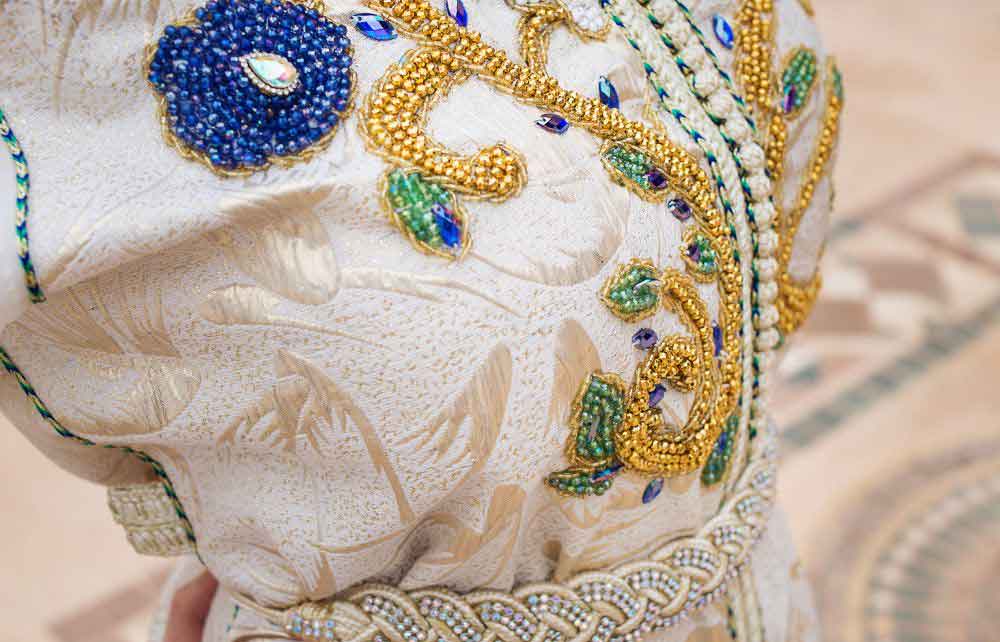
If you are curious about what women wear in Morocco, you will quickly notice the beautiful djellabas and kaftans worn across the country. They are known for their embroidery, flowing shapes, and bold colours, although you will also find more understated styles for everyday wear.
Kaftans tend to feel slightly dressier, while djellabas are often worn more casually.
Back home, they can easily become a statement piece rather than something you wear to pop to the shops.
Good To Know
On a tour in Casablanca, we were shown how to check the fabric weight and stitching quality. A good djellaba should feel substantial rather than flimsy, and the best quality pieces are hand-finished with detailed embellishments. Always check the seams and embroidery up close before committing.
10. Moroccan Mint Tea and Teapots
Best Place To Buy
Approximate Cost
Mint tea is part of daily life in Morocco.
You will be offered it at your riad, in shops, during tours, and sometimes when you are just standing still long enough to look approachable.
It is sweet. Very sweet. If you have a sweet tooth, you will be delighted. If not, prepare yourself.
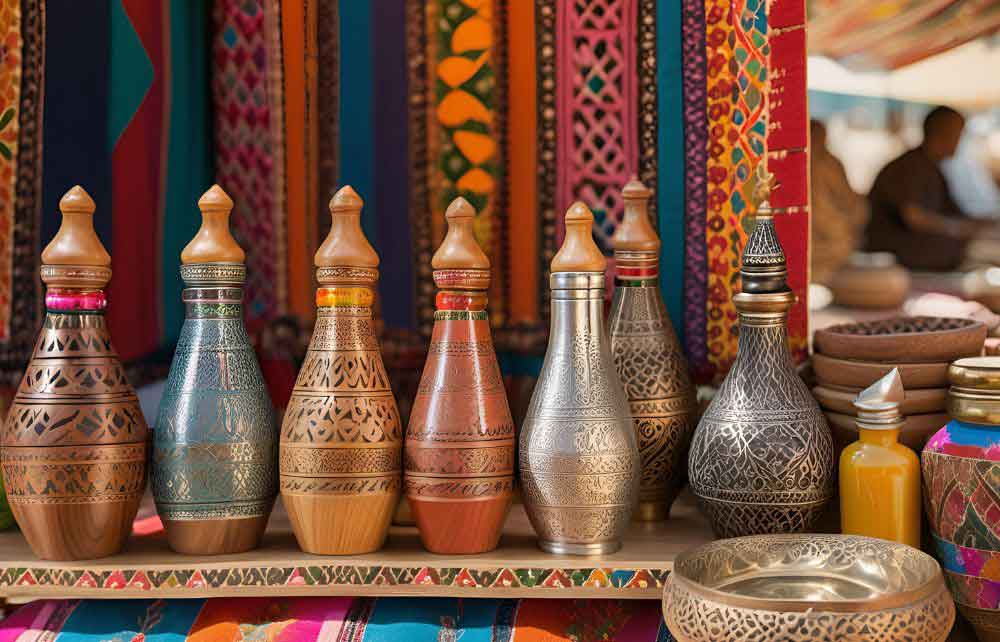
I have lost count of how many glasses I have had over the years. It feels almost rude not to accept it, and to be fair, it is part of the experience. The ornate metal teapots it is served in are just as iconic as the drink itself and make a practical souvenir you can actually use at home.

11. Olive Oil
Best Place To Buy
Approximate Cost
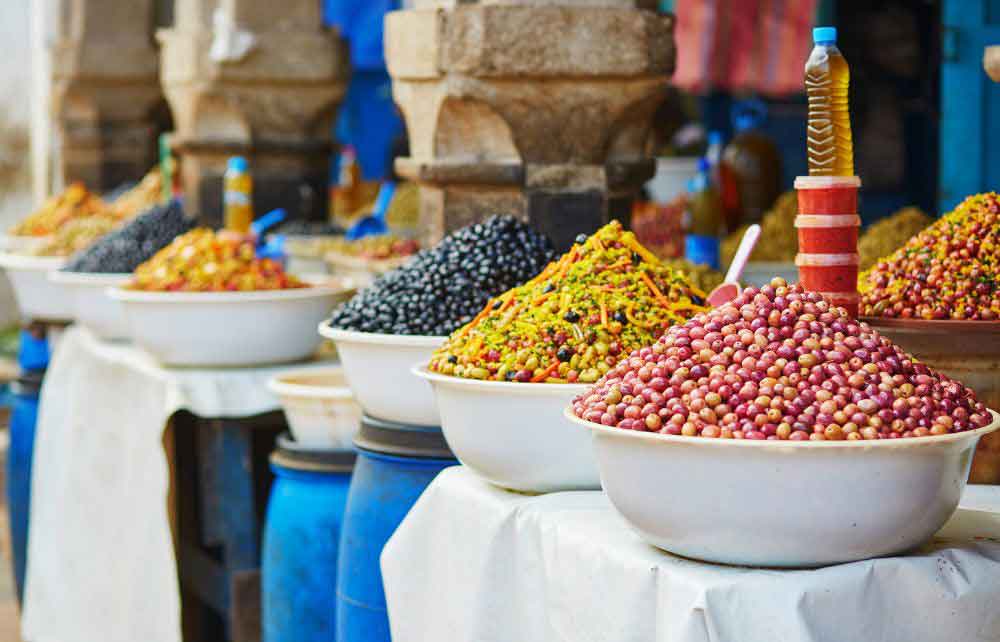
When people think of olive oil, they usually think of Greece, Spain, or Italy. But Morocco sits firmly in that same Mediterranean food culture, and olive oil is used generously in everyday cooking.
I live in the south of Spain now, and it completely changed how I cook. Coming from the UK, where butter was basically the default, olive oil has taken over everything. Salads, roasted vegetables, couscous, and even just drizzled over fresh bread with a pinch of salt.
Good olive oil makes a difference, and Moroccan olive oil is genuinely excellent.
It is not the flashiest souvenir, but I’m all for edible gifts. Just make sure it is sealed properly if you are packing it in your luggage, unless you want everything you own lightly marinated.
12. Scarves
Best Place To Buy
Approximate Cost
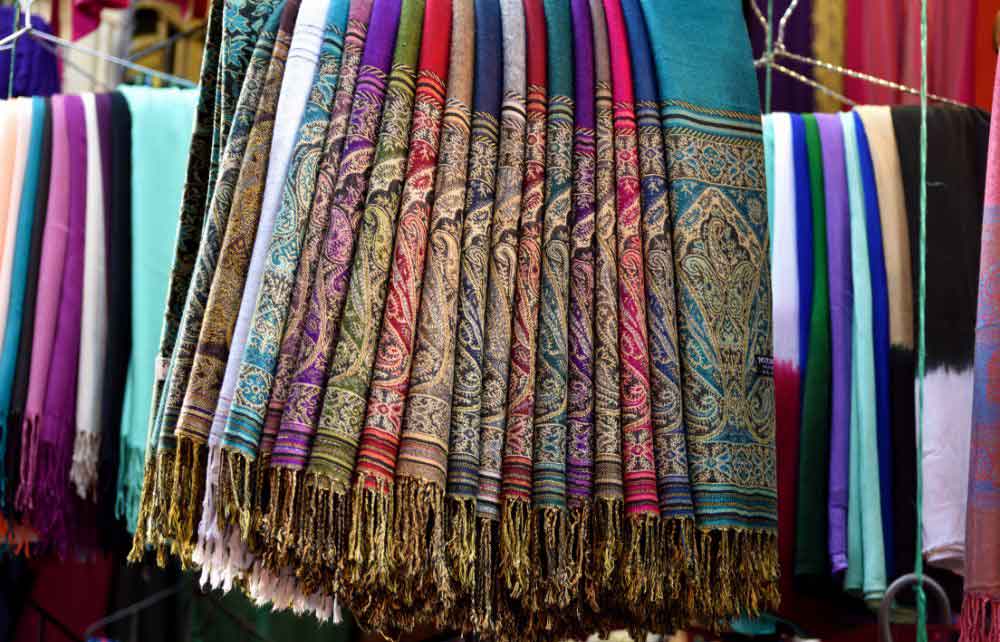
Scarves are worn by everyone in Morocco, and you will see them in every market and medina. From lightweight cotton to thicker woven pieces, they are practical as well as decorative.
If you are packing for a winter trip to Morocco, skip bringing one from home and buy locally instead. It saves space in your suitcase and gives you something far more interesting than whatever has been living in your wardrobe for the last five years.
You will find plenty of cheap imported scarves, but there are also genuinely beautiful, handmade pieces.
During one of my trips to Morocco, I remember visiting a shop where we were shown scarves being woven on a loom and told everything was made on site. Later, while looking through a stack, I spotted a couple with “Made in China” labels still attached. Slightly awkward.
There are incredible artisans producing high-quality woven scarves, including some made from cashmere or even cactus silk. Just take a moment to check what you are buying.
13. Handmade Leather Slippers
Best Place To Buy
Approximate Cost
Moroccan slippers, known as babouches, are those colourful, slightly pointy shoes you will see stacked high in the souks.
Traditionally, babouches were worn by men, but there is absolutely no rule saying women cannot wear them. These days, you will find versions for everyone, from simple neutral pairs to bright embroidered designs that are impossible to miss.
They are lightweight and easy to pack, which makes them a realistic souvenir even if you are travelling with just hand luggage. You can wear them outdoors, although I tend to use mine more as indoor shoes.

14. Homemade Soap
Best Place To Buy
Approximate Cost
Local soaps are crafted with ingredients like olive oil and argan oil, and many of them are naturally vegan-friendly. You will see bars scented with rose, orange blossom and other botanicals, and they smell far better than anything you will find in a standard supermarket aisle.
If you are looking for affordable gifts to buy in Morocco, these are a very easy win. They are small, lightweight, and simple to pack, which makes them ideal if you are travelling with limited luggage space.
I usually pick up a few bars for myself each time I visit. Just wrap them properly in something you don’t mind being lightly scented with rose for the next few weeks. Although it’s a nice reminder of the trip.

15. Zellige Tiles
Best Place To Buy
Approximate Cost
I live in Seville in Southern Spain, so I see decorative tiles every single day. They are everywhere. So I was not expecting to be that impressed in Morocco. And yet, I was.
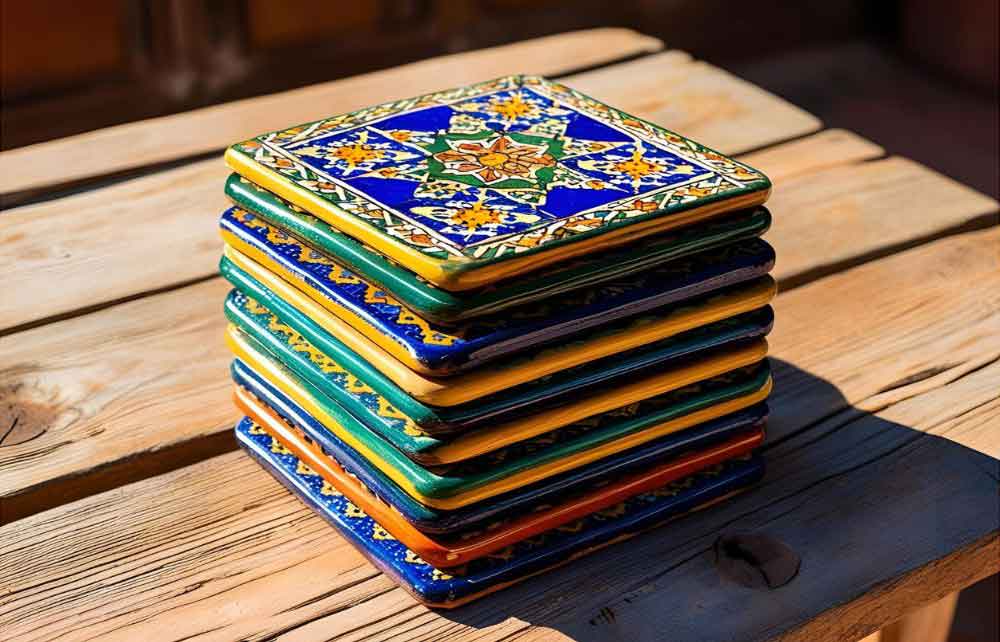
Zellige tiles are beautifully precise, with geometric patterns and bold colours. You can absolutely buy large decorative slabs, but unless you are renovating a kitchen, that feels ambitious.
The smaller tiles are much more realistic. They make great coasters and plant stands. I like that they feel intentional, not like something designed purely for tourists, which makes them an authentic souvenir from Morocco to bring home.
16. Hammered Metalworks
Best Place To Buy
Approximate Cost
I mentioned lanterns earlier, but metalwork in Morocco goes far beyond lighting. You will see hammered trays, decorative boxes, serving dishes and mirrors, all with intricate patterns worked into the surface.
Some of the larger trays look like they would weigh a small ton, but surprisingly, many of them are lighter than they appear. That said, size still matters when you are trying to squeeze everything into a suitcase. I would stick to smaller trays or boxes unless you are confident you have the space.
The craftsmanship really is impressive, especially when you look closely at the detail.
Good To Know, Planning Hack/ Don’t Miss)
To check something is genuinely handmade, look for small irregularities in the hammered pattern. Slight variations in the design usually mean it has been worked by hand rather than pressed out by a machine. Perfect symmetry can sometimes be a red flag.

17. Musical Instruments
Best Place To Buy
Approximate Cost
If you want a quirky Moroccan souvenir that is a bit different, look at the traditional instruments hanging in the souks.
Here are some instruments to look out for:
- The qraqeb are those heavy metal castanet-style things you sometimes hear clacking in street performances, especially linked to Gnawa music. They are loud. Very loud.
- The oud is a beautiful, rounded string instrument that looks a bit like a lute. It is stunning to look at, although unless you can actually play it, it may end up as décor.
- The darbuka is a small goblet-shaped drum that is much easier to carry home and slightly more realistic if you fancy attempting a rhythm or two.
Even if you cannot play a single note, they make a great talking point and definitely stand out on a shelf.

18. Thuya Wood Boxes
Best Place To Buy
Approximate Cost
Thuya wood is native to Morocco, particularly around Essaouira, which is why you will see so many carved items for sale there. The wood is known for its beautiful swirling grain and slightly sweet, warm scent. Even years later, you can still smell it when you open the box.
I have picked up a few of these over the years. They are small, lightweight, and genuinely useful. I use mine for jewellery and random little keepsakes that would otherwise disappear into the abyss of a drawer.
They are easy to pack, easy to justify buying, and far less stressful than trying to transport something oversized or fragile.

19. Blankets
Best Place To Buy
Approximate Cost
I’m a huge fan of blankets and shawls, mostly because I am a chronically cold-feeling person and will take any excuse to wrap myself in something warm. If you are planning a winter trip to Morocco, picking up a shawl locally makes far more sense than stuffing a bulky one into your suitcase at home.
You will find textiles all over the country, from thick wool blankets to lighter cotton or blended throws. Many traditional pieces are made from sheep’s wool, particularly from the Atlas region, and are woven on simple looms by local artisans. You will also see softer cotton versions and some synthetic blends, especially in more touristy areas.
If warmth is your priority, check the weight and texture of the fabric before buying. A good wool blanket should feel dense and well-woven rather than thin and loosely stitched.

20. Rose Water and Rose Oil
Best Place To Buy
Approximate Cost
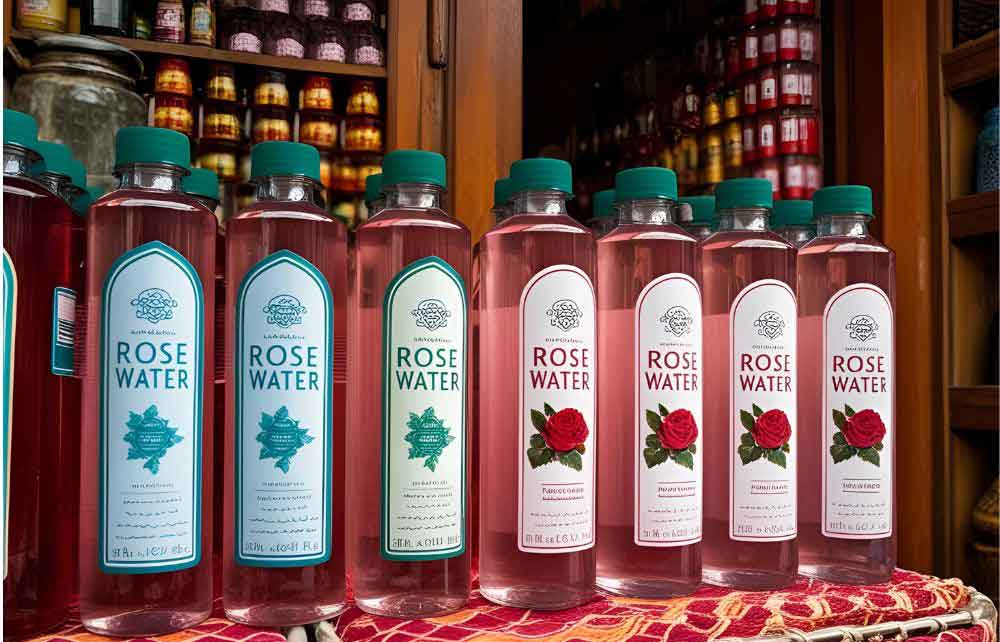
Rose water and rose oil come from the Valley of the Roses, a region in southern Morocco near Kelaat M’Gouna, between Ouarzazate and the Dades Valley. Every spring, the valley fills with blooming damask roses, which are harvested and distilled into oils, waters, and beauty products.
You will find rose-scented body creams, oils, soaps and sprays in markets across the country, but this is where it all originates. The scent is fresh and natural rather than overpowering. It smells clean, not like you have fallen into a bottle of synthetic perfume.
Rose water is surprisingly versatile. It can be used on the skin as a toner, added to food and desserts, or even stirred into tea. I tend to stick to the skincare side of things, and a small bottle lasts ages.
Planning Tip
If you happen to be in the area in May, the Rose Festival in Kelaat M’Gouna is the best time to buy directly from producers. It lasts a few days and celebrates the harvest, so the products are at their freshest.
21. Moroccan Pastries and Gourmet Food
Best Place To Buy
Approximate Cost
If you have even a slight sweet tooth, Moroccan pastries are dangerous territory. Everything looks good. Everything smells good. And yes, you will probably say you are just looking before walking out with a box.
They also make surprisingly good edible souvenirs, provided you do not eat them all before you get to the airport.
Some to look out for:
- Cornes de Gazelle (Kaab el Ghazal)
Crescent-shaped pastries filled with ground almonds, cinnamon and orange blossom water, wrapped in thin pastry and dusted with sugar. Soft, fragrant, and very easy to eat more than intended. - Baklava
Similar to what you might know from the Middle East or Mediterranean, but often heavier on almonds and generously soaked in honey. Sticky fingers are inevitable. - M’hanncha (Snake Cake)
A coiled pastry filled with almond paste and flavoured with rose or orange blossom water. It looks impressive and tastes even better.

22. Fossils and Minerals
Best Place To Buy
Approximate Cost
I was one of those kids who went through a dinosaur phase. It never really left. So, of course, I was fairly excited to see fossil stalls all over southern Morocco.
You will notice them particularly if you are travelling through the Atlas Mountains or heading towards the Sahara. Towns like Erfoud and Rissani, in the southeast near Merzouga and the desert, are known for fossils because this region used to be underwater millions of years ago. That is why you find so many marine fossils here.
Trilobites, ammonites and orthoceras are the most common. Even if you are not a collector, they make an unusual souvenir and are far more interesting than another keyring.

23. Kohl Eyeliner
Best Place To Buy
Approximate Cost
Kohl has been used around North Africa and the Middle East for centuries. In Morocco, it is both makeup and something practical, too. You will often hear that it was used to help with harsh sun glare, which makes sense when you have experienced how bright and dry parts of the country can be.
The pigmentation is strong. Really strong. A tiny amount goes a very long way.
When I bought my little pot of kohl, I asked the shop assistant to show me how to apply it properly. It looks straightforward. It is not. The first time I tried it on my own, I absolutely overdid it and ended up looking like a panda. It takes a steady hand and a bit of practice.
Once you get it right, it does stay put all day. Just be careful opening it near light-coloured clothes. It stains, and it is not coming out easily.
Where to Shop in Morocco
When it comes to shopping, every city in Morocco feels slightly different. The atmosphere, the pace, and even the things on display can change depending on where you’re visiting.
If you are still deciding what to buy from Morocco, it helps to know which places are known for what.
You do not need to buy everything everywhere. Some cities simply do certain things better.
What to Buy in Marrakech
- Spices and Herbs: Marrakech is the place to stock up on spices. You will find ras el hanout, saffron, cumin, cinnamon, and just about anything else you can think of.
- Lanterns and Lamps: The metal lanterns here are some of the best you will see.

Souks of Marrakech Guided Walking Tour
The souks can feel like a maze. If you are not confident navigating or negotiating, a local guide can make the whole experience far less stressful.
What to Buy in Fes
- Ceramics and Pottery: Fes is famous for its blue and white pottery. If you want hand-painted plates or bowls, this is one of the best places to find them.
- Leather Goods: Even though I personally am not shopping for leather, Fes is known for it. Everything from bags, belts, pouffes, and jackets.
- Carpets and Rugs: You will find some of the finest hand-woven rugs in the old medina here.
- Embroidered Linens: Tablecloths and textiles with detailed embroidery and are easy to pack.
What to Buy in Essaouira
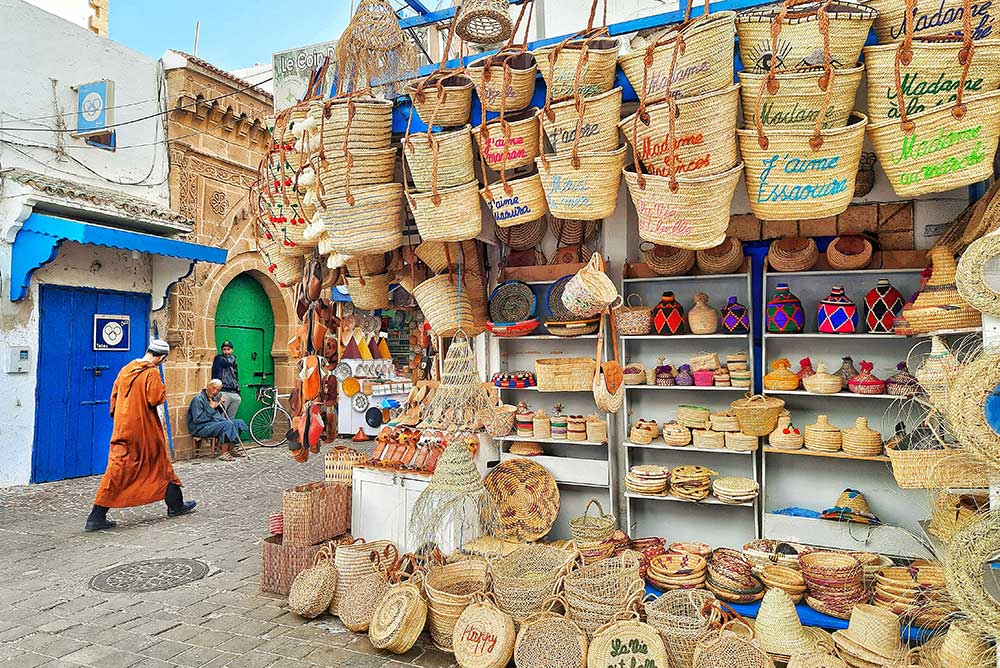
- Thuya Wood Products: Essaouira is known for thuya wood. Small carved boxes, chess sets, and decorative pieces are everywhere, and they are much easier to pack than they look.
- Argan Oil: This is one of the best areas to buy argan oil, especially from local cooperatives.
- Artwork: Essaouira has a strong creative scene. If you want something slightly different from the usual market finds, original paintings and prints are worth browsing.
What to Buy in Casablanca
- Modern Moroccan Fashion: Casablanca leans more contemporary. You will find designers blending traditional cuts with modern styles.
- Jewellery: If you are after something a little more refined, Casablanca has plenty of quality gold and silver jewellery.
What to Buy in Tangier
- Antiques and Vintage Finds: Tangier’s long international history means you will find some interesting older pieces and vintage-style items here.
- Moroccan Pastries: The mix of Mediterranean and Moroccan influences shows up in the bakeries. If you are hunting for edible treats, this is a good place.
Tips for Shopping in Morocco & What To Expect
Shopping in Morocco is an experience.
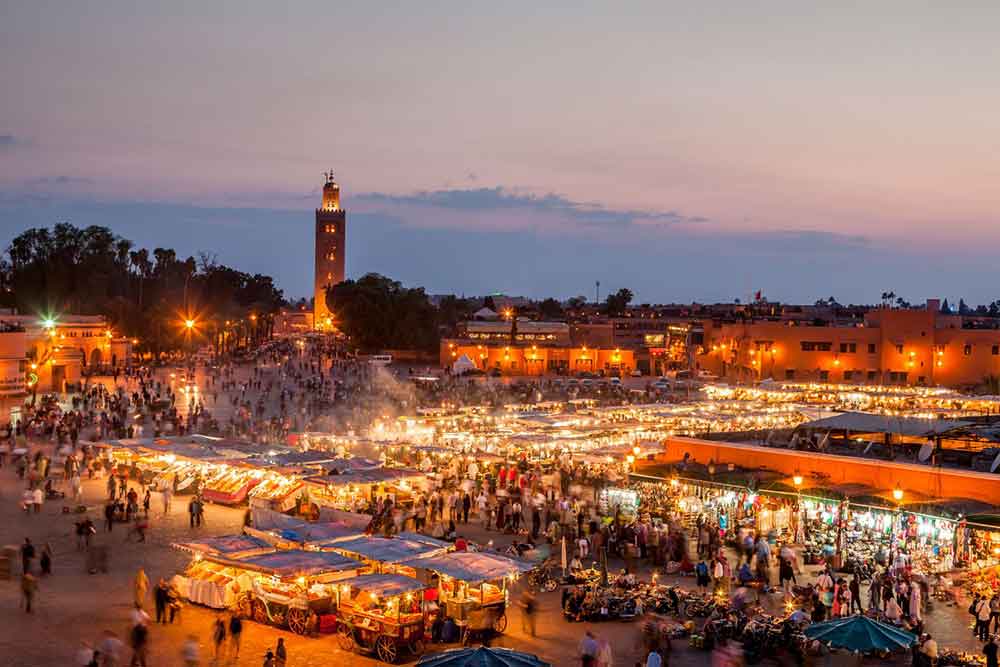
The souks, especially in Marrakech and Fes, are not neat rows of shops with tidy signage. They are a maze of narrow alleyways, stalls spilling into each other, scooters weaving through gaps that do not look wide enough, and people heading in every direction.
It can feel disorientating very quickly.
Add in the noise, the heat, and peak season crowds, and it is easy to feel overwhelmed. I have walked in confidently and then had no idea which direction I came from ten minutes later.
That said, once you accept the chaos, it becomes part of the fun.
Cash is King in Morocco
Most markets and smaller shops prefer cash.
- Break large notes at your accommodation or a supermarket before heading into the souks.
- Smaller denominations make life much easier, especially when you are buying lower-priced items.
- Paying in cash can sometimes give you more leverage when negotiating, as vendors avoid card fees.
Do not assume everyone will have change for a large note. They often do not.
Haggling and Negotiating
Haggling is part of the culture in the souks. It is expected, not rude.
- As a starting point, offering around half the asking price is common, then negotiating from there.
- Stay friendly. Smile. Keep it light.
- Be prepared to walk away. Quite often, you will suddenly be offered a better price.
At the same time, keep perspective. When it comes to haggling for the few extra dirhams off, ask yourself if it is really worth pushing hard over a very small amount.
The goal is a fair price for both sides, not “winning”.
Safety in the Souks, Especially for Solo Women
The souks are generally safe, but they are busy and intense, particularly in Marrakech and Fes.
As a solo female traveller, I am mindful of how I dress and carry myself. Dressing relatively modestly helps avoid unnecessary attention. Covered shoulders, longer skirts or trousers, nothing overly tight. It is not about restriction; it is about blending in.
If you want a full breakdown, I go into detail in my guide on what to wear in Morocco as a woman.
Confidence goes a long way. Walk with purpose, even if you are completely lost. If someone offers to “help” and you did not ask for it, a polite but firm no thank you is usually enough.
Keep your bag secure, avoid flashing large amounts of cash, and trust your instincts. The vast majority of interactions are harmless, but the environment can feel full-on if you are not used to it.
Avoiding Fakes and Buying Smart
Not everything labelled “handmade” actually is. Like the “authentic” scarves I’d mentioned earlier that still had the Made in China label on them.
Check items carefully, especially higher-priced pieces like carpets, antiques, or silver jewellery. Look for small imperfections that indicate something was made by hand. Perfect symmetry can sometimes mean factory production.
If you are buying larger items, ask about shipping and get the details in writing. Some shops handle it well, others less so.
Learning a few basic phrases in Arabic or French also helps. Even a simple greeting changes the tone of the interaction.
A Quick Reality Check Before You Buy
Each city has its specialities. Leather in Fes. Ceramics in Safi. Thuya wood in Essaouira. Knowing roughly what to buy where helps you avoid impulse purchases you regret later.
It is very easy to get swept up in the atmosphere and convince yourself that you need everything. I have been there.
Setting a rough budget before you head in makes it much easier to choose the things you genuinely love, rather than just collecting random gifts from Morocco because you felt caught up in the moment.
What to Buy in Morocco FAQs
Is Morocco safe for solo female travellers?
Morocco can be safe for solo female travellers, but it is not the place to switch off completely. Expect attention, especially in busy areas. Dress fairly modestly, stay confident, and avoid quiet streets late at night. If a situation feels off, trust your gut and leave.
What is special to buy from Morocco?
The special stuff is what is actually made there. Think handwoven rugs, painted ceramics, metal lanterns, zellige tiles, argan oil, spices like ras el hanout, and proper mint tea sets. If it looks flawless and identical to the stall next door, it is probably not handmade.
Is Morocco cheap to buy things?
Some things are cheap, some things are “cheap” until you realise you were quoted the tourist price. Spices, soap, tea, and small ceramics can be great value. Bigger items like rugs can be pricey, but still good compared to home. Prices vary wildly, so compare first.
Should you haggle in Morocco?
Yes, in the souks it is expected, and it is basically part of the sport. Start at about half the price of the original price, keep it friendly, and be willing to walk away. If you hate haggling, shop in fixed-price stores and save yourself the stress.
Should I carry cash in Morocco?
Yes. Cash is king in markets, smaller shops, and taxis. Carry small notes because vendors often “do not have change” (sometimes true, sometimes convenient). Cards are more common in hotels and larger restaurants, but do not rely on them in the souks. Keep your cash split up.
What are the top things to buy in Marrakech?
Essential things to buy in Marrakech include spices (ras el hanout, saffron), metal lanterns and lamps, ceramics, and small gifts like soap or jewellery. The souks are overwhelming, so compare prices across a few stalls before buying.
Now You’ve Sorted the Best Souvenirs from Morocco, Here’s What to Do Next
Now you know what to look out for, you can wander the souks with a bit more confidence and avoid buying something just because you felt pressured in the moment.
If you are still deciding what to bring home from Morocco, do not rush it. The best finds usually happen when you are not actively hunting for them. Take your time, compare stalls, and buy the pieces you genuinely like rather than what someone tells you is “traditional.”
And if you are planning the rest of your trip, have a look at my other Morocco guides. I cover city breakdowns, packing tips and itineraries, all written for independent travellers who prefer figuring things out for themselves.
Now go plan the rest of it. And yes, leave space in your suitcase.
Have a question? then don’t forget to join our free Facebook Group and ask the community.
Want to discover more about Morocco? then check out these other great articles to find out more.
Morocco Travel Planning
- Where Is Morocco Located?
- Can You See Morocco From Spain?
- Best 10 Days Morocco Itinerary [Self-Guided]
- 14 Beautiful Cities in Morocco to Visit
- What to Wear in Morocco [Packing List]
- Complete Morocco Souvenir Buying Guide