
27 First-Time Cruise Tips and Tricks for Beginners
Planning your first-time cruise and not quite sure what to expect? Maybe you’re wondering how cruises actually work, what’s included, or whether you’ll feel stuck on a floating resort.
I completely understand.
As a solo traveller who usually prefers DIY trips and cultural immersion, cruising never felt like it was for me.
I had plenty of experience on liveaboard dive boats as a scuba diver. But that is very different from stepping onto a full-scale cruise ship. I worried I would feel restricted. Or that it simply wouldn’t suit my travel style.
When I finally booked my first cruise, I went solo on a Mediterranean route with stops I would normally have stitched together myself. I was half expecting to feel boxed in.
Instead, I loved it.
The flexibility.
Unpacking once.
Exploring each port independently.
It completely changed my perspective. I went from sceptical to quietly planning my next one before the first had even ended.
If you’re preparing for a cruise and wondering what to expect, these 27 cruise tips and tricks will walk you through everything. From choosing the right ship to navigating embarkation day without feeling overwhelmed. And the small details no one really explains to beginner cruisers.
If you normally plan independent trips and just want to understand how cruising fits into that style, this will make it feel far less mysterious.

Meet Me In Departures contains affiliate links and is a member of the Amazon Services LLC Associates Program. If you make a purchase using one of these links, we may receive compensation at no extra cost to you. See our Disclosure Policy for more information.
Essentials Before You Book Your First Cruise
1. How Do Cruises Work for Beginners?
Before I went on my first cruise, I remember thinking, how does this actually work? Not the glossy brochure version. The practical version.
Because no one really explains basic cruise information for first-time cruisers.
So here’s the simple answer.
You book a cabin on a ship that follows a set route.
You unpack once.
The ship sails between different destinations.
Your accommodation, food, and entertainment travel with you.
That’s essentially it.
Every day falls into one of two categories:
Sea Days
- You stay onboard while the ship is sailing.
- You can join activities, watch shows, sit by the pool, or quietly disappear with a book.
Port Days
- The ship docks somewhere new.
- You can book an organised excursion.
- Or explore independently, which is what I usually did.
I assumed it would feel rigid. In reality, it felt structured but surprisingly flexible. Think of it as a moving hotel with an itinerary built in. You have a framework, but you’re not herded around.
2. Choose the Right Destination for Your Travel Style
One thing that surprised me when I started looking into cruises is just how different they can feel depending on where you go.
Before booking, I assumed a cruise was a cruise. Big ship. Buffet. Sun deck. Repeat.
In reality, the destination shapes the entire experience.
I chose the Mediterranean for my first cruise because I knew I would want to explore independently in each port. Wandering old towns, visiting ruins, and finding somewhere local for lunch instead of heading straight back to the ship. That suits how I already travel.
If I had chosen a Caribbean itinerary instead, the pace would have been completely different. More beach-focused, more resort-style days, less wandering around with Google Maps open, trying to find a bakery someone recommended.
A simple way to narrow it down:
- Love history, cities, and exploring on foot? Mediterranean.
- Prefer relaxed beach days and minimal planning? Caribbean.
- Want scenery and wildlife? Alaska.
Out of all the early cruising tips I picked up, this one mattered most.
Choose somewhere that already suits your personality. The cruise should simplify logistics, not change the way you like to travel.
3. Cruise Line Personalities Matter More Than You Think
This was something I nearly skimmed over.
I assumed most cruise lines were broadly similar. Same sort of setup. Same sort of crowd. Just different ships.
Each cruise line has its own atmosphere. Some feel lively and modern. Some are very family-focused. Others are quieter and a bit more traditional.
A very simplified way to think about it:
| If you want… | Look for… |
| Adults-only, lively energy | Modern adult-focused cruise lines |
| Families and lots of activities | Large ships with kids’ clubs and waterparks |
| A calmer, slower pace | Smaller or more classic ships |
| More time in port | Lines known for longer stays |
When I was choosing mine, I focused mostly on the route.
Looking back, the overall vibe would have changed the experience just as much.

Good To Know
It’s worth taking five minutes to look at who the cruise line is actually aimed at. A week is a long time to realise you’ve booked the wrong atmosphere.
4. Ship Size and Layout Can Change Your Experience
I didn’t pay much attention to ship size when I first booked. I was focused on the route and the cabin and assumed the rest would sort itself out.
It doesn’t quite work like that.
Some ships are enormous. Multiple restaurants, huge theatre productions, several pool decks, endless corridors. You could genuinely get your steps in just trying to find breakfast.
Others are smaller and feel more contained. Fewer venues, fewer passengers, less of that floating city feeling.
Neither is better. It just depends on what suits you.
On a larger ship, you get:
- More choice
- Bigger entertainment
- More anonymity
On a smaller ship, you get:
- Quieter spaces
- Easier navigation
- A more intimate atmosphere
As a solo traveller, this actually matters. On very large ships, it’s easy to blend in completely, which can be great if you value independence. On smaller ships, you’re more likely to recognise faces and have repeat conversations, which can make it feel more social without trying too hard.
I chose a mid-sized ship for my first cruise, and it felt like a good balance. Enough going on that I never felt bored, but not so vast that I needed a map and a strategy just to get dinner.
If you already know you dislike crowds, or you’re travelling solo and wondering how visible you want to be, ship size is worth thinking about.
5. Solo Cabins and Single Supplements Explained
If you’re travelling alone, this is something first-time cruisers often don’t realise until they’re halfway through the booking process.
Cruise pricing is usually based on two people sharing a cabin. So if you’re going solo, you can end up paying what’s called a single supplement, which basically means covering the cost of the missing second person.
It’s not a scam. It’s just how cruise pricing works.
Some cruise lines offer dedicated solo cabins, which are smaller and priced for one person. Others occasionally reduce the single supplement on certain sailings. It just depends on availability and demand.
I went in fully expecting it to feel awkward travelling alone. It wasn’t. The pricing structure was the only slightly annoying part.
Preparing for a Cruise: Planning & Logistics
6. Book Smart and Understand Cruise Pricing
Cruise prices can look very appealing at first glance.
That bold, flashy headline price? It is usually the lowest category cabin, with nothing extra added. No drinks package. No WiFi. No excursions. Just the basics.
One of the most important things to know before going on a cruise is that you will almost certainly spend more than the number you first see advertised.
That does not mean it is bad value. It just means you need to look properly.
When I booked my first cruise, I went down a small rabbit hole comparing what seemed like similar deals. They weren’t. Once port fees, gratuities, drinks, and add-ons were factored in, the cheapest option was not actually the cheapest at all.
Before you commit, check:
- Are gratuities included or added daily onboard?
- Are port fees already in the total?
- Is WiFi extra?
- Will you realistically want a drinks package?
- How much are excursions in your chosen ports?
Planning Tip
Some cruise lines are clearer than others. Some are… less so.
Take your time. Read the breakdown. Make sure you understand what you are paying for before you press book.
7. Always Arrive the Day Before Departure
I know it’s tempting to fly in on the morning of your cruise. It looks efficient. It saves a hotel night.
Don’t.
Flights get delayed. Bags go missing. Weather does what it wants. And cruise ships absolutely do not wait while you’re still in an airport queue.
I arrived the day before mine and spent the afternoon exploring the ruins around Athens, fully leaning into my usual obsession with ancient stones and crumbling columns. It turned embarkation day into something calm rather than chaotic.
Most cruise ports are near somewhere worth exploring. Instead of thinking of it as an extra expense, think of it as an extra day of your holiday.
You start the trip relaxed, not flustered. And that makes a bigger difference than you might expect.
8. Complete Online Check-In Early
Cruise lines usually open online check-in weeks before departure. It is very tempting to ignore the email and tell yourself you’ll do it at the last minute.
Do it when it opens.
You’ll usually need to:
- Upload your passport details
- Choose your arrival time at the port
- Add a payment method for onboard spending
It takes about fifteen minutes and saves you sorting admin at the terminal while everyone else is trying to board.
I filled mine out as soon as it became available and noticed a separate queue at the port for people still completing forms. I will admit, I felt quietly smug gliding past and heading straight on board while others were faffing with bits of paperwork.
9. What Is Actually Included on a Cruise
By the time you step onto the ship, you’ve already booked and paid. That part is done.
Now it’s about awareness.
Most cruises include quite a lot:
- Your cabin
- Main dining rooms and buffets
- Basic drinks like water, tea, and coffee
- Entertainment and shows
- Access to pools and the gym
But once you’re in holiday mode, it’s very easy to start tapping your card without thinking.
Usually extra:
- Alcohol and speciality coffee
- WiFi
- Shore excursions
- Spa treatments
- Specialty restaurants
On my first cruise, I was pleasantly surprised by how much was covered. I never felt pressured to spend more. But I could also see how quickly the small extras could add up if you weren’t paying attention.
10. Travel Insurance Is Not Optional
This is not the glamorous part of planning. It is also not the part you should skip.
Cruises are different from standard trips because you are tied to a schedule and a ship. If something goes wrong, you cannot just rearrange things casually.
Miss the ship? That’s on you.
Need medical treatment onboard? It will not be public healthcare pricing.
Flight cancelled, and you missed the embarkation? Also, not the cruise line’s problem.
If you’re British, that means it definitely is not NHS-level costs. If you’re from elsewhere, assume private medical pricing at sea.
I made sure my insurance provider covered cruise travel specifically, including missed departures and onboard medical care. It is one of those things you hope you never need.
But if you do, you will be very glad you sorted it.

Embarkation Day: What to Expect
11. Embarkation Day Feels Chaotic at First
I’m going to be honest. My first embarkation day felt chaotic.
Not because the system didn’t work, but because I hadn’t properly read up on what to expect. I definitely had that slightly bewildered, wide-eyed look of someone trying to pretend they understood what was happening.
That part was on me.
If it’s your first time on a cruise, here’s what to expect:
- You arrive during your assigned time slot
- You hand over your main luggage
- You go through security
- You show your documents
- You board
There’s a lot happening at once, so it can feel overwhelming at first. But once I’d sussed out what I was doing, everything clicked into place.
Not long after, I was onboard with a drink in hand, thinking, right…this is actually fine.
12. Bring a Carry-On With Essentials
Your main luggage does not go straight to your cabin.
It gets collected at the terminal and delivered later, sometimes a few hours later. Which is absolutely fine… unless everything you need for the afternoon is inside it.
Bring a small carry-on with:
- Passport and documents
- Medication
- Swimsuit
- Sunscreen
- Phone charger
- A change of clothes if you want to freshen up
I saw people hovering around the pool in full travel outfits because their swimwear was somewhere in a suitcase still being sorted below deck.
It’s not a disaster. Just mildly inconvenient.
Good To Know
Having what you need on you means you can board, explore, grab lunch, and start relaxing straight away instead of waiting for your luggage to appear.
13. What Actually Happens During the Muster Drill
Every cruise needs a safety drill before the ship departs. It’s not optional, and yes, you do have to go.
I’d heard about it before my first cruise, but hadn’t really looked into what a muster drill involved. So when people started moving with purpose in different directions, I did have a brief oh, right moment.
You’re assigned a muster station when you check in. There will be a letter linked to your cabin, and you’ll see that same letter clearly marked around the ship, usually painted on the floor, railings, or walls. You take your life jacket from your cabin and head to that spot at the designated time.
The staff are very used to first-timers who aren’t entirely sure what’s going on. They’ll point you in the right direction and make the whole thing feel straightforward.
It reminded me of school fire drills. Everyone lines up, someone takes a register, you’re shown what to do in an emergency, and then it’s done.
14. Explore Before You Unpack
When you first get access to your cabin, the instinct is to drop everything and start unpacking immediately.
Resist it.
The first couple of hours onboard are actually a great time to explore. The ship feels fresh, everyone’s still getting their bearings, and it’s much easier to wander around before dinner crowds start forming.
On my first cruise, I did a slow lap of the decks before even opening my suitcase. I figured out where the main dining room was, where the quieter corners were, and which areas I’d probably avoid at peak times.
It made the rest of the week feel much more familiar.
The suitcase can wait for now. The ship is worth scouting first.

Life Onboard (Especially for Solo Travellers)
15. Dining Is Easier Than You Think, Even Solo
One of my biggest worries before my first cruise was dining alone.
I had visions of awkward tables, couples everywhere, and me trying to look deeply invested in my bread roll.
It wasn’t like that at all.
Most cruises give you options. You can:
- Sit at a shared table and meet other travellers
- Request a smaller table for yourself
- Use the buffet if you want something more casual
- Check whether there’s a solo diner section
On mine, there was actually a designated area for solo travellers. It made things feel relaxed straight away. No explaining, no awkwardness, just people in the same situation.
16. Cruises Are Surprisingly Social for Solo Travellers
I’m very comfortable in my own company. I travel solo regularly and genuinely enjoy my personal space, so loneliness wasn’t my concern.
What I did wonder was whether cruising would feel a bit cliquey. Like everyone else had arrived in pairs, and I’d be hovering on the edges.
It wasn’t like that at all.
There were organised activities every day, and I quickly noticed a lot of the people turning up were women travelling alone, or women whose partners had quietly disappeared to a bar somewhere.
It created a really friendly, welcoming little community without anyone trying too hard.
Good to Know
Between activities, excursions, and shared dining tables, conversations just happened naturally. You can absolutely keep to yourself. But you don’t have to.
17. You Can Always Find Quiet Spaces
Cruise ships can hold a lot of people. That part is true.
What surprised me was how easy it was to step away from it.
I love my own company, and even on a busy ship, there were always calmer corners. Early mornings on deck were peaceful. The skybar, a few levels up from the main pool made a noticeable difference. My ship even had a small library, which became my go-to spot for sitting quietly with a book.
You’re never forced to stay in the busiest area unless you choose to be.
I worked out fairly quickly where I felt most relaxed and just returned to those spaces throughout the week.
18: Pace Yourself on Sea Days
Sea days look relaxing on paper.
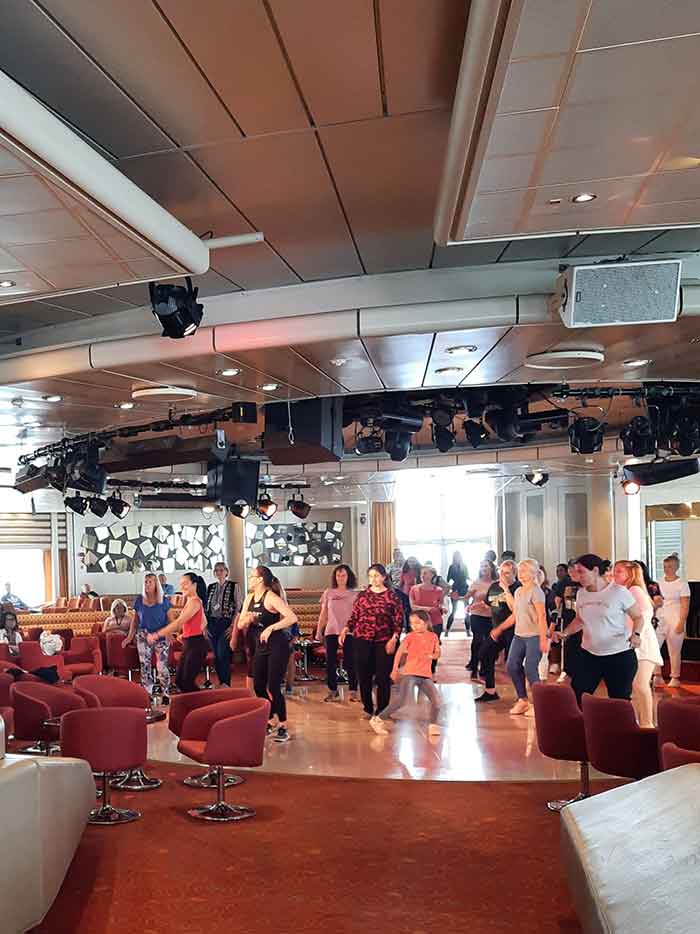
In reality, the schedule can be surprisingly full. Classes, talks about local culture and history, fitness sessions, tastings, quizzes, and live music. There is always something going on.
I’m definitely someone who gets FOMO and wants to try everything at least once. On my first sea day, I went from a salsa lesson straight into a cooking demonstration, then somehow ended up in a Zumba class. I was basically bouncing from one thing to another.
It was fun. It was also slightly exhausting.
What I noticed, especially travelling solo, was that there was never a chance to feel bored or lonely. If I wanted something to do, it was there. If I wanted to sit quietly afterwards, that was easy too.
I just didn’t need to do all of it in one afternoon.
19. Understanding Drink Packages and Extra Costs
Drink packages sound tempting.
Unlimited cocktails on holiday? It feels like the obvious choice.
But whether they’re worth it depends entirely on how you travel.
I looked at the price of the full drinks package and immediately realised I’d probably be treating it like a competitive sport to get my money’s worth. They can be super pricey.
I enjoy a cocktail, but I don’t want to schedule them in like hydration goals.
If you’re someone who has:
- Several alcoholic drinks a day
- Specialty coffees
- Fresh juices
- Plenty of sea days
It might make sense.
But if you’re off the ship most days exploring ports, or you’re not a big drinker, paying as you go can work out cheaper.
Shore Days & Exploring Independently
20. You Do Not Have to Book Cruise Excursions
A lot of people assume that on your first cruise, you have to book the ship’s organised excursions.
You don’t. But you also don’t have to avoid them entirely.
I did a mix.
There are usually a selection of excursions; some focus on history, some on cuisine, and some even do more adventurous things. I ended up hiking on an active volcano on the Santorini stop of my cruise!
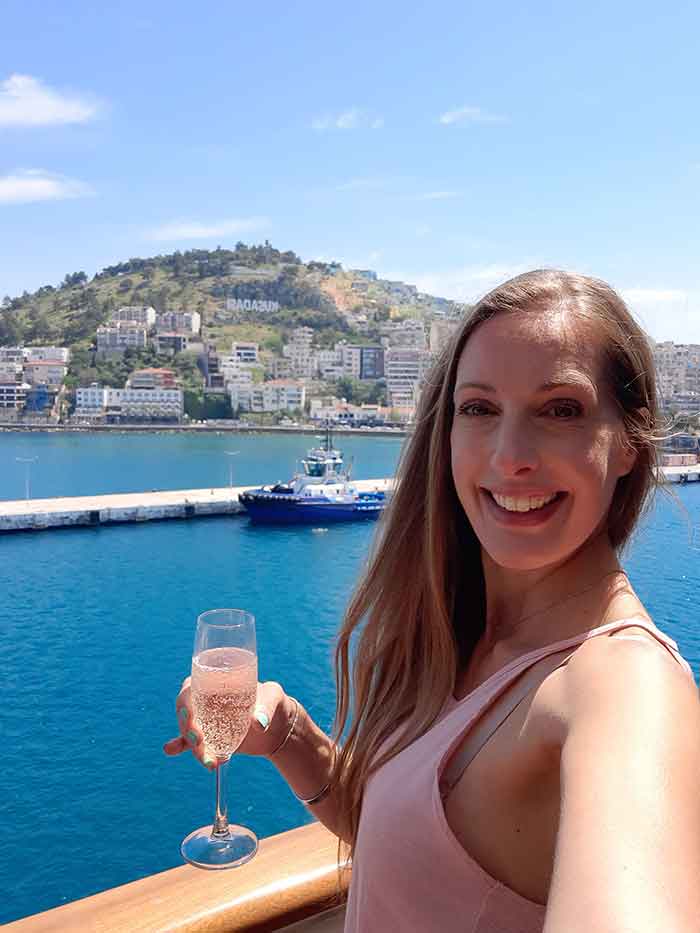
If the city was right near the port and I could walk or hop on a local bus within a few minutes, I would explore independently. That felt easy and very much my usual travel style.
But when we docked in Crete, I really wanted to visit the ruins of Knossos. It was about a 45-minute journey inland, and while I’m normally very happy figuring things out myself, that felt like one of those situations where logistics could get messy.
So I booked the excursion.
For me, it came down to practicality. Distance, transport, timing. If it was simple, I did it myself. If it required more coordination, I let the cruise line handle it.
21. Always Leave Buffer Time
If you decide to explore independently, timing really does matter.
Cruise ships run on their own schedule. If you miss it, they’re not hanging around while you finish your coffee.
I’m quite organised when I need to be, but even then, I gave myself far more time than strictly necessary. Earlier bus. Alarm set on my phone. Screenshot of directions back to the port. Zero guesswork.
If you’re someone who runs a bit chaotic on holiday, just be extra conscious of it.
The goal isn’t to rush your day. It’s to avoid that horrible feeling of checking the time and realising you’ve cut it too fine.
Give yourself loads of buffer. It makes the whole day feel calmer.
22. Do a Little Research So You Can Make the Most of Your Time
Cruise port days go quickly.
You usually get a handful of hours, and they disappear faster than you think. The last thing you want is to spend half of it standing in a queue because you didn’t realise tickets could have been booked online.
I’m very much a DIY traveller, so I always do a bit of prep before arriving somewhere. Nothing excessive. Just enough to avoid wasting time.
A few things that helped:
- Pre-booking entry tickets for popular sights
- Checking transport options from the port
- Saving directions offline
- Researching one or two local restaurants
- Making a reservation if the place looked busy
It doesn’t need to be military-level planning. Just enough so you step off the ship knowing roughly what you’re doing instead of opening Google Maps and hoping for the best.

Packing Tips for First-Time Cruisers
23. Pack Smart and Check the Itinerary First
It’s very easy to assume you need far more than you actually do.
An important piece of advice for first-time cruisers, before you pack, is to check the itinerary.
Cruises often have themed evenings, such as:
- Captain’s dinner or gala night
- Colour-themed parties
- White nights or carnival-style evenings
It’s useful to know in advance so you’re not trying to create a formal look out of something that definitely isn’t.
A few practical things to keep in mind:
- Cabin storage is decent, but not endless
- Large suitcases don’t always fit neatly under the bed
- You probably won’t wear half of what you pack
I’m naturally quite a minimalist packer and can usually manage most trips with a carry-on and a backpack. Cruises are no exception.
Packing cubes make a big difference. And if you’re worried about running out of clothes, most ships have a laundry service. You can send things off, and they come back cleaned and pressed to your cabin.
You can also pick up small bits in port if you genuinely forget something.
24. Bring These Underestimated Cruise Items
There are a few things people often forget to take on a cruise.
Not major items. Just small, practical bits that make life onboard smoother.
- Reusable water bottle: Handy for port days and easy to refill onboard. You’ll use it more than you expect.
- Small crossbody or day bag: Much easier for exploring ports than carrying a bulky tote.
- Packing cubes: I will never stop recommending these. They keep everything contained, especially in compact cabins.
- Lightweight layer: Evenings on deck can get breezy, even in warm climates.
- Cruise-approved power strip: Cabins rarely have enough sockets. Just double-check what’s allowed before packing it.
- Motion sickness tablets: Even if you don’t usually get travel sick. Just in case.

End of Cruise: What to Expect
25. Disembarkation Is More Like Hotel Check-Out
Disembarkation didn’t feel painfully early on my cruise.
You do have to vacate your cabin at a set time because there’s a full turnaround happening. As people are leaving, new passengers are arriving. It’s basically hotel check-out, just on a much bigger scale.
The night before, you’ll usually leave your main suitcase outside your cabin door. Keep a smaller bag with essentials for the morning.
Once you’re out of your room, you’re waiting for your assigned time slot. But you’re not just standing around in a corridor.
You can still use parts of the ship. The pool is often open. Some bars are open. Deck chairs are free. It’s quite nice, actually, to sit on deck one last time and wait for your number to be called.
You’ll also have the chance to settle any remaining balance on your onboard account, just like checking out of a hotel.
What felt strange wasn’t the timing. It was the mental shift. You go from everything being organised for you to suddenly thinking about taxis, lunch plans, and where you’re heading next.
It’s not chaotic, but there was a definite brain switch back into independent travel mode.

Common First-Time Cruise Mistakes
26. Don’t Forget the People Looking After You
One thing I hadn’t really thought about before my first cruise was tipping.
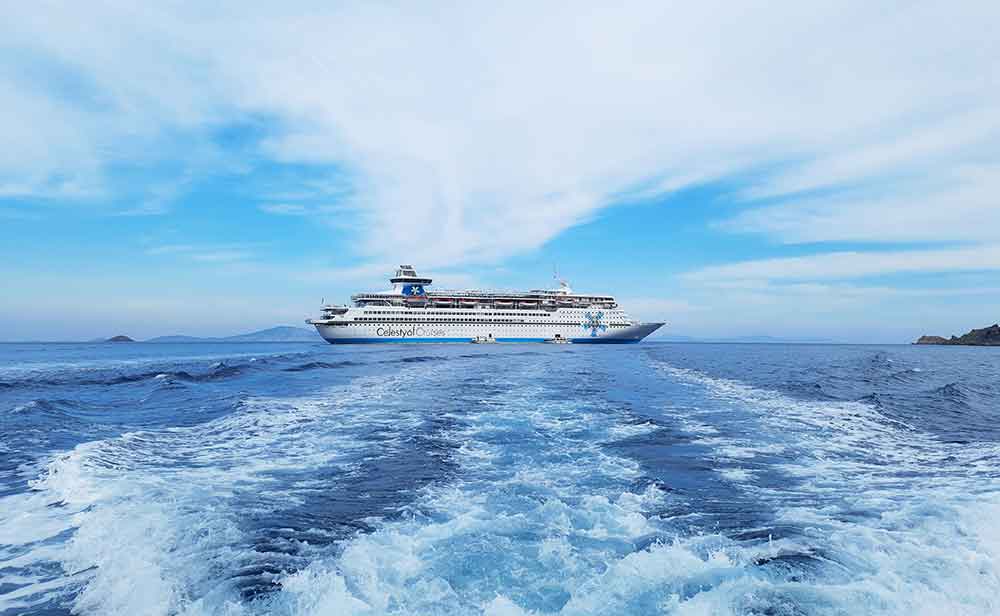
On my Mediterranean cruise with Celestyal, my room was made up twice a day. Like, properly made up. Bed done, bathroom sorted, sometimes the covers turned down in the evening with a little chocolate left on the pillow.
I genuinely wasn’t expecting that level of service.
It’s the same with the dining staff. If you’re using the sit-down restaurant regularly, you’re often served by the same people all week. They remember your preferences. They look after you.
Some cruises automatically add a daily service charge to your onboard account. Others don’t. It’s usually outlined in the booking details or the terms and conditions, so it’s worth checking.
If you’re unsure, ask at the customer service counter onboard, and they will tell you.
27. Do Not Assume Cruising Isn’t for You
I put off cruising for years because I genuinely didn’t think it was for me.
It just didn’t feel like my kind of thing. I like doing my own thing. I like wandering. I like not feeling tied to a schedule. So the idea of being on a ship with thousands of other people didn’t exactly scream ideal holiday to me.
But I was curious.
I knew I’d enjoy seeing new places, because I always do. What I didn’t expect was how much I’d enjoy the in-between bits. Waking up somewhere new without having to pack up again. Having the option to join in or disappear with a book. The ease of it all.
I boarded slightly sceptical and left genuinely impressed.
And yes, I’d absolutely do another one.
Cruising for Beginners FAQs
How long should my first cruise be?
For most first-time cruisers, three to four nights is enough to understand how cruises work without committing to a full week. If you already love travelling, a seven-night itinerary is absolutely manageable. I did a week for my first cruise and settled into it quickly.
Are cruises good for solo travellers?
Yes, especially if you’re open-minded. I travelled solo and found cruising far more social than expected, without being forced. There are solo dining options, organised activities, and plenty of people doing their own thing. You can join in or keep to yourself. It’s flexible.
How much extra money should I budget for a cruise?
It depends on how you travel. If you stick to what’s included, extra spending can stay low. Realistically, though, most first-time cruise budgets should allow for drinks, excursions, WiFi, and small extras. For a week, I’d factor in a few hundred pounds so nothing feels like a surprise.
How to Choose Your First Cruise?
When you choose your first cruise, first, figure out your budget and destination. Then, research into cruise lines that meet these requirements. It’s also a good idea to read reviews before booking.
Is a balcony cabin worth it on your first cruise?
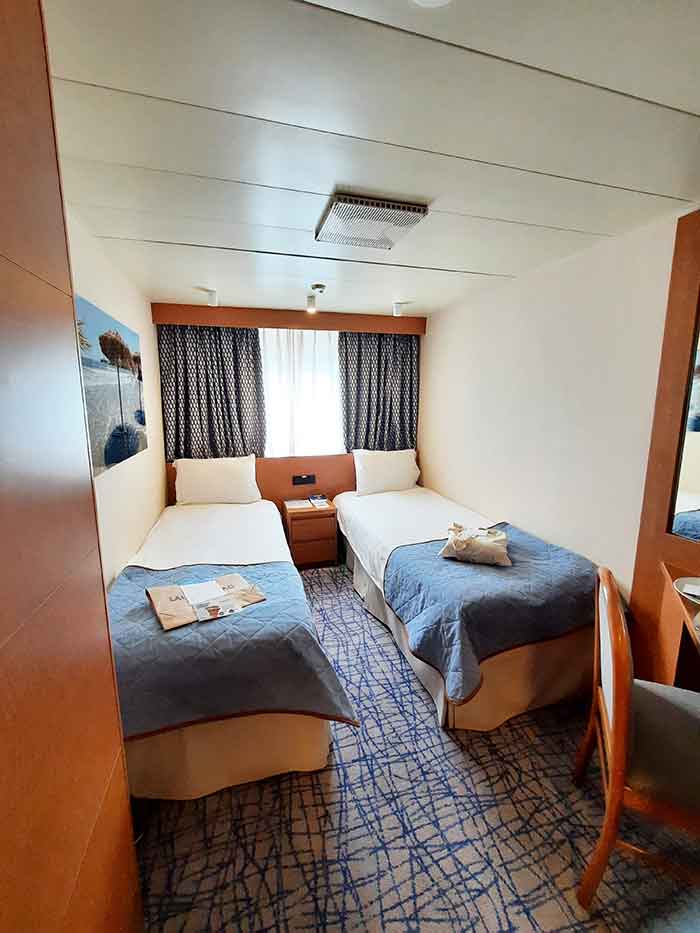
It depends on the itinerary. If you’re sailing somewhere scenic, a balcony can be lovely. If you’ll be exploring ports all day and barely in your cabin, an interior or ocean-view room is perfectly fine. I spent far less time in my cabin than I expected.
What Are The Essential Things to Bring on a Cruise?
Essential items include sunscreen, insect repellent, comfortable shoes, swimwear, a hat, and a day bag. You should also bring any necessary medications, toiletries, and electronics. It’s also a good idea to check the cruise line’s dress code and themed nights.
What happens if you miss the cruise ship in port?
If you’re on a cruise-line excursion and it runs late, the ship will wait. If you’re exploring independently and lose track of time, it won’t. That’s why leaving buffer time matters. It’s not dramatic; it’s just practical when planning port days.
What should I know before going on my first cruise?
Understand what’s included in your fare, check dress codes and themed nights, budget for extras, and research ports in advance. Most importantly, don’t overthink it. Cruises are structured, but there’s still plenty of flexibility once you’re onboard.
Ready for Your First-Time Cruise Experience?
If you’re still hovering over the idea of booking your first-time cruise, I completely understand. I did the exact same thing for years.
I’d convinced myself it wouldn’t be my kind of trip. Too structured. Too many people. Not enough freedom.
And then I tried it.
I still explored independently. I still had quiet mornings with a coffee and a book. I still wandered around ruins and did my own thing in port. The difference was I unpacked once and woke up somewhere new without having to plan trains, ferries, or where I was sleeping next.
That’s the part that won me over.
If cruising wasn’t on your radar, maybe it should be.
And if you’re leaning towards the Mediterranean, you might also like: