
What to Buy in Spain: 18 Authentic Souvenirs to Bring Home
Let’s be honest, figuring out what to buy in Spain can be a minefield. You’re surrounded by souvenir shops bursting with plastic bulls, cheap castanets, and flamenco dolls that were probably made nowhere near Spain, let alone the region you’re visiting.
After years of living here and collecting keepsakes from every corner of the country, mostly from markets and small maker-run shops, I can tell you this: not all souvenirs are created equal.
Whether you’re hunting for authentic Spanish souvenirs for yourself or looking for unique Spanish gifts to bring back for loved ones, this guide cuts through the tourist tat and shows you what’s really worth your money if you care about buying locally made, not mass-produced.
From local artisan finds to edible delights and ethical buys, I’ll walk you through exactly what to shop for and where to find it.

Meet Me In Departures contains affiliate links and is a member of the Amazon Services LLC Associates Program. If you make a purchase using one of these links, we may receive compensation at no extra cost to you. See our Disclosure Policy for more information.
Things to buy from Spain: Quick Glance
If you are short on time, here are the best authentic souvenirs that are genuinely worth taking home.
These are the items I look for when I want something regional, well-made, and connected to the place I am visiting.
My rule is simple: if it looks identical in ten shops on the same street, I don’t buy it.
Foodie Finds
- Spanish olive oil
- Saffron and paprika (pimentón)
- Turrón (Spanish nougat)
- Spanish wine and cava
- Local cheese
- Spanish honey
- Olives
- Jamón ibérico (Iberian ham)
Craft and Culture
- Spanish ceramics and pottery
- Leather goods
- Spanish fans (abanicos)
- Castanets and flamenco accessories
- Caganers
- Espadrilles (alpargatas)
- Jewellery
- Paella pan
- Perfumes
- Porrón

Pick your souvenir vibe
If you love cooking, go for olive oil, saffron, or a small pan.
If you want something display-worthy, go for ceramics, fans, jewellery.
If you want small and packable, go spices, turrón, jewellery.
Why Buy Local? A Word on Ethical & Authentic Spanish Souvenirs
Spain is packed with souvenir shops, but many sell mass-produced items that have little to do with the region you’re visiting.
If you want something meaningful, and not just another dust-collector, here’s how to shop smarter.
✅ What to Look For:
- Items labelled with a specific region or Denomination of Origin (D.O.)
- Handcrafted products with slight imperfections (a good sign!)
- Vendors who can tell you where and how the item was made
- Artisan cooperatives, local markets, and family-run shops
❌ What to Avoid:
- Souvenirs with “Made in China” or no origin label at all
- Plastic bulls, flamenco dolls, and factory-made fans
- Shops right next to major tourist attractions
- Items that feel mass-produced or identical across stores
My 10-second authenticity check
If every shop on the street has the same stuff, it’s probably not local. The real gems are usually tucked into markets or quiet side streets.
Is there an origin/region label? Does the seller know who made it? Does it feel slightly imperfect/hand-finished?
If all three are “yes,” it’s usually a good bet. The best buys I’ve brought home usually came from someone who could tell me who made it, even if the display looked a bit chaotic.
If you only remember one thing, buy from someone who can tell you the story of it.
And yes, I still get it wrong occasionally, but asking one simple question, who made this? weeds out most of the junk fast.
18 Best Things to Buy in Spain
1. Spanish Olive Oil
- Best for: foodies + use it at home souvenirs
- What to look for: D.O. seal + harvest/bottling info (new season = fresher)
- Travel note: checked luggage (wrap well)
This is hands down one of the most iconic products from Spain. The quality is incredible, especially from regions like Andalusia or Catalonia.
I always check for a D.O. (Denominación de Origen) seal on the bottle, and if I can taste it before buying, even better.
Avoid the supermarket stuff and go for small-batch oils sold in markets or gourmet shops. They’re fresher, often organic, and packed with flavour.
Where to Buy It:
- Artisan markets and food fairs
- Gourmet shops in larger towns
- Olive oil cooperatives (especially in Andalusia)

2. Saffron & Paprika (Pimentón)
- Best for: small, packable gifts
- What to look for: La Mancha saffron (label), pimentón de la Vera for smoked
- Travel note: carry-on friendly
Whenever I’m in a local spice market, I pick up saffron and smoked paprika. They’re light, easy to pack, and full of flavour, making them one of the best gifts from Spain if you’re limited on bag space or weight.
Spanish saffron, especially from La Mancha, is some of the best in the world. For paprika, I always go for the smoked version (pimentón de la Vera). It’s a staple in so many Spanish dishes.
I avoid souvenir tins in the main tourist shops, and instead buy from specialist shops or market stalls that sell by weight; it’s fresher and better quality.
Where to Buy It:
- Spice stalls in local markets
- Food cooperatives
- Specialist gourmet shops (especially in La Mancha or Extremadura)

3. Turrón (Spanish Nougat)
- Best for: easy gifts that survive travel
- What to look for: short ingredient list (almond/honey/egg white type vibes)
- Travel note: carry-on friendly
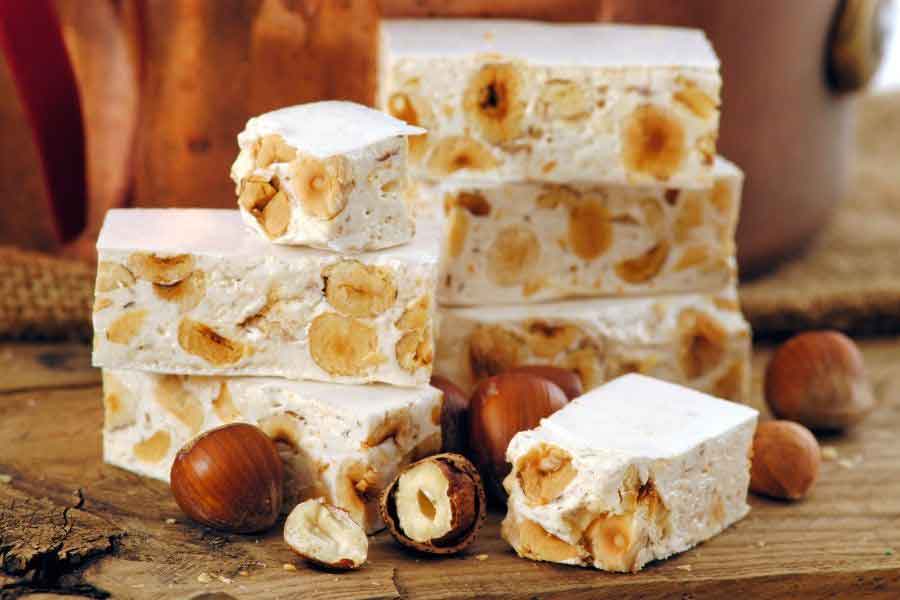
Turrón is one of those souvenirs I never leave Spain without, especially around Christmas. There are two main types: Jijona (soft and chewy) and Alicante (hard and nutty).
Even outside the festive season, you’ll find it in supermarkets and gourmet shops year-round.
I always pick up a few bars to stash in my backpack. They travel well and make great gifts. Just check the ingredients to avoid the overly processed brands.
Where to Buy It:
- Supermarkets like El Corte Inglés or Mercadona
- Artisan sweet shops
- Markets in Alicante or Jijona
4. Spanish Wine & Cava
- Best for: hosts / special gifts
- What to look for: D.O./D.O.Ca; buy at bodegas for better storytelling
- Travel note: checked luggage OR ship
Spain’s wine scene is incredibly diverse and affordable. I always grab a bottle or two when passing through regions like Rioja or Penedès (home of Cava).
If space is tight, a lot of shops will do international shipping, so you don’t have to worry about carrying it. If you do plan to pack a bottle, just make sure it’s well-wrapped and goes in your checked luggage.
Look for regional labels like D.O.Ca Rioja or D.O. Penedès, these guarantee quality.
Where to Buy It:
- Local wineries and bodegas
- Wine shops in major cities
- El Corte Inglés food halls

5. Local Cheese
- Best for: a treat yourself foodie souvenir
- What to look for: vacuum-packed + clear origin
- Travel note: import rules vary (US/AU/CA especially)
Spanish cheese is seriously underrated. From nutty Manchego to smoky Idiazabal and creamy Tetilla, there’s something for every palate. Buy it vacuum-packed, so it lasts longer and travels better. Most markets and delis offer this option if you ask.
Just be aware that some countries don’t allow you to bring in dairy products, so check your customs rules before packing them. When in doubt, eat it before you fly!
Where to Buy It:
- Covered markets like Mercado Central (Valencia) or Mercado de San Miguel (Madrid)
- Local queserías (cheese shops)
- Artisan stalls in food festivals or rural towns

6. Spanish Honey
- Best for: ethical/local producer support
- What to look for: raw/unfiltered + floral source (romero/naranjo/etc.)
- Travel note: checked luggage + restrictions vary
I always seek out local honey when I’m travelling. It’s such an underrated souvenir.
Spain produces incredible varieties like orange blossom, rosemary, chestnut, and even eucalyptus. The flavour really depends on the region’s flora, and smaller producers often use traditional, sustainable methods.
I look for raw, unfiltered honey sold in glass jars. Just make sure to pack it in checked luggage and check your country’s import rules, as some places restrict bringing in honey.
Where to Buy It:
- Farmers’ markets and craft fairs
- Local cooperatives or eco-shops
- Gourmet stores with regional sections

7. Olives
- Best for: market snack lovers
- What to look for: jarred/vac-sealed for flying
- Travel note: liquids/brine issues
Spain produces an incredible variety of olives, and they taste nothing like the bland ones I remember in jars back in the UK.
I love browsing the olive stalls in local markets, where you can try before you buy. My favourites are manzanilla, gordal, and the spicy marinated mixes you’ll find in Andalusia.
Just make sure they’re vacuum-sealed or jarred for travel. Loose olives in brine won’t make it through airport security.
Where to Buy It:
- Fresh olive stalls at local markets
- Gourmet food shops and delis
- Olive cooperatives, especially in Andalusia

8. Jamón Ibérico (Iberian Ham)
- Best for: meat-eaters who want a classic Spanish souvenir
- What to look for: bellota grade + vacuum sealed
- Travel note: restrictions are common
As a vegetarian, I’ve never bought jamón myself, but I’d be lying if I didn’t include it in this list.
It’s one of Spain’s most iconic and sought-after products.
For meat-eaters, a vacuum-packed portion of Jamón Ibérico de Bellota makes a prized souvenir. Just avoid airport gift shops and go for specialist delis or markets where staff can explain the curing process and quality grades.
Don’t forget: it must go in checked luggage, and import restrictions may apply depending on your country.
Where to Buy It:
- Traditional charcuterías and delicatessens
- Markets like Mercado de San Miguel (Madrid) or Boqueria (Barcelona)
- Iberian ham boutiques in Andalusia and Extremadura

9. Spanish Ceramics & Pottery
- Best for: statement souvenir
- What to look for: maker stamp / hand-painted variation
- Travel note: weight + fragile (often best in checked luggage)
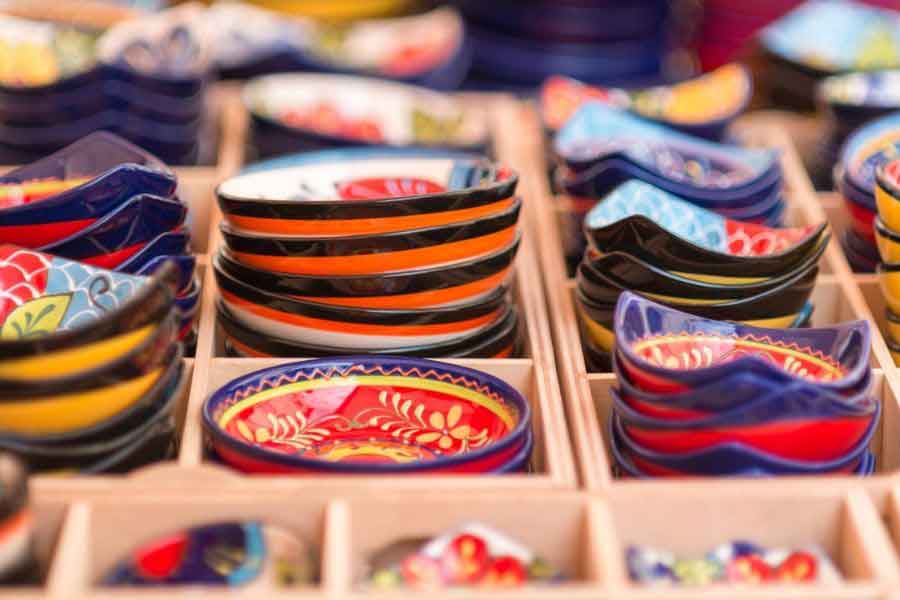
I’ve lost count of how many times I’ve wrapped ceramic bowls and plates in my socks just to get them home safely.
Spain’s pottery tradition is centuries old, and each region has its own distinct style. I particularly love the bold blues and greens from Andalusia and the intricate patterns from Talavera de la Reina.
These pieces aren’t just beautiful; they’re practical too. Just watch the weight and pack them with care.
Where to Buy It:
- Artisan markets and ceramic shops in Andalusia, Toledo, and Talavera
- Craft cooperatives in small towns
- Dedicated pottery studios (many will ship internationally)
10. Leather Goods
- Best for: buy-once quality items
- What to look for: stitching + smell/feel + local provenance (Ubrique)
- Travel note: easy to pack/ wearable
I’ll be honest, I’m not a huge fan of leather (I’ve never liked the smell), so it’s not something I usually buy. But if you’re into it, Spain is one of the best places to pick up high-quality leather goods.
The craftsmanship, especially in towns like Ubrique, is world-class.
You’ll find beautifully made bags, belts, and sandals that will last for years. Just steer clear of cheap knock-offs. Good leather always looks and feels like quality.
Where to Buy It:
- Artisan leather shops in Ubrique, Córdoba, or Granada
- Local markets in Andalusia
- Small independent boutiques in major cities

11. Spanish Fans (Abanicos)
- Best for: light gifts + quintessentially Spain
- What to look for: wood/fabric, not shiny plastic; sturdier rivet
- Travel note: carry-on friendly
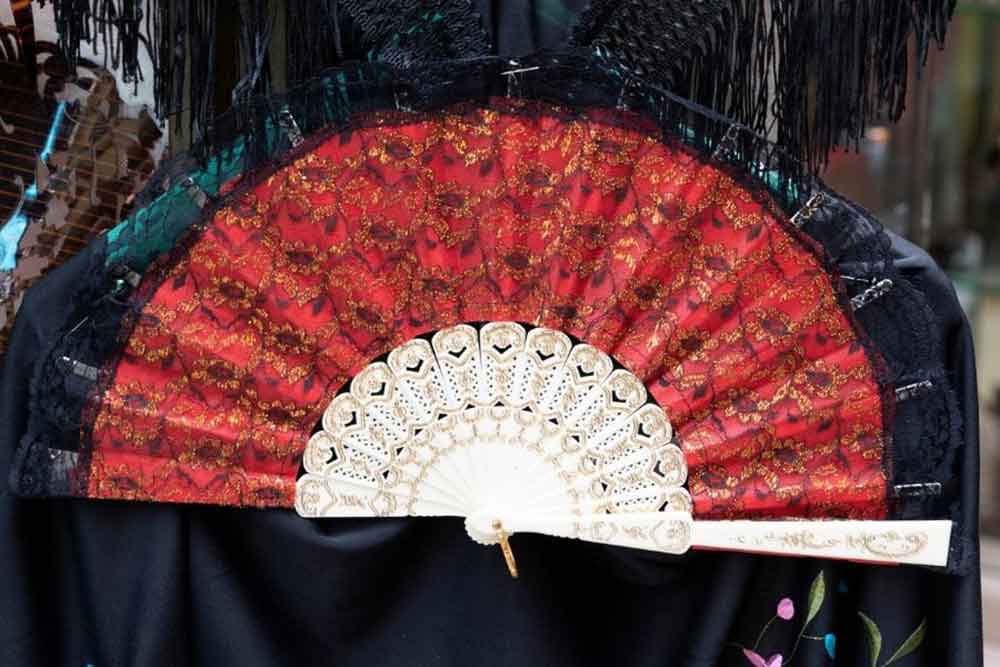
I always recommend abanicos as souvenirs. They’re lightweight, affordable, and uniquely Spanish.
You’ll find everything from touristy plastic versions to stunning hand-painted pieces made by artisans.
My favourite ones are the fans crafted from wood or fabric with intricate designs. They make lovely gifts and don’t take up space in your bag. Just be wary of factory-made fans sold in bulk. If it feels flimsy or too shiny, it’s probably mass-produced.
Where to Buy It:
- Artisan shops in Seville and Granada
- Market stalls with handmade goods
- Flamenco stores and specialist fan boutiques
12. Castanets & Flamenco Accessories
- Best for: culture lovers
- What to look for: wood castanets, better weight/sound; artisan combs
- Travel note: carry-on friendly
If you’re a fan of flamenco, I’ve come across some truly beautiful accessories while living in Spain.
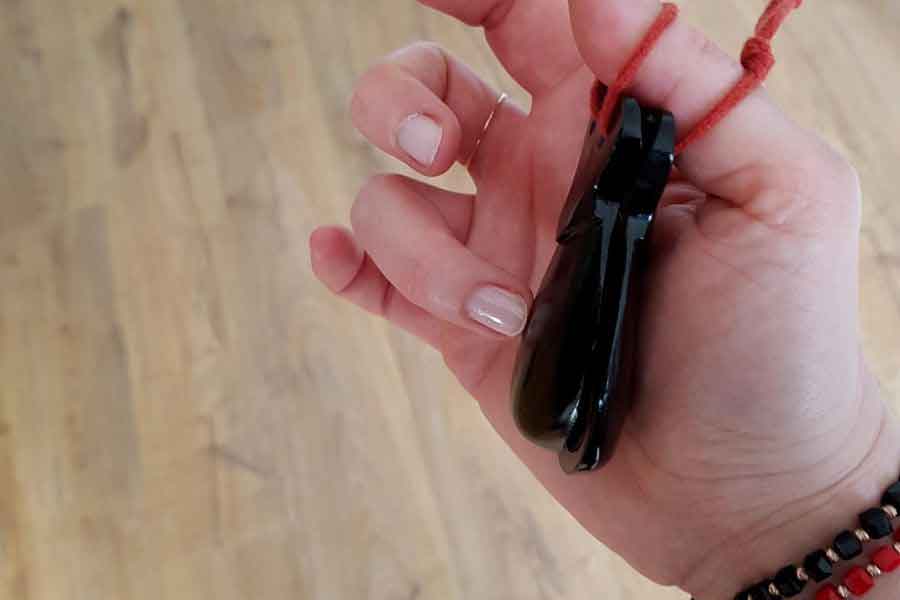
Castanets (castañuelas), embroidered shawls (mantones), and decorative hair combs (peinetas) are part of Spain’s iconic dance culture and make striking souvenirs from Spain.
Just avoid the plastic versions in tourist shops. If you’re after something special, look for pieces sold in flamenco stores, especially in Southern Spain. Many are handmade and used by professional dancers.
Where to Buy It:
- Flamenco shops in Seville, Jerez, or Granada
- Specialist accessory boutiques
- Artisan stalls during local festivals
13. Caganers
- Best for: quirky, regional, conversation-piece
- What to look for: handmade paint details vs identical moulds
- Travel note: fragile-ish, pack carefully
This is one of Spain’s most quirky and hilarious souvenirs. A Caganer is a small figurine of a person squatting with their pants down, traditionally hidden in Catalan nativity scenes.
It’s meant to bring good luck and fertility to the land. I first saw one at a Christmas market in Barcelona and couldn’t believe it was real!
They now come in every character you can imagine, from traditional farmers to celebrities and politicians.
Where to Buy It:
- Christmas markets in Catalonia (especially Barcelona)
- Souvenir shops with Catalan cultural items
- Online artisan stores around the holidays

14. Espadrilles (Alpargatas)
- Best for: useful souvenir you’ll actually wear
- What to look for: jute sole + hand stitching, not rubber lookalikes
- Travel note: easy to pack
These traditional jute-soled shoes are a Spanish classic and way more stylish than most travel souvenirs.
I’ve bought several pairs over the years.
They’re comfortable, lightweight, and come in endless colours and patterns. Just make sure you’re getting real Alpargatas and not cheap lookalikes with rubber soles.
The best ones are hand-stitched and still made using age-old methods.
Where to Buy It:
- Traditional espadrille shops in Barcelona or Madrid
- Markets and artisan shoe stores
- Small-town workshops in northern Spain (like La Rioja or the Basque Country)

15. Jewellery
- Best for: personal keepsake
- What to look for: maker marks / materials / avoid too perfect identical stalls
- Travel note: carry-on friendly
Jewellery is one of my favourite types of souvenirs because it’s personal, packable, and brings back memories whenever I wear it.
In Spain, you’ll find everything from delicate silver pieces to intricate Damascene work from Toledo, where gold or silver is inlaid into blackened steel.
I prefer picking up handmade pieces from artisan stalls or small boutiques.
Where to Buy It:
- Artisan markets across Spain
- Specialist jewellery shops in Toledo (for Damascene)
- Local boutiques in historic town centres

16. Paella Pan
- Best for: cooks (very Valencia-coded)
- What to look for: carbon steel vs decorative tourist pan
- Travel note: bulky/heavy
If you’re a foodie or love to cook, a paella pan is a brilliant souvenir and one that’s actually useful.
You can get them all over Spain, but they’re more of an authentic souvenir from Valencia, the birthplace of paella.
They come in all sizes, from single servings to giant family pans, but be warned: they’re bulky and can be surprisingly heavy.
If your luggage is close to the weight limit, it might not be the best choice. That said, smaller ones make great gifts and conversation pieces.
Where to Buy It:
- Cookware shops and markets in Valencia
- Traditional hardware stores (ferreterías)
- Gourmet shops in major cities

17. Perfumes
- Best for: luxe-but-packable gifts
- What to look for: small artisan perfumeries vs duty-free
- Travel note: liquids rules (carry-on size limits)
Spain has a long tradition of perfume-making, especially in regions like Andalusia, where floral scents like orange blossom and jasmine are everywhere.
I’ve found some beautifully bottled fragrances in small perfumeries that cost far less than international brands but smell just as luxurious.
Look for niche or artisan brands rather than duty-free labels; they’re more unique and often locally produced. Travel-size bottles are perfect for fitting into your carry-on.
Where to Buy It:
- Artisan perfumeries in Granada or Córdoba
- Boutique shops in historic city centres
- Local apothecaries and herbalist stores (herbolarios)

18. Porrón
- Best for: cultural novelty + parties
- What to look for: thicker glass / stable base
- Travel note: fragile (wrap well for shipping)
A porrón is one of the most fun and functional souvenirs you’ll find.
This traditional Catalan wine pitcher is designed to pour wine straight into your mouth without touching the glass, making it a great party trick.
While it might not be the most practical item in your suitcase, it’s a unique piece of Spanish culture and looks great on a shelf. Just be sure to wrap it well, as they’re usually made of thin glass.
Where to Buy It:
- Markets and kitchenware stores in Catalonia
- Souvenir shops with regional products
- Artisan glass shops

Regional Spanish Souvenirs: What to Buy Based on Where You Are
If you’re still deciding what to buy in Spain, this is the easiest way to avoid ending up with the exact same stuff every tourist street sells.
Spain’s not one big monolith when it comes to shopping, and the best things to take home are usually the ones that are from the place you’re standing in.
So instead of trying to hunt down the best X in Spain (stressful), I just buy what that region does well and call it a win.
Here’s a quick cheat sheet I use when I’m travelling around.
| Region | Best picks | Where to shop | Quick “is this legit?” check |
|---|---|---|---|
| Andalusia | Olive oil, hand-painted ceramics, artisan leather | Covered markets, cooperatives, ceramic studios | Oil with a D.O.; ceramics with small hand-painted differences (not identical prints) |
| Catalonia | Cava, porrón, caganers, espadrilles | Wine shops, markets, seasonal fairs | Cava labelled D.O. Cava; caganers with hand-painted details (not copy-paste faces) |
| Madrid | Market food gifts + proper abanicos | Covered markets, food halls, fan shops | Seller can tell you the producer/origin; skip “souvenir bundles” with no labels |
| Valencia | Paella pan, bright ceramics, turrón | Ferreterías, cookware shops, markets | Real pan is carbon steel (not decorative); ceramics show brush variation |
| Basque Country | Txakoli wine, local cheeses, artisan food bits | Delis, specialty shops, producers | Txakoli clearly labelled; cheese sold vacuum-packed if you’re flying |
| Castilla–La Mancha | Saffron, Manchego | Spice stalls, cooperatives, specialist food shops | Saffron with La Mancha origin; Manchego with protected-origin labelling |
| Toledo | Damascene jewellery | Reputable workshops/stores | Ask what it’s made of + how it’s done; avoid ultra-cheap identical trays |
| Mallorca | Flor de sal, Mallorca pearls (often imitation) | Salinas shops, artisan markets | Salt names the producer/salinas; pearls are usually for style, not “investment” |
Souvenir Shopping in Spain FAQs
What is the best thing to purchase in Spain?
It really depends on your interests, but olive oil, ceramics, and espadrilles are always at the top of my list. They’re authentic, practical, and easy to find in most regions.
What products is Spain famous for?
Spain is known for high-quality olive oil, Iberian ham, wine, saffron, leather goods, and handcrafted ceramics. Many of these products are protected by regional D.O. labels, meaning they’re tied to local heritage and production standards.
What food can I bring back from Spain?
You can usually bring back vacuum-packed or sealed items like turrón, saffron, paprika, canned olives, cheese (check your country’s import rules), and wine in checked luggage. Fresh or loose foods, like open cheese or olives in brine, may be restricted depending on where you’re travelling to. Always check customs guidelines before flying.
What souvenirs are easiest to bring home from Spain?
If I want easy, I buy small, sealed stuff, saffron or pimentón, turrón, jewellery, or a decent abanico. These won’t leak, smash, or cause drama at security. Olive oil and wine are fine too, I just pack them in checked luggage and wrap them properly.
How can I tell if something is actually made in Spain?
My quick test is simple: can the seller tell me where it’s from and who made it? If it’s vague, I leave it. For food, I look for origin labels like D.O. For crafts, I look for maker marks and small differences, not identical copies.
I’m flying home, What Spanish food should I be careful with?
This depends on where you’re flying to, but I play it safe. I buy sealed or vacuum-packed, I put liquids in checked luggage, and I assume meat and dairy might be restricted. If I’m unsure, I check customs rules, or I eat it in Spain, tragic but necessary.
What’s a good non-touristy gift from Spain that isn’t food?
If I want something people will actually use, I go for a good abanico, a small ceramic tapas dish, espadrilles, or a simple piece of artisan jewellery. They’re easy to pack, feel genuinely Spanish, and don’t scream I panic-bought this at the airport.
Done Shopping For Souvenirs In Spain And Planning What Comes Next?
Now you know what to bring back from Spain, and what to walk past without a second glance.
Basically, if you stick to markets, small shops, and makers who can tell you where things come from, you will probably end up with an authentic souvenir that actually feels connected to your trip.
If you are planning the rest of your time in Spain, here are a few good next steps.
- The Honest Pros And Cons Of Visiting Spain
- Choose The Spanish Cities That Fit Your Travel Style
- What To Bring So You Do Not Overpack For Spain
- How To Plan A Spain Trip Without The Stress
Have a question? then don’t forget to join our free Facebook Group and ask the community.
Want to discover more about Spain? then check out these other great articles to find out more.
General Spain Travel
- Ultimate 10 Days In Spain Itinerary
- 2 Week Spain and Portugal Itinerary
- How Many Days Should I Spend in Spain and Portugal?
- 50+ Best Experiences for Your Spanish Bucket List
- 38 Most Famous Landmarks in Spain
- Can You See Morocco From Spain?
Andalucia and South Spain
- Southern Spain Itinerary: Best 7 Days in Andalucia
- Local’s Guide To Seville in 3 Days
- 35+ Top Things To Do In Seville
- 23 Best Day Trips From Seville, Spain
- How to Do A Seville to Cordoba Day Trip
- Where Is the Nearest Beach to Seville?
- How To Spend One Day in Granada
- Best 2 Days in Granada Itinerary
- The Best Cordoba in One Day Itinerary
- 5 Places for the Best Glamping in Spain’s Southern Coast
Barcelona
- 32 Best Things to Do in Barcelona, Spain
- Barcelona 5 Day Itinerary for First-Time Visitors
- Should You Visit Barcelona or Lisbon?
- Montserrat Day Tour With Tapas and Wine From Barcelona
Madrid And Surrounding Area
- Is Madrid Worth Visiting?
- 28 Best Things to Do in Madrid, Spain
- Best Madrid 2 Day Itinerary By A Local!
- 30 Things to Do In Winter in Madrid
- Madrid vs Lisbon Comparison Guide
- How to Visit Segovia From Madrid in a Day
- A Day Trip to Toledo from Madrid
Basque Country and North Spain
- An Epic 5 Days Road Trip in Aragón Itinerary
- 15 Best Things to Do in Aragon, Spain
- Is Zaragoza Worth Visiting? Everything You Need To Know
- The Best Things to See in Zaragoza, Spain
- Is San Sebastian Worth Visiting? The Pros and Cons
- San Sebastian Food Tour Review With Devour Tours
- Is Bilbao Worth Visiting? 12 Reasons To Visit Bilbao