
11 Best Cities in Southern Spain to Visit
Southern Spain is full of incredible places to visit, but figuring out which cities are actually worth your time can be weirdly difficult. There are Moorish palaces, flamenco shows, beach towns, hilltop views, and enough tapas to make decision-making feel like a full-time job.
If you’re trying to narrow down the best cities in southern Spain for your trip, this guide will help. Whether you want iconic sights, a more local feel, lazy beach days, or cities with great food and plenty of character, I’ve rounded up the places I genuinely think are worth your time when visiting southern Spain.
I’ve been living in Andalucía for a while now, and I’ve slow-travelled my way through its cities, so this isn’t just a generic list of the obvious ones. It includes the big hitters like Seville and Granada, but also a few quieter places that deserve far more attention than they usually get.
If you tend to prefer authentic neighbourhoods, tiny tapas bars, walkable old towns, and places that still feel enjoyable when you’re exploring at your own pace, I think you’ll find a few favourites here. That goes double if you’re travelling solo, or just want cities that are easy to enjoy without a rigid itinerary.
I’ve included 11 cities, a quick comparison table, and some practical planning tips to help you work out which ones suit your travel style best.
There’s also at least one personal favourite involving a flamenco show in a cave bar, six locals, and no actual stage. So grab a coffee, or a tinto de verano, and let’s figure out which cities deserve a spot on your Southern Spain itinerary.

Meet Me In Departures contains affiliate links and is a member of the Amazon Services LLC Associates Program. If you make a purchase using one of these links, we may receive compensation at no extra cost to you. See our Disclosure Policy for more information.
Why Visit Southern Spain?
Southern Spain has a way of making other trips feel a bit underwhelming afterwards. One minute you’re wandering through a Moorish palace, the next you’re ordering tapas in a tiny bar full of locals and practising your Duolingo Spanish. It’s the kind of place that’s very easy to fall for.
What I love most about Andalucía is how varied it is. You’ve got cities packed with history, coastal spots made for long lunches and sunset walks, and smaller places that still feel local once the day-trippers disappear.
After living in the region and travelling through it slowly, I can honestly say it’s one of the easiest parts of Spain to build a trip around, whether you want culture, food, beach time, or a bit of everything.
If you’re putting together your Southern Spain itinerary, expect grand architecture, old towns you’ll want to get lost in on purpose, and food that will completely ruin sad supermarket tapas for you.
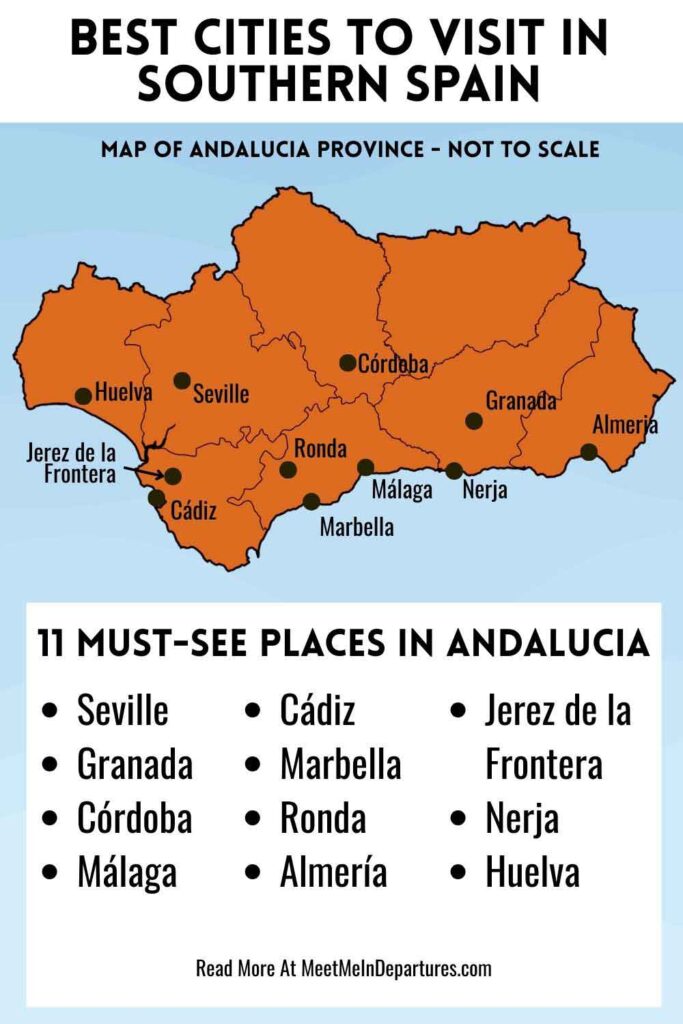
Map of the Best Cities in Southern Spain
To help you get your bearings, here’s a map of the cities I’ll be covering below.
Some are by the coast, some are further inland, and all of them are worth knowing about before you start wildly overestimating how much you can fit into one trip.
Use this map to start planning your trip to Spain, whether you’re mapping out a road trip or just figuring out which places fit together best.
Quick Comparison Table: Which City is Right for You?
Not sure which cities to prioritise?
Here’s a quick breakdown to help you figure out where to go based on your travel style.
| City | Best For | Vibe |
| Seville | Culture, architecture, history | Lively & traditional |
| Granada | Moorish history, epic views | Historic & dramatic |
| Córdoba | Courtyards, history, calm vibes | Quiet & beautiful |
| Málaga | Beaches, art, food | Stylish & coastal |
| Cádiz | Ancient port, sunsets | Relaxed & local |
| Marbella | Beach, stylish stays, old town charm | Chic but authentic |
| Ronda | Nature, scenery, small-town feel | Wild views & peaceful |
| Jerez de la Frontera | Sherry, Andalucian horses, no crowds | Local & cultural |
| Nerja | Caves, beaches, cliffside walks | Laid-back & sunny |
| Almería | History, desert, off-grid | Remote & cinematic |
| Huelva | Quieter coast, Rio Tinto | Under-the-radar & rugged |
11 Best Places to Visit in Southern Spain
1. Seville
Seville is Best for
Must-See In Seville
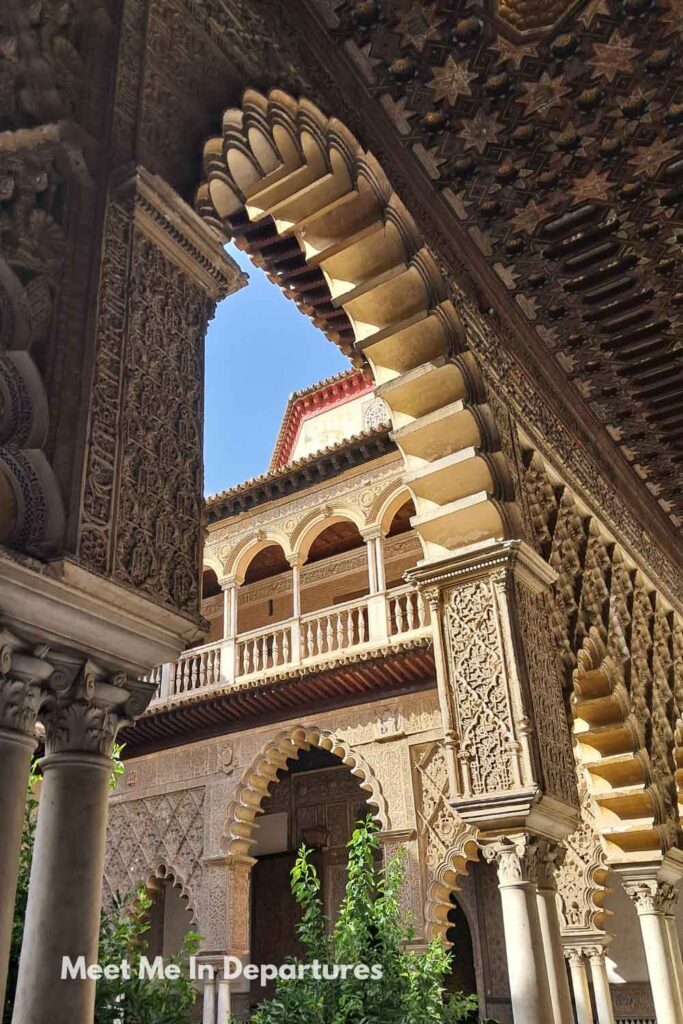
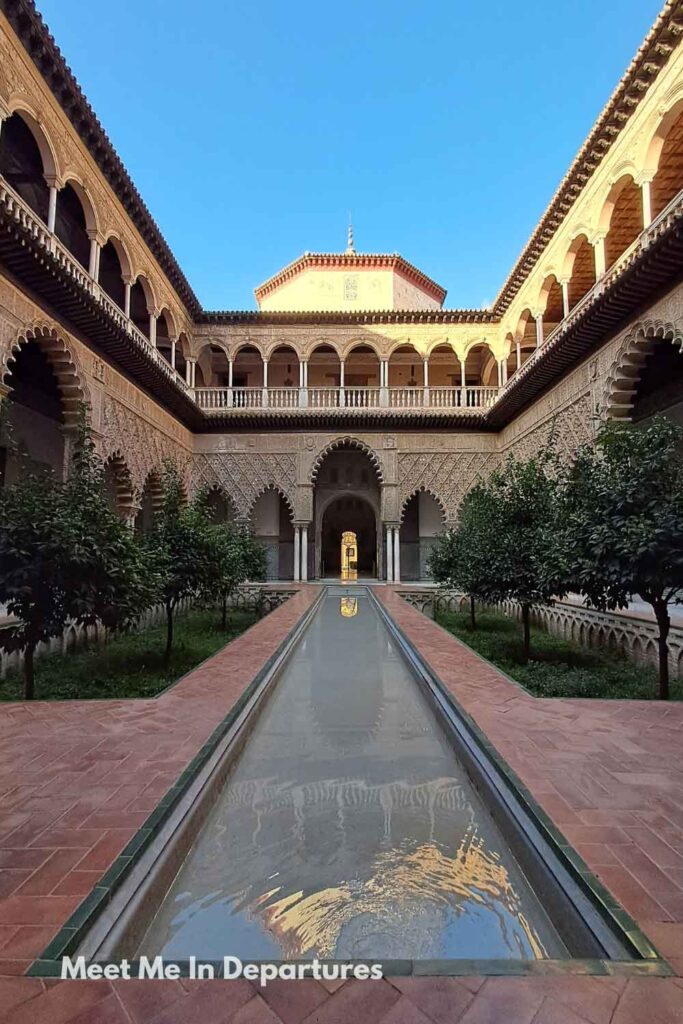
If there’s one place that really sums up southern Spain, it’s Seville.
This city is loud, colourful, full of life, and just a little bit chaotic when it wants to be. I live here now, so yes, I’m biased, but even after all these years, I still love it. The charm never really wears off.
From the moment you arrive, you’re surrounded by Andalusian architecture, jasmine-scented patios and the distant strum of a flamenco guitar. It somehow manages to be both elegant and down-to-earth at the same time.
There’s no shortage of iconic things to do in Seville, from wandering around the Real Alcázar to climbing La Giralda and ending the day at a flamenco show. But what I love most is how the city balances its big-name sights with everyday local life.
One minute you’re standing in front of a palace, the next you’re squeezed into a tiny tapas bar, wondering how one street can hold this many people and this much noise that goes on well into the early hours.
Seville is also one of the best Spanish cities for solo travellers. It’s walkable, full of plazas and cafés where you won’t feel awkward on your own, and it has that rare kind of energy that makes it easy to fill a day.
Spring is my favourite time to visit. Semana Santa and Feria de Abril turn the whole city into a complete spectacle, in a good way, but do book early because accommodation goes fast.

Planning Hack
The Alcázar is easily the busiest spot in Seville, so I always recommend booking the earliest ticket available and getting there before opening time. There are only about 25 of these limited tickets per day.
2. Granada
Granada is Best for
Must-See In Granada
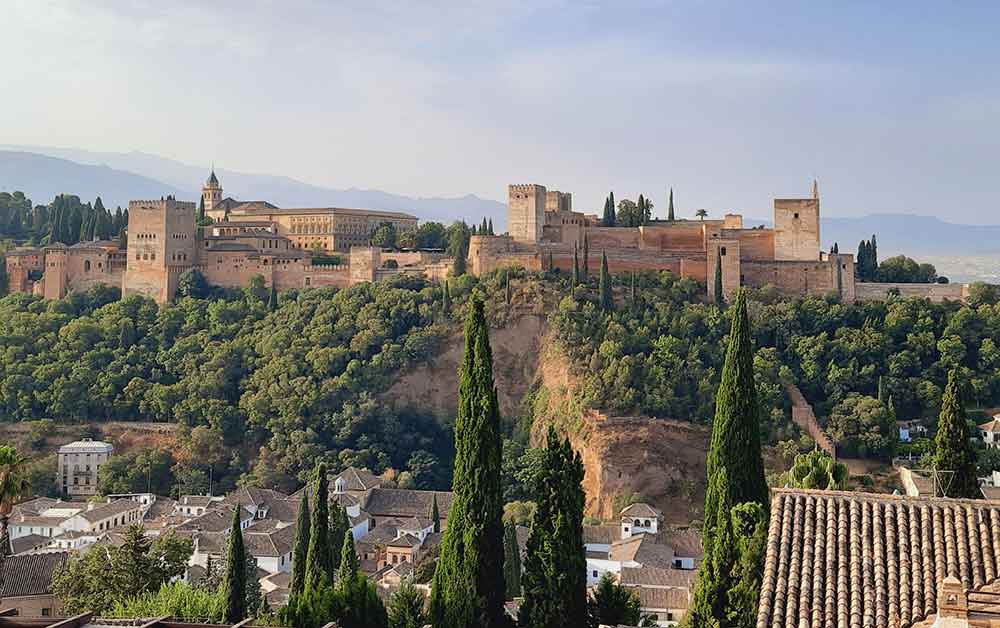
Granada feels like it has far more packed into it than a city this size really should. You’ve got steep cobbled streets, incredible Moorish architecture, street musicians drifting through the Albaicín, and the Alhambra sitting above it all like it knows it’s the main event.
One of the quirkiest things you can do in Granada here is watch a Flamenco show in a cave house!
You can see the city’s layered history everywhere, from its Islamic roots to its later Christian influence, but nowhere hits quite like the Alhambra. It’s one of those rare places that actually lives up to the hype. Slightly irritating, really, when so many don’t.
Granada also has a younger, more creative side thanks to its big student population, so it doesn’t feel like a city that’s stuck in the past.
And then there’s one of the best local perks, free tapas. Order a drink, get food. Order another, get more food. It’s a brilliant system, and I fully support it.

Alhambra & Nasrid Palace Tickets
Tickets frequently sell out, even outside peak season. It’s worth booking as soon as you know your travel dates to guarantee entry.
3. Córdoba
Córdoba is Best for
Must-See In Córdoba
Córdoba tends to get overshadowed by Seville and Granada, which is slightly unfair because it’s gorgeous yet laid back. It doesn’t need to fight for your attention. It already knows it’s impressive.
The Mezquita-Catedral is the big reason people come, and rightly so.
Those endless red-and-white arches are even better in person, and the cathedral stuck in the middle gives the whole place a slightly surreal feel. I’ve visited several times, and it still does that thing where your brain briefly gives up trying to work out the scale of it.
What I love about Córdoba is that it feels easier than some of the bigger cities.
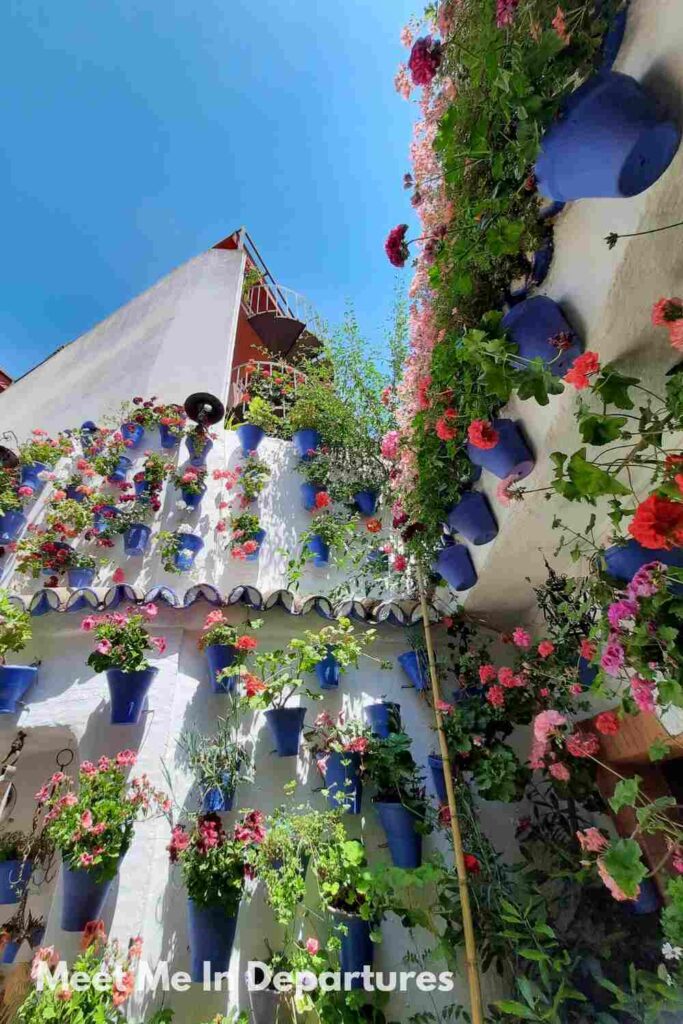
You’ve got beautiful old streets, hidden courtyards, shady little plazas, and far fewer moments where you’re wondering why you thought queueing in full sun was a good holiday activity.
If you like places that feel historic but not hectic, this is a very good shout, as you can easily see the highlights of Cordoba in a day.
Start with the Jewish Quarter, visit the Mezquita, peek into flower-filled patios, and still have time to sit down with a coffee without feeling like you’re racing against the clock.
Good To Know
If you can, visit during the Patio Festival in May, but go midweek if you want to avoid the worst of the crowds.
If you’re not visiting in spring, Palacio de Viana is still well worth it for its patios, and it gives you a good taste of that side of Córdoba year-round.

4. Málaga
Málaga is Best for
Must-See In Málaga
For years, Málaga got treated like the place you flew into before heading somewhere else, which feels a bit unfair now because it’s actually a great city in its own right.
Malaga packs in beaches, art, good food, and just enough edge to stop it from feeling too polished.
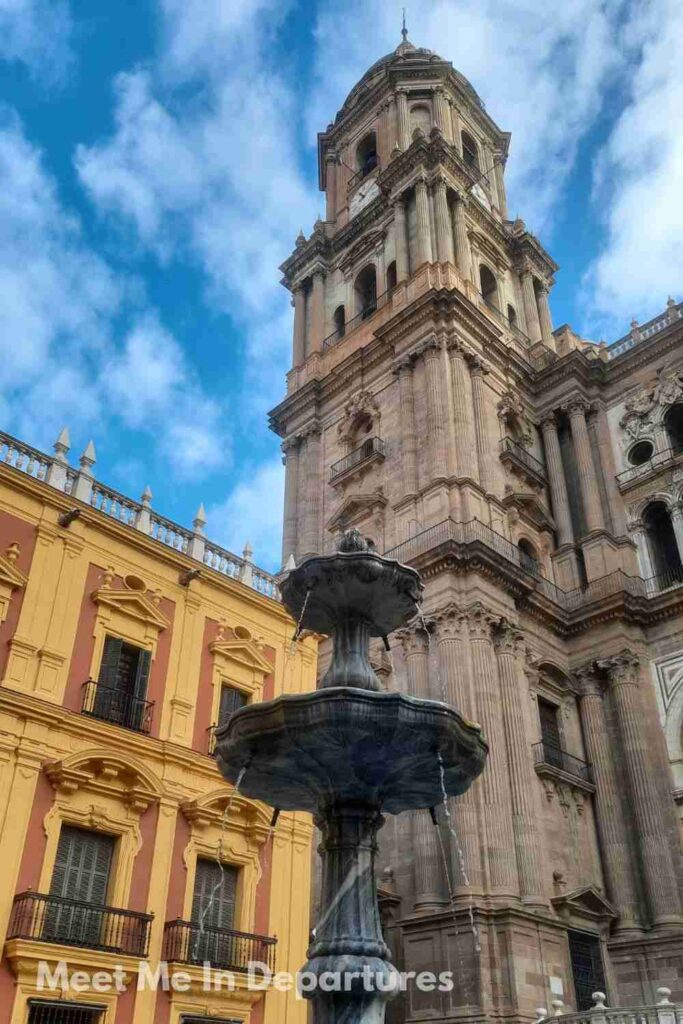
You’ve got the Alcazaba and Gibralfaro watching over the city, Roman ruins tucked into the middle of things, busy food markets, and a street art scene that gives the place a bit more personality than people expect.
Malaga is also Picasso’s hometown, which means even if modern art isn’t really your thing, the Picasso Museum is still worth a look for the building alone.
And then there’s the coast. For a city beach setup, Málaga does very well for itself.
Pedregalejo is my favourite area for a more local feel, with seafront bars, laid-back cafés, and plenty of veggie-friendly tapas if you know what to order. Pimientos de padrón and berenjenas con miel are usually an easy win.
Insider Tip
If you like street art, don’t just stick to the obvious bits. Wander through Soho Málaga properly, because that’s where the city feels a bit scruffier in a good way. The murals change regularly, and there are some great coffee spots and small galleries tucked in between them.

5. Cádiz
Cádiz is Best for
Must-See In Cádiz
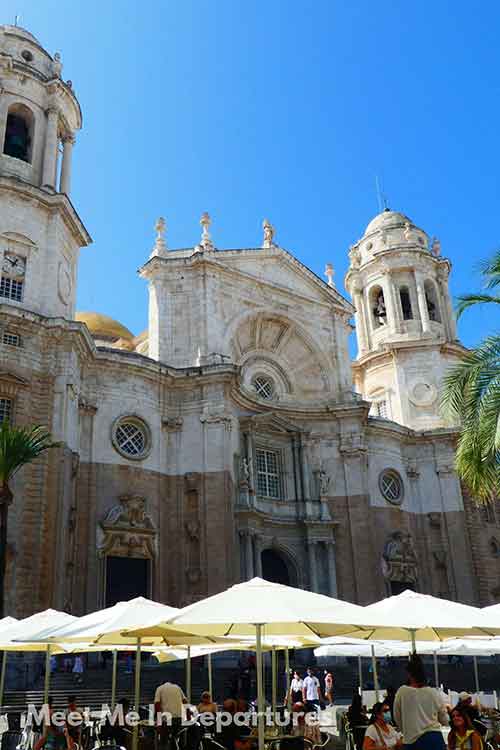
Cádiz is one of Europe’s oldest continuously inhabited cities, and somehow it still feels a bit overlooked, which honestly only adds to the appeal. It’s slightly weathered, a little salty around the edges, and all the better for it.
There’s something about Cádiz that feels lived-in. Fewer crowds, more sea air, and sunsets that make everyone suddenly go quiet for once.
The city centre sits on a narrow spit of land, so you’re never far from the water. Whether you’re wandering along the promenade or perched on the sea wall with an ice cream, you’re surrounded by Atlantic breeze.
Compared to somewhere more polished like Seville or Málaga, Cádiz feels scruffier, and that’s exactly why I love it.
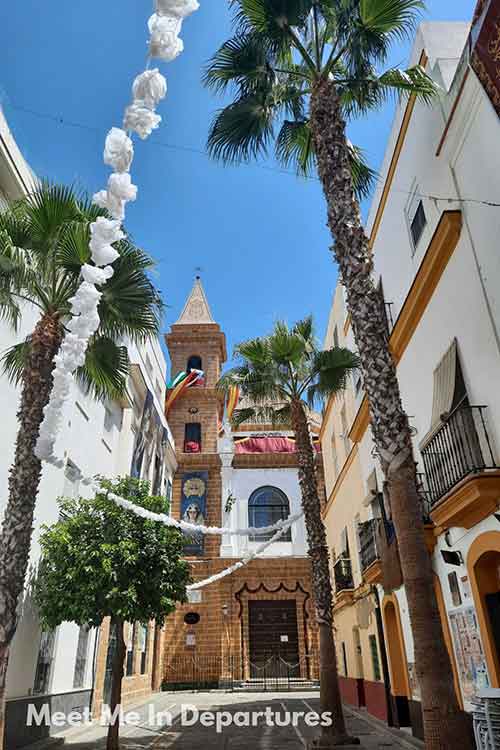
The old town is full of faded baroque buildings, tiny plazas, and that golden light that makes even the washing lines look oddly photogenic.
And if you like a good market, Mercado Central is well worth a stop. It’s known for seafood, obviously, but I usually make a beeline for the veggie stalls, local cheeses, and the baked goods hidden away at the back.
Good To Know
Skip busy Playa de la Victoria and head to La Caleta for sunset instead. Take something to sit on, something cold to drink, and give yourself a minute. It’s one of those places that really does live up to the hype.
6. Marbella
Marbella is Best for
Must-See In Marbella
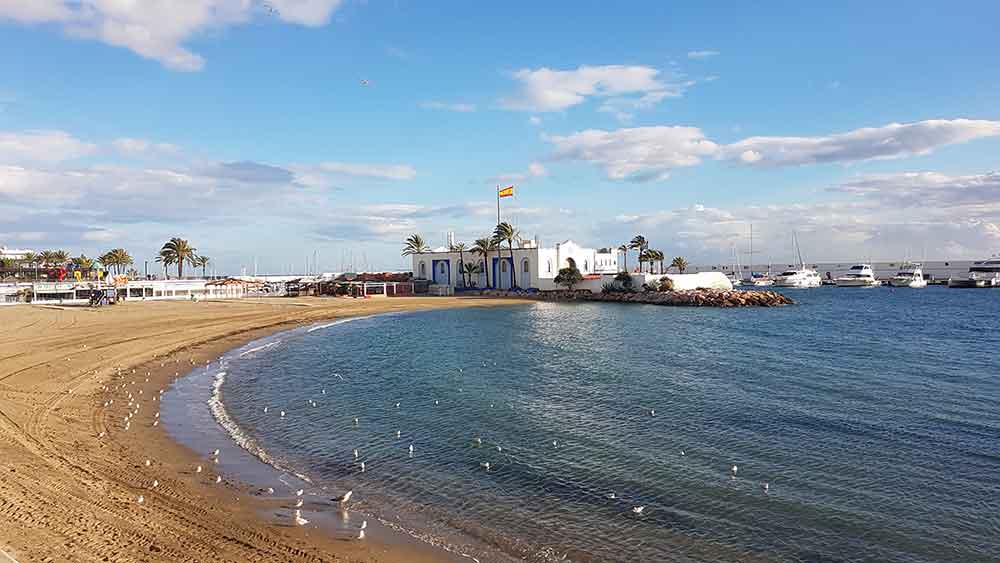
Marbella gets a bit of a reputation, and sure, there’s a lot of champagne-spraying nonsense in Puerto Banús, but that’s not the full story.
Head into the Casco Antiguo, and you’ll find a charming old town that feels more like a whitewashed Andalusian village than a flashy resort.
There’s a real contrast here, with glitzy beach clubs one minute, then hidden tapas bars and bougainvillaea-covered courtyards the next.
If you’re after that holiday mode, fully activated feeling, Marbella nails it. Sunny beaches, palm-lined promenades, and just enough glimmer to feel like a treat, without having to sell a kidney.
The vibe is more polished than Cádiz or Málaga, but it doesn’t feel soulless. You can base yourself here for beach days and use it as a springboard for inland day trips to places like Ojén or Ronda.

Money Saving Tip
Ditch Puerto Banús and stay in Marbella’s Casco Antiguo. Same beauty, half the price, and far less bling.
7. Ronda
Ronda is Best for
Must-See In Ronda
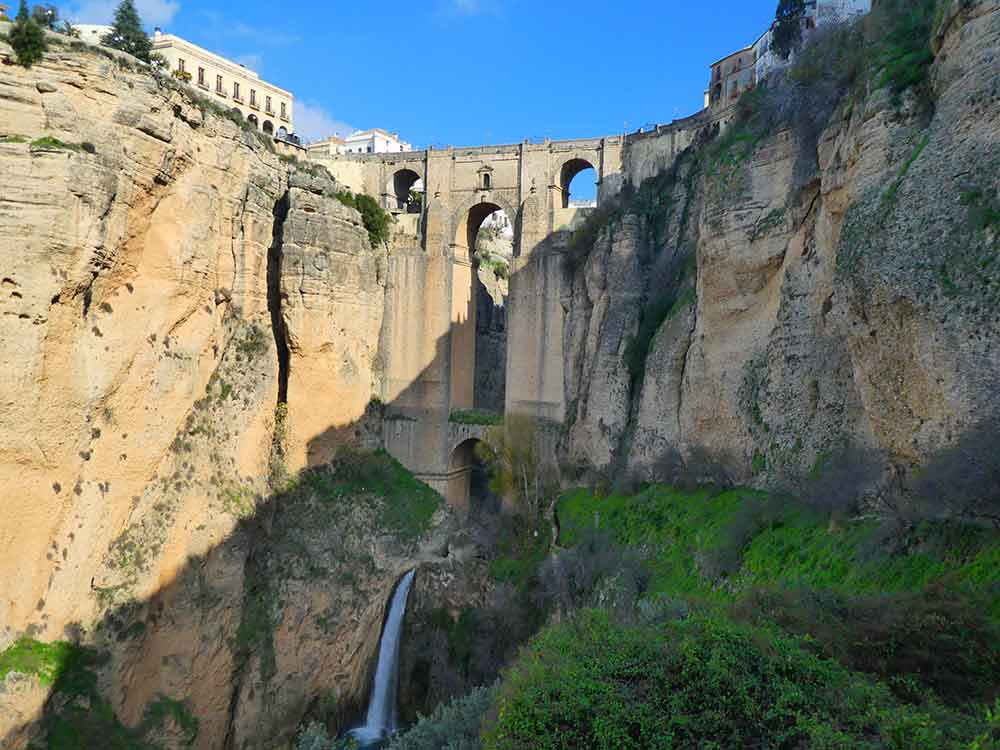
Perched high above a deep gorge, Ronda is the sort of place that makes your jaw drop, even if you’ve already seen the photos. The iconic Puente Nuevo bridge spans El Tajo and links the old town with the new, and no matter how many times I go back, it still has that same wow factor.
But there’s more to Ronda than just the bridge.
It’s quieter and slower-paced than a lot of the bigger Andalusian cities, with winding lanes, leafy plazas, and one of the oldest bullrings in Spain, which you can visit without supporting any actual events.
The views do a lot of heavy lifting here. Every corner seems to hand you yet another excuse to stop and take a photo.
Ronda is also a great stop on a southern Spain road trip, especially if you want a break from the coast and fancy some mountain scenery instead. It has that classic whitewashed Andalusian feel, but with enough walking trails, little museums, and scenic viewpoints to keep you busy for a couple of days.
Don’t Miss
Once you’ve seen the bridge from the usual viewpoints at the top, take the trail down into the gorge below Puente Nuevo.
The view from the bottom is impressive and gives you a better perspective of the engineering of the bridge. A lot of people never bother because of the steep walk down and back up again.
8. Jerez de la Frontera
Jerez is Best for
Must-See In Jerez
Jerez de la Frontera, or simply Jerez as most people call it, tends to get overlooked, which honestly is part of the appeal.
It’s less polished than Seville and less touristy than Córdoba, so you get a lot more room to enjoy it without constantly sidestepping other people’s elbows.
Jerez is best known for its Andalusian horses, and rightly so. The Royal Andalusian School of Equestrian Art is here, and even if horses aren’t usually your thing, the performances are seriously impressive. There’s a strong sense of tradition here, but it still feels real rather than dressed up for visitors.
It’s also the place to get sherry. From dry finos to richer styles like Pedro Ximénez, the bodegas here are full of history and character. Tío Pepe is the big name most people know, but there are smaller, more atmospheric places to try it too, which is usually much more my speed.
The city itself feels elegant but a little faded around the edges, with tiled courtyards, a crumbling Alcázar, and wide plazas that never seem as busy as you expect them to be. It’s cultured, interesting, and a lot more relaxed than some of the bigger-name cities nearby.
Good To Know
Skip the busiest big-name bodegas and book a tasting at Bodegas Tradición instead. It’s quieter, more personal, and their aged sherries are excellent. They’ve also got a genuinely good art collection inside, which makes it feel less like a standard tasting stop.

9. Nerja
Nerja is Best for
Must-See In Nerja
Nerja is popular for a reason, and in peak season it absolutely fills up, but it still feels more relaxed and less overbuilt than some of Spain’s bigger beach resorts. It’s small, scenic, and perched on a cliff with gorgeous views over the Mediterranean.
If you want a coastal base that feels lively without tipping fully into tacky resort territory, Nerja does a very good job.
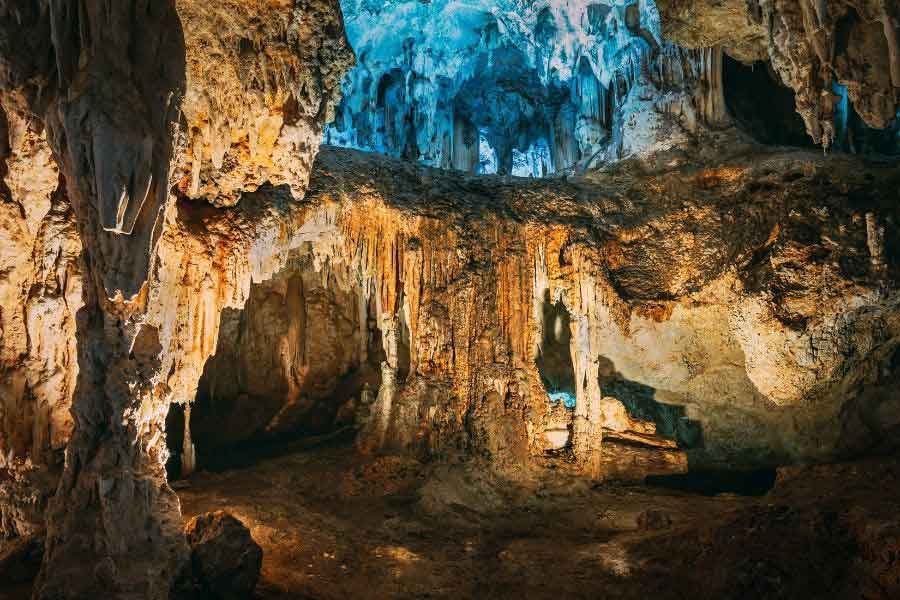
The main attraction is the Cuevas de Nerja, a huge cave system with vast chambers, dramatic rock formations, and some of the oldest cave art in Europe. Inside is cool (literally and figuratively), I’ve found it’s much more enjoyable earlier in the day, before the coaches roll in and the whole place gets a lot louder than a cave really should.
Back above ground, you’ll find the Balcón de Europa, a palm-lined viewpoint stretching out over the sea, with cafés and ice cream shops conveniently close by.
Nerja’s beaches are some of the best along this stretch of coast. They’re smaller, a bit more rugged, and great for swimming or kayaking.
If I want somewhere quieter, I head east towards the beaches near Maro. They’re usually less busy and just as lovely.
Tickets for Nerja Caves
Visit the caves first thing in the morning, because tour buses tend to arrive mid-morning, and it gets noisy fast, which sort of spoils the experience.
10. Almería
Almería is Best for
Must-See In Almería
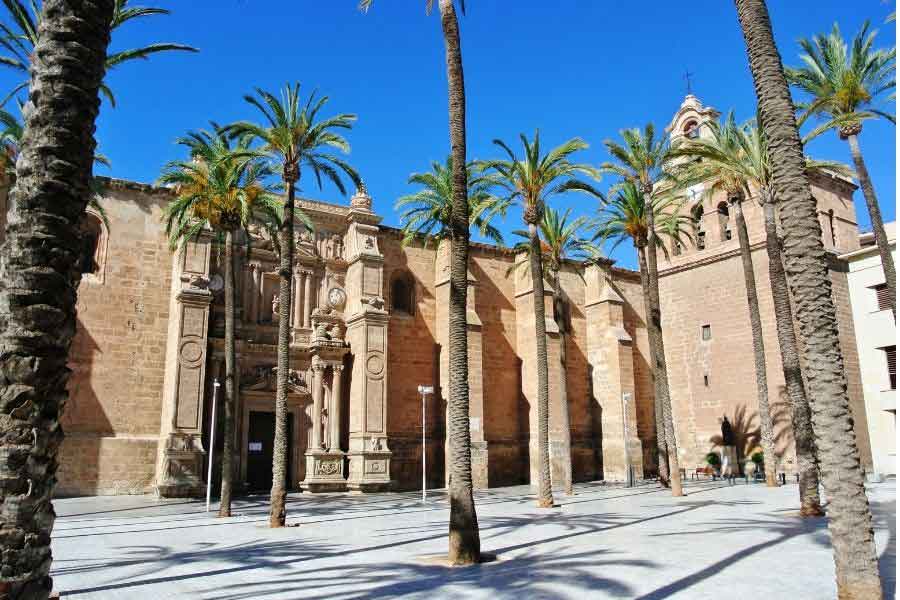
Almería is one of Andalucía’s most underrated cities, and I kind of hope it stays that way. It’s a little rough around the edges, sure, but that just makes its rewards feel even sweeter. If you like your cities with a side of cinematic desert and Moorish ruins, you’ll love it here.
The city’s centrepiece is the Alcazaba, a sprawling fortress with sweeping views over the coast and enough history to rival the Alhambra, minus the crowds. You can almost always have large parts of it to yourself, especially if you visit midweek.
Just outside the city, you’ll find the Tabernas Desert, Europe’s only true desert. It’s been the backdrop for hundreds of spaghetti westerns and still has a few film sets you can visit (cheesy, but fun).
And if you’re more into beaches than cowboy reenactments, head for the Cabo de Gata Natural Park. It’s wild, undeveloped, and full of hidden coves.
Planning Tip
Cabo de Gata’s beaches are beautiful, but many of them have very few facilities, which is partly why they stay quieter. Bring plenty of water, snacks, sunscreen, and anything else you’ll need for the day, because you often won’t find much once you’re there.
11. Huelva
Almería is Best for
Must-See In Almería
Huelva gets plenty of visitors in peak season, especially around the coast, where the big beach hotels and package holidays pull in plenty of northern Europeans. Outside of that, though, it’s often overlooked by independent travellers, which means it can feel surprisingly low-key compared with some of the bigger names in southern Spain.
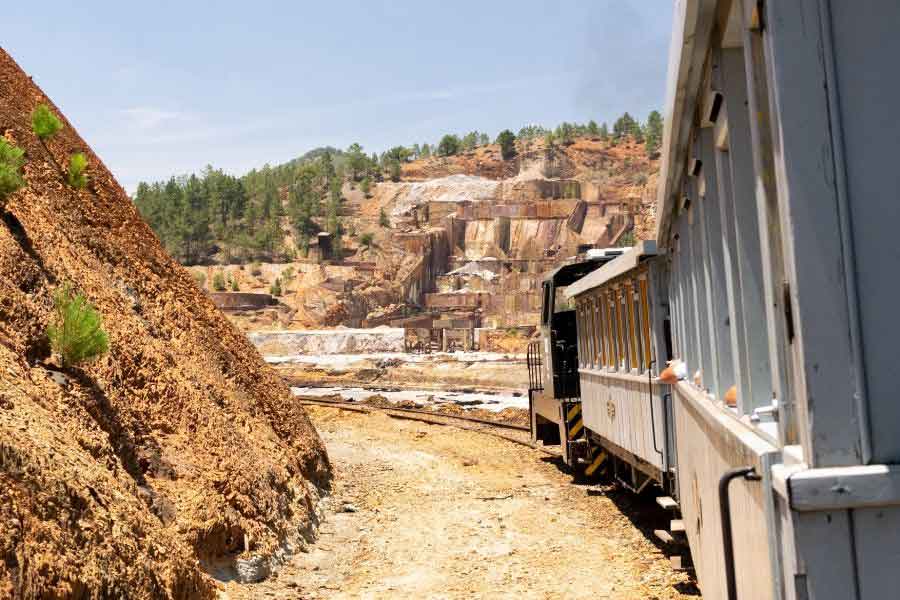
One of my favourite places here was the Rio Tinto. The red, iron-rich landscape and acidic water make the whole place look faintly Martian, and it genuinely feels unlike anywhere else I’ve been in Spain. NASA has even used the area as a Mars analogue for research, which says quite a lot.
Inland, you’ll find forests, rivers, and nature reserves, while the coastline is lined with long sandy beaches that feel much quieter once you’re away from the main holiday stretches and outside the busiest summer weeks.
Huelva is also tied to Christopher Columbus, who set sail on his first voyage from nearby Palos de la Frontera.
And if you’re a fan of sherry, it’s also worth heading over to nearby Sanlúcar de Barrameda, which is famous for manzanilla and has a long maritime history of its own.
Don’t Miss
Huelva works best as a base for exploring the wilder side of this part of Andalucía. I recommned pairing it with a trip into Doñana National Park for birdlife, dunes, and marshland, or head to El Rocío, which feels unlike anywhere else with its sandy streets, horses, and slightly surreal Wild West energy.
How to Plan Your Route Around Southern Spain
With 11 cities in southern Spain to choose from, the trick is not trying to cram all of them into one trip and then wondering why you need a holiday afterwards.
I’ve travelled around Andalucía enough now to know that this part of Spain works best when you give yourself a bit of breathing room.
If you’ve only got 3 to 5 days
Keep it simple. I’d stick to Seville, Córdoba, and Granada.
They’re well connected by train, easy to do without a car, and give you a really good mix of history, architecture, and food without spending half your trip in transit.
If you’ve got a week
This is where you can start mixing bigger Andalusian cities with some coast.
A route like Seville, Cádiz, Ronda, and Málaga works really well if you want a trip that feels varied.
You get culture, beach time, mountain scenery, and plenty of good food, without it turning into a constant cycle of packing, unpacking, and dragging your suitcase over cobbles.
If you’ve got 2 weeks or more
You’ve got a lot more flexibility here.
You can do a bigger loop through Seville, Córdoba, Granada, Almería, Málaga, Nerja, and Ronda.
Or, if you’d rather include a few less obvious stops, add in places like Jerez and Huelva for a trip that feels a bit more local and a bit less copied from everyone else’s Pinterest board.
Driving or public transport?
I’ve done both, and honestly, it depends on which cities you want to include.
Public transport works well between the bigger places. But for spots like Ronda, Cabo de Gata, or parts of Huelva province, having a car makes life much easier.
When I’m checking routes, I usually use the Omio app to compare prices between trains and buses, because what looks simple on a map and what’s actually practical are not always the same thing.
The roads are generally good, and distances between these cities aren’t huge. I would just avoid driving into city centres unless you enjoy tight parking, mysterious one-way systems, and unnecessary stress.
My favourite way to do it
If you want to turn it into a road trip, I’d fly into Seville or Málaga, do a loop, and fly out of the other.
It keeps things straightforward and means you’re not doubling back for no good reason.
Money Saving Tip
I often use buses between smaller cities because they’re usually cheaper than trains, and sometimes quicker too. ALSA and Damas are both worth checking for regional routes, and I normally use a comparison app to compare times and prices before I book.
BlaBlaCar can also be a good option if you’re happy with ride-sharing and don’t mind a slightly less predictable day.
When’s the Best Time to Visit Southern Spain?
Southern Spain gets a lot of sunshine, but that doesn’t mean every season is equally fun. Some months are brilliant for city-hopping, some are better for the coast, and some are best approached with realistic expectations and a very large bottle of water.
If I had to pick, spring and autumn are usually the sweet spot.
Spring: best overall
Spring is hands down my favourite time to travel around southern Spain. The weather is warm, but not the sort that makes you question every life choice by midday, and cities like Seville and Córdoba feel at their best.
This is when you get orange blossom, patio season, festivals, and long sightseeing days without melting. If you want culture, city breaks, and a decent chance of enjoying yourself while walking uphill to a viewpoint, spring is a very safe bet.
Summer: best for the coast, not inland cities
Summer can be great, but you do need to be a bit selective.
Inland cities like Seville, Córdoba, and Granada can be brutally hot, and I usually avoid them at this time of year unless I have a very good reason. Coastal spots like Nerja, Cádiz, and Almería are a much better shout if you’re travelling in summer and want sea breeze, beach time, and a lower chance of turning into a sweaty puddle by lunch.
Autumn: best for fewer crowds
Autumn is another really good time to visit. The sea is still warm, the worst of the summer crowds start to ease off, and it’s a lovely time for road trips or mixing city stops with a few days by the coast.
If you want warm weather without peak-season chaos, this is often the sweet spot.
Winter: best for mild weather and quieter trips
Winter in southern Spain is still much milder than a lot of Europe, although evenings can feel chilly, especially inland. I actually quite like this time of year for slower trips, because the cities are calmer and you can explore without constantly dodging crowds.
Places like Málaga and Almería are some of the warmest areas in Spain in winter, so they’re a good option if you’re after sunshine. And if you want something completely different, Granada is also one of the best places for snow in Spain, thanks to the Sierra Nevada.
Planning Tip
If I can offer one slightly opinionated bit of advice, it would be to avoid visiting Spain in August if you can. It’s hot, expensive, crowded, and half the country seems to be on the move at once. There are exceptions, obviously, but for city travel especially, it’s not my favourite time to be here.
Ethical and Sustainable Travel in Andalucía
Andalucía has been dealing with the downsides of overtourism for a while now, especially in places like Seville, Granada, and Málaga. You can feel it in some neighbourhoods. More short-term rentals, higher housing costs, and city centres that are slowly becoming less liveable for the people who actually live there.
I’m under no illusion that travellers can fix all of that on their own, but I do think we can make better choices and be more mindful of the impact we have.
A few things I always try to keep in mind:
- Stay in locally owned hotels, guesthouses, or family-run places where possible, especially instead of short-term rentals in old-town neighbourhoods.
- Travel outside peak season if you can. It’s usually a better experience for you as well, and the cities feel far less strained.
- Don’t just stick to the obvious places. Cities like Jerez, Huelva, or Almería have plenty to offer and don’t carry the same pressure as Seville or Granada.
- Eat local, shop local, and put your money into independent businesses where you can. Tapas bars, food markets, and small shops will always tell you more about a place than a chain ever will.
And honestly, one of the best things you can do is slow down a bit. Andalucía isn’t a region that rewards being marched through on a clipboard schedule. It’s better when you give it time, and that usually leads to a more thoughtful trip as well.
Best Cities in Andalucía: FAQs
What is the most beautiful city in the south of Spain?
Granada gets that title a lot, mostly thanks to the Alhambra, the mountain backdrop, and the fact it looks unfairly good from just about every angle. That said, Seville is hard to beat for grand architecture, and Córdoba is easily up there if you love historic streets and flower-filled patios.
What is the best city to visit in southern Spain?
Seville is probably the best all-rounder. It has history, food, architecture, and plenty to do, which makes it a great starting point for most trips. If you’re more into Moorish history, go for Granada. If you want beaches as well, Málaga or Cádiz are better picks.
When is the best time to visit southern Spain?
Spring and autumn are usually the best times to visit southern Spain. Spring is ideal for festivals, flowers, and sightseeing without melting, while autumn gives you warm weather, fewer crowds, and sea temperatures that are still good for the coast. Summer is best for beach trips, but inland cities can be brutally hot.
Is it easy to travel between cities in Spain?
Yes, especially between the main cities in Andalucía. Seville, Córdoba, Granada, and Málaga are all easy to connect by train or bus. For smaller places like Ronda, Huelva, or Cabo de Gata, having a car gives you a lot more flexibility.
Keep Planning Your Southern Spain Trip
After travelling around Andalucía and living here, I’ve learnt that the best trips here are rarely the ones where you try to do everything at once. Some people want big-name sights and city breaks, others want beach time, quieter corners, or places that still feel a bit local. Most people want a mix of all of it.
So start with the places in southern Spain to visit that genuinely sound like your kind of trip, then build from there. It’s a much better strategy than trying to cram in half the region and spending most of your holiday in transit.
Ready to plan the next step? Start here:
- Read my Southern Spain Itinerary if you want a route that actually makes sense
- Dive into my guides to the top cities in southern Spain, including Seville, Granada, and Córdoba
- Browse my other Spain travel articles for extra tips, day trips, and planning help
Have a question? then don’t forget to join our free Facebook Group and ask the community.
Want to discover more about Spain? then check out these other great articles to find out more.
General Spain Travel
- Ultimate 10 Days In Spain Itinerary
- 2 Week Spain and Portugal Itinerary
- How Many Days Should I Spend in Spain and Portugal?
- 50+ Best Experiences for Your Spanish Bucket List
- 38 Most Famous Landmarks in Spain
- Can You See Morocco From Spain?
Andalucia and South Spain
- Southern Spain Itinerary: Best 7 Days in Andalucia
- Local’s Guide To Seville in 3 Days
- 35+ Top Things To Do In Seville
- 23 Best Day Trips From Seville, Spain
- How to Do A Seville to Cordoba Day Trip
- Where Is the Nearest Beach to Seville?
- How To Spend One Day in Granada
- Best 2 Days in Granada Itinerary
- The Best Cordoba in One Day Itinerary
- 5 Places for the Best Glamping in Spain’s Southern Coast
Barcelona
- 32 Best Things to Do in Barcelona, Spain
- Barcelona 5 Day Itinerary for First-Time Visitors
- Should You Visit Barcelona or Lisbon?
- Montserrat Day Tour With Tapas and Wine From Barcelona
Madrid And Surrounding Area
- Is Madrid Worth Visiting?
- 28 Best Things to Do in Madrid, Spain
- Best Madrid 2 Day Itinerary By A Local!
- 30 Things to Do In Winter in Madrid
- Madrid vs Lisbon Comparison Guide
- How to Visit Segovia From Madrid in a Day
- A Day Trip to Toledo from Madrid
Basque Country and North Spain
- An Epic 5 Days Road Trip in Aragón Itinerary
- 15 Best Things to Do in Aragon, Spain
- Is Zaragoza Worth Visiting? Everything You Need To Know
- The Best Things to See in Zaragoza, Spain
- Is San Sebastian Worth Visiting? The Pros and Cons
- San Sebastian Food Tour Review With Devour Tours
- Is Bilbao Worth Visiting? 12 Reasons To Visit Bilbao