
Spain Packing List: Capsule Wardrobe for Every Month
Figuring out what to wear in Spain isn’t always as simple as it sounds. One day you might be sweating through 40°C (104°F) heat in Seville, and the next reaching for a raincoat in the green hills of the north.
I’ve travelled across the country in every season, and now live here, so I’ve learned what works and what doesn’t when it comes to building a smart, mix-and-match capsule wardrobe for Spain that fits in carry-on luggage, without overpacking or feeling underdressed.
This women’s Spain packing list breaks down exactly what to pack, with seasonal outfit advice, regional weather tips, cultural etiquette, and capsule wardrobe ideas, to keep it all simple.
Meet Me In Departures contains affiliate links and is a member of the Amazon Services LLC Associates Program. If you make a purchase using one of these links, we may receive compensation at no extra cost to you. See our Disclosure Policy for more information.
Women’s Packing Guide to Spain
Packing for Spain is relatively simple: the vibe is smart but relaxed, and you’ll see a mix of effortless style across the country.
If you’re travelling with minimal luggage, then you won’t go wrong with classic, neutral basics you can dress up or down. And, fabrics matter: linen, cotton, viscose, and light wool (in cooler months) keep you comfy on long sightseeing days.
You’ll see locals wearing everything from tailored trousers and midi skirts to straight-leg jeans, sundresses and chic trainers.
In coastal towns, outfits skew breezier; in Barcelona and Malaga, smart-casual is the norm at night (think a dress, jumpsuit, or trousers + nice top).

How Spanish Women Actually Dress (And How to Blend In)
One of the easiest ways to feel confident in Spain is to dress slightly more polished than you might at home. Spanish women tend to favour clean lines, neutral colours, and simple but well-fitted pieces over loud prints or overly casual outfits.
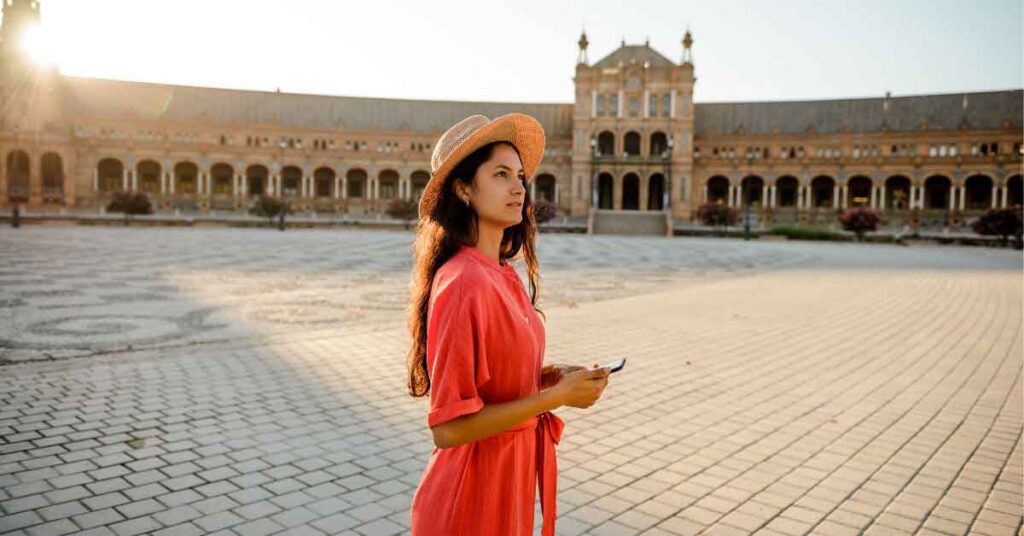
You’ll rarely see full athleisure looks in cities like Madrid, Seville, or Valencia. Instead, think tailored trousers with trainers, a midi skirt with a tucked-in tee, or a simple dress with structured sandals.
The key is effortless, not overdone. A neat crossbody bag, tidy hair, and comfortable but stylish shoes go a long way. If your outfit feels relaxed but intentional, you’ll fit right in.
❌ What Not to Wear in Spain
There isn’t really anything you can’t wear in Spain.
Like the rest of Europe, it’s very liberal, and people generally wear what they want.
As a generalisation, I did find that cities like Bilbao and Barcelona are pretty relaxed with the way they dress; in contrast, in cities like Seville, people seem to dress more conservatively and with a bit more formality.
Also, a handy tip is to carry a light scarf or oversized shirt when you’re sightseeing. It’s perfect for quickly covering your shoulders or legs when visiting churches and cathedrals.
Things to Pack for Spain
Pack carry-on and do one laundry mid-trip.
Packing cubes help you keep outfits modular and tiny.
If you’re not planning on getting clothes washed mid-trip, then tweak the numbers of each item.
Clothes to Pack for Spain (My Simple 10-Day Capsule Wardrobe)
For a 10–14 day trip to Spain, I stick to versatile pieces that mix and match easily.
The goal isn’t to pack more, it’s to pack smarter. Choosing a cohesive colour palette means every top works with every bottom, and you can create multiple outfits from a limited number of pieces.
Here’s what that typically looks like:
- Underwear x10–12
- Socks x6–8
- Bras x2 + sports bra x1
- Tops x7–8 (a mix of tees or tanks plus 1–2 dressier blouses)
- Bottoms x4 total: 1 light trouser (linen or viscose), 1 jeans, 1 shorts or skirt, 1 midi skirt or second trouser
- Dress x1–2 (easy day-to-night styles)
- Light knit or cardigan x1 (summer) / x2 (spring or autumn)
- Light overshirt x1 (linen or cotton — ideal for sun cover and churches)
- Packable rain jacket (north or shoulder seasons) or light trench/denim jacket
- Swimwear + cover-up or sarong
Cold-season add-ons (November to March):
- Wool sweater x1–2
- Warm coat
- Thermal tights
From these pieces alone, you can easily create 6–8 outfit combinations, more if you keep your colours neutral and your layers lightweight.
Shoes
For minimalist packing, I only recommend 2 pairs of shoes.
- City trainers (walkable, neutral)
- Flat sandal or low wedge (summer/coast)
- Ankle boot (autumn/winter) or light hiking shoe (mountains/Camino)
- Flip-flops (beaches/hotels)
Accessories
- Scarf (style + church cover)
- Compact umbrella
- Sun hat
- Sun glasses
- Secure day bag
Toiletries & Health
- Usual travel minis: shampoo, shower gel, face cream, deodorant, toothbrush, etc
- Makeup and lip balm
- SPF 30–50 (I wear this all year round in Spain, the sun is strong, even in winter)
- Hand sanitiser
- Basic first-aid (plasters, pain relief, rehydration tabs)
Other Essential Things to Take to Spain
- Passport + copies
- Payment cards + some cash (most places accept cards, and ATMs are everywhere in cities)
- Travel insurance
- Reusable bottle
- Tote for markets and shopping
- Laundry soap/sheets
Electronics
- Type C/F European plug, 230V
- Phone + charger
- Power bank
- Camera (optional)
- eSIM or roaming plan.
What to Wear in Spain at Night
Evenings in Spain are later and often dressier than many visitors expect. Dinner typically starts around 9–10 pm, and people make an effort, especially in cities.
In Madrid or Seville, smart-casual is the safe baseline. A midi dress with flat sandals, tailored trousers with a nice blouse, or dark jeans with a structured top all work well. In beach towns, the vibe is more relaxed but still put-together.
Heels aren’t necessary and can be impractical on cobbled streets. A block heel, chic flat, or sleek trainer is far more realistic. If in doubt, aim for polished but comfortable.
Common Packing Mistakes in Spain
Over the years, I’ve noticed a few common mistakes travellers make when packing for Spain:
- Bringing heels for cobbled streets
- Packing heavy layers for southern spring trips
- Forgetting a scarf for churches and religious sites
- Underestimating how cold indoor spaces can feel in winter
- Packing too many “statement” outfits and not enough mix-and-match basics
Spain’s climate varies dramatically by region, and dressing smart is often about versatility rather than quantity.
What to Pack for Spain by Month
Spain may look small on a map, but it packs in a wide range of climates. Understanding the regional weather is key to smart packing.
- Northern Spain (e.g., Basque Country, Galicia): Green and lush for a reason, so expect cooler, wetter weather.
- Southern Spain (e.g., Andalusia): Hot and dry, especially in summer, but also the best place to find winter sun in Spain.
- Central Spain (e.g., Madrid, Castilla-La Mancha): Dry summers and cold winters.
- Eastern Coastal Spain (e.g., Valencia, Barcelona): Mediterranean climate, with hot summers and mild winters.
- The Islands (Balearic & Canary): Generally mild and warm year-round, but vary slightly by island.
If you’re travelling with a minimalist or capsule wardrobe, then tweak just 2–3 items for your season: a coat in winter, breezy layers in summer.

Don’t Forget
I always check Spanish weather on regional meteorological sites instead of relying on generic weather apps. Andalusia in November and the Basque Country in May couldn’t be more different. The best place to check is Aemet, which is Spain’s official weather forecast.
What to Wear in Spain in January
Weather: The coldest month across Spain. Inland areas reach daytime highs of 6–12°C (43–54°F), with nights often dropping close to 0°C (32°F).
The north and mountainous regions can see snow and steady rain, while the south is milder but still crisp, especially indoors, where central heating isn’t common.
- Thermal base layers (especially for mornings and nights)
- Wool coat or insulated jacket
- Waterproof boots or lined shoes
- Warm accessories: gloves, a hat, and a cosy scarf
What to Wear in Spain in February
Weather: Still chilly, especially in central and northern Spain.
Snow is common in the mountains, and Galicia or the Basque Country can be rainy. Coastal and southern regions are a little milder but still cool at night. Highs hover between 8–14°C (46–57°F).
- Warm coat or puffer
- Wool jumper or fleece
- Ankle boots or waterproof shoes
- Umbrella for the north
What to Wear in Spain in March
Weather: Transition month. Temperatures start to rise, so expect 12–18°C (54–64°F) during the day, but the north and northwest are still wet and unpredictable.
The south gets sunnier, especially by late March.
- Layered outfits: tee + light knit or cardigan
- Lightweight jacket or trench
- Closed shoes, sneakers or boots
- Rain layer for the north


What to Wear in Spain in April
Weather: Classic spring, with blooming trees and mixed forecasts.
Highs range from 15–22°C (59–72°F). Rain is still likely in the north, while the south warms up fast, making the springtime one of the best seasons to travel around Andalucia!
- Long-sleeve tops and breathable trousers
- Light jumper or overshirt
- Rain jacket or compact umbrella
- Trainers or loafers
What to Wear in Spain in May
Weather: Mostly dry and comfortably warm. Inland cities like Madrid can hit 25–28°C (77–82°F), and southern areas often see their first real heatwaves.
The north stays milder and greener.
- Dresses, t-shirts, skirts, or wide-leg trousers
- Light layers for the evening
- Sandals or lightweight shoes
- Sunhat and sunglasses
What to Wear in Spain in June
Weather: Early summer. Expect 28–35°C (82–95°F) in central and southern Spain.
Northern coastal areas are still pleasant and less intense, which is a great reason to visit San Sebastian at this time of year. The milder temperatures make it a welcome escape from the inland heat.
- Linen or cotton clothing
- Sleeveless tops and airy dresses
- Sunhat, sunglasses, SPF
- Open-toed shoes or sandals
- Light scarf or cover-up for churches
What to Wear in Spain in July
Weather: Peak summer. Inland cities (Madrid, Seville, Córdoba) regularly hit 36–40°C (97–104°F).
Coastal regions and islands are slightly cooler but still hot.
- Breathable fabrics only: cotton, viscose, linen
- Sandals or breathable trainers
- Shorts, floaty skirts, tank tops
- Light sleepwear for warm nights
- Light scarf or cover-up for churches
What to Wear in Spain in August
Weather: Still roasting and just as hot as July, especially inland and southern cities like Seville and Granada.
Many locals head to the beach or mountains. Expect 30–40°C (86–104°F) across most of Spain.
- Swimsuit and cover-up for beach towns
- Light, loose-fitting outfits
- Flat sandals or flip-flops
- Light sleepwear for warm nights
- Light scarf or cover-up for churches
What to Wear in Spain in September
Weather: Warm but less intense.
Southern Spain still sees 28–32°C (82–90°F); the north is comfortably around 22–26°C (72–79°F). Evenings start to cool.
- Summer dresses and light trousers
- T-shirt and shorts by day
- Layer for evening: cardigan or denim jacket
- Comfortable flats or sandals
What to Wear in Spain in October
Weather: True shoulder season.
Central and northern Spain start to cool (16–22°C / 61–72°F), while southern regions remain mild and dry.
Here’s what to pack for Sapin in October:
- Layered outfits: long-sleeve tee + light jumper
- Closed shoes or boots
- Jacket or coat for cooler nights
- Umbrella for northern cities
What to Wear in Spain in November
Weather: Autumn settles in. The north sees regular rain and cooler temps (12–18°C / 54–64°F).
The south stays sunny but crisp, especially mornings and evenings.
- Sweaters and midweight outerwear
- Ankle boots
- Scarf or shawl for layering
- Waterproofs for the north
- Layers for varied temperatures
What to Wear in Spain in December
Weather: Winter returns. Inland cities range from 5–12°C (41–54°F), while the south and coast hover around 15–18°C (59–64°F). Mountain areas are cold and may see snow, typical of winter in northern and central Europe.
But unlike much of the continent, Spain is a great option if you’re looking for a bit of winter sun, especially in the south, where the days are still bright and pleasantly mild.
- Warm jumper and coat
- Scarf, gloves, tights
- Boots or insulated trainers
- Something dressy for festive events
Spain Packing List by Season – Quick Reference Guide
| Packing for Spain in Spring (March to May) | Packing for Spain in Summer (June to August) |
| Spring is unpredictable, especially in the north. Expect warm days and chilly nights. Rain is always a possibility. Layering pieces (cardigans, lightweight sweaters). Waterproof jacket, closed-toe shoes, a scarf or pashmina, and smart casual wear for religious or cultural events | Spain gets hot — especially inland and in the south. Dressing for comfort is key. Opt for breathable fabrics (cotton, linen), a sunhat and sunglasses. Wear sandals with good support, and don’t forget your swimsuit and quick-dry towel. 👉 Insider tip: Even in summer, churches and some upscale venues have dress codes — I always pack a lightweight scarf or sarong. |
| Packing for Spain in Autumn (September to November) | Packing for Spain in Winter (December to February) |
| Autumn brings cooler evenings and more rain in the north. September can still feel like summer. Pack layers (sweaters, long sleeves) as well as a light waterproof jacket, and a travel umbrella. Opt for closed shoes or waterproof boots | Winter varies by region — snowy mountains and sunny coasts. Bring a warm coat, thermals, scarf, gloves, hat and waterproof boots 👉 Insider tip: Lots of buildings in southern Spain have stone or marble floors, and don’t have central heating – the floors are like ice! Bring a pair of slippers/thick socks or footwear for wearing indoors. |
What to Pack for Southern vs. Northern Spain
Spain might look compact on a map, but packing for Seville is nothing like packing for San Sebastián.
The climate shifts dramatically between the north and south, and if you’re travelling across regions, you’ll need to be strategic with your layers and fabrics.
Here’s how I break it down:
Southern Spain (Including Seville, Córdoba, Granada)
Hot, dry, and sunny, especially in Andalucia.
Your summer travel essentials should include clothing that keeps you cool, protects you from the sun, and still respects local customs.
Must-haves for the South:
- Breathable fabrics: cotton, linen, or moisture-wicking blends. I avoid synthetic materials which trap heat.
- Sun protection: think wide-brimmed hat, high-factor sunscreen, sunglasses, and a refillable water bottle.
- Modest but cool options: a lightweight scarf or kimono works wonders for popping into religious sites or walking around more traditional neighbourhoods.
- Sandals with support: I live in mine from June to September, but make sure they’re made for walking.
Good To Know
Even summer evenings can still feel warm in Andalusia, but I always bring a light wrap or jacket for indoor spaces with aggressive air con.
Northern Spain (Including San Sebastián, Bilbao, Santiago)
The north is green for a reason: it’s cooler, wetter, and far more unpredictable.
Pack layers and waterproofs so you can enjoy everything from San Sebastián’s top attractions to the pintxos bars of Bilbao, whatever the weather.
Must-haves for the North:
- Waterproof jacket or compact umbrella: I always carry a packable raincoat in my day bag up here.
- Comfortable walking shoes: ideally water-resistant, especially if you’re hiking or exploring coastal towns.
- Layer-friendly outfits: long sleeves, light sweaters, and a scarf will cover you for cooler evenings or sudden weather changes.
- Quick-dry fabrics: drying laundry can take ages in damp weather, so I opt for clothes that won’t stay soggy.
Good To Know
I once packed like it was summer for a trip to the Basque region in June, and spent most of the week in gym pants and a hoodie. Now I never visit the north without at least one warm jumper and a rain layer.
If you’re planning to do a multi-region trip around Spain, your best bet is a modular packing list that layers easily. The trick is choosing versatile pieces that work across temperatures and can be styled up or down.
Hair, Makeup & Beauty Tips for Spain’s Climate
Spain’s climate can affect more than just your outfit.
Humidity in the north and coastal regions can cause frizz, while the dry southern heat can leave skin feeling tight and dehydrated.
I always pack a small anti-frizz product or claw clip for windy coastal days.
Lightweight, breathable makeup tends to last better in the heat, and SPF is non-negotiable year-round. In winter, especially in southern cities, the climate is cold and dry, so a good moisturiser and lip balm are essential.
Cultural Clothing Tips for Spain
If you’re visiting Spain during a major celebration, like Semana Santa (Holy Week) or Feria, your packing list might need a small tweak.
Semana Santa
Some larger cities in Spain celebrate Holy Week, big time!
This is especially true in Seville, Córdoba, and Málaga, where the mood is formal and respectful. Locals often dress up just to watch the processions, especially in the evenings.
You’ll see people wearing smart trousers, dresses, blouses, and polished shoes, even if they’re simply standing in the crowd.
While you don’t need to go all out as a tourist, wearing something neat and respectful (no beachwear, ripped clothing, or athletic wear) is a good way to blend in and show cultural awareness.
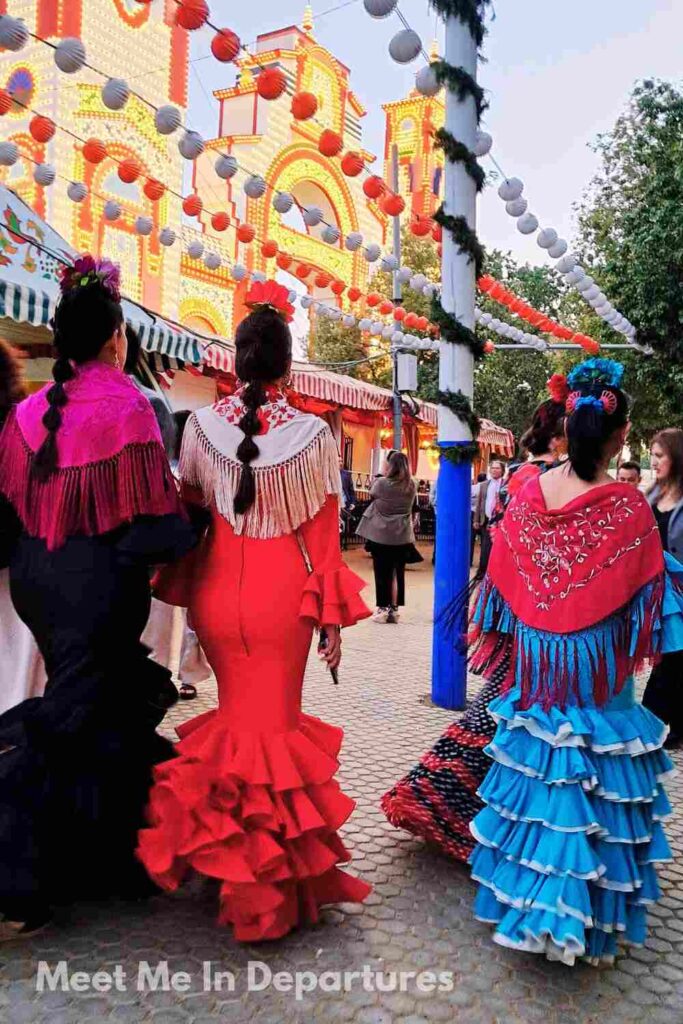
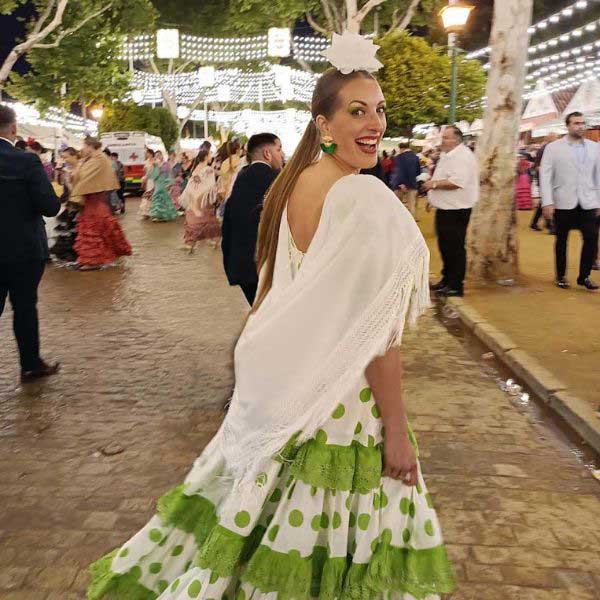
Feria de Abril (Seville’s April Fair) and Similar Ferias Across Andalucía
These have a completely different vibe — colourful, loud, and full of traditional dress.
Women often wear flamenco dresses (trajes de gitana), and men may wear short jackets, boots, and hats. You’re not expected to dress in traditional clothing as a visitor, but you can still join in the spirit with a colourful dress or nice blouse and skirt.
Comfortable shoes are a must – but avoid trainers – expect to be on your feet all night.
Things to bring to Spain during a festival:
- A smarter evening outfit (dress, midi skirt + blouse, or tailored trousers)
- Flats or block-heeled shoes for cobbled streets and long evenings
- Shawl or light jacket for cooler nights during spring events
- Optional: statement earrings or hair accessories (flowers are popular at Feria!)
Spain Travel Essentials (Beyond the Clothes)
Clothes are only half the story. These are the travel essentials I never head to Spain without.
They’re small things, but they make a big difference, especially if you’re travelling solo in Spain or hopping between cities by train.
Tech & Connectivity
A universal power adapter is non-negotiable. Spain uses Type C and F plugs at 230V. I travel with a multi-adapter that works across Europe and has built-in USB ports so I’m not fighting over outlets at night.
A local SIM card or portable WiFi is also worth it. It makes Google Maps, ticket bookings, and translating menus far easier. I usually grab a SIM on arrival. If you’re moving around a lot, a pocket WiFi can be more convenient.
Eco-Friendly Toiletries
Solid shampoo, conditioner, and soap bars save space, last longer, and avoid liquid limits. I keep mine in a small tin so they don’t turn into a soggy mess.
Reef-safe sunscreen is especially important if you’re heading to the coast or natural parks. The Spanish sun is strong, even in winter, so high SPF is a must.
A reusable water bottle is another easy win. Tap water is safe to drink in most of Spain, and a collapsible bottle takes up barely any room in your bag.
Smart Packing Extras
Packing cubes genuinely changed the way I travel. I can grab what I need without unpacking my entire suitcase onto a tiny hotel bed.
A lightweight laundry bag is helpful if you’re staying longer than a week. Most cities have self-service laundrettes, and many accommodations offer laundry services too.
A small daypack or sling bag is ideal for market runs, day trips, or keeping valuables close in busy areas.
If you’re visiting bigger cities like Barcelona, consider using a phone cord or lanyard. Pickpocketing happens, and it’s far less stressful when your phone is physically attached to you.
Keep a little cash on hand as well. Tipping is not expected in Spain, but rounding up the bill or leaving a couple of euros is appreciated.
Backpack or Suitcase?
Spain’s cobblestones and narrow staircases can destroy a hard-shell suitcase’s dignity in about five minutes.
I prefer a soft backpack when I’m travelling by train or staying in older buildings without lifts. If you’re mostly staying in modern hotels, a wheeled cabin case is perfectly fine. Just know that not every charming apartment has an elevator.
Bonus Items for Solo Travellers
If you’re travelling solo in Spain, a few small precautions can make things smoother:
- A small lockable pouch for valuables
- Offline Google Maps downloaded for key areas
- A backup bank card stored separately
Planning Tip
Before I arrive anywhere new, I download offline maps and pin accommodation, train stations, and a few veggie-friendly eats nearby. It saves time, data, and unnecessary wandering when you’re tired.
If You Only Pack 8 Core Pieces, Make Them These
If you want to keep things ultra-minimal, focus on these eight versatile staples:
- Neutral trainers
- Linen or lightweight trousers
- A midi dress
- A structured crossbody bag
- A lightweight scarf
- A white or neutral tee
- A breathable overshirt
- A light knit or cardigan
These pieces work across regions and seasons and can be dressed up or down depending on where you’re headed. Build around them, and you’ll never feel overpacked.
FAQ: Spain Packing Questions Answered
How to Not Stand Out as a Tourist in Spain?
You do not need to completely change your style, but aim for polished over overly casual. Spanish women tend to wear simple, well-fitted pieces in neutral colours rather than loud prints or full athleisure outfits. Clean trainers, tailored trousers, midi dresses, and a structured bag blend in easily. The goal is relaxed but intentional, not “just threw this on.”
What Not to Pack for Spain?
Avoid anything bulky, heavy, or hard to rewear. Full-on hiking gear for city trips, multiple “just in case” jackets, and uncomfortable shoes are the usual culprits. Unless you have a specific event planned, you can also skip extra dressy outfits. Spain is stylish, but it is not the place where you need five different statement looks. Pack versatile pieces you will actually wear.
Do People Wear Bright Colours in Spain?
Yes, but it depends on where you are. In big cities, locals often stick to neutrals and classic tones, especially in everyday outfits. In coastal towns and during festivals, you will see far more colour, prints, and bold accessories. If you love bright colours, wear them. Just balance them with simple basics, so your outfits still feel polished and easy to mix and match.
What Shoes Should I Pack for Spain?
Bring a comfortable pair of walking shoes or trainers. Spain’s cities are full of cobbled streets, stairs, and uneven pavements, so support matters. I also pack a pair of sandals or flats for warmer days and evenings out. If you are not used to walking on cobbles in heels, leave them at home. Your feet will thank you.
Do I Need a Power Adapter in Spain?
Yes. Spain uses Type C and Type F plugs with a standard voltage of 230V. If you are travelling from the UK, US, or most non-European countries, you will need an adapter. I recommend a universal adapter with built-in USB ports so you can charge multiple devices overnight without hunting for extra sockets.
Backpack or Suitcase: Which Is Better for Spain?
It depends on your itinerary. If you are staying in modern hotels and taking taxis, a small cabin suitcase works well. If you are travelling by train, using public transport, or staying in historic buildings with lots of stairs, a backpack is often easier. Cobblestones and narrow staircases can make wheeled luggage frustrating very quickly.
What Should I Pack for Two Weeks in Spain with Carry-On Only?
Stick to a simple capsule wardrobe built around one colour palette so everything mixes and matches. Limit yourself to two pairs of shoes, choose lightweight fabrics that dry quickly, and plan one mid-trip laundry stop. Spain is very carry-on friendly, and travelling light makes train journeys and cobbled streets far easier to manage.
What to Wear in Spain, Sorted. Now Let’s Plan the Rest
You’ve figured out what to wear in Spain. Your capsule wardrobe is sorted, your packing list for Spain makes sense, and you’re not staring at your suitcase wondering what you forgot.
That’s a good place to be.
Now you get to focus on the exciting part. Deciding where to go, how to piece your route together, and what kind of trip you actually want to have. The outfits are handled. The logistics feel lighter. Everything else gets easier from here.
If you’re mapping out the rest of your Spain adventure, check out these other useful articles:
- How to Start Planning Your Trip to Spain
- Is Spain Safe for Solo Female Travellers
- 15 Must-Visit Cities in Spain
- Ultimate Spain Bucket List Experiences
Have a question? then don’t forget to join our free Facebook Group and ask the community.
Want to discover more about Spain? then check out these other great articles to find out more.
General Spain Travel
- Ultimate 10 Days In Spain Itinerary
- 2 Week Spain and Portugal Itinerary
- How Many Days Should I Spend in Spain and Portugal?
- 50+ Best Experiences for Your Spanish Bucket List
- 38 Most Famous Landmarks in Spain
- Can You See Morocco From Spain?
Andalucia and South Spain
- Southern Spain Itinerary: Best 7 Days in Andalucia
- Local’s Guide To Seville in 3 Days
- 35+ Top Things To Do In Seville
- 23 Best Day Trips From Seville, Spain
- How to Do A Seville to Cordoba Day Trip
- Where Is the Nearest Beach to Seville?
- How To Spend One Day in Granada
- Best 2 Days in Granada Itinerary
- The Best Cordoba in One Day Itinerary
- 5 Places for the Best Glamping in Spain’s Southern Coast
Barcelona
- 32 Best Things to Do in Barcelona, Spain
- Barcelona 5 Day Itinerary for First-Time Visitors
- Should You Visit Barcelona or Lisbon?
- Montserrat Day Tour With Tapas and Wine From Barcelona
Madrid And Surrounding Area
- Is Madrid Worth Visiting?
- 28 Best Things to Do in Madrid, Spain
- Best Madrid 2 Day Itinerary By A Local!
- 30 Things to Do In Winter in Madrid
- Madrid vs Lisbon Comparison Guide
- How to Visit Segovia From Madrid in a Day
- A Day Trip to Toledo from Madrid
Basque Country and North Spain
- An Epic 5 Days Road Trip in Aragón Itinerary
- 15 Best Things to Do in Aragon, Spain
- Is Zaragoza Worth Visiting? Everything You Need To Know
- The Best Things to See in Zaragoza, Spain
- Is San Sebastian Worth Visiting? The Pros and Cons
- San Sebastian Food Tour Review With Devour Tours
- Is Bilbao Worth Visiting? 12 Reasons To Visit Bilbao