
50 Famous Landmarks in Spain You Shouldn’t Miss
Spain is overflowing with unforgettable sights: ancient Roman ruins, Moorish palaces, gravity-defying cathedrals, and hilltop monasteries with views for days.
But when every travel guide calls something a “must-see”, how do you know which Spanish landmarks are actually worth your time?
I live in Spain and spend my weekends and holidays exploring, revisiting favourites, stumbling on hidden gems, and nerding out over architectural details wherever I go.
After years of travelling and countless city breaks, I’ve pulled together a practical, no-fluff guide to the most famous landmarks in Spain. From crowd-pleasers like Gaudí’s surreal Sagrada Família to a fairytale castle that inspired Disney, each one comes with tips, standout features, and a little local insight.
If you’re planning a trip and want to make the most of it, this is the list I wish someone had handed me before my first visit.
Meet Me In Departures contains affiliate links and is a member of the Amazon Services LLC Associates Program. If you make a purchase using one of these links, we may receive compensation at no extra cost to you. See our Disclosure Policy for more information.
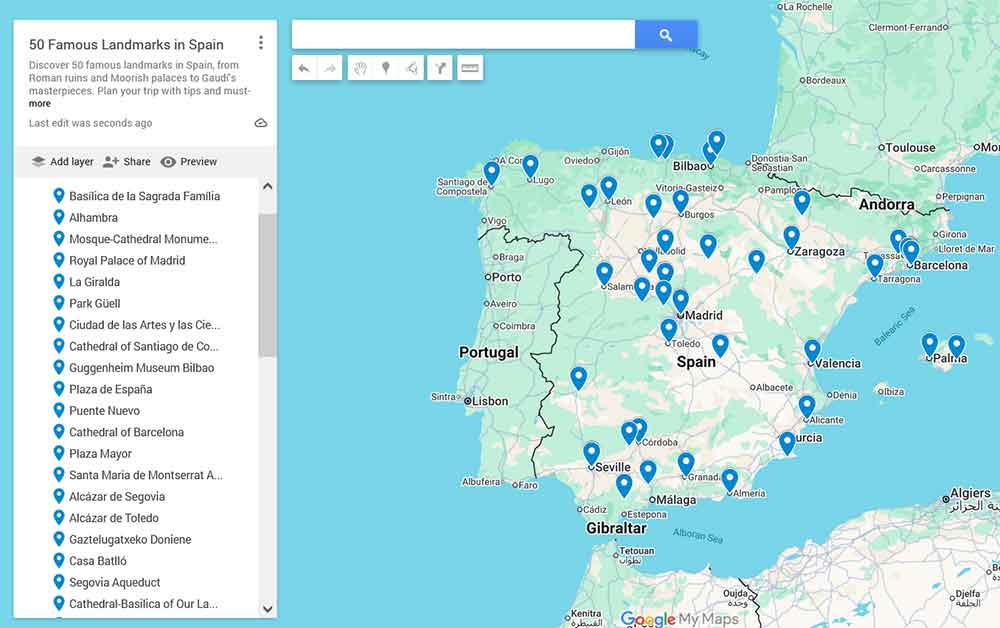
Famous Spanish Landmarks Interactive Map
There are loads of ways to sort a list like this: by region, by style, by era. But to keep things simple, I’ve ranked these popular landmarks in Spain based on popularity.
Want to take this list with you? Access the full map and checklist on your phone, perfect for trip planning on the go.
1. La Sagrada Familia
- 🗺️ Location: Barcelona
- 🏛️ Type: Modernist / Religious Landmark
- 👣 Best for: Architecture fans, city travellers
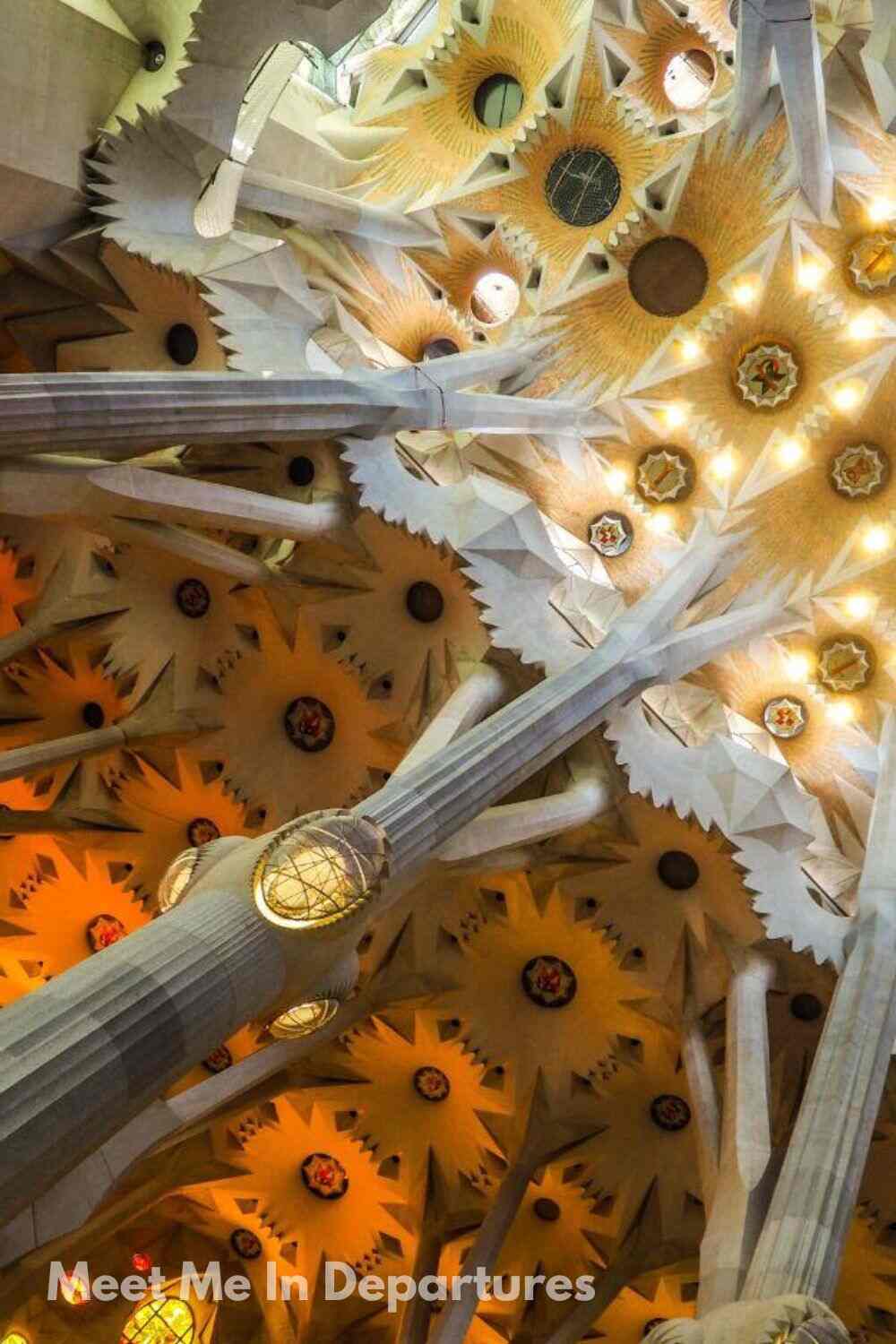
If there’s one Spanish landmark that genuinely lives up to the hype, it’s this one. I still remember the first time I saw it, silently mouthing an over-exaggerated wow! Everything about the Sagrada Familia is impressive.
La Sagrada Familia is Gaudí’s wildest dream in basilica form, and despite still being under construction after more than 140 years, it’s already the most visited and arguably the most iconic monument in Spain, drawing around 5 million visitors a year.
Look closely, and you’ll notice all the nature-inspired symbolism Gaudí worked into the design. I recommend booking the rooftop tour (yes, it’s worth the extra cost) to see the detailing up close. The city views are spectacular too.
The full Sagrada Familia experience also pairs nicely with a few other Gaudí sites and lesser-known stops. There’s no shortage of things to see and do in Barcelona.

La Sagrada Familia Tour with Roof Access
La Sagrada Familia gets absolutely rammed. Buy skip-the-line tickets in advance and aim for a morning slot.
2. The Alhambra
- 🗺️ Location: Granada
- 🏛️ Type: Moorish Fortress
- 👣 Best for: History buffs, photographers
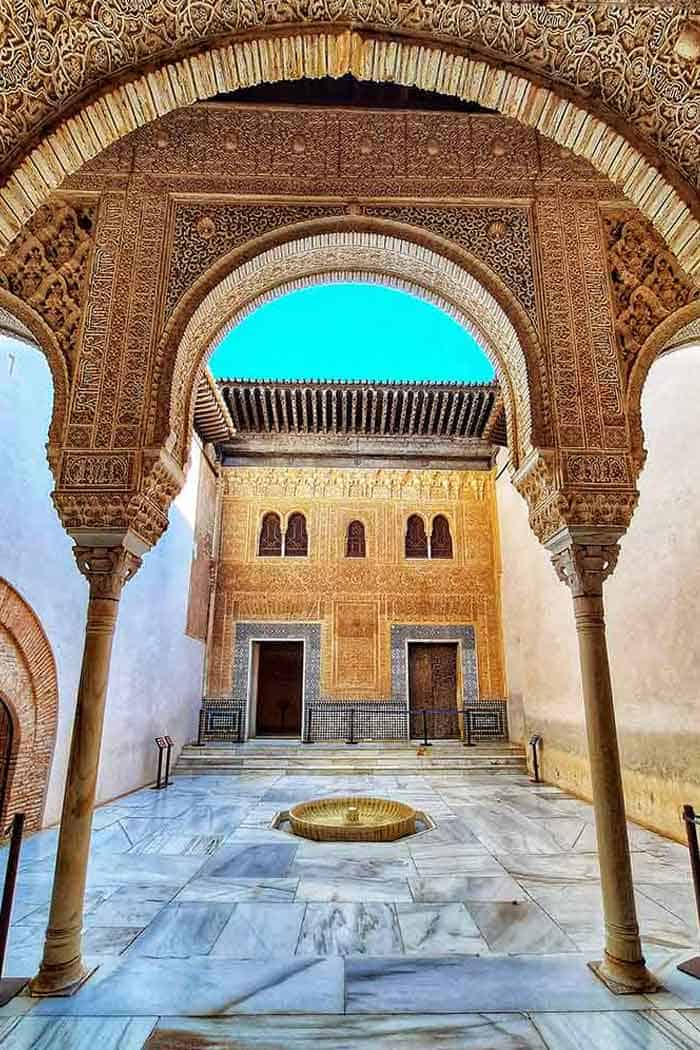
Granada’s Alhambra is one of those places that gives you goosebumps. More than just a palace, it’s an entire complex of intricately designed courtyards, tranquil gardens, and commanding fortress walls. It’s easy to see why it’s considered one of the most iconic tourist attractions in Spain.
The real highlight? Wandering through the Nasrid Palaces. Every inch is covered in stunning stucco detail, geometric patterns, and calligraphy. All of it is stunning, but the Patio de Los Leones is my ultimate favourite place here. Also, don’t skip the Generalife gardens either, especially in spring when everything is in bloom.
Timing is everything at the Alhambra. Tickets regularly sell out (sometimes weeks in advance), even in the off-season, and access to the Nasrid Palaces is strictly timed. It’s best to book your tickets first and then plan the rest of your Granada itinerary around your allocated time slot.
Alhambra and Nasrid Palaces Tour
Small group, skip-the-line tickets for Alhambra and Nasrid Palaces.
3. Mosque-Cathedral of Córdoba
- 🗺️ Location: Córdoba
- 🏛️ Type: Islamic / Religious Site
- 👣 Best for: Cultural travellers, architecture fans
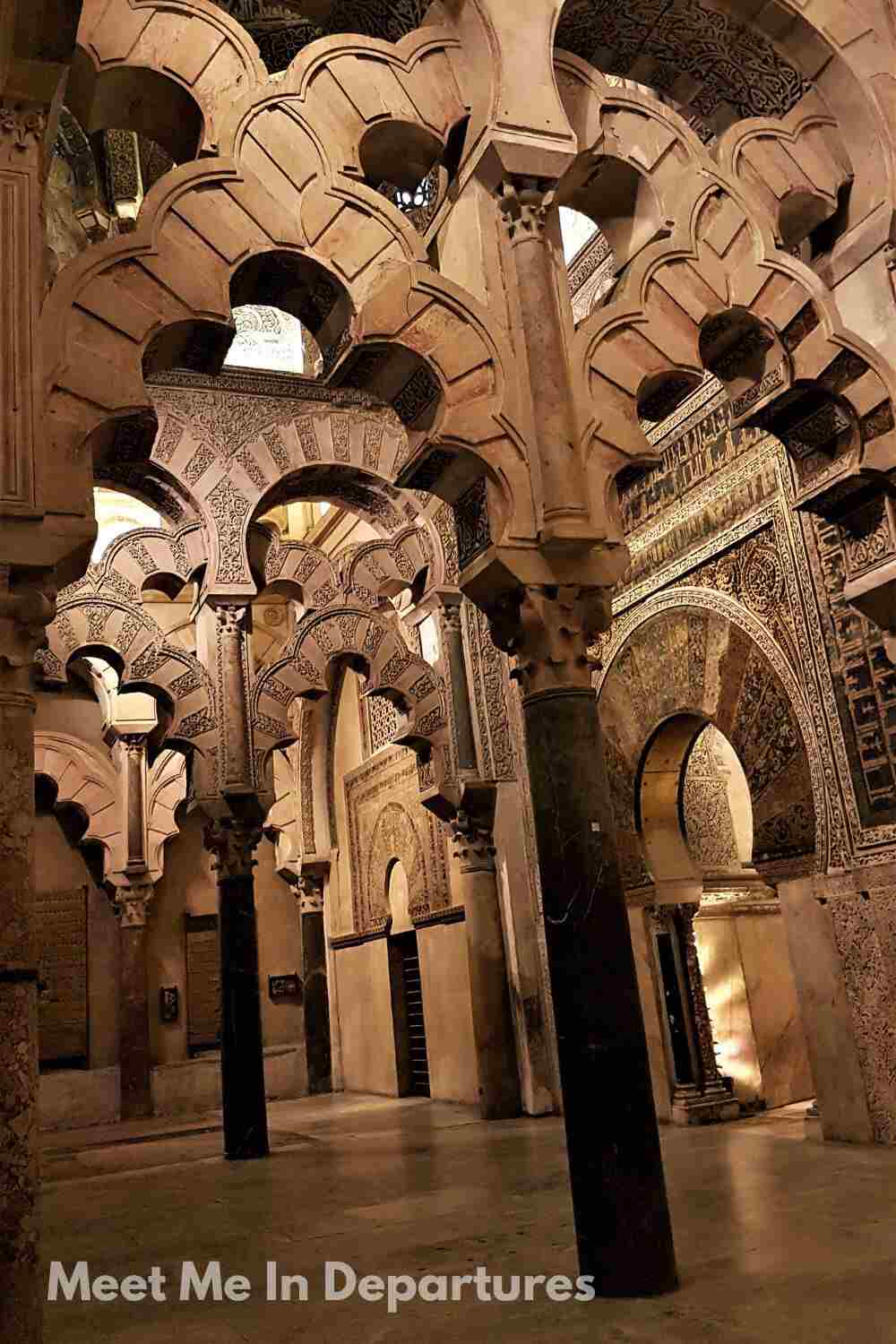
I’ve visited the Mezquita several times, it never looses it wow-factor. The moment you step inside and see those endless rows of striped arches stretching into the distance, it hits you.
This is one of the most visually striking and historically layered places I’ve ever been, and one of the most important Spanish buildings, thanks to its UNESCO status and iconic pink and white arches. Beyond the arches, don’t miss the Capilla Mayor and the Marsura Dome.
The Mezquita reflects centuries of shifting influence, combining Roman foundations, Islamic artistry, and Christian additions under one roof. It’s a powerful symbol of Spain’s multicultural past. For over 700 years, much of Spain was under Islamic rule, and this building stands as a relic of that era.
One thing I wish I’d known on my first visit to Cordoba? There’s almost no signage inside. You’ll get so much more out of it with a guide or at least an audio tour.
Cordoba Mezquita Guided Tour
Skip the line, small group tour with English-speaking guide.
4. The Royal Palace
- 🗺️ Location: Madrid
- 🏛️ Type: Royal / Historic Building
- 👣 Best for: Royal history fans, museum-goers
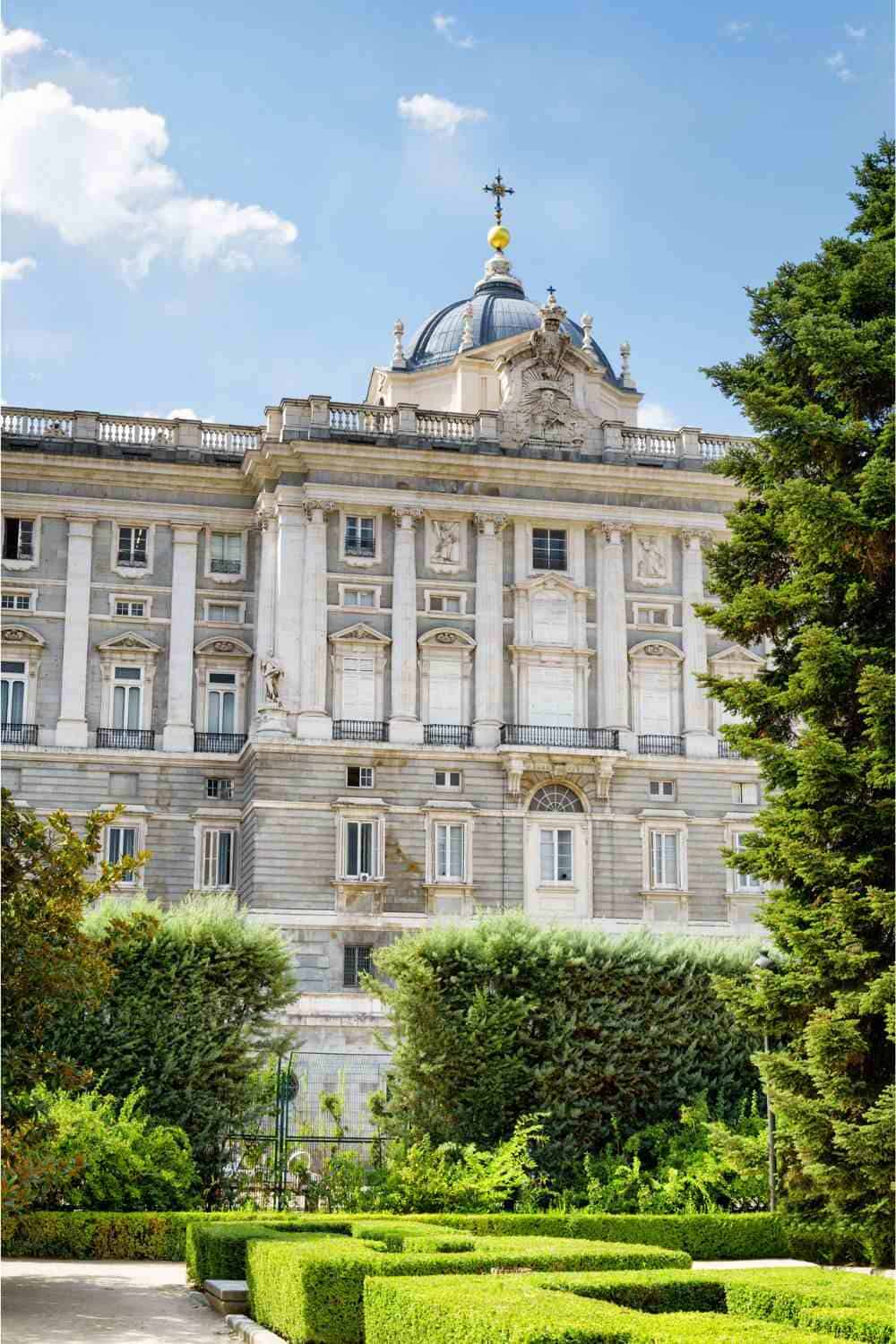
This place is huge. I’m talking 3,000+ rooms, level-of-huge. While it’s no longer home to the royal family, the interiors are still dripping with grandeur. Think gold details, elaborate ceilings, and tapestries galore.
If you’re into royal history or just love peeking inside ridiculously fancy buildings, it’s well worth a visit. The Royal Armoury and the Throne Room are my favourites. It’s also one of the most visited Spanish landmarks, and an essential stop on any well-paced Madrid itinerary.
Also, you might be able to catch the changing of the guard. It happens bi-weekly on Wednesdays and Saturdays, between 11 am and 2 pm outside the Puerta del Príncipe gate. It’s fun to watch and adds a bit of pomp to your day.
Royal Palace of Madrid Entrance and Tour
Skip the line, fast track entry with an English-speaking tour guide.
5. Seville Cathedral & La Giralda
- 🗺️ Location: Seville
- 🏛️ Type: Gothic Cathedral / Minaret
- 👣 Best for: Gothic architecture fans, history lovers
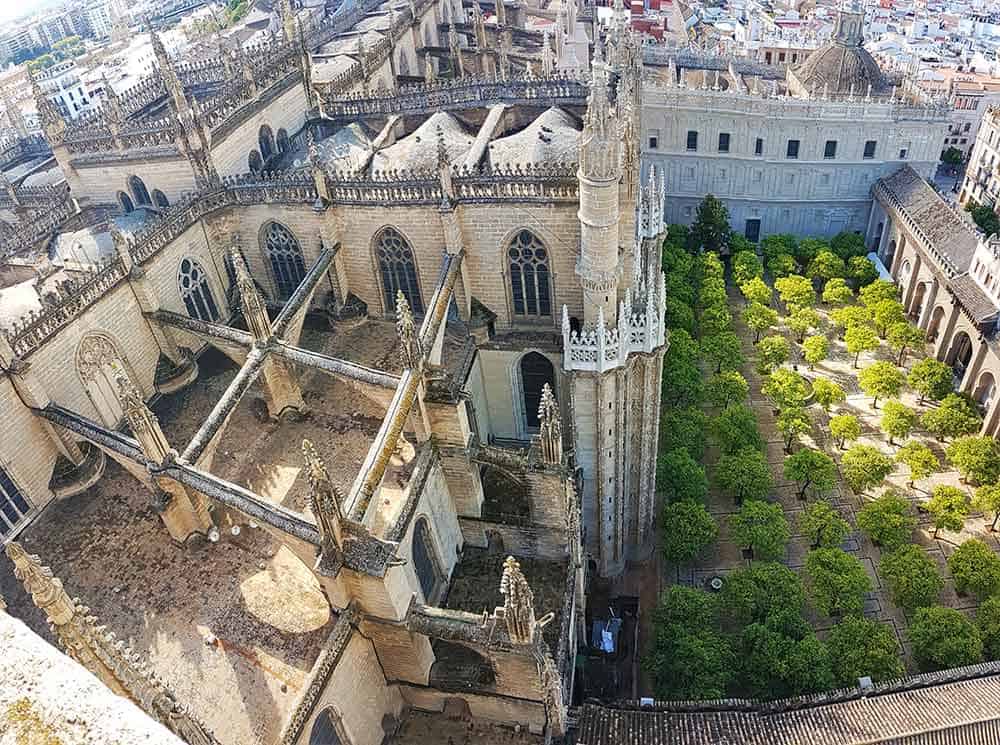
I’ve climbed a lot of towers in Spain, but the Giralda is one of the more interesting ones. There are no stairs, just a gently sloping spiral ramp. A mosque once stood on this site, and the Giralda was originally the minaret. The ramps were designed so that the muezzins could ride up on horseback to make the daily call to prayer.
The cathedral itself is enormous. It’s the biggest Gothic cathedral in the world, making it not only one of Seville’s top attractions, but one of the most iconic Spanish monuments.
Other parts of the cathedral’s Islamic heritage still remain. The peaceful orange tree courtyard just outside is a beautifully preserved reminder of the site’s earlier chapter.
Inside, don’t miss what’s said to be the tomb of Christopher Columbus. It’s both imposing and controversial.
There’s a dress code for Seville Cathedral since it’s still a place of worship. Think smart casual, so no crop tops or short shorts.
Seville Catedral & Girlada Tickets
Skip-the-line entry with optional audio guide
6. Park Güell
- 🗺️ Location: Barcelona
- 🏛️ Type: Modernist Park / Architecture
- 👣 Best for: Art lovers, fans of Gaudí
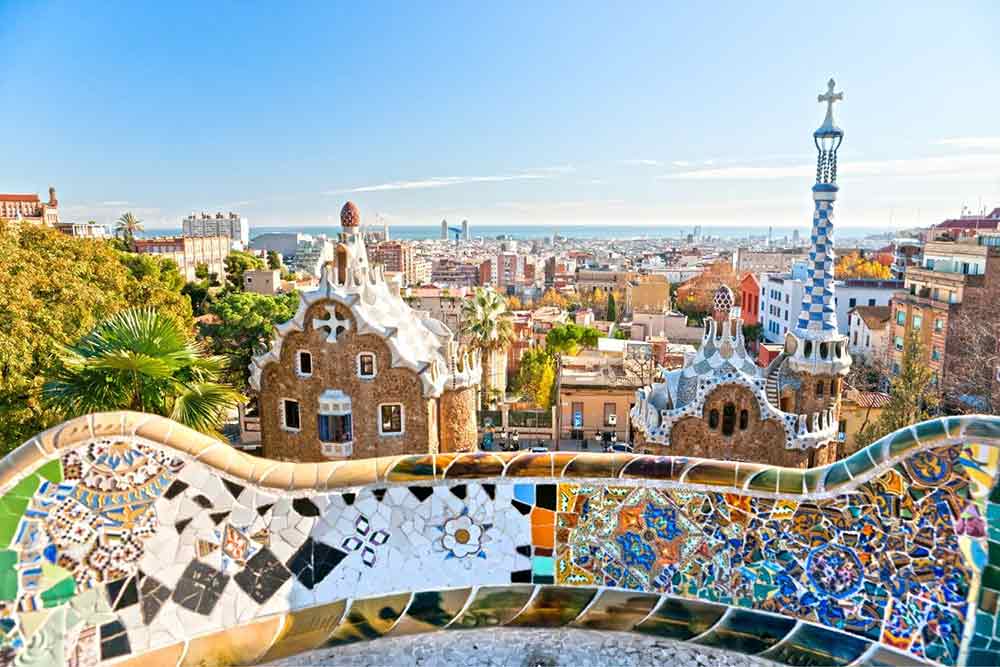
Park Güell is Gaudí at his most playful. It’s packed with wavy lines, bright mosaics, gingerbread-style buildings, and a view that stretches across the city to the sea. I felt like I’d stepped into the magical world of Dr Seuss!
It’s no surprise this is one of the most popular places in Spain, especially for design lovers and first-time visitors to Barcelona.
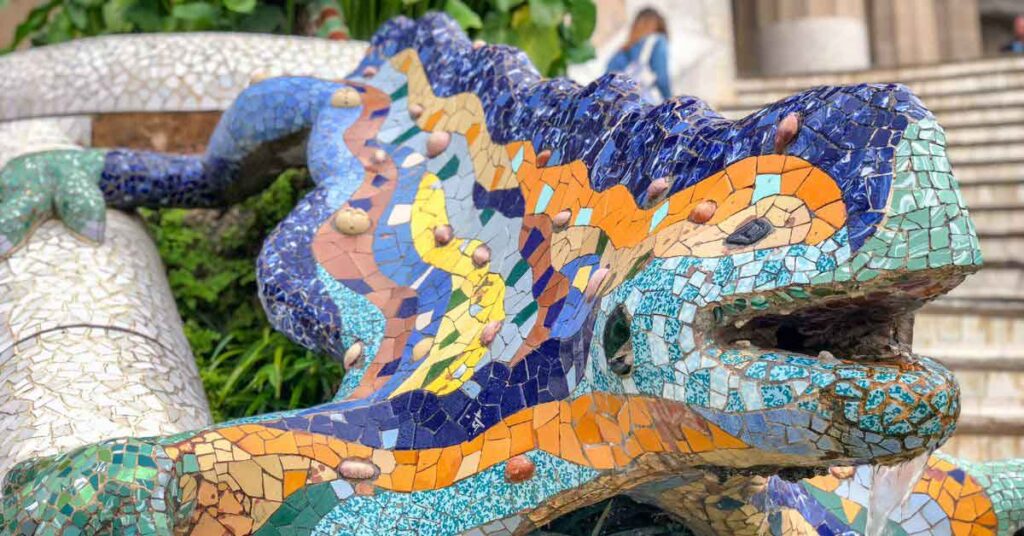
The Monumental Zone is where all the iconic bits are: the mosaic lizard (called El Drac), the curved benches, and the surreal Hall of Columns.
Go early in the morning when it’s quieter, and don’t miss the free areas higher up in the park for fewer crowds, same incredible views.
Park Güell Admission Ticket
Save time and book in advance. Get your ticket sent straight to your mobile.
7. City of Arts and Sciences
- 🗺️ Location: Valencia
- 🏛️ Type: Futuristic Architecture
- 👣 Best for: Modern architecture enthusiasts
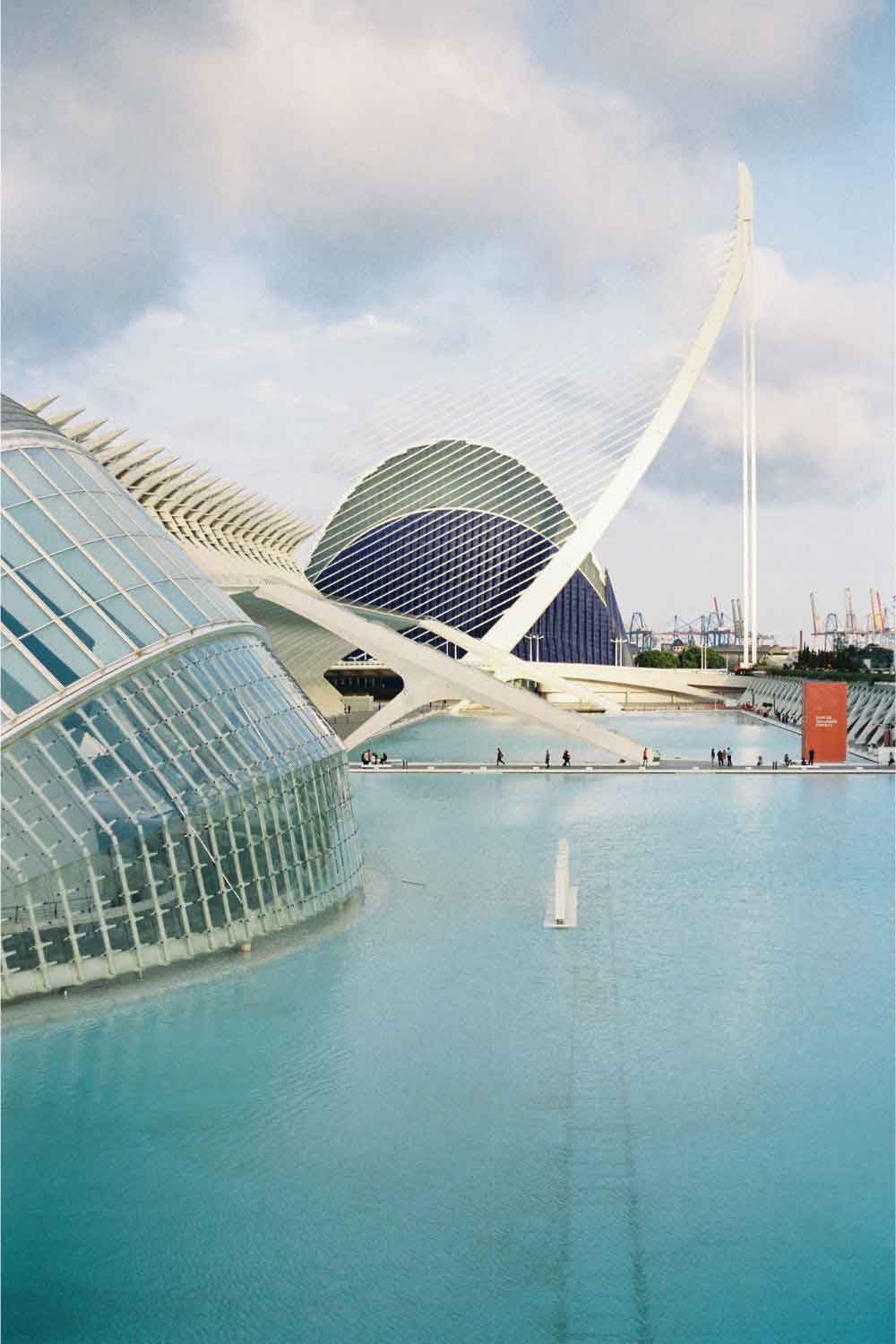
It’s hard to believe this futuristic complex sits just a short tram ride from Valencia’s historic centre.
Designed by Santiago Calatrava, it’s all glassy curves, white arches, and reflection pools. The Hemisfèric looks like a giant blinking eye, and the whole place glows at night.
Even if you don’t go inside the museums, just wandering around the outside is worth it. It’s especially lovely around golden hour, when the buildings and water light up.
Rent a bike and cruise through the Turia Gardens to get here. It’s one of the nicest urban green spaces in Spain, and you’ll feel like a local rather than a tourist.
8. Cathedral of Santiago de Compostela
- 🗺️ Location: Santiago de Compostela
- 🏛️ Type: Religious / Pilgrimage Site
- 👣 Best for: Pilgrims, religious history buffs
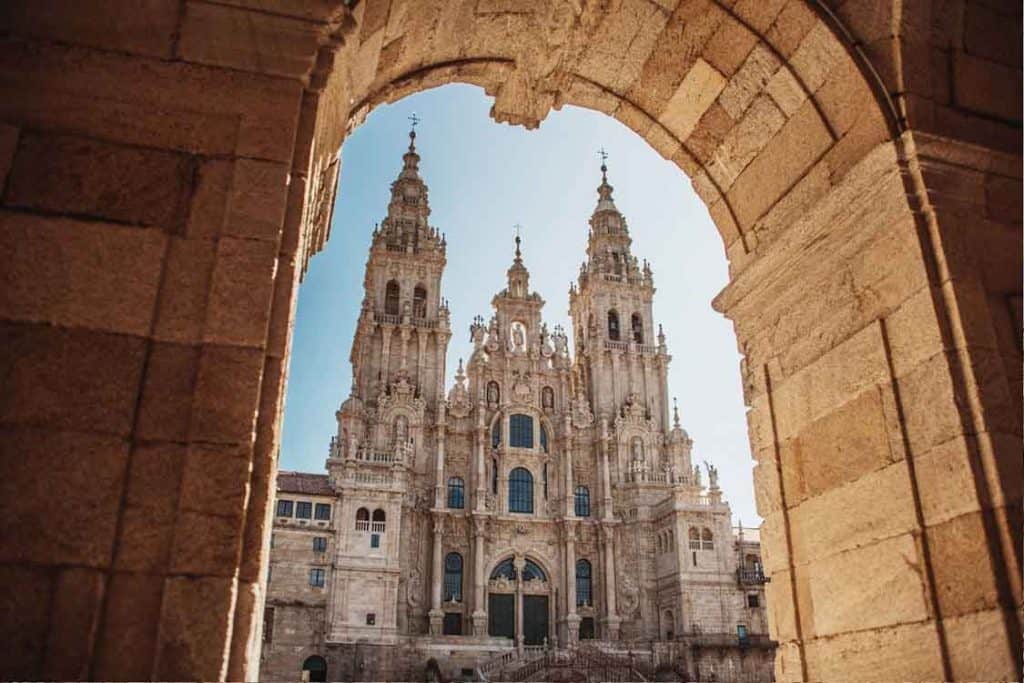
Whether you’ve walked the Camino or just rolled up in comfy trainers, arriving at this cathedral still feels epic. Pilgrims gather in the square, some in tears, and whatever your stance on religion, you can feel some sort of energy about the place.
Aside from it being an important religious site, it’s often the final destination for thousands who’ve spent weeks or even months walking across the country.
Inside, you’ll find a blend of Romanesque and Gothic architecture, an immense altar, and the tomb of Saint James beneath it.
Try to visit during a Pilgrim’s Mass when they swing the Botafumeiro, an enormous incense burner. It’s fascinating to watch and smells lovely too. It doesn’t happen every day, so check ahead.
9. Guggenheim Museum
- 🗺️ Location: Bilbao
- 🏛️ Type: Modern Art Museum
- 👣 Best for: Architecture and modern art lovers
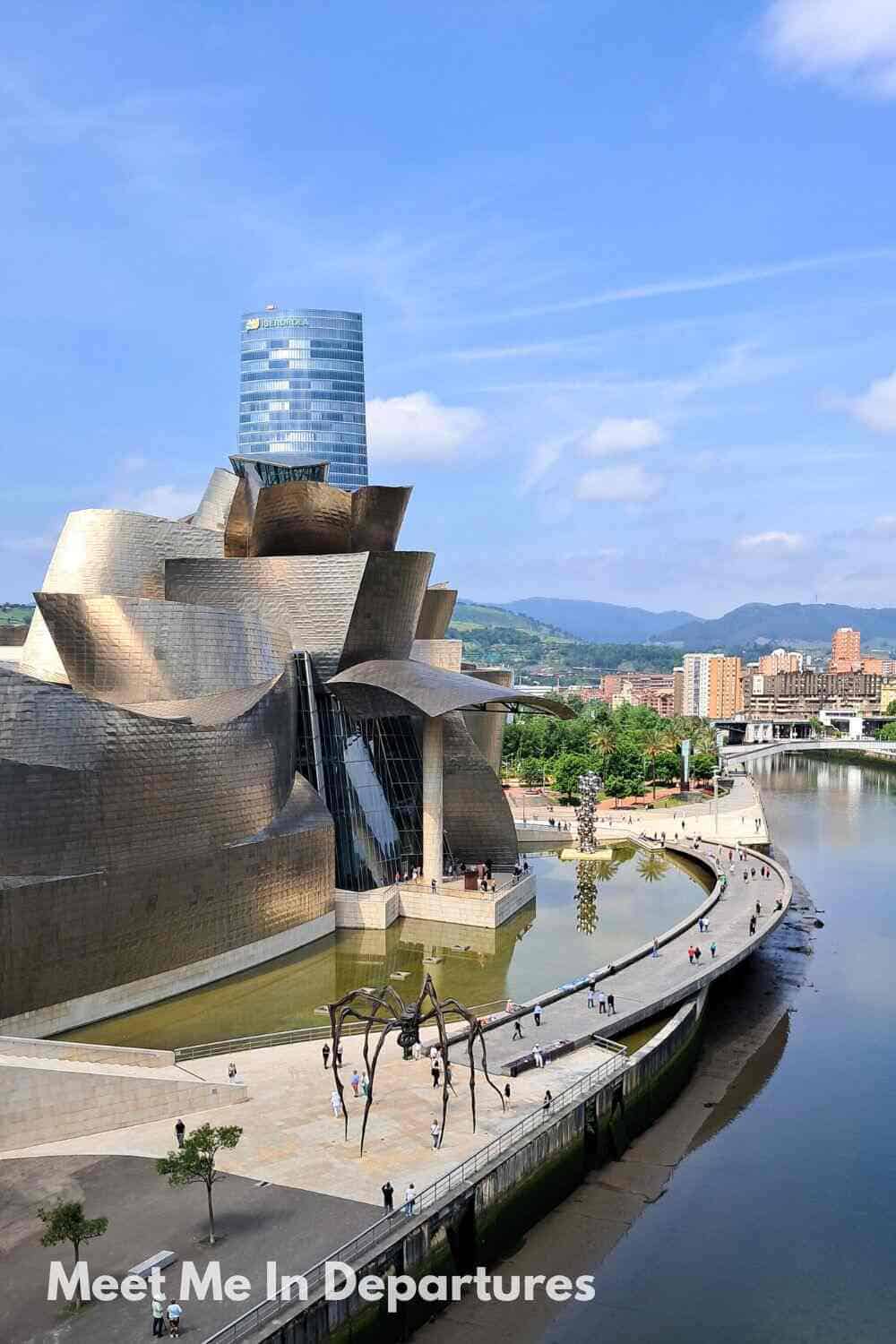
Even if modern art isn’t your thing, the Guggenheim is still a must. The building steals the show here. Designed by Frank Gehry, it’s all shimmering titanium curves, with giant outdoor sculptures like the spider (Maman) and the floral Puppy.
Inside, the space feels light and open, with installations you can walk around and sometimes, through.
One of my favourite permanent exhibits here is “The Matter of Time”, by Richard Serra.
If you’ve read Dan Brown’s Origin, you will recognise them from the opening scenes. They’re just as striking in person as they are on the page.
Also, don’t miss the water mist installation on the river either. It appears every hour.
The Guggenheim alone is reason enough to plan a stop in this city, but there are plenty of other highlights that make Bilbao worth visiting even if you’re just passing through.
10. Plaza de España
- 🗺️ Location: Seville
- 🏛️ Type: Historic Plaza / Expo Site
- 👣 Best for: Photography fans, slow travellers
So, Spain has A LOT of Plaza de España’s. But only one is as impressive as the one in Seville.
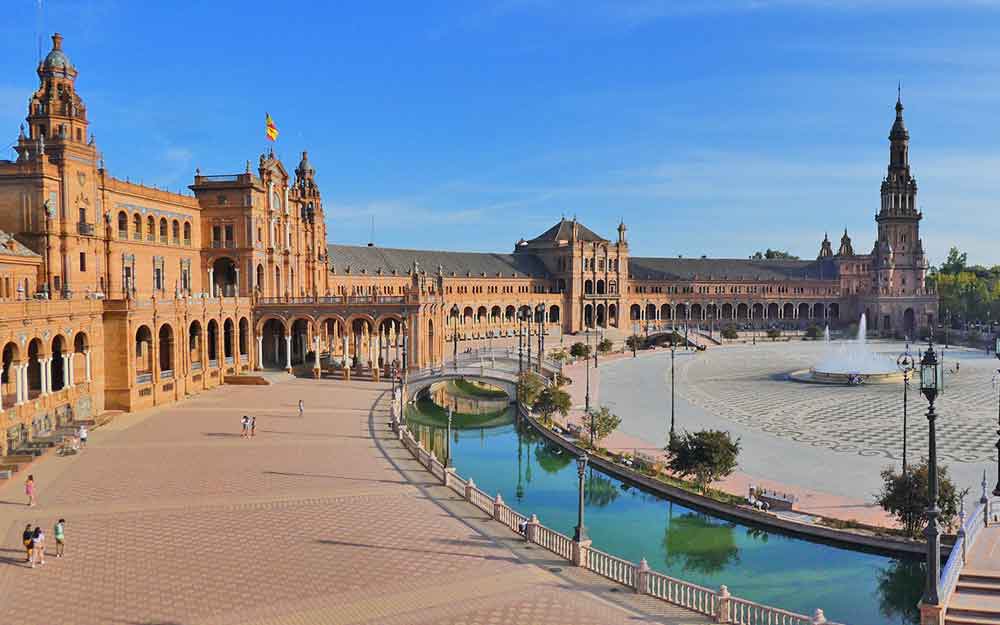
Built for the 1929 Ibero-American Expo, it’s full of colourful tiles, mini bridges over canals, and a huge semi-circular palace. It’s widely considered one of the most beautiful places in Spain, and it’s easy to see why.
Each Spanish province has its own hand-painted alcove with decorative tiles and benches. It’s fun to walk around the full arc, spotting the ones you’ve visited.
Although this is now the city I call home, I remember my first trip to Seville, spending hours perusing all of the details. It’s impossible to take a bad photograph here!
11. Puente Nuevo
🗺️ Location: Ronda
🏛️ Type: Bridge / Scenic Landmark
👣 Best for: Photographers, dramatic scenery lovers
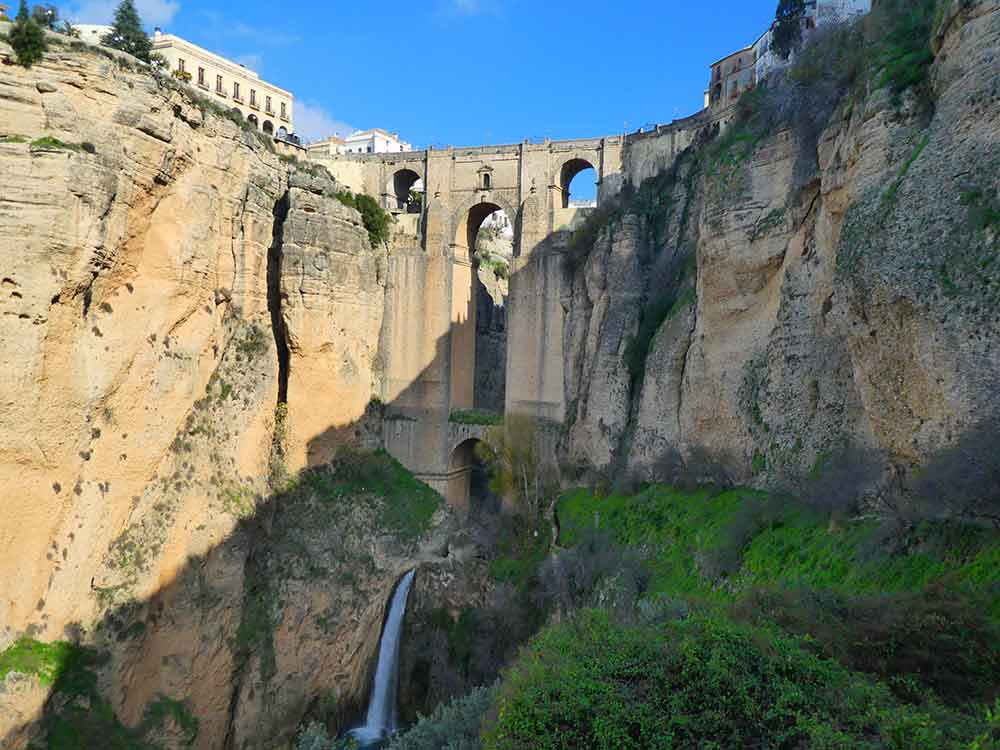
The Puente Nuevo is a massive 18th-century bridge that spans the El Tajo gorge in Ronda, connecting the old and new parts of the city with a dizzying 98-metre drop below.
Photos never really capture the scale of the bridge, and I remember the first time I visited being in absolute awe of it.
The best part is that you can view it from multiple angles: from above on the main plaza, from below via a short hike, or even from the hidden side paths that wind around the gorge.
For that postcard-perfect photo, head down the Camino de los Molinos trail just before sunset, where you’ll get golden light hitting the bridge and far fewer people.
12. Barcelona Cathedral
- 🗺️ Location: Barcelona
- 🏛️ Type: Gothic Cathedral
- 👣 Best for: Gothic lovers, hidden gem seekers
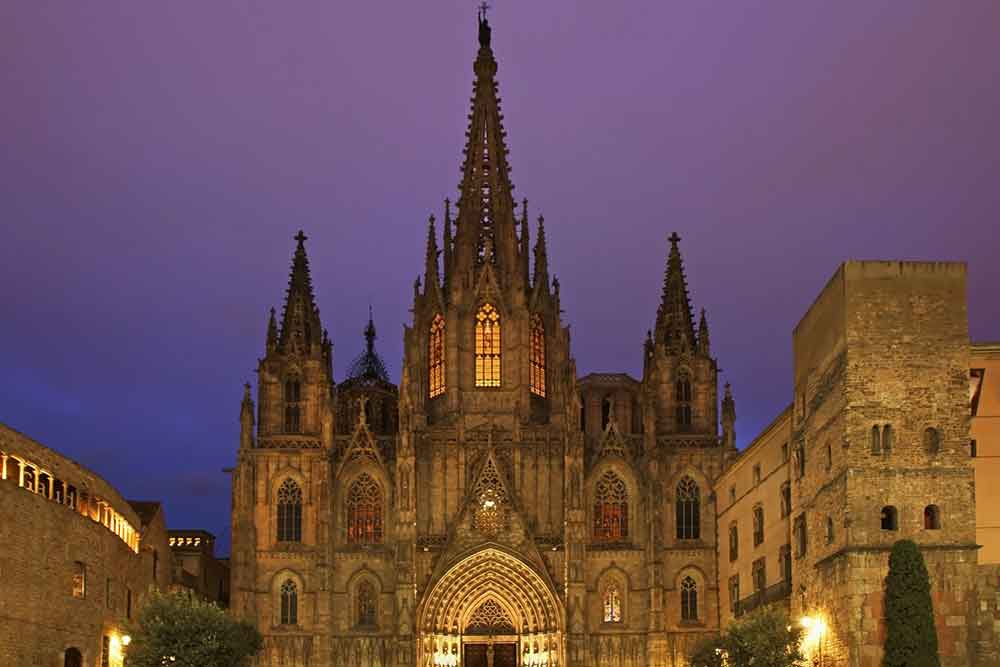
This Gothic beauty in the heart of the old town doesn’t get nearly the love it deserves. Most people head straight for Gaudí, but I always carve out time for this one.
Its façade is classic Gothic drama, with pointed arches, spires, and statues glaring down at you, but step inside, and it’s surprisingly calm.
The highlight for me? The cloister. It’s a lush little garden with fountains, palm trees, and 13 geese honking away. Yes, geese! Legend says they symbolise the age of Saint Eulalia when she was martyred. It’s weird and wonderful, and very memorable.
13. Plaza Mayor
- 🗺️ Location: Madrid
- 🏛️ Type: Historic Square
- 👣 Best for: People watchers, local culture fans
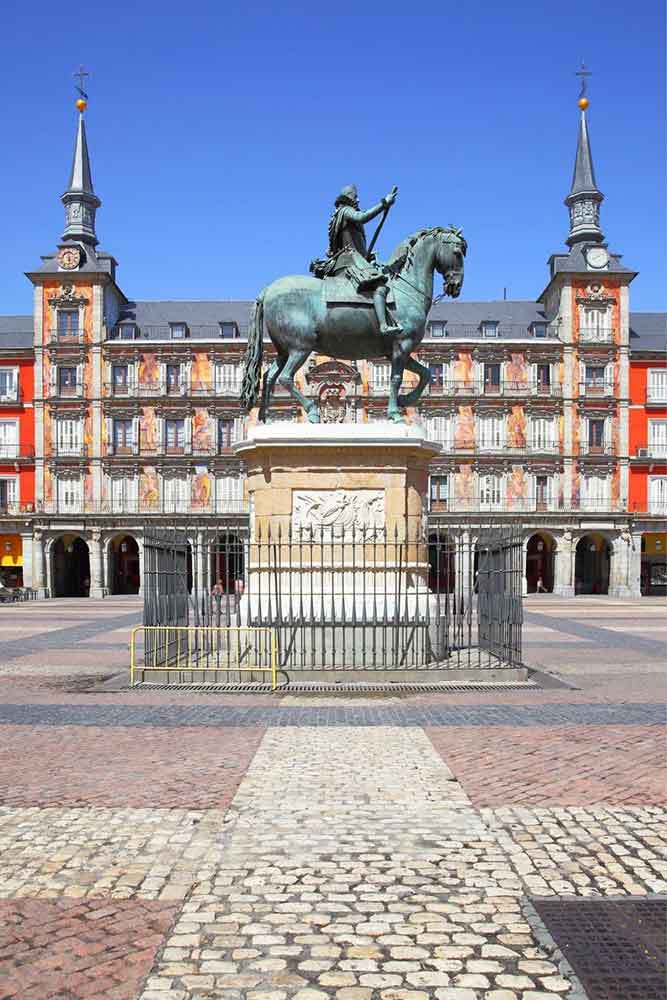
At first glance, it’s just a big square… but spend a few minutes here, and the history starts to sink in.
Built in the 1600s, it’s hosted everything from royal coronations to public executions. Now, you’ll find street performers, painters, and loads of cafés with slightly overpriced drinks and Madrid’s most popular Christmas market during the winter months.
Still, I always end up pausing here for at least 15 minutes just soaking it in; however, I don’t recommend eating in the square.
Instead, walk 2 minutes to Calle de la Cava Baja in La Latina and find proper tapas at local prices.
14. Montserrat Monastery
- 🗺️ Location: Montserrat (near Barcelona)
- 🏛️ Type: Monastery / Natural Scenery
- 👣 Best for: Spiritual travellers, nature lovers
Montserrat is an easy day trip from Barcelona. The mountain itself is like a giant stone sculpture, with twisted peaks jutting into the sky and perched among them is the monastery.
Inside, you’ll find the Black Madonna, a small statue with a huge reputation. Even if you’re not religious, it’s moving to watch pilgrims line up just to see her.
From the monastery, take the San Joan Funicular to the top of the mountain for views looking down on the monastery and out to the surrounding landscapes. There are also tons of hiking trails leading off from here.

15. Alcázar of Segovia
- 🗺️ Location: Segovia
- 🏛️ Type: Castle / Fortress
- 👣 Best for: Castle fans, fairytale settings
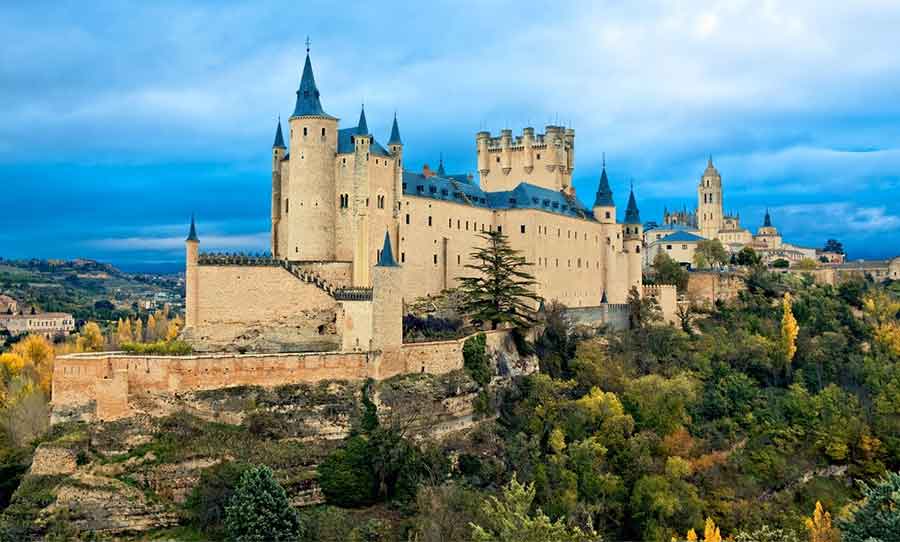
If I had to choose one castle in Spain that truly looks like something from a fairytale. And in fact, it did inspire Walt Disney’s Magic Kingdom.
The Alcázar rises out of a rocky cliff with high towers and a sharp stone roof that screams Disney castle and is one of the most photogenic of Spain’s attractions.
The medieval city of Segovia is an easy day trip from Madrid, especially for fans of dramatic architecture and sweeping views.
Inside the Alcázar, you’ll wander through grand halls, throne rooms, and spiral staircases. The whole place is packed with royal history, but the real magic is climbing the Tower of Juan II. It’s a steep, narrow climb, but once you’re at the top, the view over Segovia is absolutely worth the effort.

Veggie Travel Tip
Don’t leave Segovia without trying a veggie version of their famous beans dish (judiones).
16. Alcázar of Toledo
- 🗺️ Location: Toledo
- 🏛️ Type: Fortified Palace
- 👣 Best for: Military history lovers
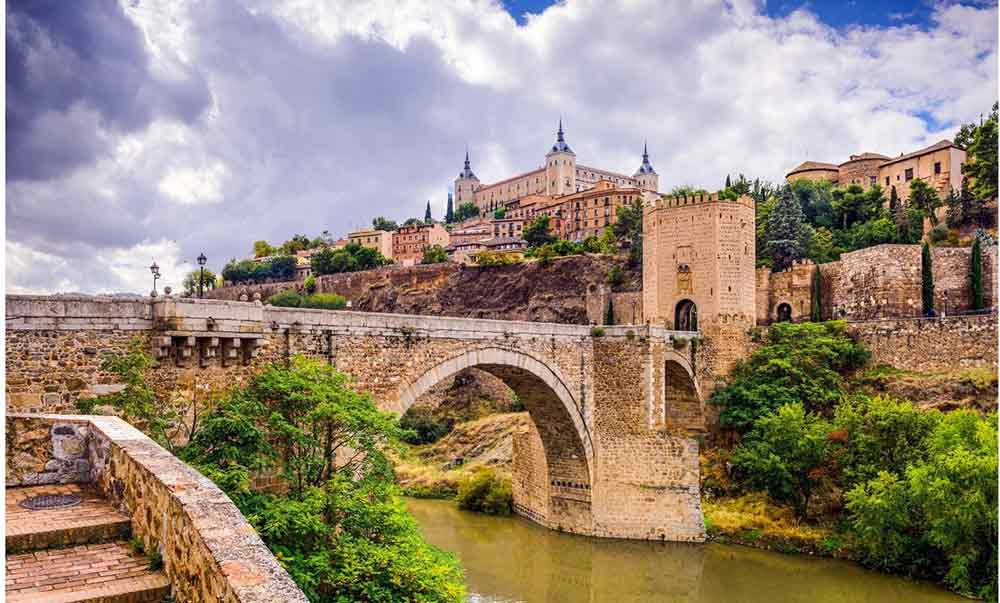
Toledo is one of those cities where every building seems to have a thousand-year story, and the Alcázar is no exception.
This fortress has seen Roman governors, medieval monarchs, and civil war battles. It’s been rebuilt multiple times, but still commands the hilltop like a watchful guardian.
Today, it houses the Army Museum, which is better than it sounds. There’s everything from ancient weapons to dramatic Civil War exhibits. What I loved most, though, was the view from the top floor.
You get this sweeping panorama over the Tagus River and tiled rooftops of Toledo. If you’re thinking of spending a day exploring Toledo, the Alcázar is one of several highlights worth seeing here.
Time your visit for late afternoon, which is when you’ll be able to watch the city turn gold in the sunset. While you’re walking up through Toledo’s sloping streets, don’t forget to stop along the way to peek into the little craft shops selling damascene jewellery and handmade swords.
17. San Juan de Gaztelugatxe
- 🗺️ Location: Basque Country
- 🏛️ Type: Hermitage / Coastal Hike
- 👣 Best for: Hikers, GoT fans, coastal explorers
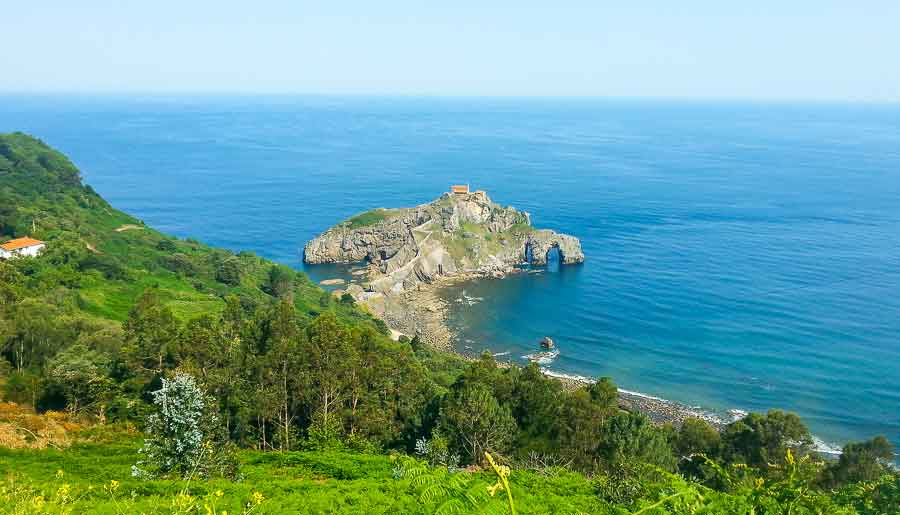
This spot went viral thanks to Game of Thrones, but long before it was “Dragonstone,” San Juan de Gaztelugatxe was a place of pilgrimage. A tiny hermitage perched on a rocky islet, linked to the mainland by a narrow stone bridge and 241 winding steps.
Climbing it is tough, especially on a hot day, but once you reach the top and ring the bell (it’s tradition!), you’re rewarded with sweeping views of the wild Basque coastline.
Tickets are free, but you need to book them in advance to manage crowds.
Try to visit early in the morning for misty views and fewer people. Also, wear proper shoes. The route down and back up is steep, uneven, and can get slippery after rain.
18. Casa Batlló
- 🗺️ Location: Barcelona
- 🏛️ Type: Modernist Building
- 👣 Best for: Gaudí fans, architecture buffs
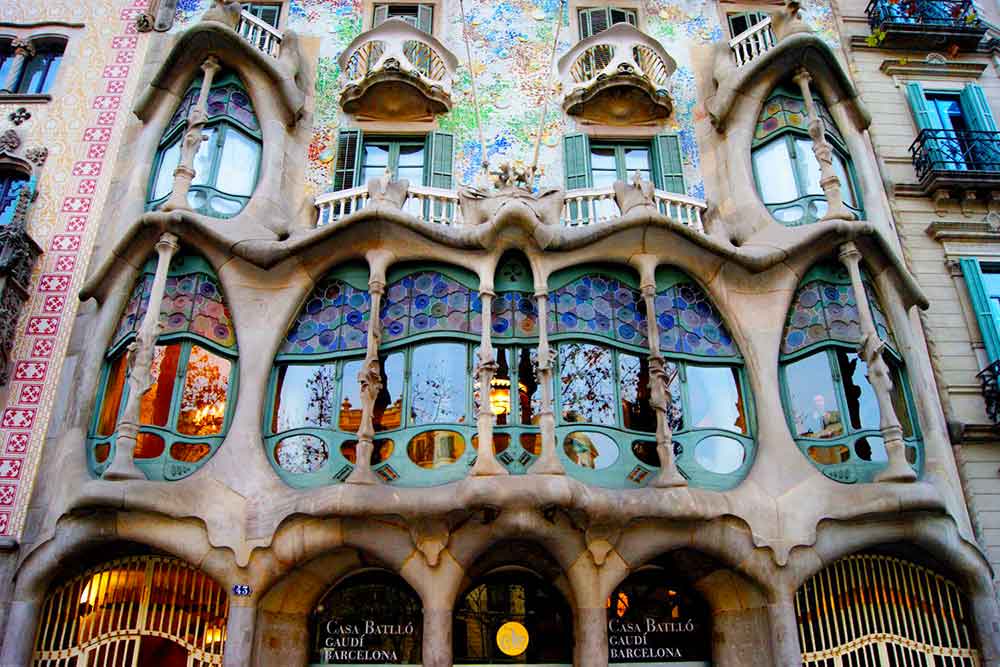
If La Sagrada Familia is Gaudí’s masterpiece, Casa Batlló is his wild daydream brought to life. I remember standing outside thinking if this was a building, a piece of art, or a colourful dragon. It’s all three, and more!
The balconies look like skulls, the rooftop like dragon scales, and the whole place seems to shift colours depending on the light. It’s one of the most visually striking Spanish tourist attractions.
Inside, it’s even more surreal. There’s barely a straight line in sight. Windows ripple, ceilings swirl, and the staircase looks like a spine. The attention to detail is unreal.
During the summer months, the Magic Nights rooftop concert experiences are something special with live music and sunset views over the city.
Casa Batlló Entry with Self-Audioguide Tour
Skip-the-line and get fast-track entry with a self-paced audio tour.
19. Segovia Aqueduct
- 🗺️ Location: Segovia
- 🏛️ Type: Roman Ruin
- 👣 Best for: Roman history lovers
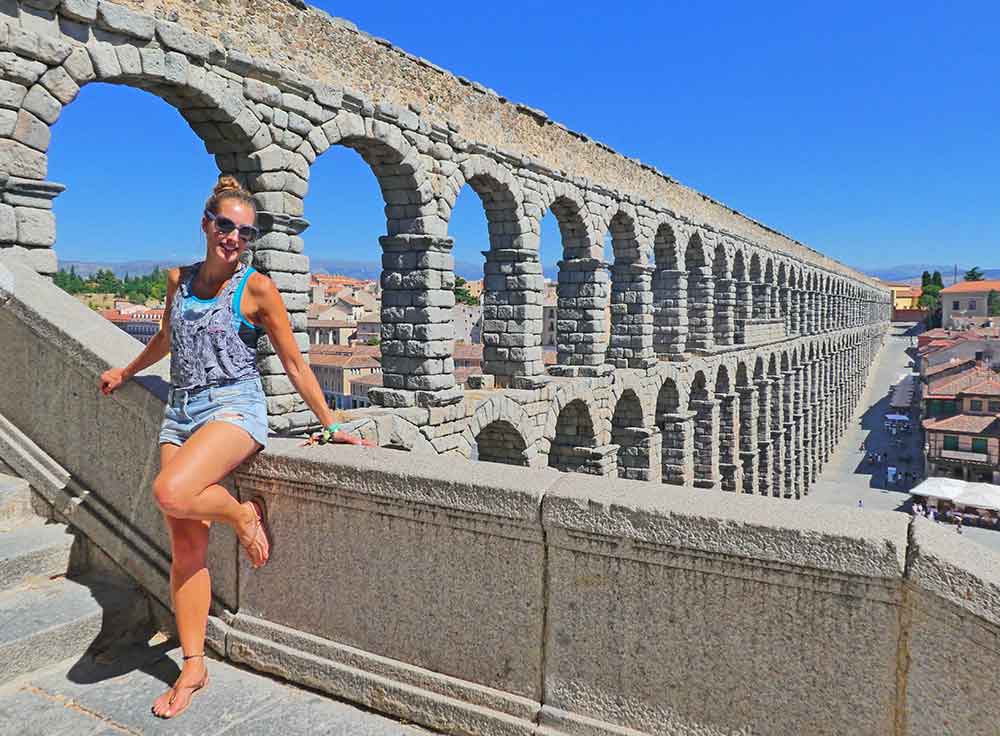
No mortar. No concrete. Just 167 stone arches stacked up by the Romans nearly 2,000 years ago, and it still stands strong. Compared to some modern-day buildings, the Segovia Aqueduct really makes you wonder how advanced Roman engineering was.
I loved wandering between the pillars and standing at its base. The sheer scale is humbling, and you feel tiny under those towering arches.
For the best view (and photos), climb the stairs on the left-hand side of the plaza to reach the viewing platform. Sunrise or golden hour gives you amazing light, and fewer tour groups clogging the scene.
20. Basilica of Our Lady of the Pillar
- 🗺️ Location: Zaragoza
- 🏛️ Type: Religious Landmark
- 👣 Best for: Pilgrims, religious art fans
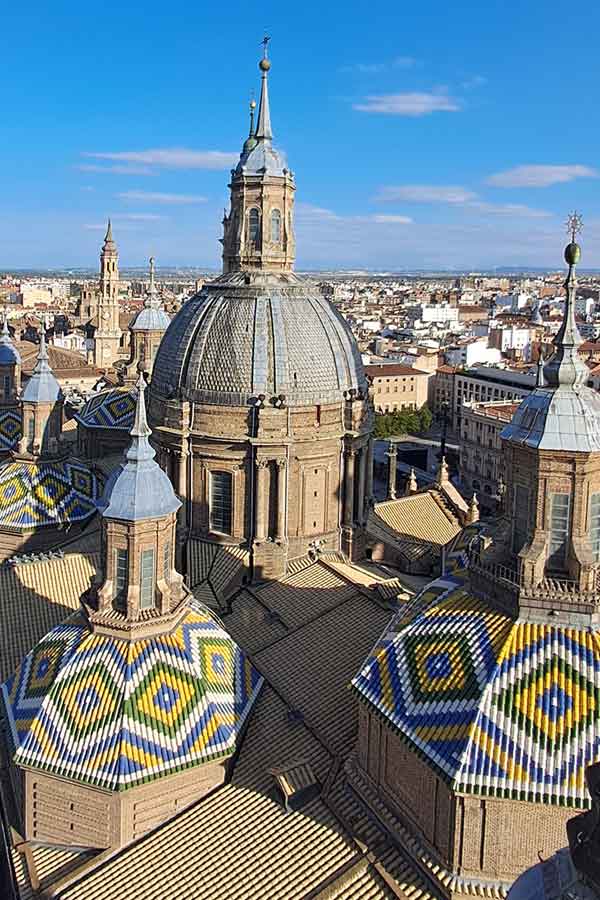
Set right on the banks of the Ebro River, this basilica is one of Spain’s most important pilgrimage sites. Even if you’re not religious, the sheer scale and beauty of it are worth the visit.
I wasn’t expecting much before I went, but walking into that massive nave with its domed ceilings, colourful frescoes by Goya, and the striking onion-shaped tiled roof domes completely won me over. Climb the tower for panoramic views over Zaragoza and the river. It’s rarely crowded, and you’ll get great photos.
According to legend, this is the very first church ever dedicated to Mary. You can actually see (and touch!) the small pillar she’s believed to have appeared on; hence the name.
Zaragoza might not get the same crowds as Spain’s headline cities, but it’s packed with incredible architecture, history, and culture. It’s well worth spending at least a full day in Zaragoza if you’re anywhere nearby.
If you’re there in October during the Fiestas del Pilar, prepare for packed streets, parades, and locals dressed in traditional costumes placing flowers at the basilica.
21. Roman Theatre of Mérida
- 🗺️ Location: Mérida
- 🏛️ Type: Roman Ruin / Amphitheatre
- 👣 Best for: Roman theatre and history lovers
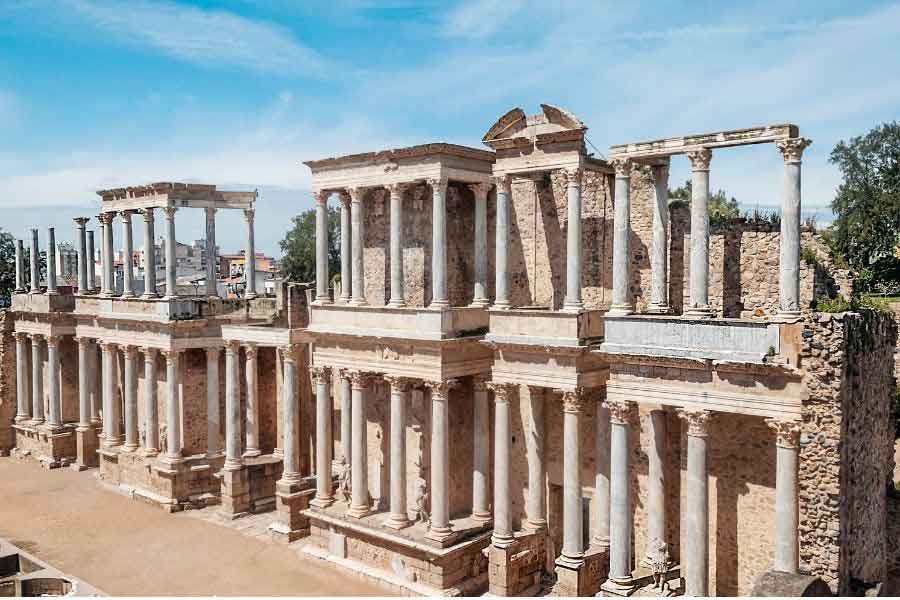
Mérida is one of the most underrated destinations for ancient ruins in Spain, and the Roman Theatre is the star of the show.
When I first stepped into the semicircular amphitheatre, one thing I was impressed with was how well-preserved the site was. You’ll find tall marble columns, statues, and the original stage.
What makes it really special is that it’s still in use today. During the summer, they host open-air theatre performances and concerts right on the Roman stage. Watching a play under the stars in a 2,000-year-old theatre is an unforgettable experience.

Good To Know
Visit first thing in the morning or late afternoon for the best light—and to avoid the baking midday sun.
Your ticket also includes access to several other Roman sites in town, like the amphitheatre and Temple of Diana, so make a day of it.
22. Palma Cathedral (La Seu)
- 🗺️ Location: Mallorca
- 🏛️ Type: Gothic Cathedral
- 👣 Best for: Gothic architecture and coastal city lovers
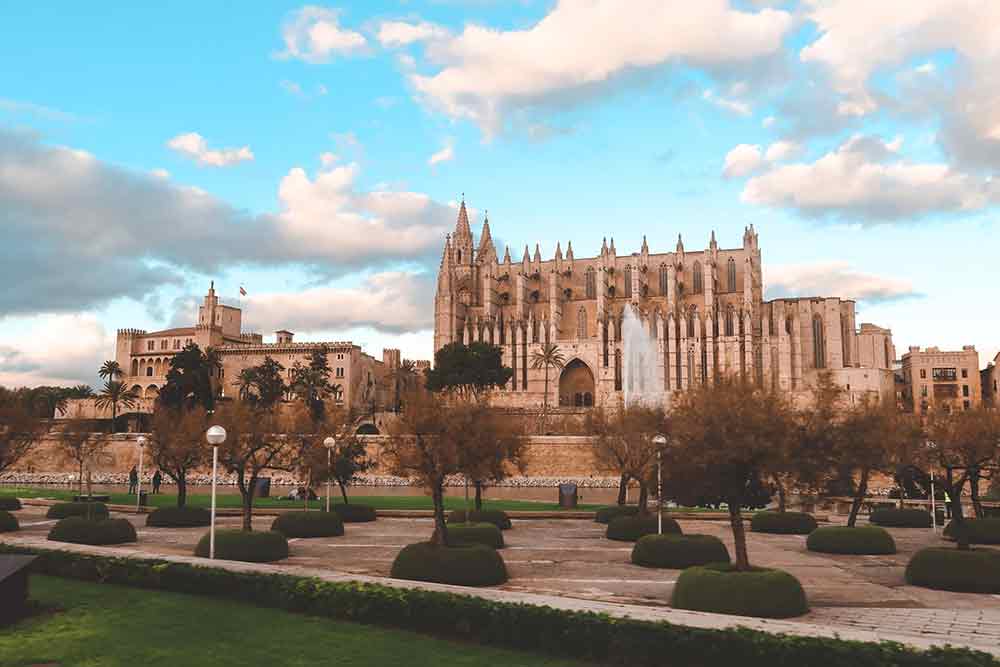
You can see this cathedral from almost anywhere in Palma. It rises dramatically above the city walls, right by the sea.
Locals call it La Seu, and it’s hands down one of the most beautiful cathedrals in Spain. Gothic spires, flying buttresses, and huge rose windows; it ticks all the boxes.
But what really sets it apart is the interior. Gaudí worked on parts of the renovation, and there’s also a massive, contemporary ceramic mural by artist Miquel Barceló in one of the side chapels. The contrast between old and new is stunning.
Try to book a rooftop tour if you can, as it takes you right up among the flying buttresses with views over the harbour.
23. Palau de la Música Catalana
- 🗺️ Location: Barcelona
- 🏛️ Type: Modernist Concert Hall
- 👣 Best for: Architecture and music lovers
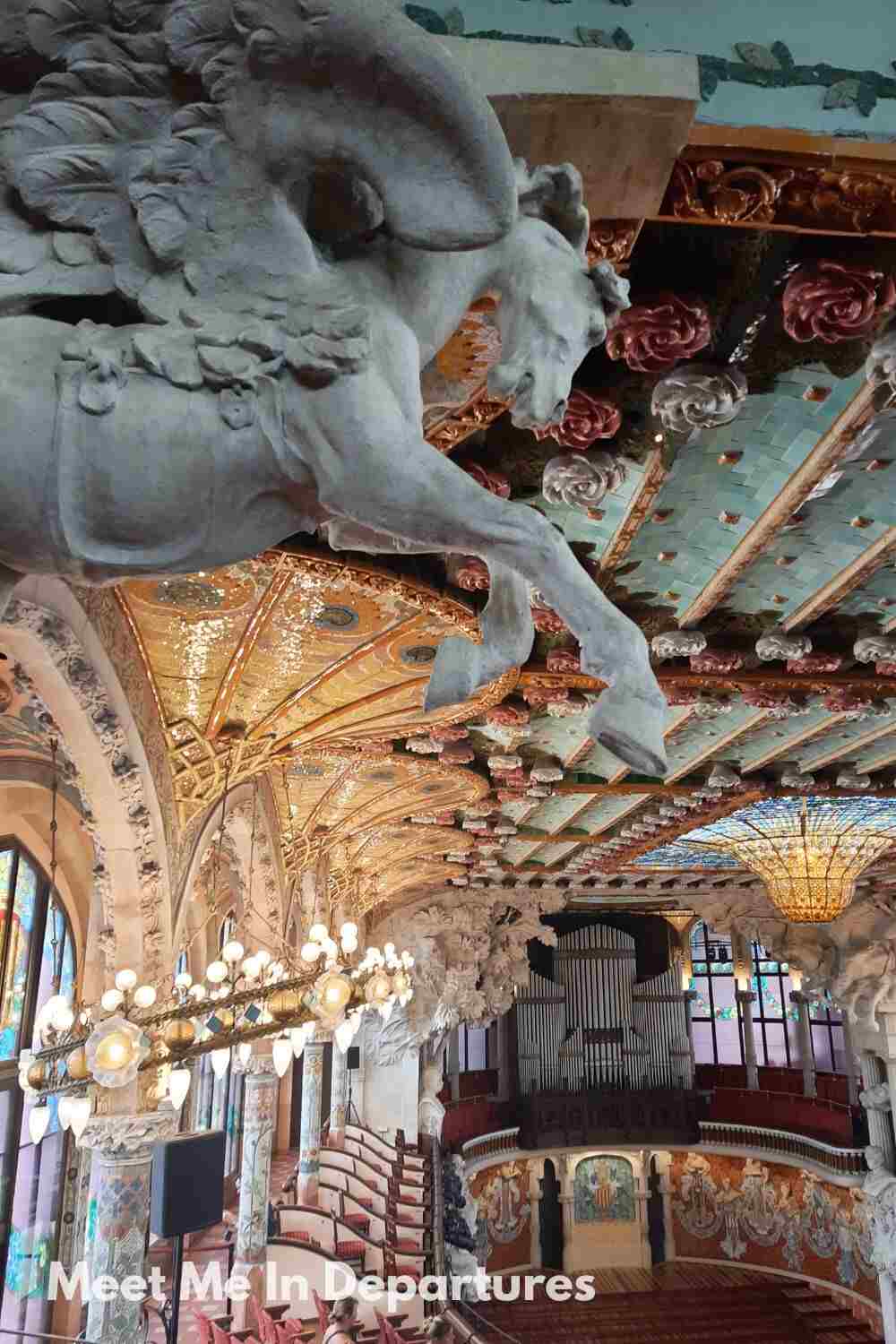
This concert hall is a full-blown celebration of Catalan Modernisme.
Designed by Domènech i Montaner, the Palau de la Música Catalana is easily one of the most beautiful interiors in Spain. You’ll find a stained glass skylight, colourful mosaics, floral pillars, and ornate balconies, making it one of the most photogenic interiors I’ve ever seen.
Even if you’re not going to a concert, the guided tour is worth it just to stand inside that hall and take it all in. If you can’t get onto a guided tour, then the audio tour that comes with the regular entry is very informative.
If you can, book a ticket for a live performance here. It’s an unforgettable experience, even if you don’t know the music.
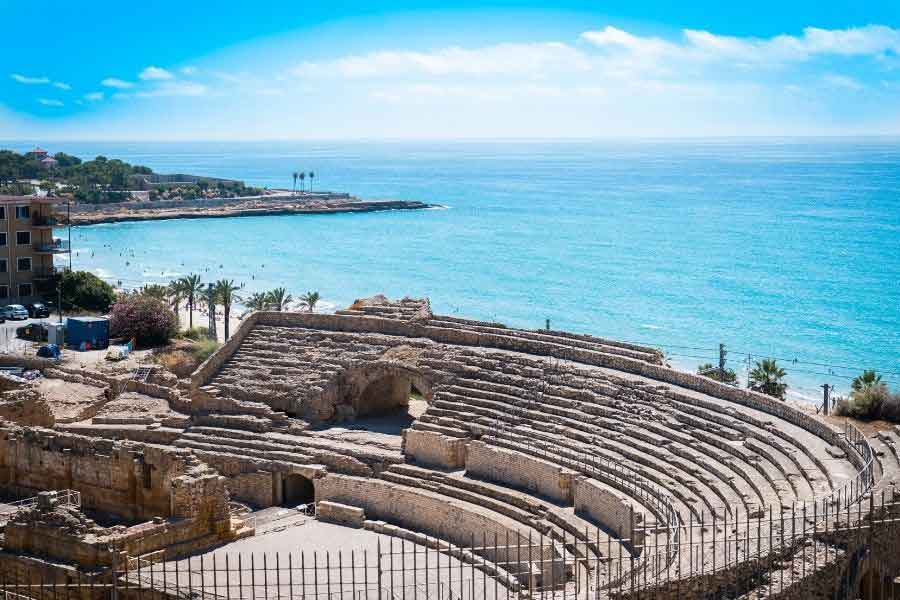
24. Roman Amphitheatre of Tarragona
- 🗺️ Location: Tarragona
- 🏛️ Type: Roman Amphitheatre / Seaside
- 👣 Best for: Roman history buffs, seaside views
If you’re into Roman history, you definitely want to put Tarragona on your radar.
The city is famous for its amphitheatre set right by the sea. It was once used for gladiator battles and public spectacles, and you can still walk the same arena floor where they fought.
It’s surprisingly intact, and the setting that makes it unforgettable is the location with the Mediterranean waves crashing just beyond the ancient stone tiers.
If you’re a fan of ancient ruins, then buy the combined ticket that includes the amphitheatre, the forum, and the Roman circus.
25. Monastery of San Lorenzo de El Escorial
- 🗺️ Location: San Lorenzo de El Escorial (near Madrid)
- 🏛️ Type: Monastery / Royal Complex
- 👣 Best for: History fans, slow travellers
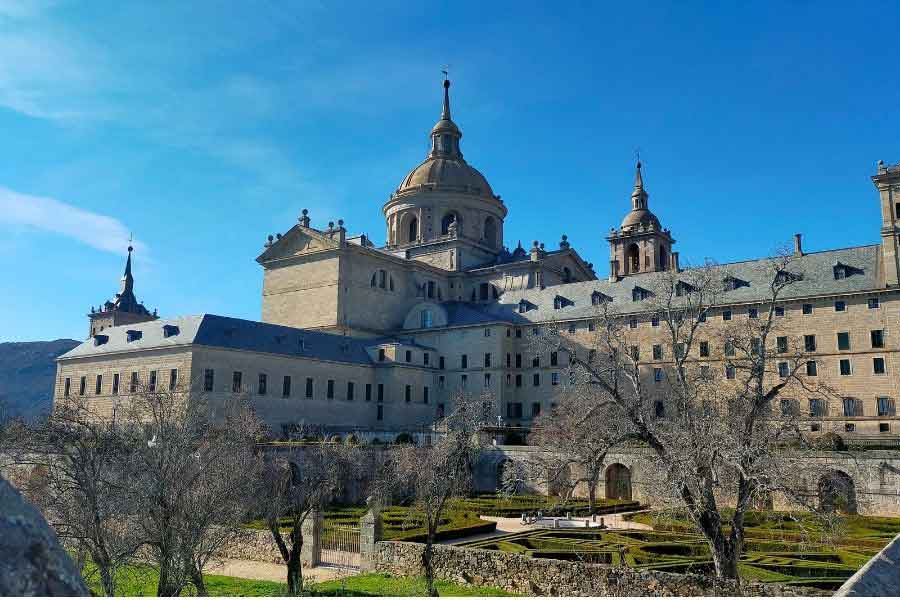
Not only is El Escorial a royal complex, but it’s also, more importantly, a working monastery at its core.
Built in the 1500s under Philip II, this was meant to be a spiritual centre as much as a seat of royal power. And honestly? It shows.
The atmosphere is hushed and contemplative, with long echoing corridors, sunlit cloisters, and a real sense of solitude.
I was struck by how sparse and stripped back the monks’ quarters are, especially when you contrast them with the grandeur of the royal rooms just next door. It’s a fascinating blend of opulence and austerity.
Insider Tip
Guided tours often focus on the palace sections, so take your time to linger in the monastery areas. The basilica, cloister, and monks’ library are especially worth a slow wander. Early mornings are quieter and better for soaking up the atmosphere.
26. Burgos Cathedral
- 🗺️ Location: Burgos
- 🏛️ Type: Gothic Cathedral
- 👣 Best for: Gothic architecture fans
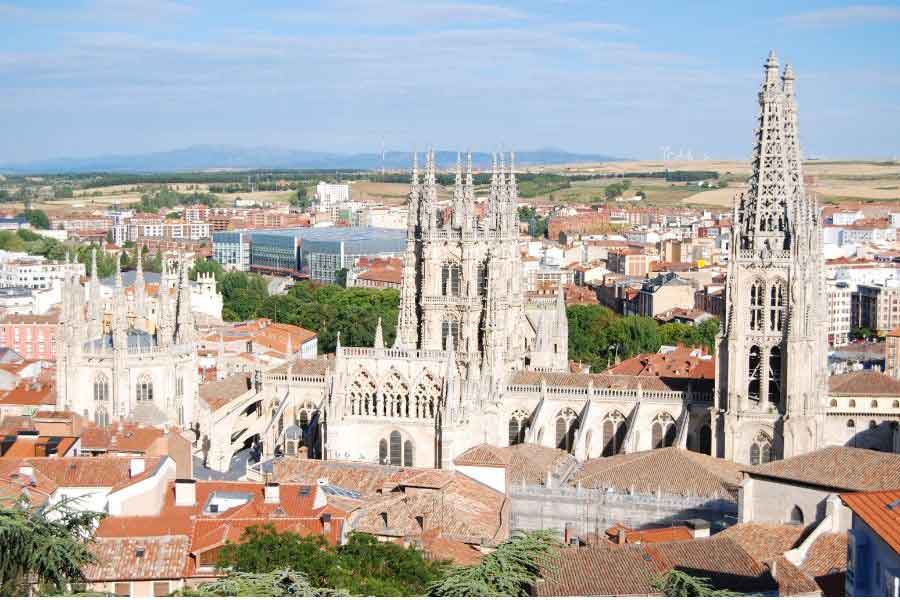
If you’re a fan of Gothic architecture, I guarantee you’ll love Burgos Cathedral.
It has everything from towering spires, endless carvings, and massive rose windows. Despite this being one of the most impressive cathedrals in Spain, it somehow still feels underrated.
Inside, the light filters through stained glass onto ornate tombs, golden chapels, and one of the most intricate star-vaulted ceilings I’ve ever seen. It’s also the burial place of El Cid, Spain’s legendary medieval hero.
The audio guide is excellent, so don’t skip it if you want to understand what you’re looking at.
Also, go early to avoid the tour groups, and if you’ve got the energy, climb the tower for sweeping views across the city’s terracotta rooftops.
27. León Cathedral
- 🗺️ Location: León
- 🏛️ Type: Gothic Cathedral / Stained Glass
- 👣 Best for: Stained glass and peaceful vibes
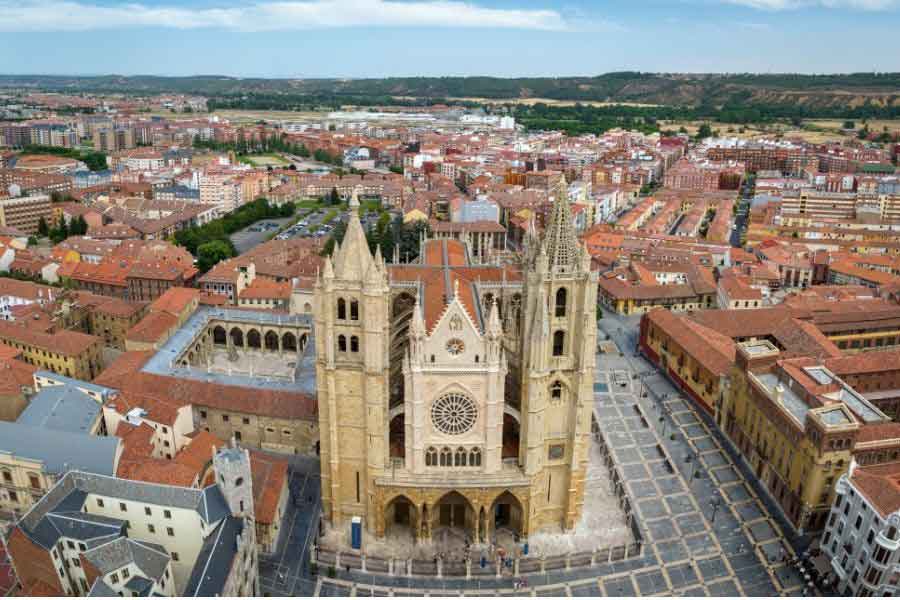
This cathedral doesn’t try to impress with size; it wows you with light!
Often called the “House of Light,” León Cathedral is packed with some of the most stunning stained glass windows in Europe. We’re talking over 1,800 square metres of them, most dating back to the 13th century. When the sun hits just right, the entire interior glows like a kaleidoscope.
What really struck me was how delicate it all feels, like the stonework is just there to hold up the glass. It’s incredibly atmospheric, especially if you catch it on a sunny morning when everything seems to shimmer.
Your museum ticket also includes access to the cloister and treasury, which most people miss but are totally worth seeing if you have the time.
28. Temple of Debod
- 🗺️ Location: Madrid
- 🏛️ Type: Egyptian Monument
- 👣 Best for: History lovers, sunset chasers
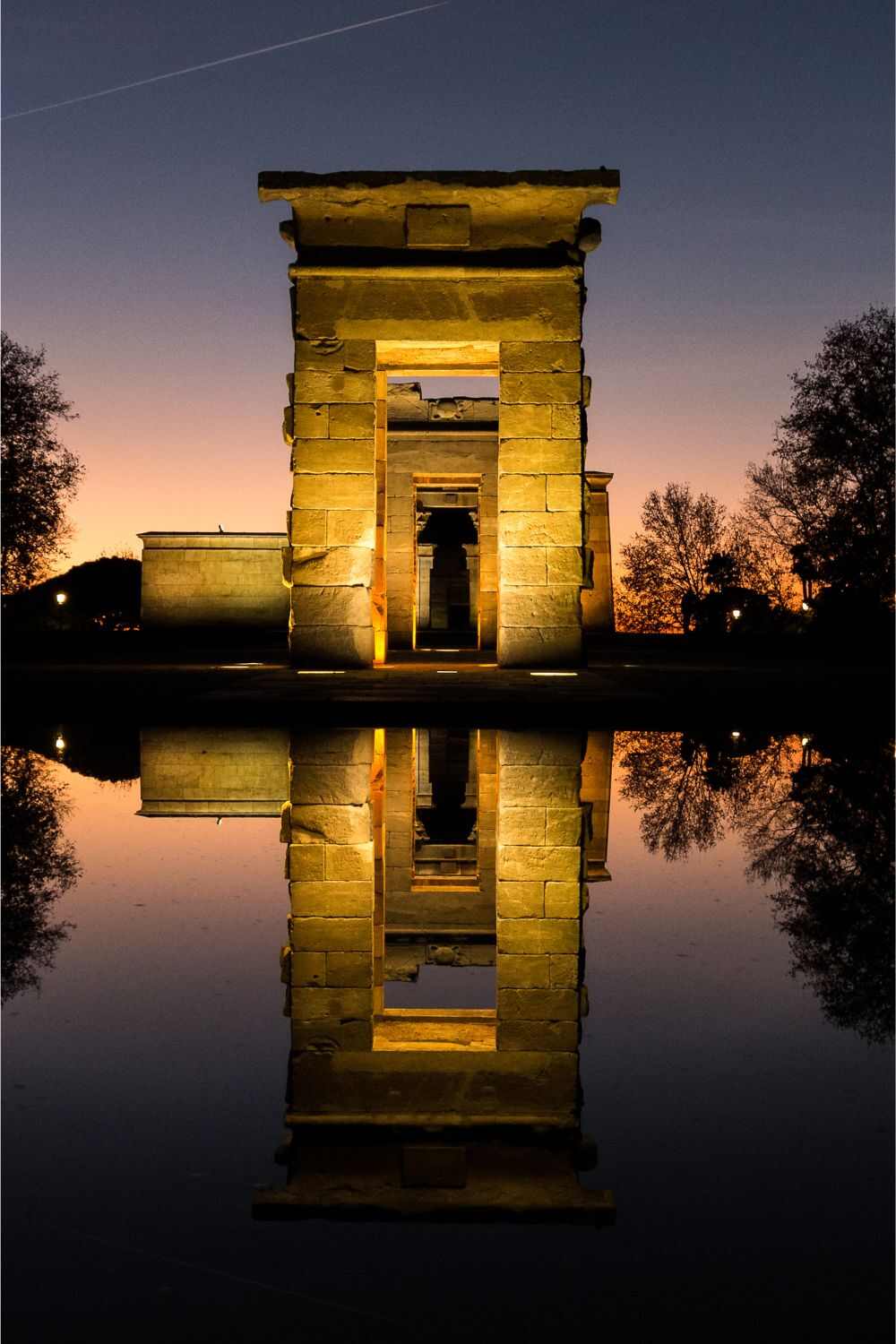
My first impression was that this monument feels out of place, and that’s because it is!
This is a genuine 2,000-year-old Egyptian temple, right in the middle of Madrid. The Temple of Debod was gifted to Spain by Egypt in the 1960s, as a thank-you for helping save Abu Simbel during the Aswan Dam construction.
It’s a small complex, but the setting is what makes it memorable. The temple sits on a raised platform with reflecting pools and sweeping views over Casa de Campo. At sunset, it’s one of the most photogenic spots in the city.
29. Tibidabo Basilica
- 🗺️ Location: Barcelona
- 🏛️ Type: Religious Site / Scenic Viewpoint
- 👣 Best for: Panoramic views, architecture lovers
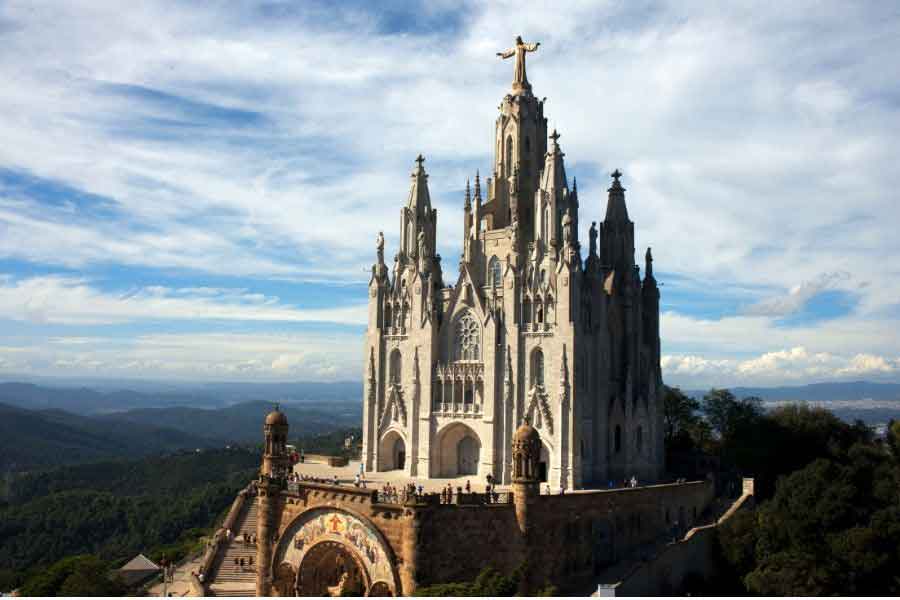
Perched high above Barcelona on Mount Tibidabo, this neo-Gothic basilica looks like a fairytale castle from afar.
The Temple Expiatori del Sagrat Cor (thankfully, most people just call it Tibidabo Basilica) is topped with a gleaming statue of Christ and has one of the best panoramic views of the city and coastline.
It’s actually two churches in one; the crypt below is dark and ornately decorated, while the upper church is bright and airy.
The journey up to Mount Tibidabo is half the fun. Take the funicular if it’s running, or the bus from Plaça Catalunya for a more scenic ride.
At the top of the mount, there’s also a vintage amusement park, which makes it a fun half-day out if you’re travelling with friends or just want something a bit quirky.
30. Roman Walls of Lugo
- 🗺️ Location: Lugo
- 🏛️ Type: Roman Ruins / Defensive Walls
- 👣 Best for: Walkers, Roman history fans
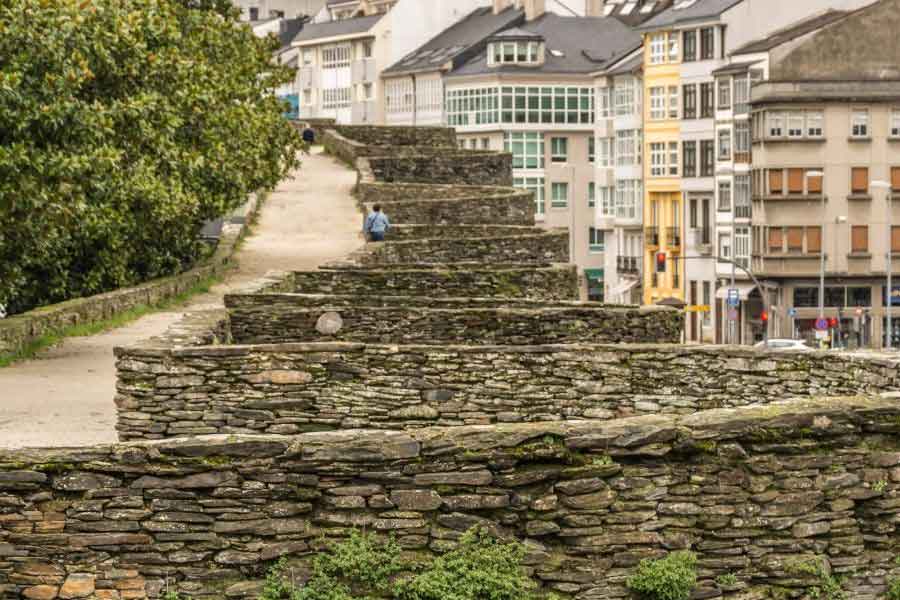
Lugo is the only city in the world where you can still walk the full circuit of its Roman walls. These 2,000-year-old defences still completely encircle the old town.
I walked the 2km loop and lost count of how many gates and towers I walked past. I looked it up on the evening after my walk, and learned there are, in fact, 10 gates and 85 towers. Impressive!
Start your walk early in the morning before it gets too hot. It’s free to enter and open 24/7.
One of my favourite views was near Porta de Santiago, looking out over the Romanesque churches and Galician rooftops.
31. Catedral de Ávila
- 🗺️ Location: Ávila
- 🏛️ Type: Gothic Cathedral / Fortress
- 👣 Best for: Gothic architecture lovers
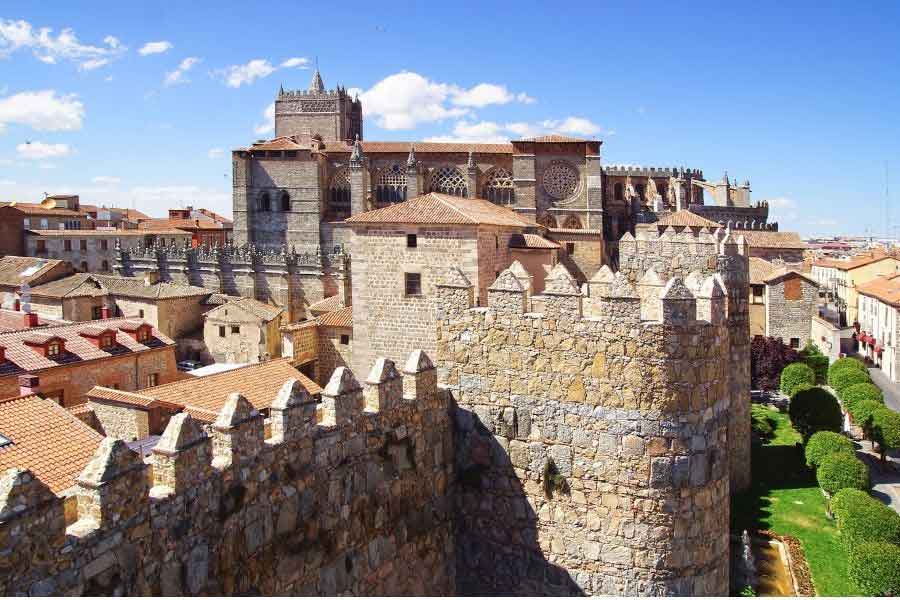
This Gothic cathedral is part fortress, part spiritual sanctuary.
Catedral de Ávila is built right into the city walls, using them as part of its structure. It’s stern and grey from the outside, but the interior has soaring ceilings, delicate stained glass, and a sense of calm that contrasts with the castle-like exterior.
It’s much less crowded than some of the big-name cathedrals in Spain, which makes it easier to slow down and appreciate it. I was surprised by the level of detail in the chapels and cloisters. Don’t miss the little museum upstairs with medieval relics and robes.
If you’re planning to visit quite a few sites, then purchase the combo tickets that give you access to parts of the wall and other churches in Ávila.
32. Roman Theatre of Cartagena
- 🗺️ Location: Cartagena
- 🏛️ Type: Roman Theatre
- 👣 Best for: Roman ruin fans, architecture geeks
Cartagena isn’t always on the radar for travellers, but this Roman theatre is reason enough to go.
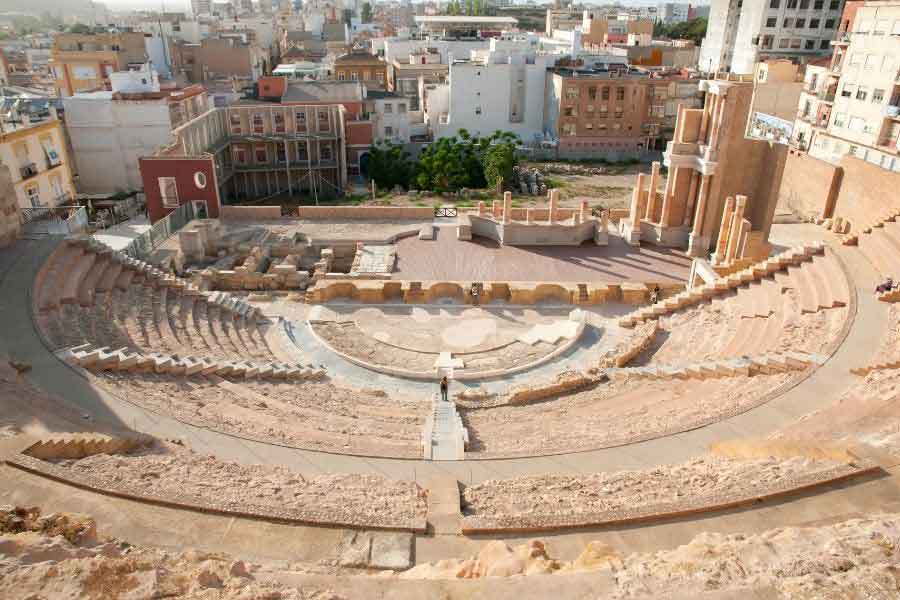
Built in the 1st century BC and buried for centuries under houses and a cathedral, the Teatro Romano was only rediscovered in 1988. Now restored, it’s one of the best Roman theatres in Spain.
The renovations have been sympathetically done, and they’ve managed to blend old and new. I loved how I started in the hyper-modern museum, before stepping out into the open-air amphitheatre, where you can still see original carvings and tiered seating cut into the hillside.
While you’re visiting the city, and if you have time, head up to the nearby Castillo de la Concepción for a view over the theatre and harbour.
33. Cueva de Altamira
- 🗺️ Location: Near Santillana del Mar
- 🏛️ Type: Prehistoric Cave Art
- 👣 Best for: Prehistory lovers, art historians
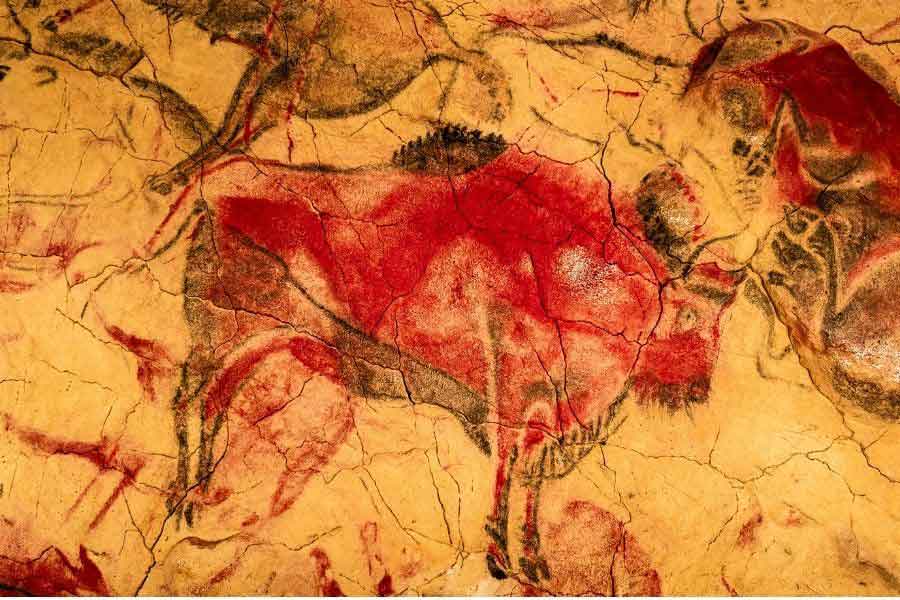
The real Cave of Altamira is closed to the public, but the Neocave replica nearby is an absolute must if you’re fascinated by prehistoric art.
The detail is incredible, with life-size reproductions of the 36,000-year-old bison and other animals painted on the low, curved ceiling just like in the real cave.
There’s something humbling about looking up at art that old and feeling that immediate, human connection from millennia ago. The on-site museum adds loads of context about how the cave was discovered and how the replica was created.
Go for a guided tour if it’s available during your visit. They explain things you’d easily miss.
While you’re in the area, it’s also worth calling in at nearby Santillana del Mar, one of Spain’s prettiest villages, which makes a lovely place to stop for lunch.
34. Castillo de Belmonte
- 🗺️ Location: Cuenca Province
- 🏛️ Type: Medieval Castle
- 👣 Best for: Families, medieval history fans
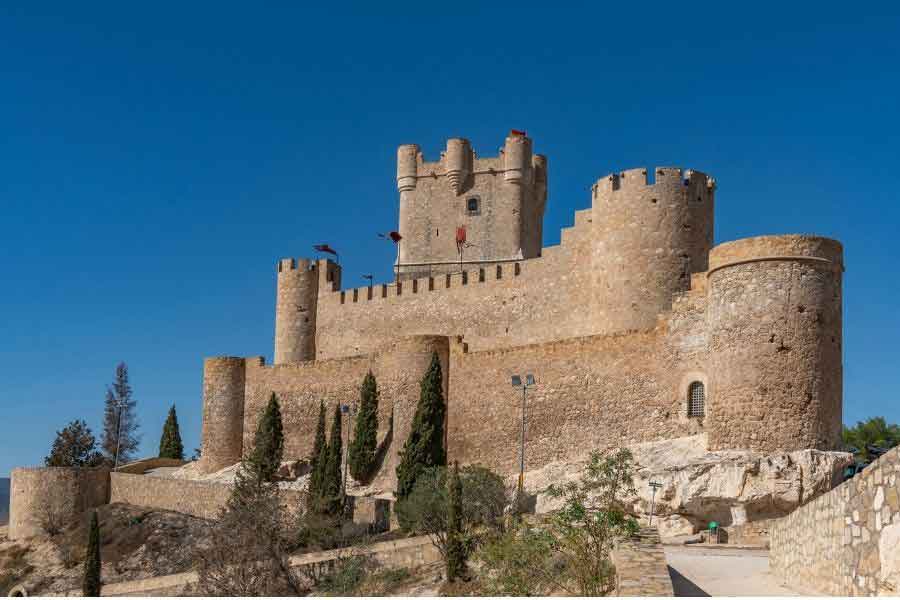
This is one of the best-preserved castles in all of Spain, which still feels like a proper medieval fortress rather than a polished museum. Castillo de Belmonte has thick towers, a dramatic hilltop setting, and even regular medieval tournaments and reenactments in summer.
Check on the castle’s official site for events like archery, falconry, and medieval combat demos.
Inside, lots of the rooms are furnished, giving you a feel for how people actually lived within these walls. The ramparts walk gives you amazing views over the countryside.
Travel Planning Tip
If you’re driving between Madrid and Valencia, the Castillo de Belmonte makes a convenient detour.
35. Catedral de Salamanca
- 🗺️ Location: Salamanca
- 🏛️ Type: Romanesque & Gothic Cathedrals
- 👣 Best for: Architecture lovers, symbol spotters
Salamanca doesn’t just have one cathedral; it has two, built side-by-side.
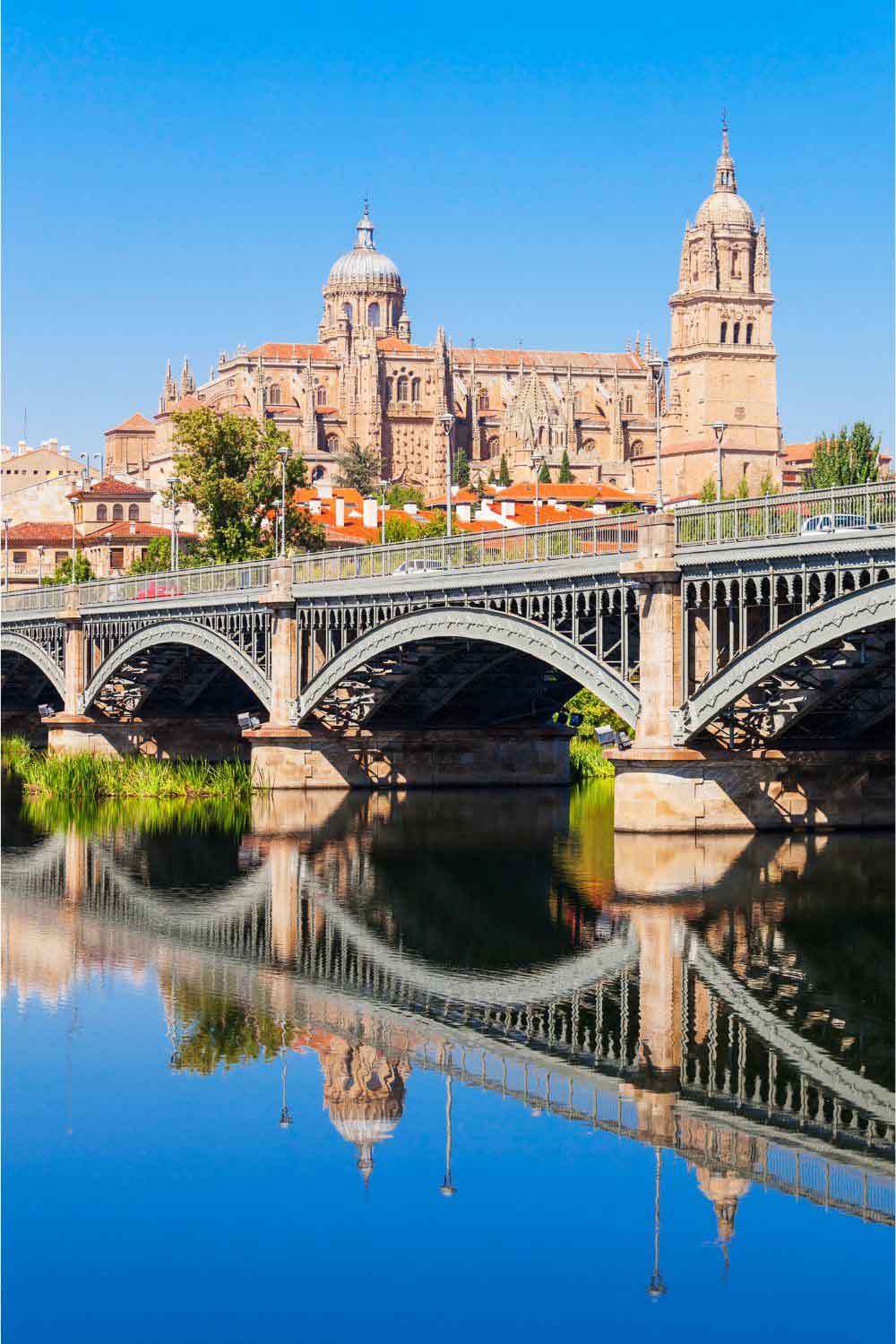
The Old Cathedral (12th century) is Romanesque and moody, with ancient frescoes and a jaw-dropping apse. The New Cathedral, built later in Gothic-Baroque style, is soaring, ornate, and full of unexpected details, including a modern astronaut carved into the façade (yes, really!).
I enjoyed wandering through both and spotting the odd additions hidden in the stonework. If you’re into architecture or symbolism, you could spend hours here.
Don’t miss the Ieronimus tower climb. It’s a loop that takes you through secret galleries, rooftops, and bell towers, with amazing views over the Plaza Mayor and university domes.
36. Alcazaba of Almería
- 🗺️ Location: Almería
- 🏛️ Type: Islamic Fortress
- 👣 Best for: Islamic history lovers
The Alcazaba of Almería is one of the largest Muslim fortresses in Spain. It’s also way less crowded than the Alhambra in Granada.
The complex is spread over several terraces with fortified walls, towers, and gardens. If you’re seeing serious Game of Thrones vibes, you’re vibing correctly! It was used as a filming location for the series.
The views over the city and coastline are incredible, and the layers of Moorish and Christian history are everywhere. Best of all, it’s usually quiet, so you get the space to take it all in.
Also, unlike the Alhambra in Granada, it is free to enter for EU citizens.
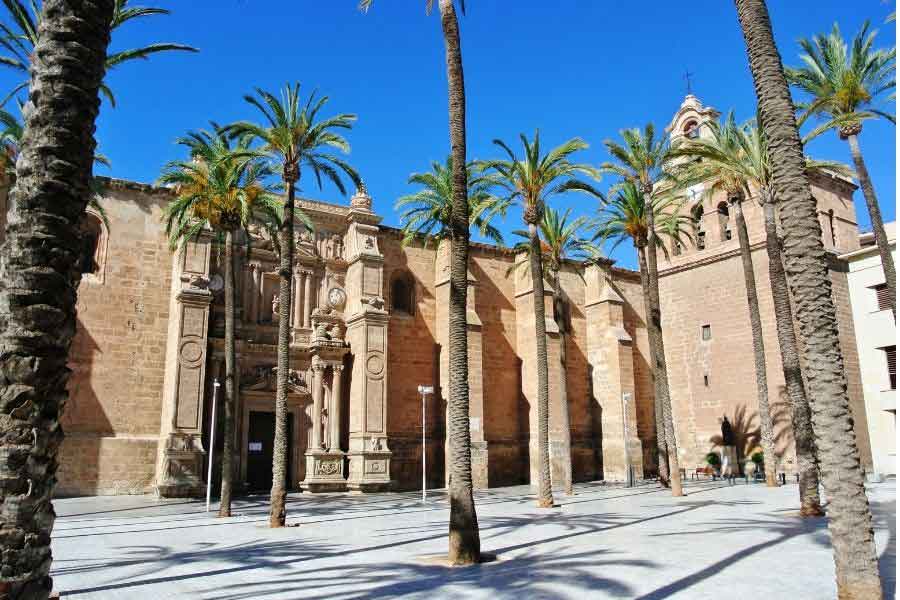
37. Castillo de Coca
- 🗺️ Location: Segovia Province
- 🏛️ Type: Mudejar Castle
- 👣 Best for: Castle hunters, Mudejar fans
This is one of Spain’s most striking castles thanks to its bright brickwork and Mudejar design. If you’re new to the term, Mudejar is a blend of Christian architecture with Islamic-style decoration.
If you’re after a quintessential castle, Castillo de Coca ticks the right boxes with its deep moat, huge towers, and zig-zagging walls.
The interior is mostly bare, but the architecture is the star here. You’ll find arched doorways, intricate brick patterns, and spiral staircases; you’ll definitely feel it in your legs the next day.
The caveat is that guided tours are the only way to access the inside. And these tours are all in Spanish. However, it’s still worth doing for access to the towers and dungeons. Call ahead to check tour times, especially in the off-season.
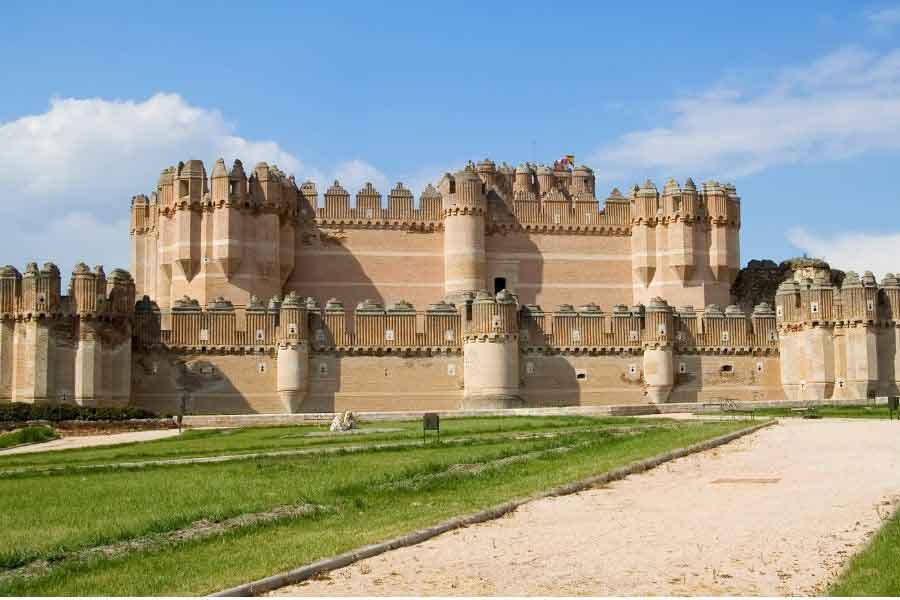
38. Castillo de Loarre
- 🗺️ Location: Huesca Province
- 🏛️ Type: Romanesque Castle
- 👣 Best for: Remote castle lovers, photographers
Perched on a rocky outcrop with the Pyrenees in the distance, Castillo de Loarre is one of the most spectacular Romanesque castles in Spain. It’s rugged, remote, and completely atmospheric. Think high towers, ancient chapels, and crumbling passageways with views that go on for miles.
It’s not polished at all, so no velvet ropes, audio guides or hordes of tourists. It’s just you, the stone walls, and a whole lot of wind.
When I arrived, it coincided with a school group who were just finishing up. After they’d left, I pretty much had the whole place to myself.
A rental car is essential to get here, and the drive through the countryside is stunning.
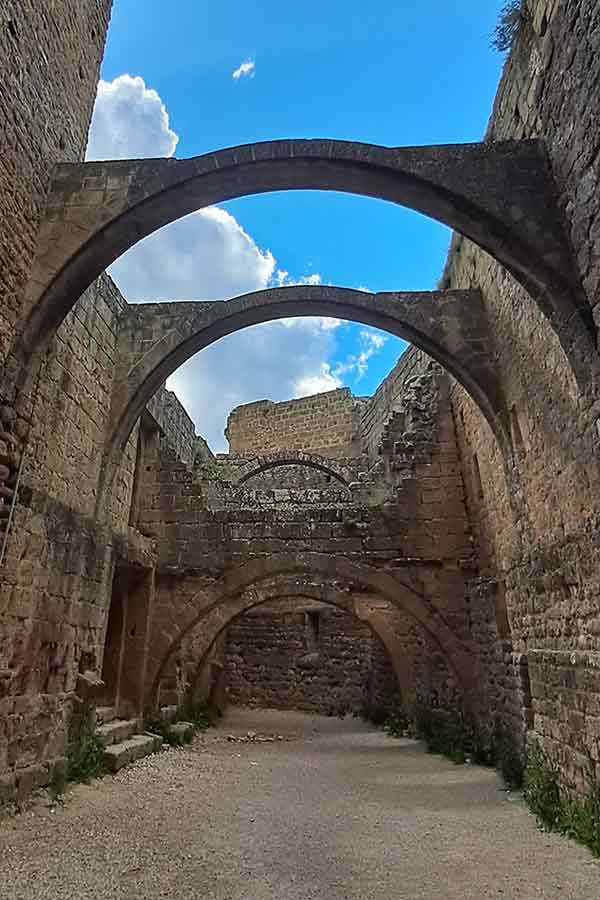
39. Monasterio de Piedra
- 🗺️ Location: Zaragoza Province
- 🏛️ Type: Monastery / Natural Park
- 👣 Best for: Nature lovers, hikers
Don’t let the name fool you; Monasterio de Piedra (literally “Stone Monastery”) is far more than just an old religious site. Sure, there’s a Cistercian monastery with cloisters and Gothic halls, but what really blew me away was the park surrounding it: a wonderland of waterfalls, caves, turquoise pools, and forested trails.
As cliché as it sounds, it felt like I’d stumbled into Tolkien’s Rivendell thanks to the lush, peaceful, and ethereal feel.
There are loads of hiking trails here, so wear proper walking shoes and bring a picnic and plenty of water.
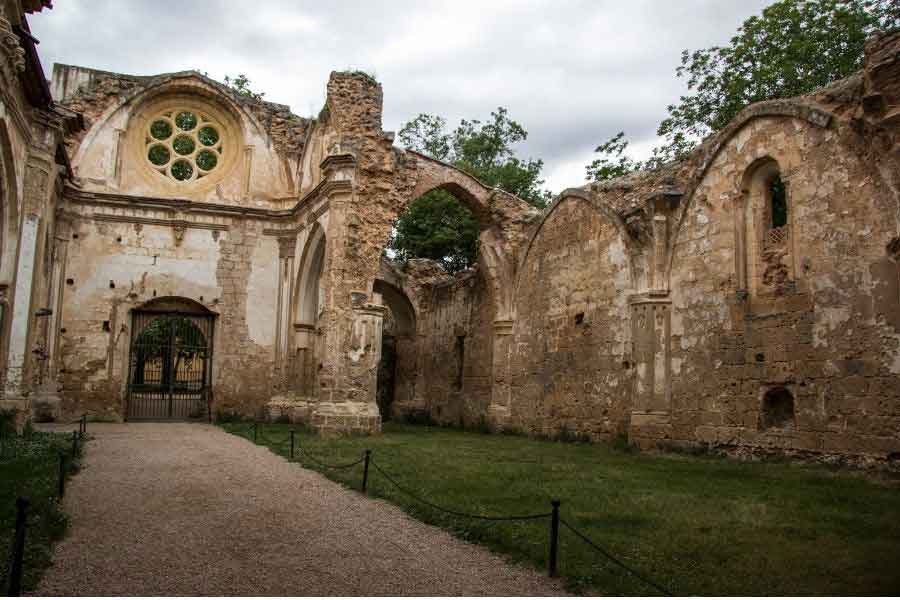
40. Basilica de Santa Maria del Mar
- 🗺️ Location: Barcelona
- 🏛️ Type: Gothic Basilica
- 👣 Best for: Quiet moments, Gothic fans
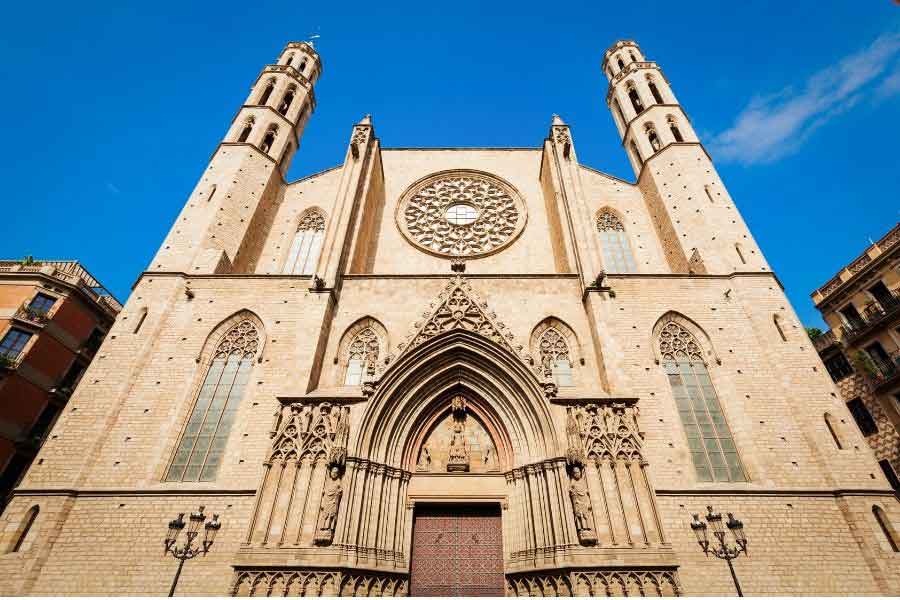
Tucked away in the El Born neighbourhood, Santa Maria del Mar is way more peaceful than the Sagrada.
Built in the 14th century by local stonemasons and fishermen, it’s packed with classic Gothic features: soaring columns, elegant lines, and a vaulted ceiling with an airy atmosphere inside.
Don’t miss the rooftop tour. It’s nowhere near as busy as the likes of Sagrada Familia, and the views over Barcelona are just as good. Go in the late afternoon for amazing light filtering through the rose window.
41. Palacio de Gaudí (Episcopal Palace of Astorga)
- 🗺️ Location: Astorga
- 🏛️ Type: Modernist / Neo-Gothic Palace
- 👣 Best for: Gaudí fans, Camino travellers
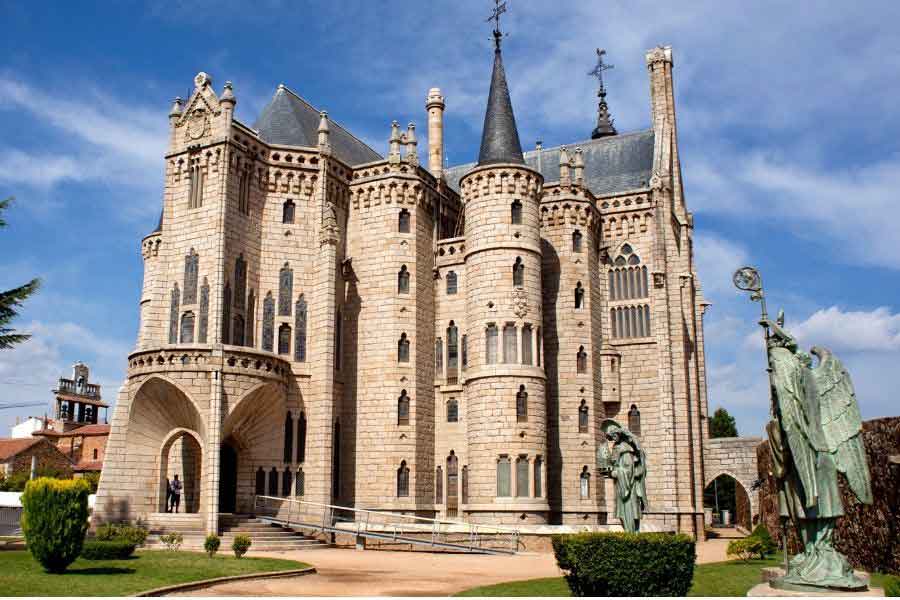
If you’re after your Gaudí fix, but not visiting Barcelona, you can find it here, in Astorga.
The Episcopal Palace, now known as the Palacio de Gaudí, is Neo-Gothic with a Gaudí twist. The building almost doesn’t seem real with its spiky turrets and delicate stonework.
Inside, it houses the Museo de los Caminos, dedicated to the Camino de Santiago. But honestly, I spent most of my visit just admiring the curves, windows, and that surreal blend of cathedral and fantasy castle, which, if you’ve not realised until now, I’m a bit obsessed with.
Also, while you’re here, I recommend visiting the nearby chocolate museum!
42. Castillo de Peñafiel
- 🗺️ Location: Castilla y León Province
- 🏛️ Type: Castle / Wine Museum
- 👣 Best for: Castle fans, wine lovers
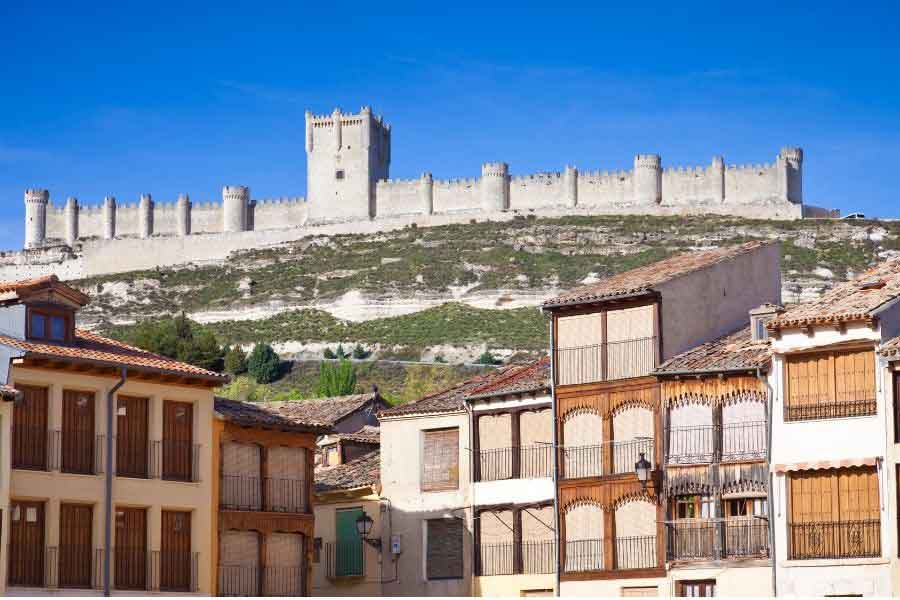
Shaped like a massive ship sailing over the plains of Castilla, Castillo de Peñafiel is one of the most unique castles I’ve ever seen. It’s long and narrow, with tall defensive walls, stretching dramatically across a hilltop with panoramic views in all directions.
The castle houses a wine museum now (this is Ribera del Duero country, after all), but the real joy is climbing the tower and walking along the battlements, which is perfect if you’ve got a thing for medieval drama and open skies.
One thing I’d recommend is checking the opening hours of the wine museum before you go. It’s closed on some weekdays. Failing that, there are several local bodegas around the area you can visit instead.
43. Cuevas del Drach
- 🗺️ Location: Mallorca
- 🏛️ Type: Cave / Underground Lake
- 👣 Best for: Families, nature lovers
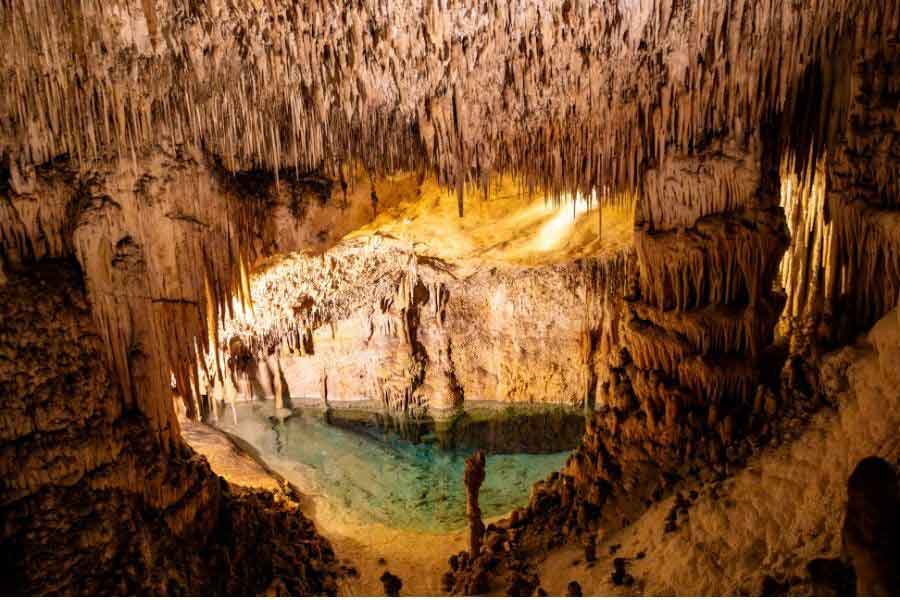
The Drach Caves are one of Mallorca’s most surprising highlights. I wasn’t expecting much beyond some pretty stalactites, but in reality, it was a lot more than that. The promo photos of this place DO NOT do it justice at all.
The cave system stretches for nearly 1,200 metres and ends at an underground lake called Lake Martel. Here, you’re treated to a short classical concert in near-total darkness. It’s incredibly atmospheric.
The walk through the caves is well-lit and easy to navigate, winding past weird rock formations and mirror-like water pools.
Even inthe peak of summer, I recommend bringing a light jumper, the caves stay consistently cool inside.
44. Castillo de Almodóvar del Río
- 🗺️ Location: Córdoba Province
- 🏛️ Type: Medieval Castle / Filming Location
- 👣 Best for: Castle fans, fantasy lovers
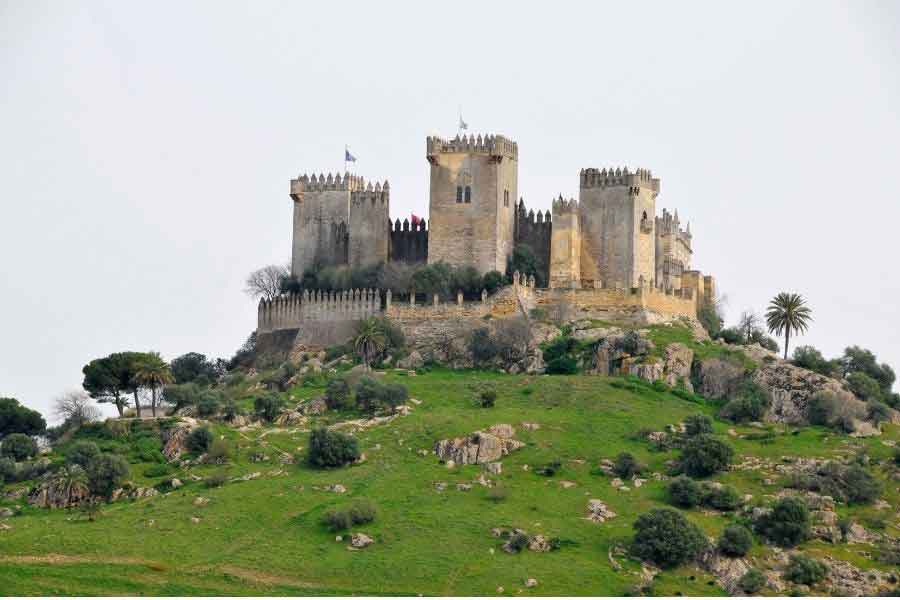
This restored hilltop fortress looks like something straight out of a fantasy novel, and it kind of is. Castillo de Almodóvar del Río was used as Highgarden in Game of Thrones.
But beyond its cinematic fame, it’s a wonderfully preserved medieval castle with towering ramparts, panoramic views, and rooms that feel truly lived-in.
One of the best things about this castle is that you can explore freely, climb towers, wander along the walls, and imagine life back in the 14th century. They often run medieval-themed days with actors and activities, which are great fun if you time it right.
Good To Know
You’ll need a car to get here. If you’re visiting Córdoba, it’s only a 30-minute drive.
45. Dolmen de Menga
- 🗺️ Location: Antequera
- 🏛️ Type: Megalithic Monument
- 👣 Best for: Prehistory lovers, hikers
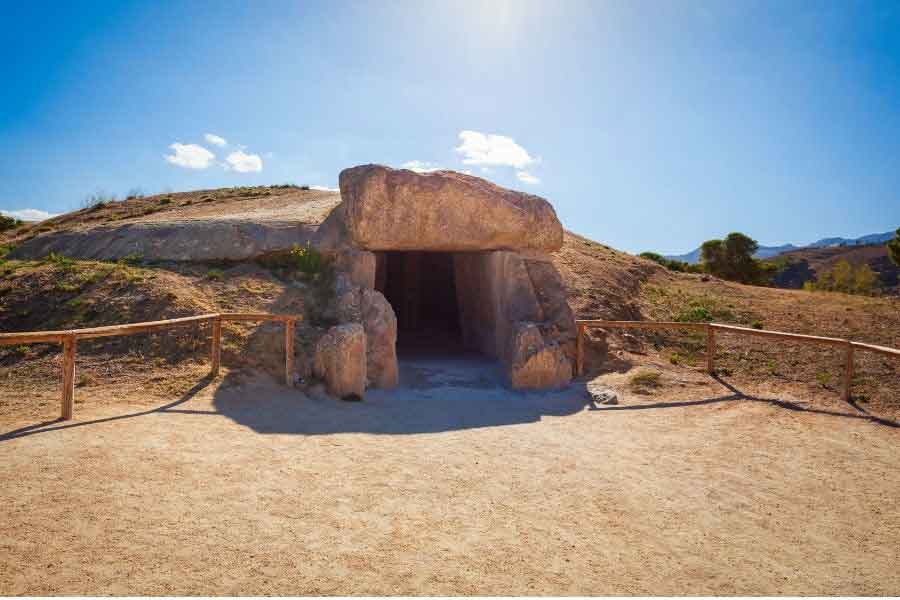
Older than the pyramids, the Dolmen de Menga is one of Europe’s most important megalithic monuments, and hardly anyone seems to know about it.
It’s a massive stone burial chamber built around 3,700 BC. The size of the stones alone is staggering, with some weighing over 180 tonnes.
What I found most fascinating is how the dolmen is aligned; not with the sun like many others, but with a nearby mountain, Peña de los Enamorados. Nobody knows exactly why, but it adds a layer of mystery.
Entry is free, and there’s a small visitor centre with useful context.
46. Castillo de Gormaz
- 🗺️ Location: Soria Province
- 🏛️ Type: Moorish Fortress / Ruins
- 👣 Best for: Medieval ruins and solitude seekers
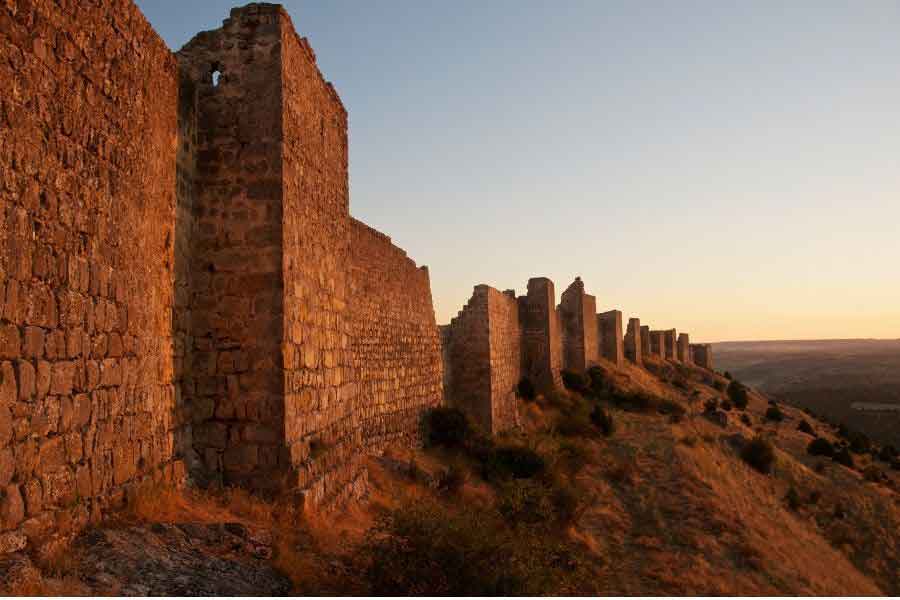
If you want raw, untouristy medieval history, this is the one. Castillo de Gormaz is a colossal fortress that stretches across a ridge with open views in every direction.
Built by the Moors and later expanded by the Christians, it’s one of the largest castles by surface area in Europe, and you’ll probably have it entirely to yourself.
It’s mostly ruins now, but walking along the walls gives you a real sense of scale and drama.
There’s no entrance fee, no ticket booth, and barely any signage, so read up before you go. Be sure to bring water and sturdy shoes; the terrain is rough, and there’s no shade.
47. Iglesia de San Martín
- 🗺️ Location: Frómista
- 🏛️ Type: Romanesque Church
- 👣 Best for: Camino walkers, architecture fans
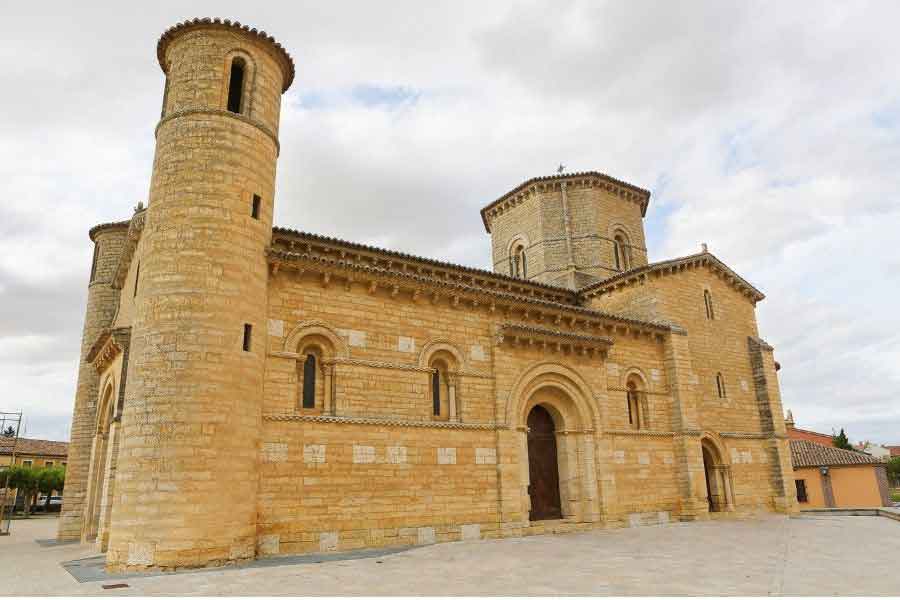
This Romanesque church in the tiny town of Frómista is one of those quiet gems that make you fall in love with slow travel. Built in the 11th century, Iglesia de San Martín has clean lines, rounded arches, and twin towers that rise perfectly above the flat Castilian plains.
It’s small and simple, but the detail in the stone carvings is gorgeous. If you’re walking the Camino de Santiago, this is a calm and spiritual stop compared to the buzz of larger towns.
There’s a small fee to enter, but it’s worth it for the peaceful interior. The town itself is sleepy, but nearby Villalcázar de Sirga has some great local food options if you’re cycling or driving.
48. Torre del Oro
- 🗺️ Location: Seville
- 🏛️ Type: Moorish Tower / Naval History
- 👣 Best for: Riverside explorers, history fans
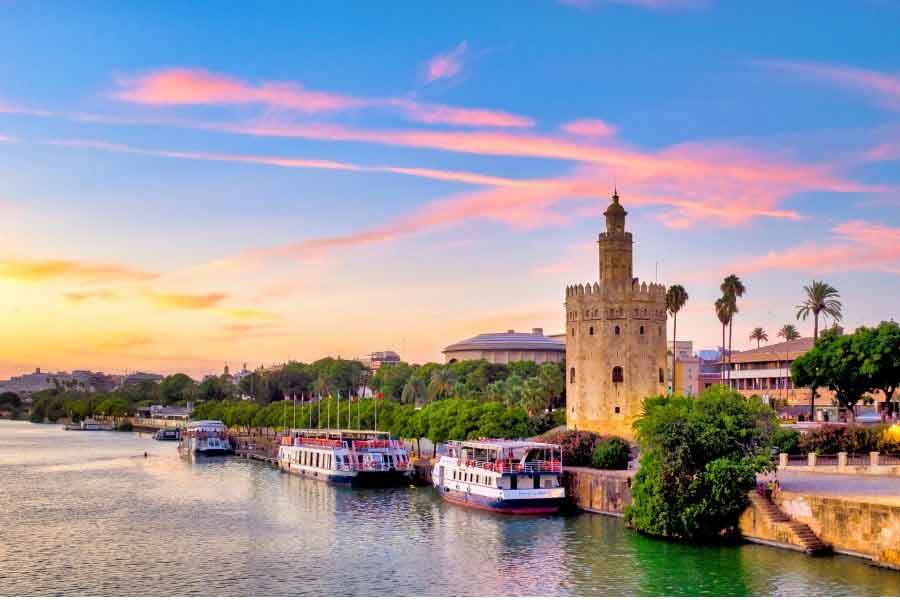
Right on the banks of the Guadalquivir River, the Torre del Oro is one of Seville’s most recognisable landmarks.
It was built by the Moors in the 13th century as part of the city’s defences. Its name (“Tower of Gold”) comes from the way its stone used to shine in the sunlight, especially during Golden Hour.
It’s not a huge tower, but it packs in a lot of history. Inside, there’s a small naval museum, and you can climb to the top for some decent views of the river and the Triana neighbourhood.
It’s free to enter, although they do ask for a donation of a few Euros.
49. Castillo de Santa Bárbara
- 🗺️ Location: Alicante
- 🏛️ Type: Castle / Panoramic Views
- 👣 Best for: Castle lovers, sunset chasers
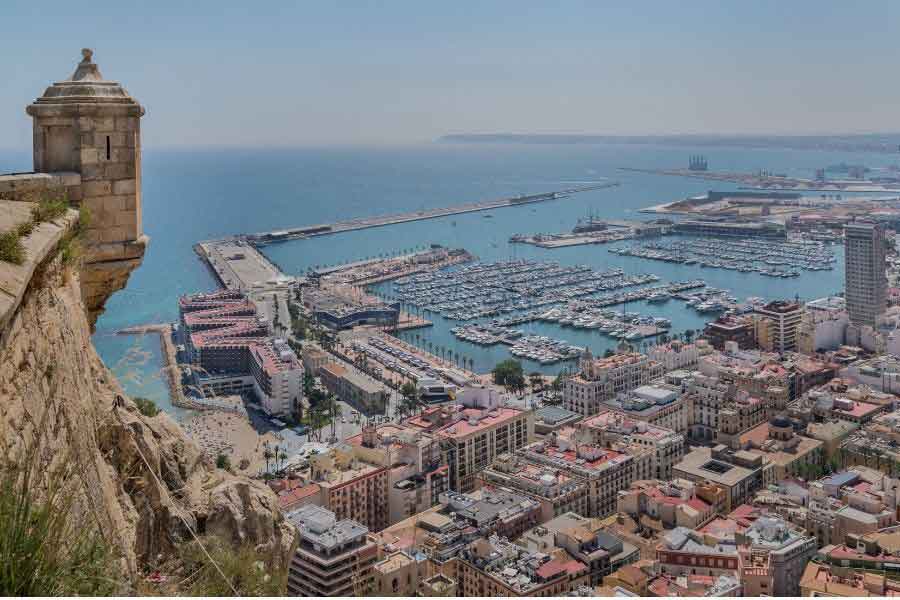
Towering above Alicante on Mount Benacantil, Castillo de Santa Bárbara is one of Spain’s most dramatically located castles. The views from the top are incredible and stretch over the city rooftops, marina, and the Mediterranean.
It’s a steep climb up (you can also take the lift), but totally worth the effort. If you want the lazy option, then take the lift up and then walk down to enjoy all the terraces at your own pace.
Parts of the castle date back to the 9th century, and you can still explore old watchtowers, dungeons, and battlements. There are often pop-up exhibitions or markets too, depending on the season.
Bring water and a hat. It gets hot in summer, and shade is minimal.
50. El Capricho de Gaudí
- 🗺️ Location: Comillas
- 🏛️ Type: Modernist Building / Gaudí Design
- 👣 Best for: Gaudí fans, off-the-path explorers
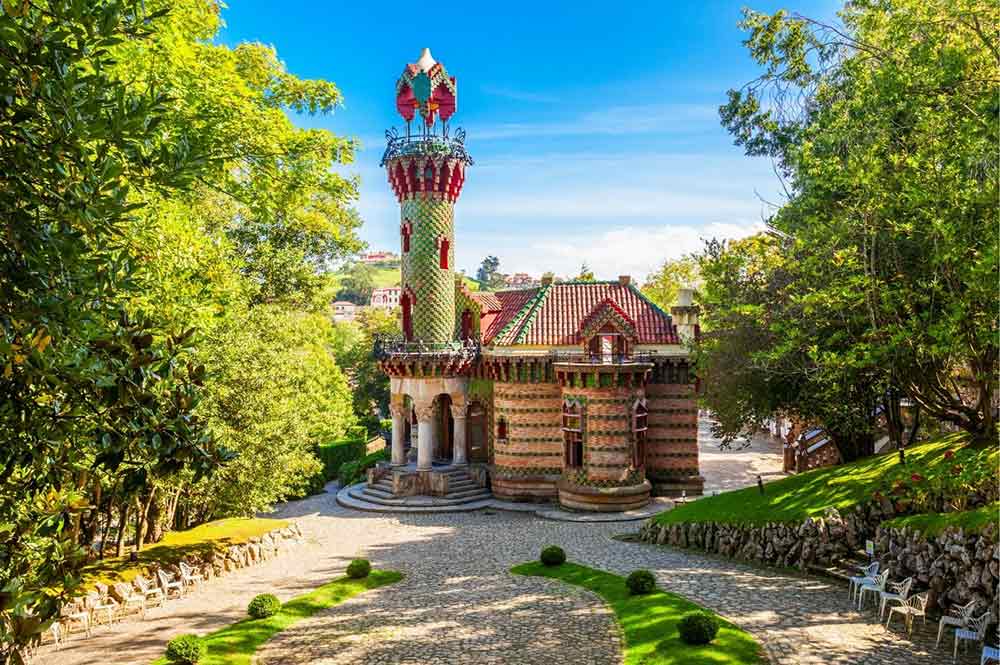
Tucked away in the small Cantabrian town of Comillas, El Capricho is one of Antoni Gaudí’s early works, packed with his signature creativity.
It was built between 1883 and 1885. The house was commissioned by a musician, so you can see nods to this throughout the design. Keep your eyes peeled for details like the wrought-iron music motifs.
Unlike his more famous buildings in Barcelona, this one feels intimate and personal, surrounded by gardens and coastal air. It’s a must for anyone wanting to see Gaudí’s genius outside Catalonia.
How Many of These Iconic Spanish Landmarks Have You Ticked Off?
Whether you’re drawn to ancient Roman ruins, dramatic castles, or mind-blowing architecture by Gaudí, Spain is packed with places that leave a lasting impression. This list barely scratches the surface of the many incredible landmarks found throughout Spain—especially if you love slower travel and hidden gems.
If this post has sparked some ideas for your next adventure, don’t stop here!
👉 Explore more of Spain with my regional guides and itineraries.
Have a question? then don’t forget to join our free Facebook Group and ask the community.
Want to discover more about Spain? then check out these other great articles to find out more.
General Spain Travel
- Ultimate 10 Days In Spain Itinerary
- 2 Week Spain and Portugal Itinerary
- How Many Days Should I Spend in Spain and Portugal?
- 50+ Best Experiences for Your Spanish Bucket List
- 38 Most Famous Landmarks in Spain
- Can You See Morocco From Spain?
Andalucia and South Spain
- Southern Spain Itinerary: Best 7 Days in Andalucia
- Local’s Guide To Seville in 3 Days
- 35+ Top Things To Do In Seville
- 23 Best Day Trips From Seville, Spain
- How to Do A Seville to Cordoba Day Trip
- Where Is the Nearest Beach to Seville?
- How To Spend One Day in Granada
- Best 2 Days in Granada Itinerary
- The Best Cordoba in One Day Itinerary
- 5 Places for the Best Glamping in Spain’s Southern Coast
Barcelona
- 32 Best Things to Do in Barcelona, Spain
- Barcelona 5 Day Itinerary for First-Time Visitors
- Should You Visit Barcelona or Lisbon?
- Montserrat Day Tour With Tapas and Wine From Barcelona
Madrid And Surrounding Area
- Is Madrid Worth Visiting?
- 28 Best Things to Do in Madrid, Spain
- Best Madrid 2 Day Itinerary By A Local!
- 30 Things to Do In Winter in Madrid
- Madrid vs Lisbon Comparison Guide
- How to Visit Segovia From Madrid in a Day
- A Day Trip to Toledo from Madrid
Basque Country and North Spain
- An Epic 5 Days Road Trip in Aragón Itinerary
- 15 Best Things to Do in Aragon, Spain
- Is Zaragoza Worth Visiting? Everything You Need To Know
- The Best Things to See in Zaragoza, Spain
- Is San Sebastian Worth Visiting? The Pros and Cons
- San Sebastian Food Tour Review With Devour Tours
- Is Bilbao Worth Visiting? 12 Reasons To Visit Bilbao