
Best Roman Ruins in Spain: 13 Ancient Sites Worth Exploring
Spain’s packed with ancient history. But if you’re specifically searching for Roman ruins in Spain, the kind with amphitheatres, mosaics, old roads, and the occasional forgotten villa, this is the guide for you.
The Roman Empire in Spain left its mark from coast to countryside. With everything from scattered fragments to entire cities still standing, narrowing down where to go can be overwhelming. I’ve gathered the best Roman ruins in one place, so you can plan confidently and skip the guesswork.
I’ve spent years slow-travelling through Spain (and beyond), and I’m always on the lookout for ancient sites. I’ve seen the big-ticket spots like Italica near Seville, but I’ve also ended up in tiny towns where the Roman ruins barely get a plaque.
I’ve included more than just the usual sights. This guide mixes well-known spots with lesser-known ruins that deserve a detour, along with practical tips to help you actually visit them. There’s also a map to make route planning even easier.
Meet Me In Departures contains affiliate links and is a member of the Amazon Services LLC Associates Program. If you make a purchase using one of these links, we may receive compensation at no extra cost to you. See our Disclosure Policy for more information.
Map of Roman Ruins in Spain
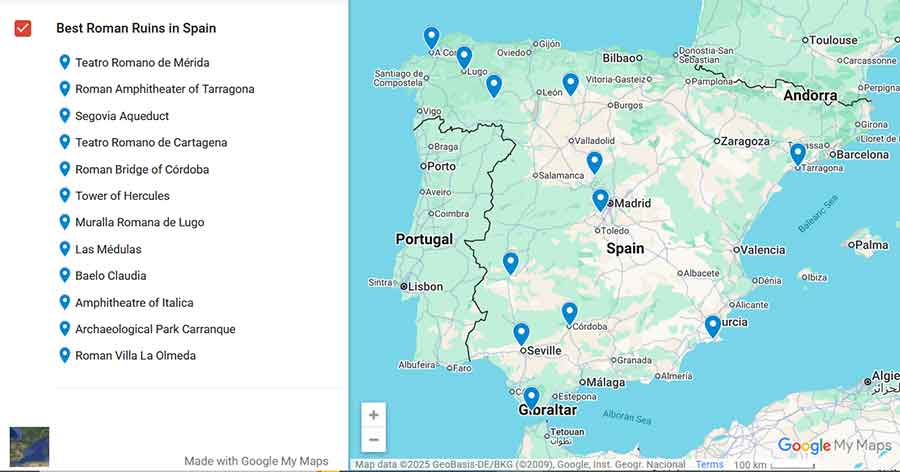
To help you plan your trip around Spain more easily, I’ve created a custom Google Map with all 15 Roman ruins pinned.
You can zoom in by region or filter by type, whether you’re hunting down amphitheatres, ancient roads, or tucked-away villas.
This is especially handy if you’re road-tripping or trying to group sites together by area.
👉 Click here to open the interactive map
1. Augusta Emerita, Mérida
Useful Info
Ruin Site Highlights
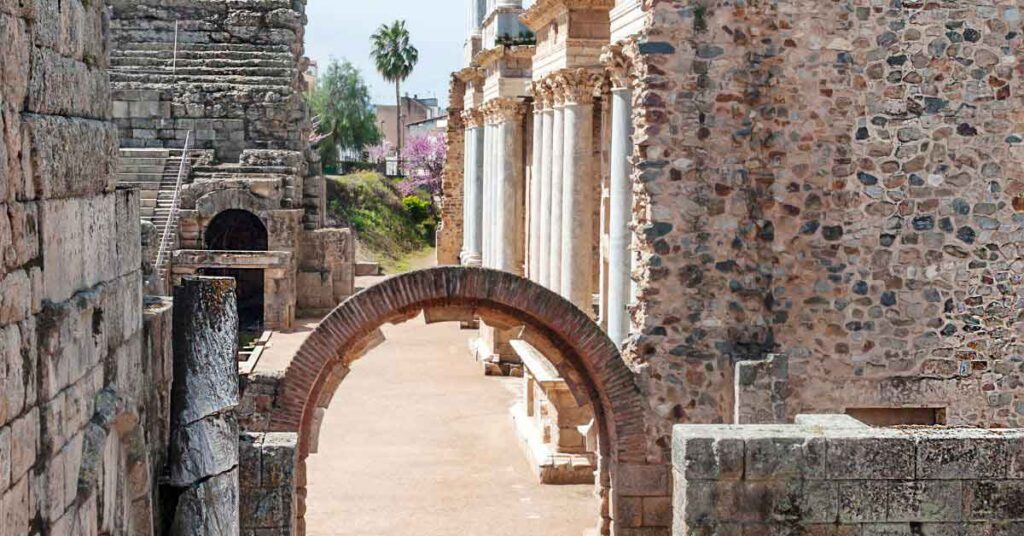
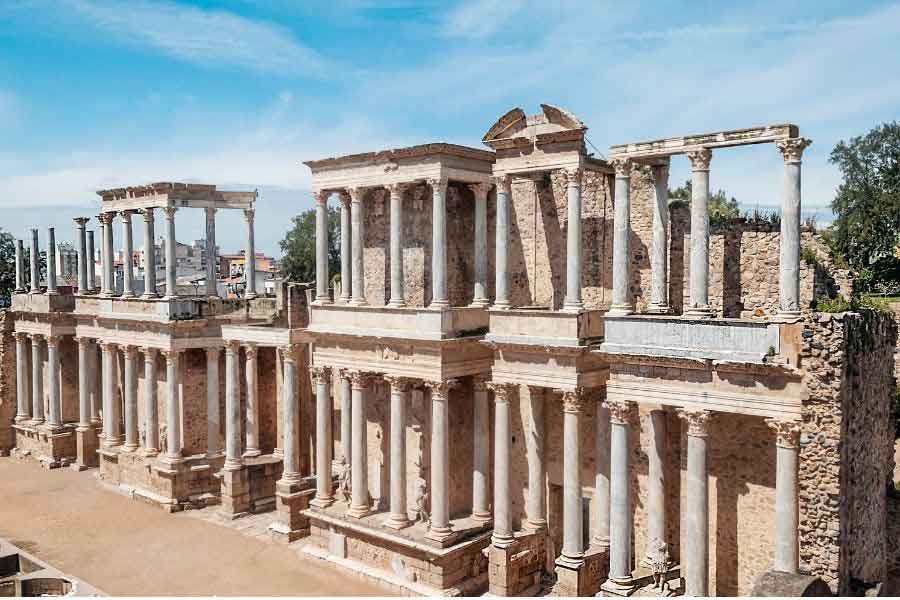
As the ancient capital of Roman Lusitania, Augusta Emerita (modern-day Mérida) is the ultimate Roman site in Spain. The scale of this UNESCO Heritage site is staggering.
You can explore a full gladiator amphitheatre, wander the beautifully preserved theatre (still used for performances), and see an intact temple framed by the modern city.
The museum across from the theatre holds intricate Roman remains, including mosaics, sculptures, and architectural fragments that bring the ancient world to life. The city also has lesser-known gems like the Roman circus and the Alcazaba, with layers of Moorish and Roman history.
You’ll want at least one full day here, ideally two if you’re a proper ruins geek.
For a unique view, walk to the bridge over the Guadiana River for a wide-angle photo of the Roman bridge and Alcazaba. A lot of people miss this spot; I only found it accidentally while I was on the hunt for ice cream!

Mérida Roman Theatre E-ticket with Audio Tour
Skip-the-line entry, with English audio-guide
2. Tarraco, Tarragona
Useful Info
Ruin Site Highlights
Tarragona, once known as Tarraco, was the first Roman settlement on the Iberian Peninsula and remains one of the most important.
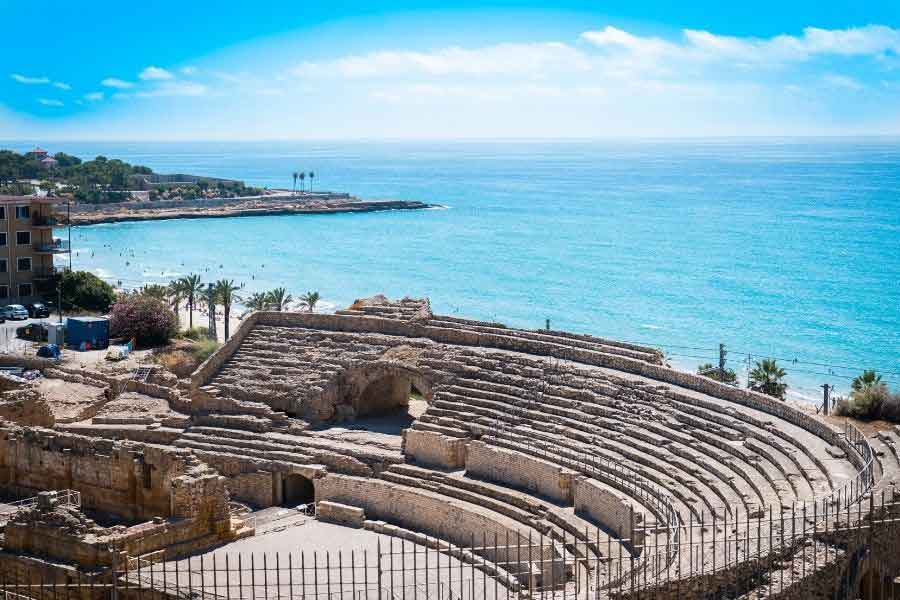
The amphitheatre, dramatically set against the Mediterranean, is the city’s showstopper, but don’t miss the Roman circus nearby. Here, you can walk through the preserved underground vaults where charioteers once prepared for races.
There are bits of the original city wall still standing, and if you venture slightly out of town, the Pont del Diable aqueduct is a stunning example of Roman engineering.
Tarragona’s layout makes it easy to explore everything on foot, and its status as a UNESCO World Heritage Site is well-earned. It’s compact but dense with history.
For a unique and quiet photo spot, climb to the top of the Pretori Tower for a panoramic view of the amphitheatre, sea, and surrounding ruins. It’s often skipped by day-trippers.
3. Aqueduct, Segovia
Useful Info
Ruin Site Highlights
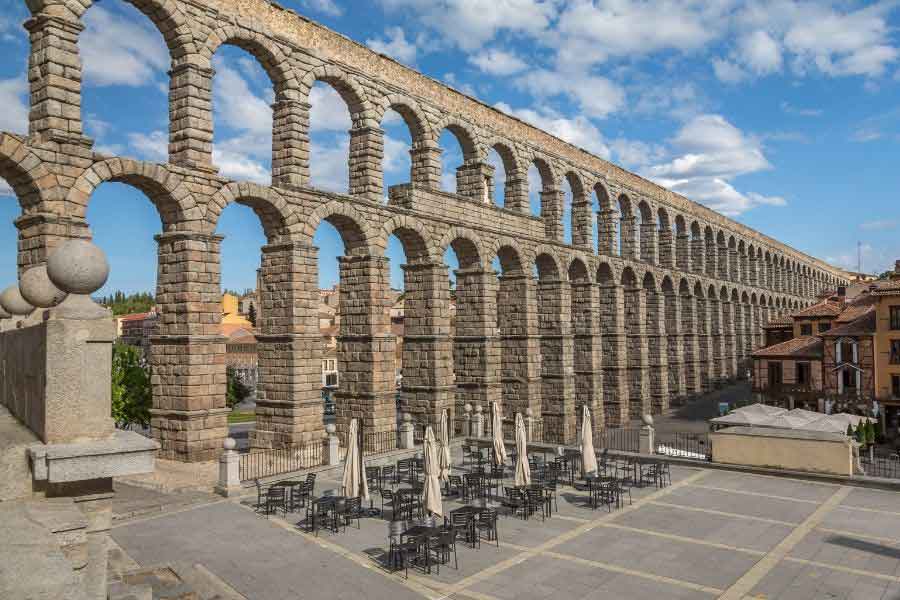
Segovia’s aqueduct is one of the best-preserved examples of Roman engineering anywhere in the world, and it’s still standing without a single drop of mortar.
It was built in the 1st century AD and once carried water from the nearby mountains over 17 km into the city.
The iconic double-tiered arches dominate the city centre, and you can climb the stairs for a side-angle view or take the lesser-known walking route along the top outskirts.
It’s completely free to visit and makes for a spectacular backdrop, especially at sunrise or under the floodlights at night. Other worthwhile things to see in Segovia include the Alcázar and the cathedral for a full day of contrasting architecture.
Head up to the Mirador del Postigo at sunset. It’s one of the best places to capture the whole length of the aqueduct.
4. Roman Theatre and Forum, Cartagena
Useful Info
Ruin Site Highlights
Cartagena is one of the most accessible and well-curated Roman experiences in Spain.
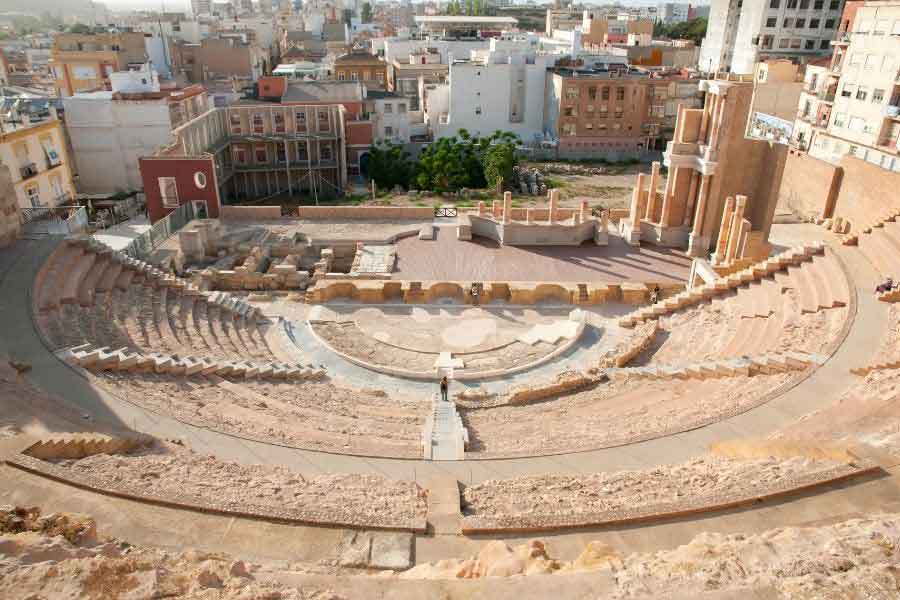
The Roman Theatre, uncovered beneath the city centre, is impressively preserved and comes with a multi-level museum that guides you through history before you emerge into the theatre itself. It’s a great way to understand the layout before seeing it in person.
Nearby, the Roman Forum District includes the Curia, a temple, and thermal baths, all in situ with walkways above the ruins.
There’s also a Roman road buried beneath a hotel, and yes, you can walk through it!
There is also plenty of signage and interactive displays, so you don’t have to join a tour to understand what’s what.
While you’re in the city, don’t skip the Casa de la Fortuna. This lesser-known Roman villa is just around the corner with original frescoes and personal artefacts.
Ancient Roman Walking Tour of Cartagena with Entry Tickets
English-speaking tour guide with skip-the-line entry.
5. Roman Bridge and Temple, Córdoba
Useful Info
Ruin Site Highlights
Córdoba’s Roman influence isn’t as overwhelming as in other cities, but it does have two particularly striking remnants: the Roman Bridge and the Temple of Claudio Marcelo.
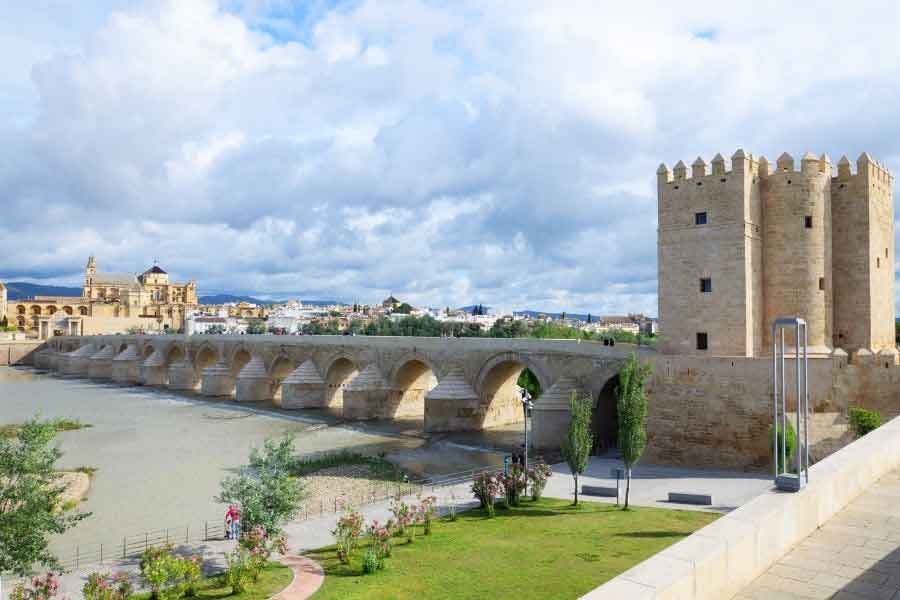
The bridge, with its 16 restored arches, still spans the Guadalquivir and has been used continuously for nearly 2,000 years. If you have a full day in Cordoba, then walk across at golden hour for panoramic views of the Mezquita-Catedral.
The Roman temple, tucked between modern buildings, gives you a sense of how large the ancient city must have been. Though only the columns remain, it’s well-lit at night and worth a quick stop.
For the best view, visit the Calahorra Tower at the far end of the Roman Bridge. It’s a lesser-visited museum with rooftop views looking back across to the old city and the Roman bridge.
6. Tower of Hercules, A Coruña
Useful Info
Ruin Site Highlights
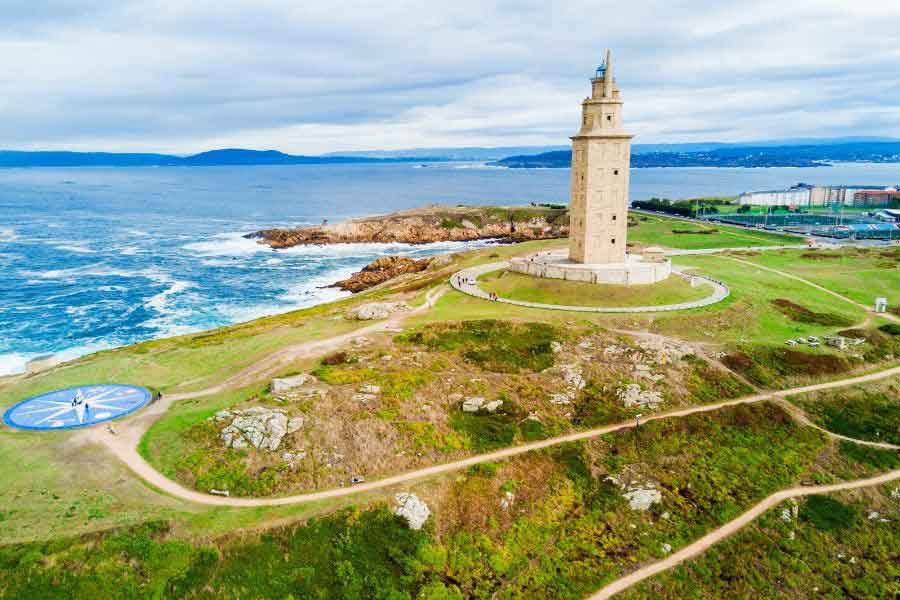
The Tower of Hercules is a true outlier among Roman ruins in Spain. It’s not a temple or theatre, but a lighthouse that’s still in use nearly 2,000 years after it was built.
The world’s oldest working lighthouse is located on a windswept peninsula just outside A Coruña. The tower was originally constructed by the Romans in the 1st century AD and later restored in the 18th century.
Inside, a spiral staircase leads you past ancient Roman stonework and up to the viewing platform. Look for the ancient Olea tree-shaped Roman inscription at the base; it often gets overlooked by people rushing up the stairs.
The coastal path and sculpture park surrounding the tower make it a great half-day excursion. It’s also a UNESCO World Heritage Site and a rare example of Roman maritime infrastructure.
7. Roman Wall, Lugo
Useful Info
Ruin Site Highlights
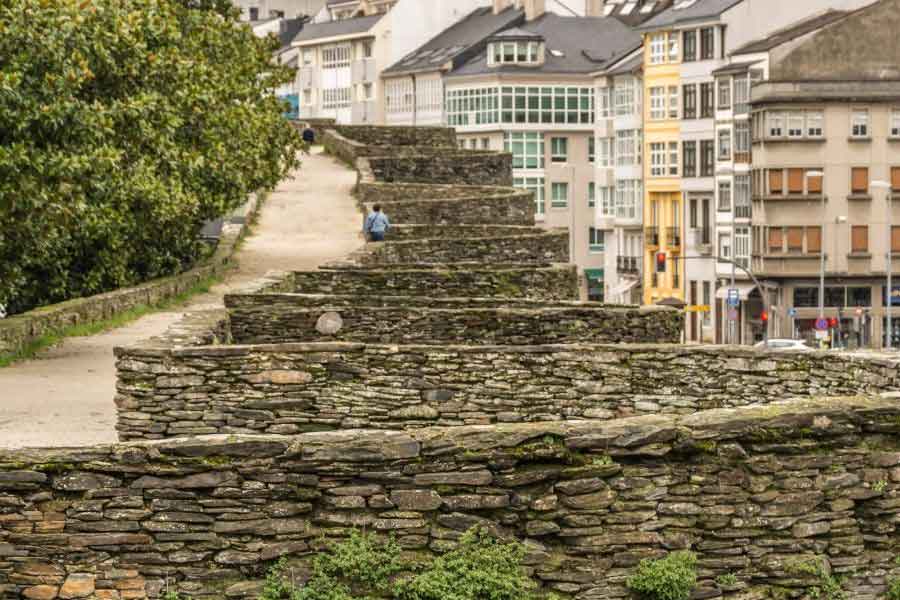
One of the world’s most iconic ruins, Lugo’s Roman wall is the only complete Roman wall in the world that you can still walk in a full circle; all 2 km of it.
The wall was built in the 3rd century AD to defend the Roman town of Lucus Augusti and is now a UNESCO World Heritage Site.
The walls stand up to 10 metres high and are dotted with towers and gates. A walk along the top gives you views over the old town rooftops and green spaces beyond. There are ramps and stairs for access at multiple points, and it’s totally free to visit.
Inside the walls, you’ll find remnants of a Roman domus beneath the cathedral and scattered archaeological remains.
8. Las Médulas Gold Mine, Castile and León
Useful Info
Ruin Site Highlights
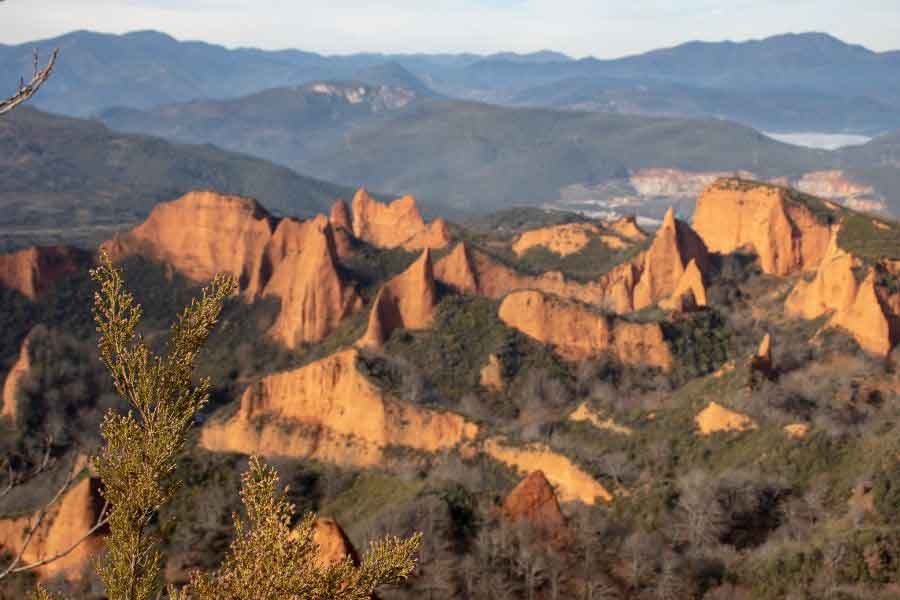
Las Médulas is one of the most visually striking Roman sites in Spain, not for a building, but for what the Romans left behind in the landscape.
This was the empire’s largest open-pit gold mine, where they used a method called ruina montium to collapse entire hillsides using water pressure. What remains today is a surreal red and orange mountain range carved by hydraulic mining.
It’s now a UNESCO World Heritage Site and perfect if you want to enjoy ruins blended with natural scenery.
You can explore hiking trails through the formations, duck into tunnels, and learn about Roman mining techniques at the visitor centre. For one of the best photos of the red cliffs, go at sunset and take the trail to the Mirador de Orellán. It’s a short walk from the car park and gives you a full sweeping view of the landscape
9. Baelo Claudia, Cádiz
Useful Info
Ruin Site Highlights
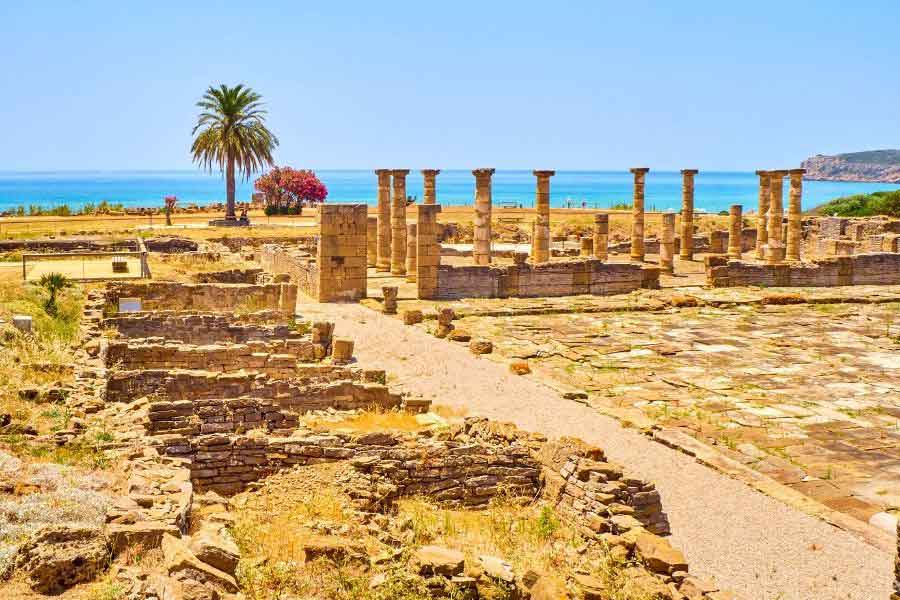
Baelo Claudia is one of the most complete Roman towns in Spain, and its setting is absolutely stunning.
Located right on the shores of Bolonia Beach near Tarifa, this coastal city thrived on the export of garum (fermented fish sauce).
The theatre is remarkably preserved, and the remains of the salting factory, baths, forum, and basilica give a great sense of how the town functioned.
The surrounding dunes and the sea breeze make this a peaceful visit, especially in the off-season.
The on-site museum is modern and helpful, with models, artefacts, and signage in English and Spanish.
10. Itálica, Santiponce
Useful Info
Ruin Site Highlights
Just 15 minutes drive from Seville, and skipped by most visitors, Itálica is one of the most important Roman sites in Spain. It’s also surprisingly quiet considering its size.
The city was founded in 206 BC Itálica was the birthplace of emperors Trajan and Hadrian.
Its amphitheatre is one of the largest in the Roman world, and once held 25,000 spectators. It was even used as a filming location for Game of Thrones.
The surrounding ruins include wide Roman roads, house foundations, and vivid mosaics that are still in their original settings. Neptune, birds, and the planetarium are my favourite ones
It’s easy to walk around, and it feels much more open and atmospheric than some other sites. Also, don’t miss the nearby monastery, although it’s not Roman, it’s a stunning site and nearly always gets overlooked.
Italica Roman City & Medieval Monastery Tour
English-speaking, small group tour, with the option to book hotel pick-up.

11. Segóbriga & Carranque, Castile-La Mancha
Useful Info
Ruin Site Highlights
These two archaeological parks are quieter and less touristy compared to other Roman Spain sites. Perfect if you’re craving atmosphere without crowds.
Segóbriga, near Saelices, is the larger of the two, with a partially restored amphitheatre and theatre, plus baths and the layout of an entire Roman city. It’s surrounded by countryside, which makes it feel tranquil.
Walk up to the small hill overlooking the theatre for a panoramic view of the entire site. It’s not marked, but it’s the best place to take it all in.
Carranque, closer to Toledo, centres on a luxurious Roman villa with intricate mosaics and a paleochristian basilica. Both have good interpretation centres and are excellent stops if you’re road-tripping around inland Spain.

Samuel Lopez Iglesias, CC BY-SA 4.0, via Wikimedia Commons
12. Villas La Tejada and La Olmeda, Palencia
Useful Info
Ruin Site Highlights
These two Roman villas are hidden gems in northern Spain, and give a fascinating glimpse into elite Roman domestic life.
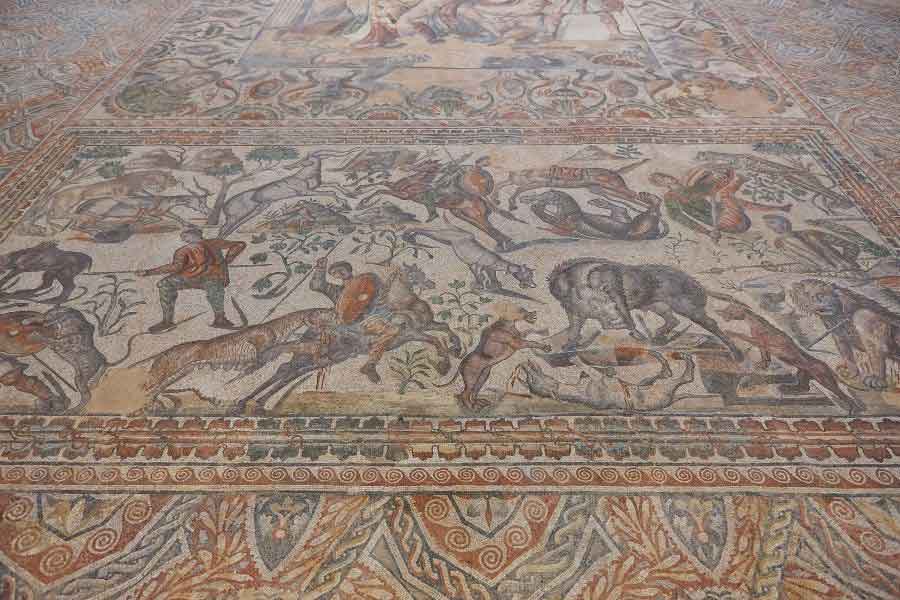
La Olmeda, near Pedrosa de la Vega, is the more famous of the two. Its giant mosaic hall, depicting a dramatic hunting scene, is one of the best preserved in Europe. The site is beautifully presented with raised walkways that allow you to view the layout without damaging the remains.
La Tejada, closer to Quintanilla de la Cueza, is smaller but is home to several fine mosaics and good interpretive signage.
Both are great if you want to visit a historical site without the crowds and work well as a paired visit on a rural road trip. If you’re short on time, prioritise La Olmeda’s main villa hall and go when the sun is starting to set. The light through the structure’s wooden dome makes the colours in the mosaics pop.
13. Roman Theatre, Málaga
Useful Info
Ruin Site Highlights
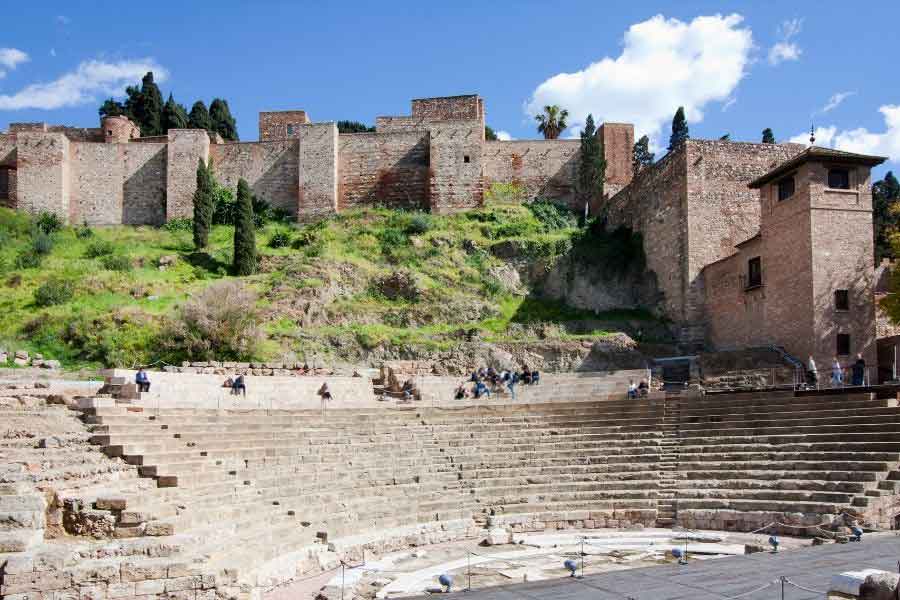
Tucked at the foot of the Alcazaba fortress, Málaga’s Roman theatre is a compact but striking site right in the heart of the city. It dates back to the 1st century BC and was rediscovered in the 1950s after being buried for centuries.
While it’s smaller than those in Mérida or Cartagena, the contrast between the Roman and the Islamic Alcazaba architecture rising directly behind the ruins makes for an impressive photo of the two civilisations.
Glass walkways let you view the pit and backstage areas from above, and the onsite modern interpretation centre has exhibits, models, and a short film to help bring it all to life.
If you visit this site during the daytime, don’t forget to come back in the evening when the theatre and Alcazaba walls are floodlit.
Practical Tips for Visiting Roman Ruins in Spain
Whether you’re visiting a city amphitheatre or heading off to rural villas, a bit of prep can make your ruin-hopping smoother, cheaper, and a lot more enjoyable.
Best Time to Visit
Spring (April–June) and autumn (late September–early November) are ideal for exploring ruins. You’ll avoid the summer heat, and there’ll be fewer crowds blocking your photo ops.
Many of the sites, especially those in small towns, close during the midday siesta (usually 2 pm–5 pm), so plan your visits around those hours.
Early mornings or late afternoons are best for soft light and quieter paths.
What to Bring
- Wear solid, grippy footwear as many sites have uneven terrain, loose stones, or old Roman paving.
- Bring a refillable water bottle, sunscreen, and a hat. Some sites (like Las Médulas or Baelo Claudia) have next to no shade.
- A small travel umbrella is great for either sun or surprise rain in spring/autumn.
Audio Guides & Apps
Some of the best sites, like Mérida, Tarragona, and Cartagena, have excellent official audio guides or free apps. Look at the site’s official website or check the entrance booths.
Don’t forget to bring your headphones or earbuds to get the most out of these.
For lesser-known spots, use Google Lens to translate info panels on the go.

Money Saving Tip
Some of the cities that have multiple ruins (like Mérida or Cartagena) have combination tickets that cover 3–5 attractions. Ask at the ticket office if you’re planning to visit several things in the same city.
Accessibility & Terrain
Not all Roman ruins are created equal when it comes to accessibility, but many are making efforts.
- Best for mobility-friendly visits: Cartagena (theatre + museum), Lugo (wall walk), Baelo Claudia (paved walkways), and Itálica (ramped paths).
- Expect cobbles, gradients, and uneven ground at places like Segóbriga, Las Médulas, and Tarraco’s circus vaults.
- Some villas, like La Olmeda, have raised wooden walkways for easier viewing.
FAQs About Roman Ruins in Spain
How Many Roman Ruins Are in Spain?
Spain has over 1,000 documented Roman archaeological sites, ranging from major amphitheatres and aqueducts to roads, villas, and mosaics. While not all are open to the public, dozens of well-preserved sites are easily accessible across the country, particularly in regions like Andalusia, Extremadura, and Catalonia.
What City in Spain Has the Most Roman Ruins?
Mérida has the highest concentration of major Roman ruins in Spain. Once the capital of Roman Lusitania, it features a theatre, amphitheatre, temple, circus, baths, bridges, and a world-class museum, earning it UNESCO World Heritage status and the nickname “Mini Rome of Spain.”
What Is the Oldest Roman City in Spain?
Itálica, near Seville, is considered the oldest Roman city in Spain, founded in 206 BC by Scipio Africanus. It was also the birthplace of emperors Trajan and Hadrian. You can explore its vast amphitheatre, Roman roads, and beautifully preserved mosaics.
What’s the Most Famous Roman Ruin in Spain?
The Aqueduct of Segovia is arguably the most famous Roman ruin in Spain. Built in the 1st century AD, it spans the city centre with 167 granite arches and has become a national symbol of Roman engineering. It’s free to visit and beautifully lit at night.
What Is the Mini Rome in Spain?
Mérida is often called the “Mini Rome of Spain” due to its incredible range of Roman monuments. From a colossal theatre and amphitheatre to temples, roads, and a Roman art museum, Mérida has one of the most complete ancient city experiences outside of Italy.
Ready to Discover More Roman Ruins in Spain?
Exploring Roman ruins in Spain is just the start of what you can experience here. From road trips through ancient cities to hidden villas tucked away in quiet countryside, there’s always more history waiting around the corner.
If you’re planning your trip, here’s where to go next:
- Check out my done-for-you Spain itineraries
- Discover the best ancient ruins around the world and expand your bucket list beyond Spain
- Read these trip planning tips to start building your own itinerary
Have a question? then don’t forget to join our free Facebook Group and ask the community.
Want to discover more about Spain? then check out these other great articles to find out more.
General Spain Travel
- Ultimate 10 Days In Spain Itinerary
- 2 Week Spain and Portugal Itinerary
- How Many Days Should I Spend in Spain and Portugal?
- 50+ Best Experiences for Your Spanish Bucket List
- 38 Most Famous Landmarks in Spain
- Can You See Morocco From Spain?
Andalucia and South Spain
- Southern Spain Itinerary: Best 7 Days in Andalucia
- Local’s Guide To Seville in 3 Days
- 35+ Top Things To Do In Seville
- 23 Best Day Trips From Seville, Spain
- How to Do A Seville to Cordoba Day Trip
- Where Is the Nearest Beach to Seville?
- How To Spend One Day in Granada
- Best 2 Days in Granada Itinerary
- The Best Cordoba in One Day Itinerary
- 5 Places for the Best Glamping in Spain’s Southern Coast
Barcelona
- 32 Best Things to Do in Barcelona, Spain
- Barcelona 5 Day Itinerary for First-Time Visitors
- Should You Visit Barcelona or Lisbon?
- Montserrat Day Tour With Tapas and Wine From Barcelona
Madrid And Surrounding Area
- Is Madrid Worth Visiting?
- 28 Best Things to Do in Madrid, Spain
- Best Madrid 2 Day Itinerary By A Local!
- 30 Things to Do In Winter in Madrid
- Madrid vs Lisbon Comparison Guide
- How to Visit Segovia From Madrid in a Day
- A Day Trip to Toledo from Madrid
Basque Country and North Spain
- An Epic 5 Days Road Trip in Aragón Itinerary
- 15 Best Things to Do in Aragon, Spain
- Is Zaragoza Worth Visiting? Everything You Need To Know
- The Best Things to See in Zaragoza, Spain
- Is San Sebastian Worth Visiting? The Pros and Cons
- San Sebastian Food Tour Review With Devour Tours
- Is Bilbao Worth Visiting? 12 Reasons To Visit Bilbao