
Inside the Real Alcázar of Seville: Tips From a Local
Nearly 5 million people step inside the Real Alcázar of Seville every year — and for good reason. It’s the oldest royal palace in Europe still in use, and a patchwork of Islamic, Gothic, and Renaissance design you won’t find anywhere else. If you’re wondering whether it’s worth visiting, the short answer is yes.
As someone who lives in Seville and visits often — in every season, on tours and solo — I still find something new each time. But for first-timers, it’s easy to feel overwhelmed. What’s worth seeing? When should you go? Is it really as stunning as it looks?
In this guide to visiting the Real Alcázar of Seville, I’ll walk you through the must-see spots, how to skip the crowds, which tickets are actually worth it, and even how to spot the Game of Thrones filming locations. It’s everything I’ve learned from exploring this palace dozens of times — designed to help you enjoy it on your own terms, and travel ethically while you do.
Meet Me In Departures contains affiliate links and is a member of the Amazon Services LLC Associates Program. If you make a purchase using one of these links, we may receive compensation at no extra cost to you. See our Disclosure Policy for more information.
Is the Real Alcázar of Seville Worth Visiting?
If you’re wondering whether the Real Alcázar of Seville is worth your time — absolutely.
The Real Alcázar is one of Spain’s most iconic landmarks, and it’s more than just a palace. Think of it as a layered patchwork of Islamic, Christian, and Gothic design that has been evolving for over a thousand years. The history of the Alcázar of Seville stretches back to its Moorish origins, and in 1987 it was recognised with UNESCO World Heritage status.
It’s also the oldest royal palace in Europe still in use. The Spanish royal family still stays here when they’re in Seville — which says a lot. You’ll be walking through public halls while royalty sleeps upstairs.
I’ve been here more times than I can count. Living in Seville makes it easy to drop in — and I still find new details every visit. It’s not a one-and-done kind of place. There’s always a hidden carving or overlooked corner that catches your eye.
Whether you’re into Moorish design, Game of Thrones scenes, or just want to see something jaw-dropping — this is the site to prioritise. And with the right timing (I’ll tell you when), you can explore it in relative peace.
Handy Info for Visiting the Royal Alcázar
Short on time? Here’s what to know before visiting the Real Alcázar of Seville:
- Top priority in Seville. The Royal Alcázar is one of Spain’s most impressive historic sites — don’t skip it.
- How long to visit the Royal Alcazar? Give yourself 2–3 hours. Longer if you want to enjoy the gardens properly.
- Book early to skip the lines. Especially in spring and autumn — Alcázar tickets often sell out. The VIP pre-entry is the best way to enjoy it; however, there are only 25 slots a day for this. Alternatively, opt for the earliest tickets possible.
- The gardens are just as good as the palace. Quiet, shady, and full of surprises.
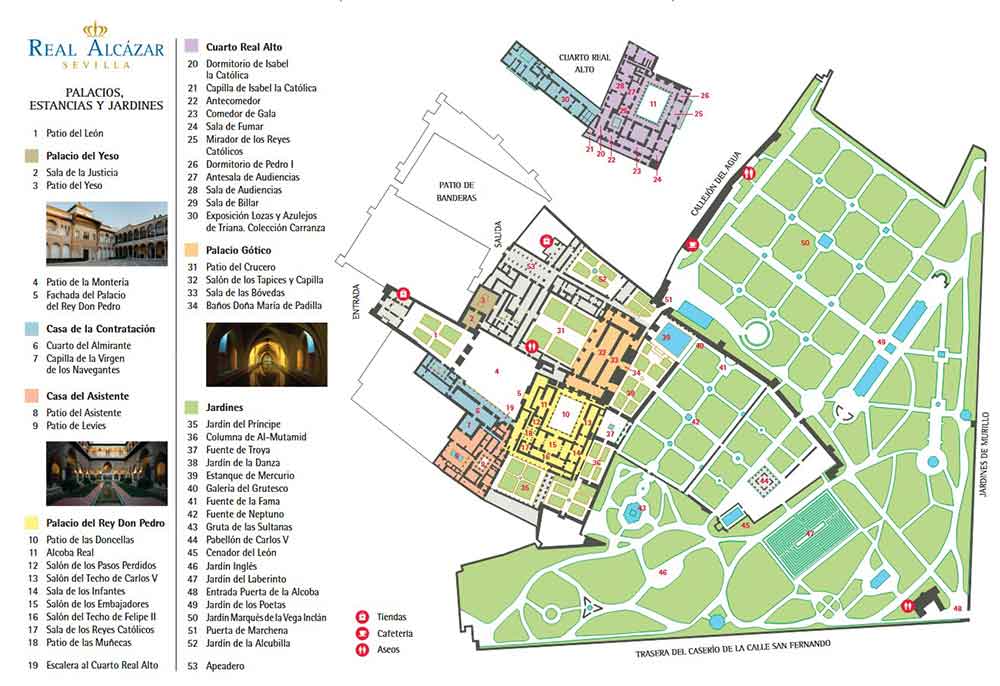
- Bring a map. It’s easy to get lost — this place is a maze (scroll down, and you’ll find it along with the link to the official download).
- Best photo spots? The Patio de las Doncellas, the ceiling in the Salón de los Embajadores, and the Baños de Doña María de Padilla.
- Cuarto Real Alto access? You’ll need a separate ticket — and they go quickly.
👉 Insider tip: Scams are rife — even a basic Google search for “Royal Alcázar official tickets” brings up loads of sponsored links from third-party sites pretending to be official. Some of them charge double or tack on hidden fees. Always double-check the URL and book through the official site.
Tips for Visiting the Real Alcázar of Seville
The Alcázar is stunning — but it’s also one of the most popular things to see in Seville. If you turn up at the wrong time or don’t know how the entry system works, it can feel a bit chaotic.
After visiting more times than I can count, I’ve figured out what works and what doesn’t. This section covers the practical stuff — when to go, how to get in without queuing for ages, and a few things that’ll make your visit a lot smoother.
Best Time to Visit the Real Alcázar
Your experience depends massively on when you go. In high season (spring and autumn), the palace fills up fast. Even with timed entry, it can feel crammed by mid-morning. If you can, get one of the first slots of the day — it’s quieter, cooler, and easier to explore at your own pace.
Summer’s hot — brutally hot. But it’s also quieter because fewer people can hack 40°C heat. On the other hand, winter in Seville – outside of the holiday season – is mild and calm, with fewer queues and softer light for photos.
👉 Time-saving tip: If you really hate crowds, or want the chance to take photos without anyone else in them, then opt for one of the Alcazar pre-entry tickets – but be quick, there are only 25 of these exclusive tickets available per day.
⭐️⭐️⭐️⭐️⭐️
Alone in the Alcazar with Walks Tours
✅ Limited to 25 guests
✅ English speaking guide
✅ Exclusive early access
Getting Tickets to the Seville Alcázar
Booking in advance is essential.
Tickets regularly sell out — especially on weekends or in spring. You can’t just show up and hope for the best, especially in peak season. As soon as you’ve planned your trip to Spain and locked in your dates, I suggest booking tickets for the Alcazar straight away.
Ticket types from the official website:
- General admission: Gives you access to the main palace and gardens with a free audio guide on your phone.
- Cuarto Real Alto: Entry for the Royal Bedrooms. Must be booked separately, limited spaces, guided tour only.
- Free hours: Available on Mondays — but you’ll need to book ahead even for that
👉 Good to Know: During low season, you might find a handful of tickets available on the day — but I wouldn’t count on it. You’d need to queue up ridiculously early (some people line up from 7:30 am) at the office in Patio de Banderas, which opens at 9 am, hoping to snag a last-minute ticket that’s been released by tour operators. Even then, you won’t get to choose your time slot — you’ll be stuck with whatever’s left. Personally, I wouldn’t chance it.
Things to Take to the Alcázar
- Comfy shoes – The floors are stone, the gardens have gravel, and you’ll be walking a lot. Leave the flimsy sandals at home.
- Water only – Food and snacks aren’t allowed inside the palace itself. There’s a small café outside in the gardens if you need a break, but no food or drink spots once you’re inside the main complex.
- A small day bag – Backpacks are scanned before entry, and while day bags are fine, large rucksacks aren’t allowed. There’s no cloakroom, so pack light.
- Your ticket (digital or printed) – There’s no re-entry, so once you leave the complex, you can’t come back in. Make sure you’ve seen everything before heading out.
- Extra patience if using a wheelchair or pushchair – While the Alcázar is listed as accessible and there are ramps in many areas, some parts (especially older stairways and uneven floors) are difficult to navigate.
- Headphones – you’ll need these if you’re opting for the audio guide on your phone with the general entry ticket.
What’s Inside the Real Alcázar of Seville?
Once inside, don’t expect a linear layout.
The Alcázar is a maze of patios, palaces, and gardens that you’ll loop through in no particular order.
This walkthrough follows the natural flow most people take, starting from the entrance at Puerta del León and winding through the palace rooms before spilling into the gardens.
I’ve added my own recommendations along the way — what to slow down for, what’s often missed, and where the best photo ops are.
Map of the Real Alcázar of Seville
Puerta del León & Patio del León
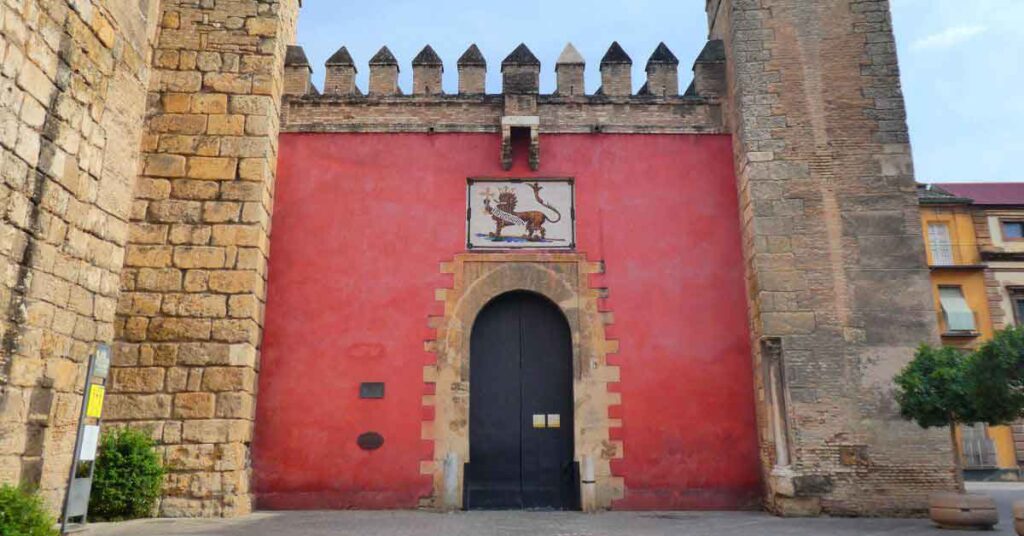
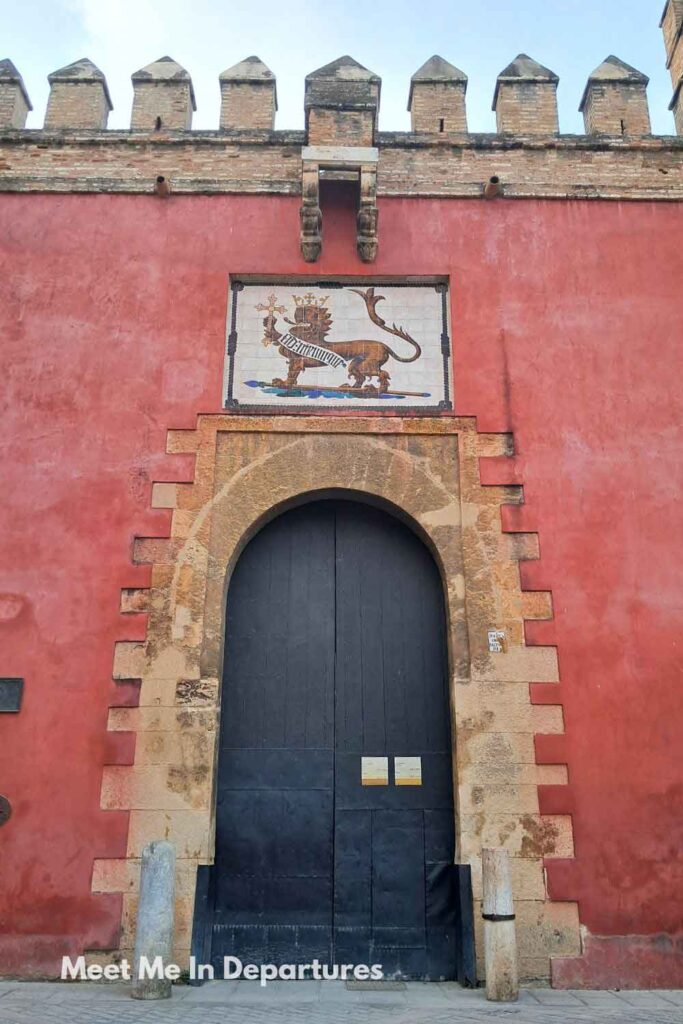
This is the main entrance – The Lion Gate – you’ll spot the bright red wall with the bold lion emblem above the archway.
Once inside, you’ll step into the Patio del León, which acts as the orientation point. Don’t forget to download the map to get your bearings.
This is also where the crowd either rushes forward… or pauses. I usually take a minute here to let the initial herd thin out.
👉 Insider tip: Don’t follow the crowd straight through — wait 2–3 minutes and you’ll avoid entering the palace in a pack.
Patio del Yeso
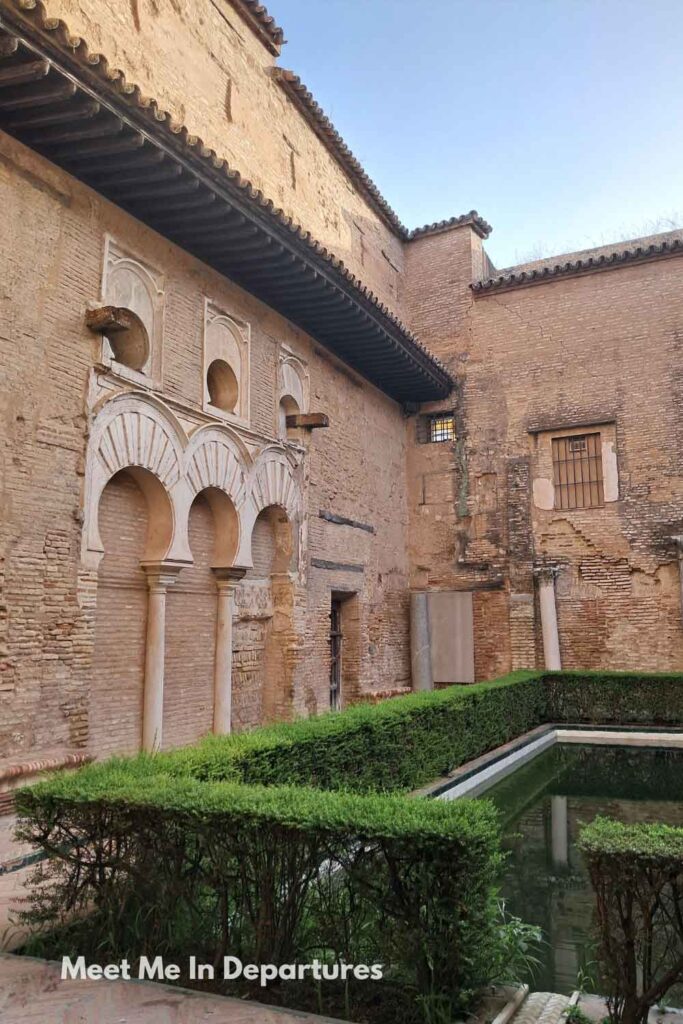
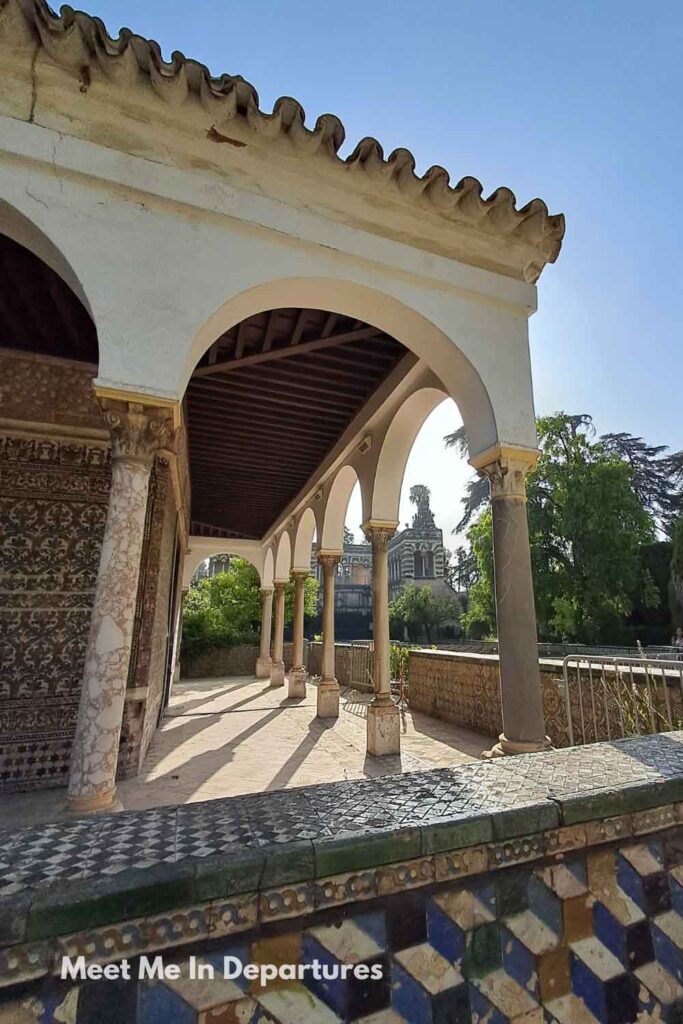
This quiet courtyard is one of the oldest parts of the Alcázar and a rare glimpse into its Almohad origins. Built in the 12th century, it’s a simple space with a long pool, pale horseshoe arches, and modest plasterwork made from gypsum — or yeso, which gives the patio its name.
It feels completely different from the ornate Mudéjar style in the main palace and offers a real sense of how the site has evolved over centuries.
👉 Insider tip: Even on the busiest days, this courtyard is usually empty. It’s one of the best spots to pause and take in the Alcázar’s earlier Islamic history.
Palacio del Rey Don Pedro
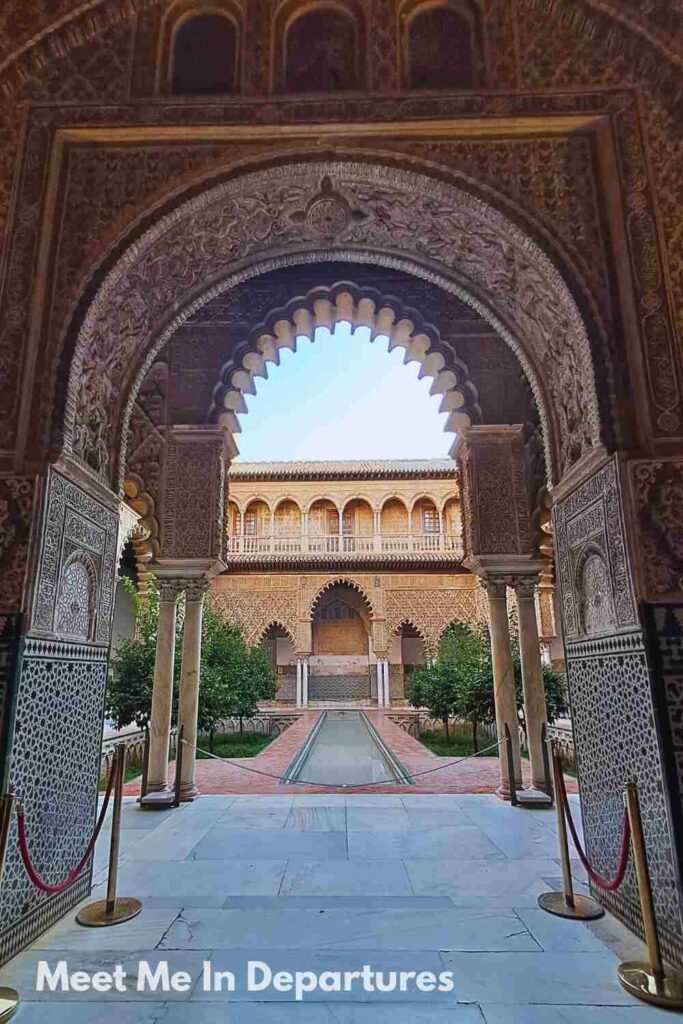
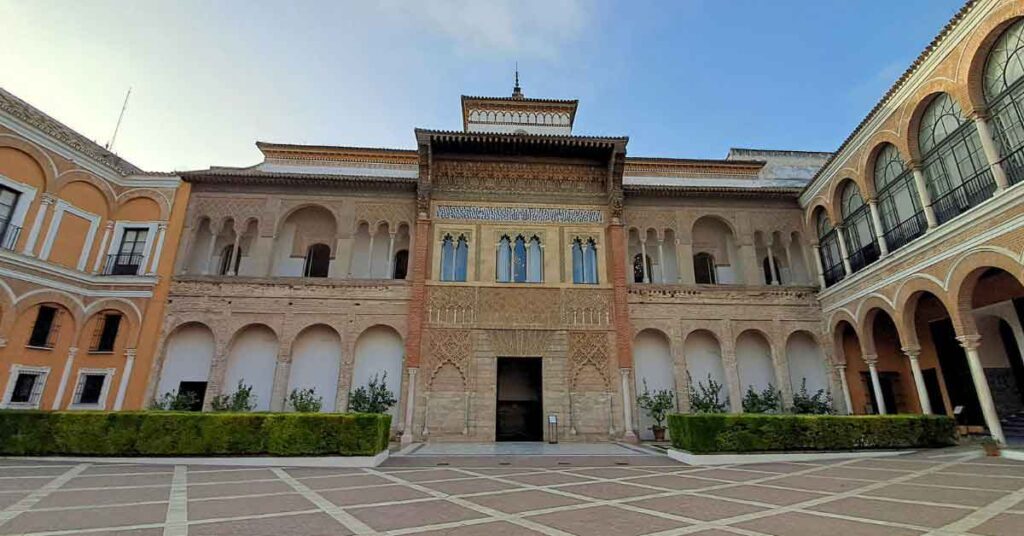
This is the main showpiece of the Alcázar — the palace that gives it most of its wow factor. Built in the 1360s for Pedro I of Castile (aka Pedro the Cruel, depending on who you ask), it’s a masterclass in Mudéjar architecture — a blend of Islamic and Christian design that was unique to this part of Spain.
Every surface is covered in detail: carved plaster, colourful tiles, Arabic inscriptions, and ornate wooden ceilings. You’ll want to look up, down, and all around — seriously, don’t rush through here. Some of the ceilings are so detailed you’ll miss them entirely if you’re staring at your phone.
This palace was built next to the older Islamic sections rather than replacing them, which is part of what makes the Alcázar feel like such a patchwork of styles.
👉 Insider tip: The Arabic inscriptions here aren’t just decoration — many are poems or praises to King Pedro himself. A good guide or audio tour can help decode them.
Patio de las Muñecas
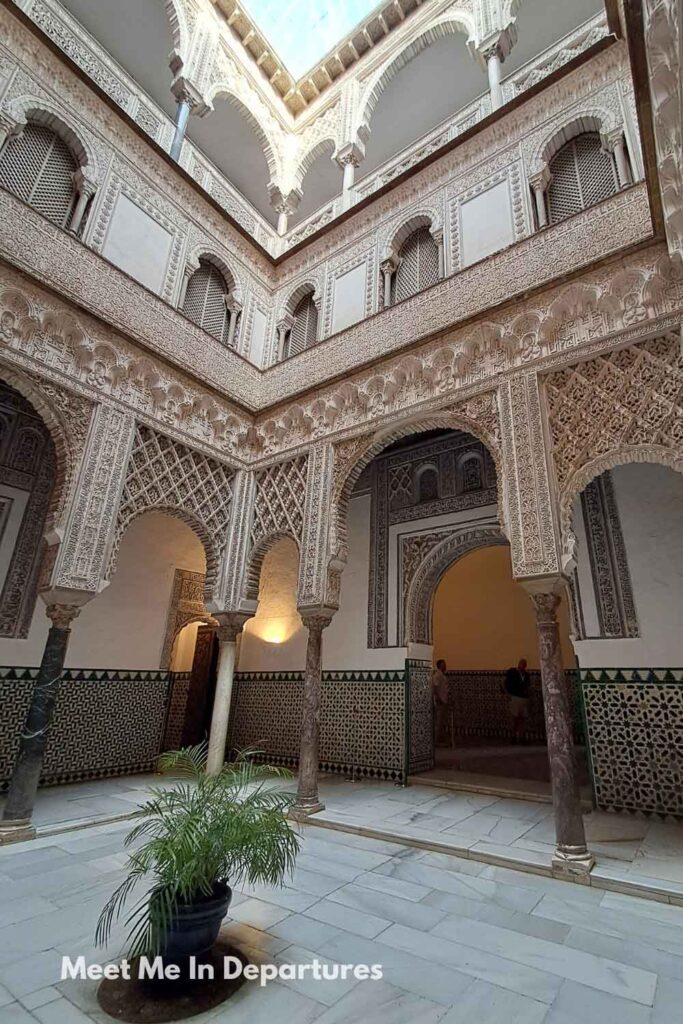
Tucked a little deeper inside the palace, the Patio de las Muñecas (Courtyard of the Dolls) is a smaller box-like room, full of hidden details. It’s named after the tiny carved faces — or “dolls” — that are hidden in the arches. Most visitors miss them entirely.
This patio marks the transition between public and private areas of the palace, which is why it feels more intimate than the grand Doncellas courtyard that you’ll see a little bit later.
The lower arches are beautifully decorated with intricate stucco, while the upper level has more Renaissance elements, showing how the palace evolved over time.
It’s easy to pass through quickly, but it’s worth slowing down here. Try to spot the tiny faces carved into the arch capitals — there are ten in total, although some signs still say nine.
👉 Insider tip: Use your phone’s zoom to find all ten dolls carved into the arches — some are tucked into corners and barely visible from ground level.
Cuarto del Príncipe
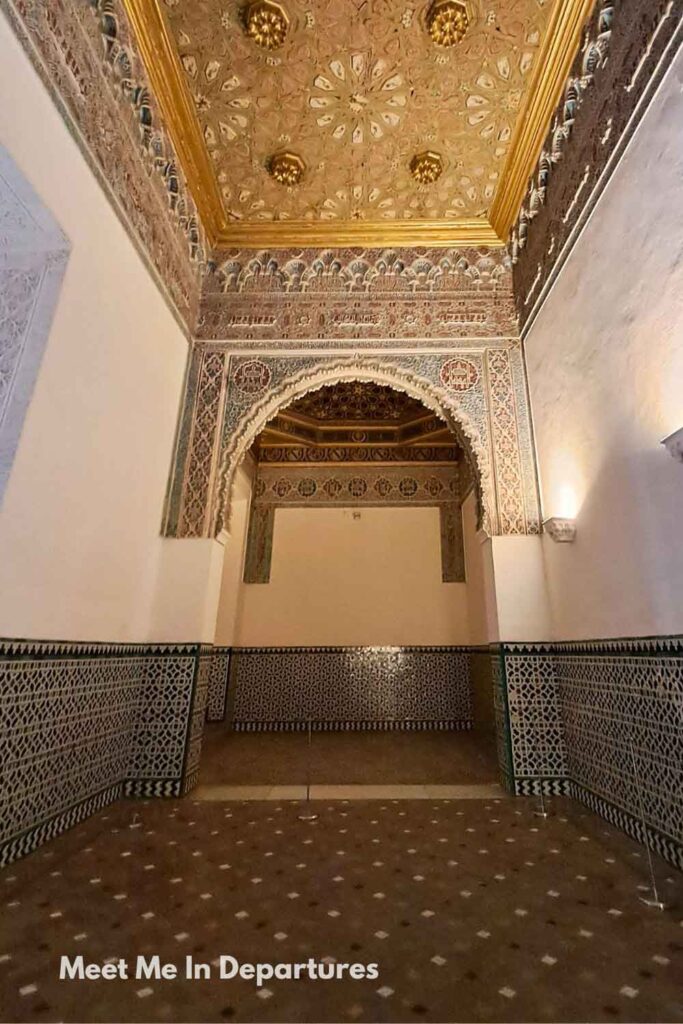
This quieter set of rooms gives you a glimpse into the more private side of palace life. The Cuarto del Príncipe (Prince’s Room) and adjacent royal chambers aren’t as visually dramatic as other spaces here, but they offer something different — a sense of intimacy.
The ceilings are lower, the decorations more restrained, and the layout starts to feel more like a lived-in space rather than a showpiece. You’ll notice a shift in the atmosphere — it’s quieter, softer, and easy to overlook if you’re rushing.
These rooms were once part of the royal family’s personal quarters and were updated over the centuries, so the styles here are more mixed — you’ll see Mudéjar motifs alongside later Renaissance touches.
👉 Insider tip: Most people breeze through this area, but the decorative ceilings and tiled doorframes here are some of the most unique in the palace — well worth a slow wander.
Salón de los Embajadores
This is the crown jewel of the palace interior — the Hall of Ambassadors, where official receptions and royal ceremonies took place. If there’s one room that stops everyone in their tracks, it’s this one.
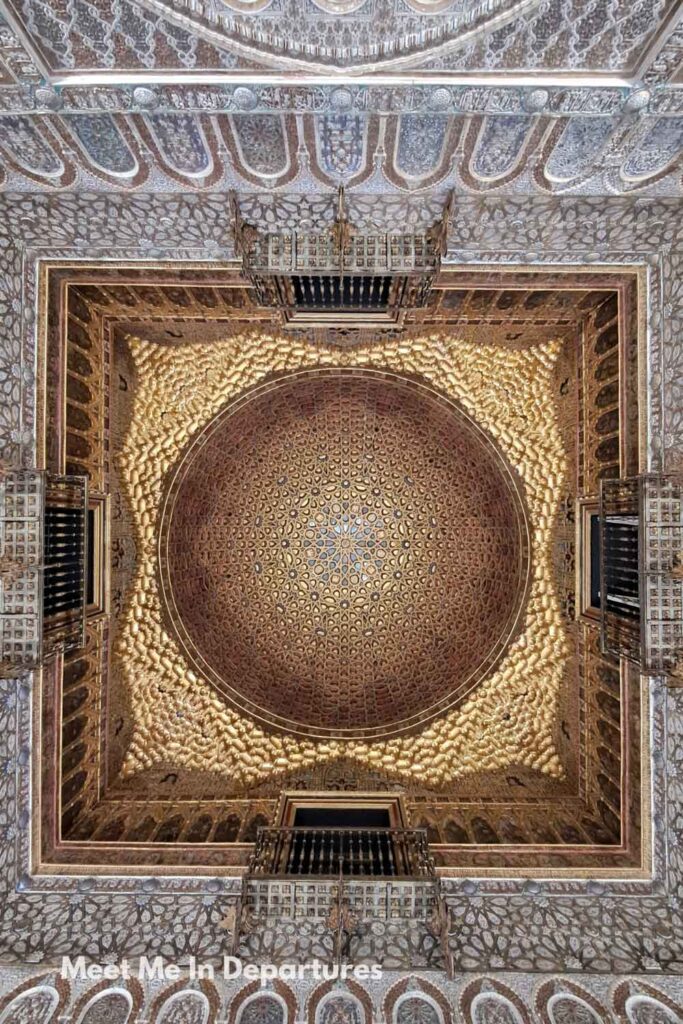
The first thing you’ll notice is the dome — a massive wooden ceiling carved in elaborate geometric patterns and gilded in gold. It was designed to symbolise the heavens and to leave visitors in awe, which it still does today. The light filtering in through the upper windows adds a dramatic glow that changes throughout the day.
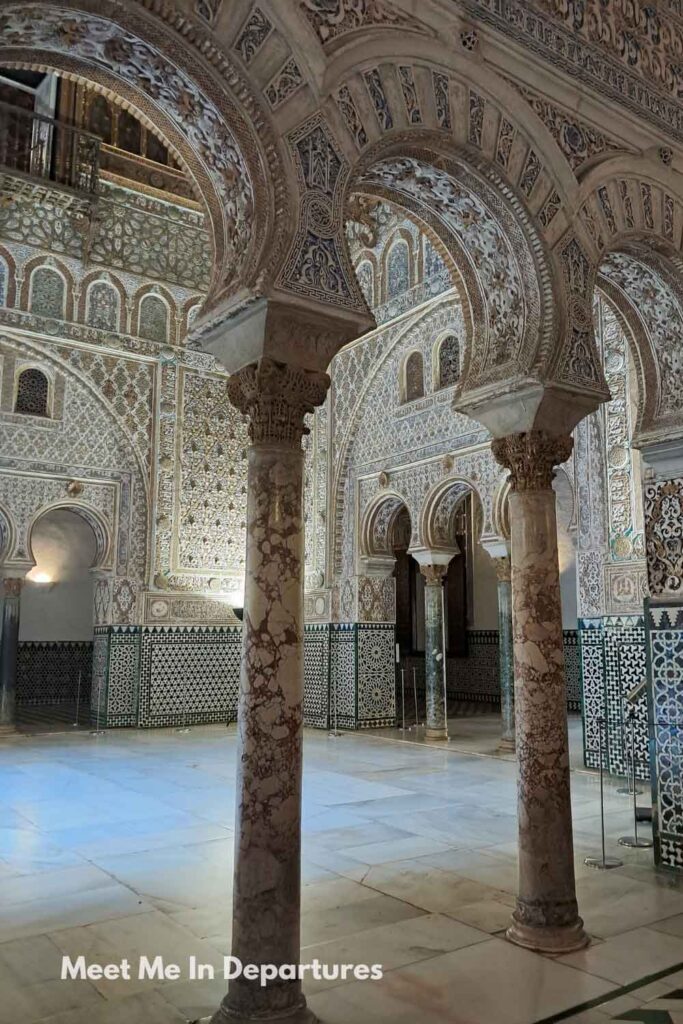
The walls are covered in vibrant azulejos (ceramic tiles), Arabic inscriptions, and intricate arches layered with plasterwork — a full-on sensory overload. This room is all about power and prestige, and it was meant to impress anyone who stood in front of the throne.
👉 Insider tip: Stand directly beneath the dome and look straight up — it’s perfectly symmetrical, and you’ll get some of your best vertical shots here.
Patio de las Doncellas
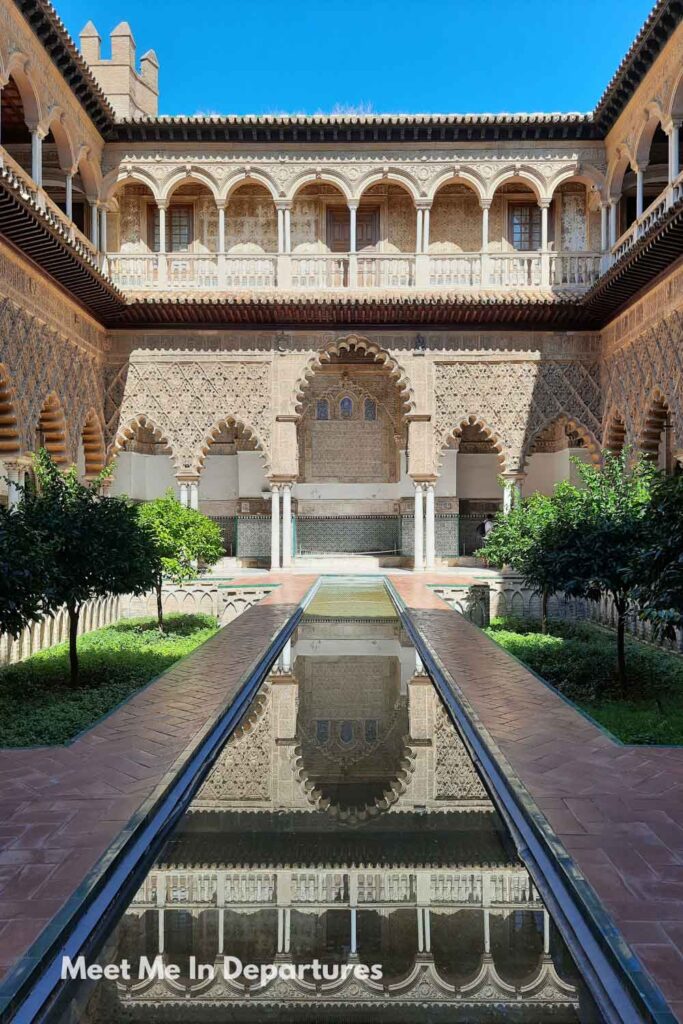
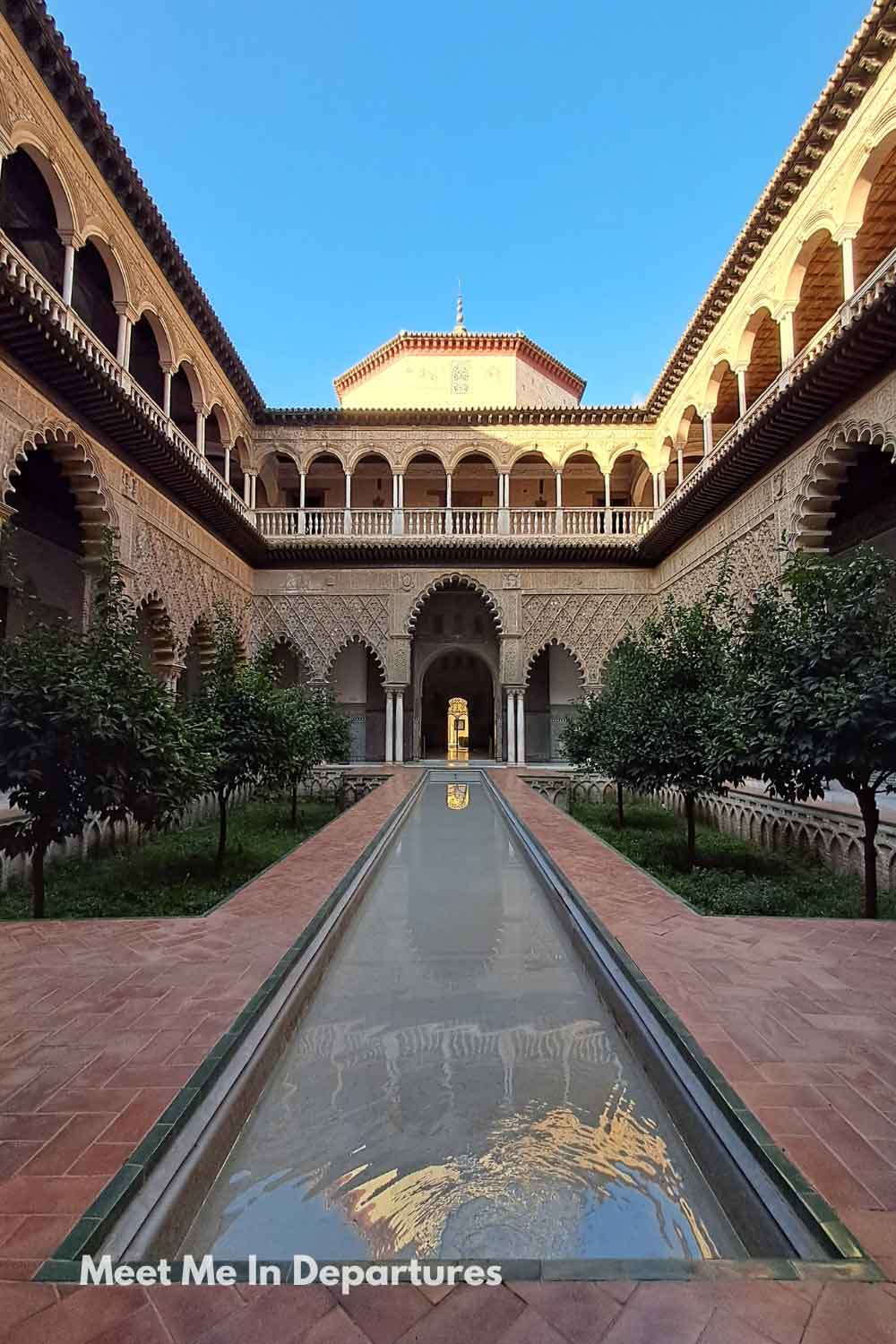
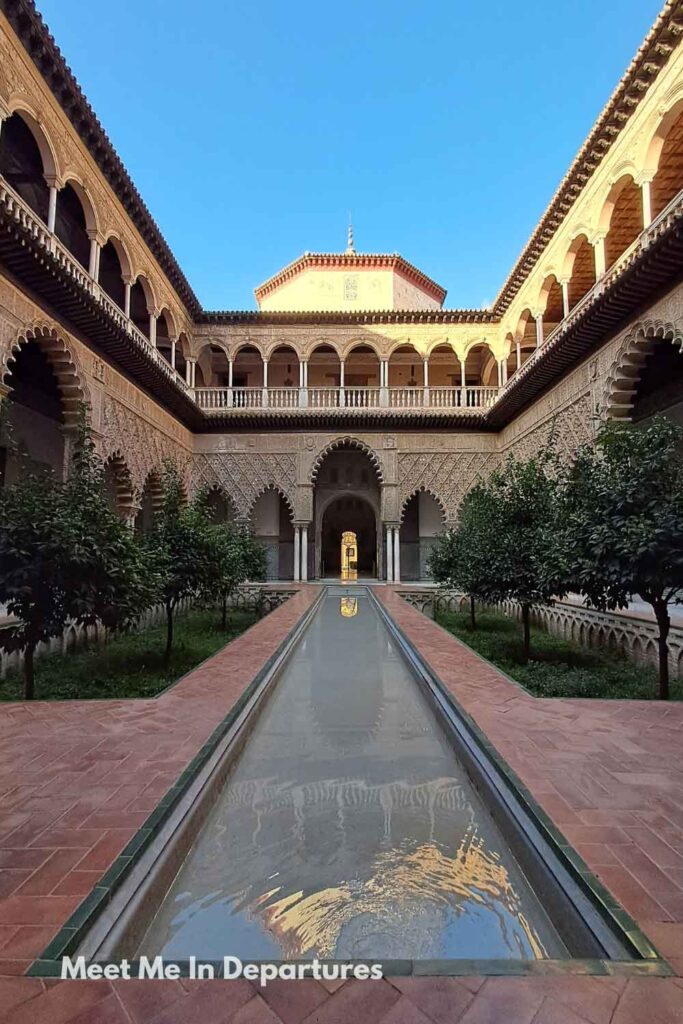
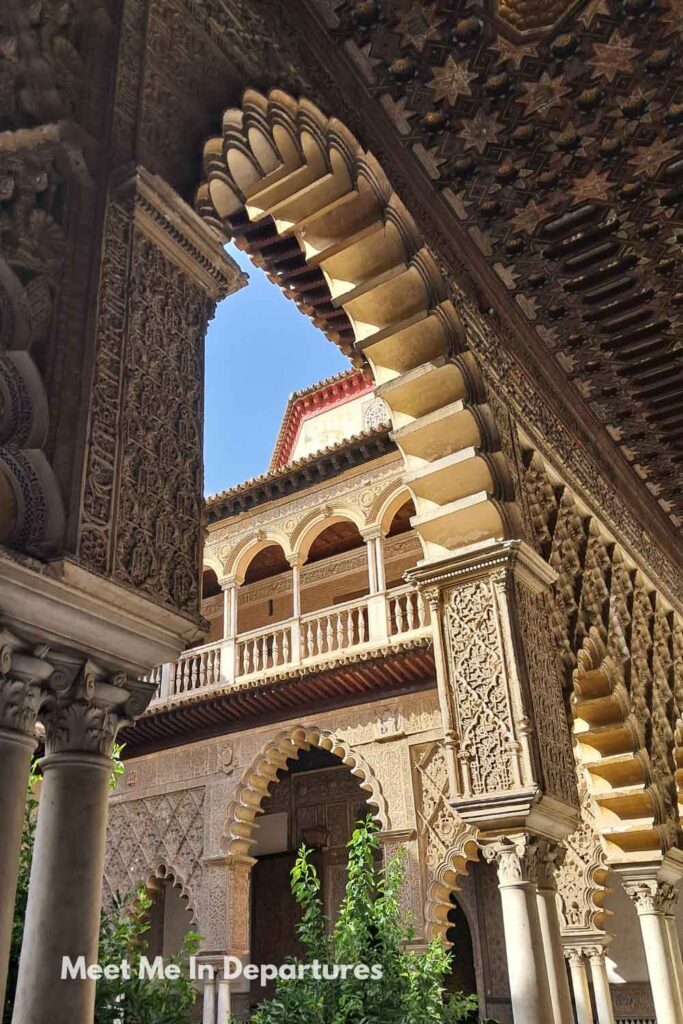
This courtyard is one of the most photographed places in Seville. No doubt you’ve seen on Instagram, in guidebooks, and on every postcard stand in Seville — and yes, it really is that impressive.
The Patio de las Doncellas (Courtyard of the Maidens) is the heart of Pedro’s palace, and it’s the best example of Mudéjar design in the entire complex. A long rectangular pool runs through the centre, surrounded by sunken gardens and framed by double-tiered arches carved in intricate detail. Everything here is designed to impress — and it still works, centuries later.
You’ll spot original 14th-century features mixed with 16th-century additions, like the upper gallery. This space was actually hidden under marble flooring for years until it was excavated in the early 2000s — what you’re seeing now is as close to the original as it gets.
📸 Photo tip: The best shots are from the far end of the courtyard, using the water for a full reflection. Try to double back later in your visit when the crowds thin out — early and late are your best bet.
Chapel of the Gothic Palace
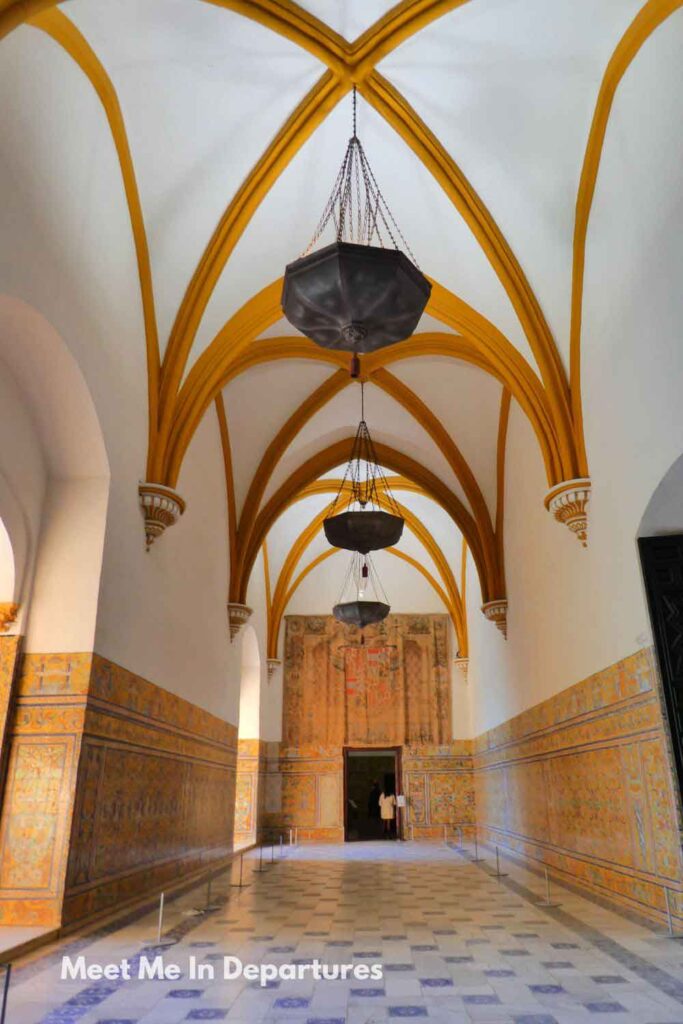
A total contrast from the Mudéjar masterpieces, this section of the Alcázar feels like a different building entirely — and that’s because it is. The Gothic Palace, including its chapel, was added in the 13th century by Alfonso X after the Christian reconquest and reflects a completely different architectural style.
The chapel itself is small but atmospheric, with pointed arches, stained-glass windows, and a darker, more solemn tone compared to the airy courtyards. It’s often overlooked, which makes it one of the quietest spots in the complex — ideal if you need a breather from the crowds and colour elsewhere.
If you’re into contrasts, this part of the Alcázar is fascinating. It shows how Christian rulers didn’t just replace Moorish structures — they layered their own styles over them, creating the architectural patchwork that makes the Alcázar so unique.
👉 Insider tip: The stained-glass here glows beautifully in the late afternoon — it’s one of the few places in the Alcázar where the lighting actually improves later in the day.
Baños de Doña María de Padilla
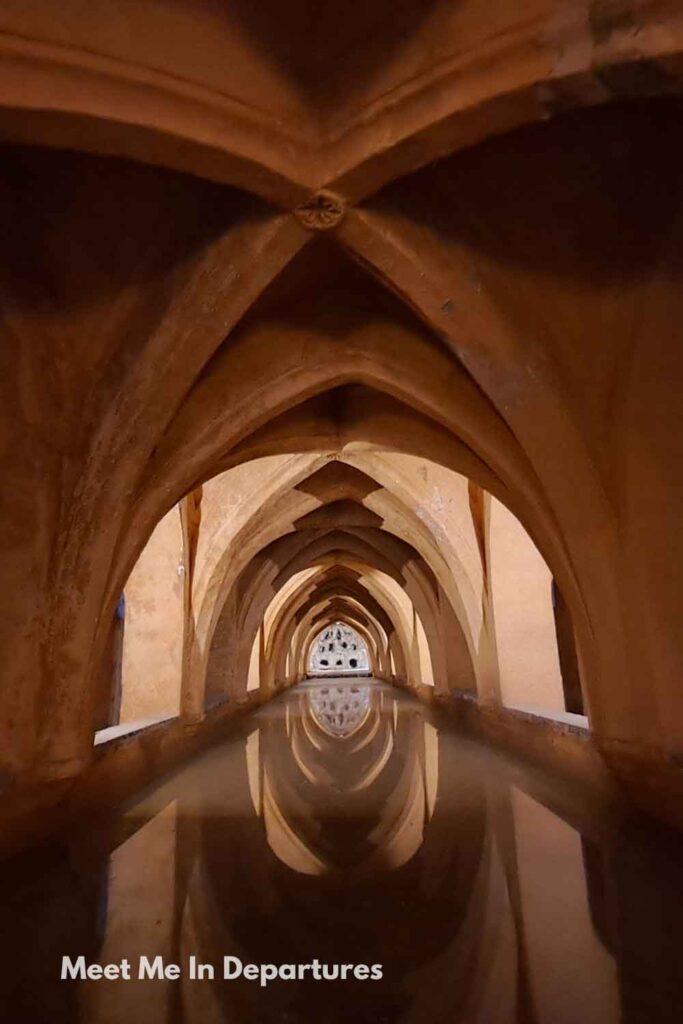
These underground vaults are one of the most atmospheric parts of the Alcázar — cool, quiet, and slightly mysterious. Technically, they’re rainwater cisterns, but one legend says they were once used as baths by Doña María de Padilla, the mistress (and later secret wife) of King Pedro I.
You’ll find them just beneath the Gothic Palace. The space is made up of long barrel vaults reflected perfectly in a shallow pool of water — it’s moody, photogenic, and feels miles away from the bright courtyards above.
Besides the legend I just mentioned, there are other mysteries surrounding the baths. One story tells of the beautiful Doña María de Padilla, who would walk through the palace naked and bathe here to cool off from the Andalusian heat.
Another, much darker tale, claims she poured boiling oil over her own face to repel King Pedro I’s advances — an act that eventually revealed her hidden identity and led to their marriage. Who knows what the truth is?
📸 Photo tip: The best shot is from the entrance, crouched low to catch the symmetry of the arches reflected in the water. Avoid using flash — the natural light here is much better for the mood.
The Alcázar Gardens
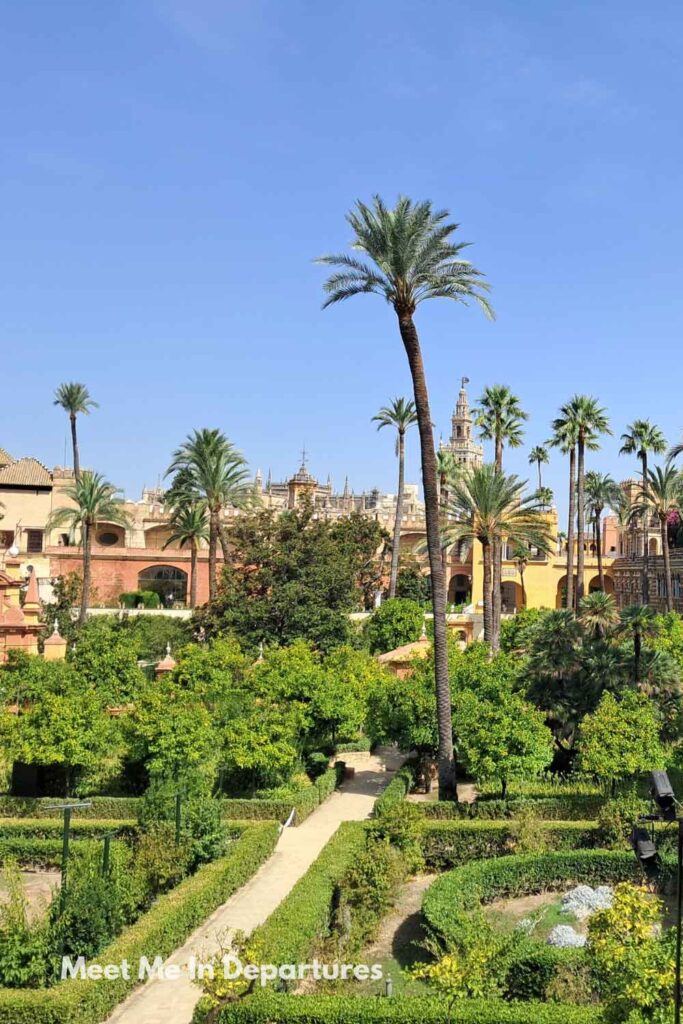
The gardens are more than just a bonus — they’re one of the best parts of the Alcázar. Sprawling over 7 hectares, they’re a mix of carefully planned landscaping and relaxed, shady corners that feel like a completely different world from the palace interiors.
There’s no single route through them, but I usually follow the outer loop clockwise — it keeps you away from the main crowds and gives you brilliant views back toward the palace. Expect a mix of geometric hedges, citrus trees, towering palms, and tiled fountains tucked into unexpected corners. You’ll also spot free-roaming peacocks and green parrots darting through the trees.
One of the most iconic features is the Mercury Fountain, where a bronze statue of the Roman god stands above a deep basin — look for the elevated balcony above, featured in Game of Thrones when the Alcázar doubled as the Water Gardens of Dorne.
Another quirky highlight is the Fuente de la Fama water organ, which plays music.
Throughout the gardens, you’ll find benches, shade, and far fewer people. It’s a brilliant place to wander slowly, eat a snack, or escape the midday heat.
👉 Insider tip: Spring is best for flowers and scent — but winter is when the gardens are quietest, and the soft light makes for great photos.
Cuarto Real Alto – Is It Worth It?
The Cuarto Real Alto (Upper Royal Apartments) is the only part of the Alcázar that’s still used by the Spanish royal family — and you can visit it, but only with a separate, timed ticket and a short guided tour.
This area isn’t included in the general admission ticket, and it’s easy to miss the booking window, especially during high season. The visit is short, and you’re not allowed to take photos inside.
So, is it worth it?
That depends. The rooms themselves are beautiful, with original 16th-century furniture, tapestries, and paintings. You’ll get a sense of how the palace evolved over time and what “royal” actually looked like centuries ago. But the tour is brief, controlled, and lacks the freedom you get in the rest of the complex.
If you’re a history or architecture buff, or just curious about the royal connection, it’s a unique experience. But if you’re short on time or budget, you won’t miss any of the main Alcázar highlights by skipping it.
👉 Insider tip: If you want to see it, book early — slots are limited and don’t always show up in English on the website. Check the Spanish version too.
Alcázar Tours – Should You Take One?
There are a few ways to explore the Alcázar depending on your budget, interest level, and how much you want to avoid the crowds.
Here’s a breakdown of the main options — from most flexible to most exclusive.
1) Self-guided visit with a downloaded audio tour
This is the cheapest and most flexible option with the regular entry ticket. Download a map and audio guide to your phone and explore at your own pace. It’s ideal if you want to dip in and out of details without being herded around in a group.
You won’t get quite as much context as a live guide would offer, but you also won’t be tied to anyone else’s schedule — and that’s a big win in a place as photogenic (and busy) as the Alcázar.
2) Standard guided group tour
Honestly, this is my least favourite option. These tours often start mid-morning — right when the palace is most crowded. You’ll be in a large group, moving quickly, and often stuck behind other groups doing the exact same route.
Yes, you’ll get some extra historical context, but you lose a lot of the experience. It’s hard to take in the atmosphere or get photos without people in the way — and I find the pace too rushed to really enjoy it.
3) VIP ‘Alone in the Alcázar’ entry
This is hands-down my favourite way to visit. It’s a special early-access ticket that lets you in before the gates officially open — and they only admit 25 people per day on this option.
You get the palace almost to yourself, which means:
- You can take photos without crowds
- You actually get to hear the fountains and birds
- You feel the stillness and calm that gets lost later in the day
It’s not cheap, but if you’re into photography, history, or just want to see the Alcázar at its best — this is the one to go for.
⭐️⭐️⭐️⭐️⭐️
Alone in the Alcazar with Walks Tours
✅ Limited to 25 guests
✅ English speaking guide
✅ Exclusive early access
Game of Thrones Filming Locations at the Alcázar
If parts of the Alcázar look familiar, it’s because they featured as the Water Gardens of Dorne in Game of Thrones.
Here’s what to look for:
- Filming location: The Alcázar was used for scenes at the Water Gardens, home to House Martell.
- Main spots to recognise:
- The Mercury Fountain — used in several outdoor garden scenes.
- The Grotto Gallery — featured in conversations between Prince Doran and Ellaria Sand.
- The upper walkways and balconies — used in establishing shots and overhead views.
- Inside the palace: The Ambassadors’ Hall appears briefly, though it’s less obvious without CGI.
👉 Good to Know: There are no official signs for GOT locations. The Alcázar doesn’t mark filming spots, so bring screenshots if you want to match scenes.
Alhambra vs Alcázar – Which Should You Visit?
If you’ve already been to Granada, chances are you’ve seen the Alhambra — and yes, it’s spectacular. But if you’re now in Seville and wondering whether it’s still worth visiting the Alcázar, the answer is: absolutely.
While both sites are rooted in Islamic architecture and offer incredible tilework, arches, and gardens, they each have a different feel:
- The Alhambra Complex is larger, more fortress-like, and built on a hill. It feels grand and elevated, with sweeping views and an emphasis on defensive design.
- The Alcázar, on the other hand, is more intimate. It’s still grand, but the layout feels more like a royal home than a military stronghold. You’ll find hidden corners, lush gardens, and more of that serene palace vibe.
🧭 My opinion? Visit both. They’re different enough that you won’t feel like you’ve “seen it already” — and together, they give you a fuller picture of Andalusia’s layered history.
Mistakes to Avoid at the Real Alcázar
Even seasoned travellers slip up here. Here are the most common mistakes — and how to avoid them:
- Not booking ahead – Skip-the-line tickets sell out fast, especially in spring and autumn. Don’t leave it to the day.
- Arriving mid-morning – By 11 am, the place is packed. Go early for cooler temps and better photos.
- Skipping the gardens – Big mistake. They’re quieter, cooler, and full of hidden corners.
- Rushing through – This isn’t a linear museum — take your time, loop back, and explore.
- Booking through shady ticket sites – Always use the official site. Google results are full of dodgy resellers with inflated prices.
Visiting the Alcázar FAQs
How early should I arrive at the Real Alcázar?
Aim to arrive 15–20 minutes before your timed entry. Security checks can cause delays, especially during busy seasons. If you’ve booked the first slot of the day, even better — you’ll beat the crowds and enjoy the palace before the tour groups arrive.
When is the best time to visit the Alcázar of Seville?
Early morning, either with a pre-entry ticket or right after opening — it’s cooler and less crowded. For fewer tourists, visit in winter (especially January–February). Spring and autumn are stunning, but also the busiest. Avoid mid-mornings and weekends if you want a quieter experience.
How much time do you need in Alcázar of Seville?
Give yourself at least 2–3 hours to explore properly. That includes time to wander through the palace rooms, take photos, and enjoy the gardens. If you’re visiting the Cuarto Real Alto or taking a tour, add another 30–45 minutes.
Do I have to visit the Alcázar with a guide?
No, you can absolutely visit the Alcazar without a guide. If you opt for this, then I recommend downloading the self-guided audio tour via the official website. Visually, it’s stunning, but without a guide or audio tour, you’ll miss a lot of the history and symbolism.
How do I visit Seville Alcázar for free?
The Alcázar has free entry on Mondays in the last hour before closing — but you still need to book a ticket in advance via the official website. These free slots fill quickly, so reserve early.
Now you’ve figured out how to visit the Real Alcázar of Seville, what’s next?
The Alcázar is hands-down one of Seville’s highlights — but it’s just the beginning. Once you’ve wandered the palaces and gardens, there’s still plenty more of the city to explore.
If you’re putting together a full itinerary, check out my 3 days in Seville itinerary to see how the Alcázar fits into a bigger trip. Or, if you’re more of a list-ticker, I’ve got a full Seville bucket list and checklist to make sure you don’t miss a thing.
Want to know what it’s like to have the place almost to yourself? You can also read my detailed review of the VIP “Alone in the Alcázar” entry tour — my favourite way to experience the palace without the crowds.
The Alcázar is just the start — let me show you how to make the most of the rest of your time in Seville.
Have a question? then don’t forget to join our free Facebook Group and ask the community.
Want to discover more about Spain? then check out these other great articles to find out more.
General Spain Travel
- Ultimate 10 Days In Spain Itinerary
- 2 Week Spain and Portugal Itinerary
- How Many Days Should I Spend in Spain and Portugal?
- 50+ Best Experiences for Your Spanish Bucket List
- 38 Most Famous Landmarks in Spain
- Can You See Morocco From Spain?
Andalucia and South Spain
- Southern Spain Itinerary: Best 7 Days in Andalucia
- Local’s Guide To Seville in 3 Days
- 35+ Top Things To Do In Seville
- 23 Best Day Trips From Seville, Spain
- How to Do A Seville to Cordoba Day Trip
- Where Is the Nearest Beach to Seville?
- How To Spend One Day in Granada
- Best 2 Days in Granada Itinerary
- The Best Cordoba in One Day Itinerary
- 5 Places for the Best Glamping in Spain’s Southern Coast
Barcelona
- 32 Best Things to Do in Barcelona, Spain
- Barcelona 5 Day Itinerary for First-Time Visitors
- Should You Visit Barcelona or Lisbon?
- Montserrat Day Tour With Tapas and Wine From Barcelona
Madrid And Surrounding Area
- Is Madrid Worth Visiting?
- 28 Best Things to Do in Madrid, Spain
- Best Madrid 2 Day Itinerary By A Local!
- 30 Things to Do In Winter in Madrid
- Madrid vs Lisbon Comparison Guide
- How to Visit Segovia From Madrid in a Day
- A Day Trip to Toledo from Madrid
Basque Country and North Spain
- An Epic 5 Days Road Trip in Aragón Itinerary
- 15 Best Things to Do in Aragon, Spain
- Is Zaragoza Worth Visiting? Everything You Need To Know
- The Best Things to See in Zaragoza, Spain
- Is San Sebastian Worth Visiting? The Pros and Cons
- San Sebastian Food Tour Review With Devour Tours
- Is Bilbao Worth Visiting? 12 Reasons To Visit Bilbao