
2 Days in Madrid Itinerary for First-Timers & Solo Travel
This two days in Madrid itinerary is for first-timers who want to see the highlights, eat well, and not spend half the trip staring at Google Maps like it’s a full-time job. Madrid is ideal for a short visit because the main sights are very central. Translation: you can walk a lot of it, and your feet will still forgive you.
I live in Spain, and Madrid is the city I keep passing through. It’s in the middle of the country, which makes it an easy base for trains, flights, and onward travel.
I’ve passed through more times than I can count. I’ve done it as a quick overnight and as a longer weekend, often solo. Each time, I’ve managed to see plenty without it turning into a frantic sightseeing dash.
I’ll cover the spots that are actually worth it for a first visit. The Prado is a yes. No debate, you’ve probably heard that before.
But how about the places you haven’t seen in every guidebook? Like Espacio Fundación Telefónica, on Gran Vía, or Chamberí, the sealed metro station from the 1950s. Discover these, and more hidden gems in this Madrid 2 day itinerary.
Meet Me In Departures contains affiliate links and is a member of the Amazon Services LLC Associates Program. If you make a purchase using one of these links, we may receive compensation at no extra cost to you. See our Disclosure Policy for more information.
What to See in Madrid in 2 Days: Quick Overview
Here’s how I’d break it down if you want to hit the good stuff in the most logical order so that you’re not criss-crossing the whole city several times.
The pacing works really well if you’re travelling solo.
It’s enough to keep things interesting, with built-in pauses for sitting in the sun, grabbing a coffee, or taking a breather before your feet start protesting.
Day 1: Classic Madrid
- Historic centre (Puerta del Sol, Plaza Mayor, Literary Quarter)
- Royal Palace area (Royal Palace, Sabatini Gardens, Almudena Cathedral)
- Temple of Debod + Plaza de España
- Malasaña
- Optional: Estación Museo Chamberí
- Evening: Mercado de San Miguel or tavernas in the historic centre
Day 2: Museums, Retiro, and Live Music
- Prado + Reina Sofía
- Retiro route (Puerta de Alcalá, Retiro Park, Crystal Palace)
- Palacio de Cibeles
- Gran Vía route (Optional: Espacio Fundación Telefónica)
- La Latina (evening food and drinks)
- Café Berlín (live music)
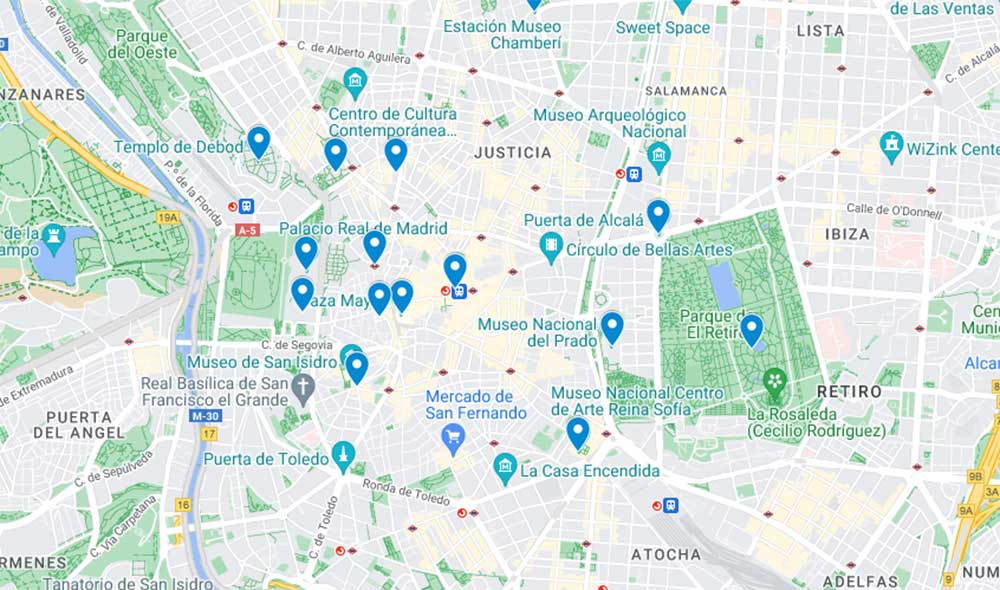
2 Days in Madrid Map
If you’re more of a visual planner like me, I’ve put everything from this Madrid 2 day itienrary into an interactive map.
It shows all the stops, so you can see how close everything is and how easily it links up on foot or by Metro.
It’s also a great option if you’re travelling alone and don’t want to wander too far from the main areas.
📍 What to Do in Madrid for 2 Days Days Checklist 📍
- Puerta del Sol
- Plaza Mayor
- Literary Quarter (Barrio de las Letras)
- Prado Museum
- Reina Sofía Museum
- Royal Palace
- Sabatini Gardens
- Almudena Cathedral
- Plaza de España
- Malasaña
- Estación Museo Chamberí (optional)
- Mercado de San Miguel or traditional tavernas in the historic centre
- Puerta de Alcalá
- Retiro Park
- Crystal Palace (in Retiro Park)
- Palacio de Cibeles
- Gran Vía
- Espacio Fundación Telefónica (optional)
- Temple of Debod
- La Latina
- Café Berlín (live music)
Planning Your Madrid Itinerary
Is Madrid Safe for Solo Female Travellers?
Overall, yes. Madrid is one of the safer capitals I’ve travelled in. It feels clean, easy to walk, and set up in a way that makes getting around straightforward, with big boulevards and open squares rather than loads of dodgy little corners.
The main thing to watch for is pickpockets, especially in the busiest tourist areas like Plaza Mayor and Puerta del Sol, where it’s very easy to get distracted. Keep your bag zipped, don’t leave your phone hanging out of a back pocket, and you’ll be fine.
I also found the Metro safe and simple to use. It’s a good backup when your feet have had enough, or when you just don’t fancy walking across the city in the middle of the day.
How Many Days Should You Spend in Madrid?
Honestly, two days is too short if your goal is to see everything. There’s just a lot going on, and even after passing through the city so many times, I still keep finding new reasons to visit Madrid again and see the places I’d missed.
That said, two long days is enough to cover the essentials. You can see the big landmarks, hit at least one of the major museums, eat very well, and still have time to wander without it feeling like you’re speed-running between sights.
If you’ve got 3 to 4 days, you’ll get a much more relaxed version of Madrid. You can add extra neighbourhood time, a second museum, longer lunches, and a few detours that aren’t strictly “must-see” but end up being your favourite parts.
But if you’re working with 48 hours, don’t stress. This itinerary is built to make two days feel genuinely worth it, not like a frustrating taster that ends just as you’re getting into it.
Where to Stay in Madrid
If you’ve only got two days, staying central makes everything easier.
These are my two go-to areas. I’ve stayed in both, and I always recommend them to first-time and solo visitors.
- Gran Vía: Right in the middle of everything, with loads of food and café options. The trade-off is that it’s busy, and it can be expensive.
- The Literary Quarter (Barrio de las Letras): Still very central, but with more character. Think cobbled streets, cute cafés, and a calmer feel, while keeping you close to the main sights.
How to Spend 2 Days in Madrid
Day 1: Madrid’s Classic Landmarks
This morning is classic Madrid.
It’s all the big headline sights in one go, and the best part is they’re all clustered together, so you can actually enjoy them instead of spending half the morning in transit.
Morning
Afternoon
Evening
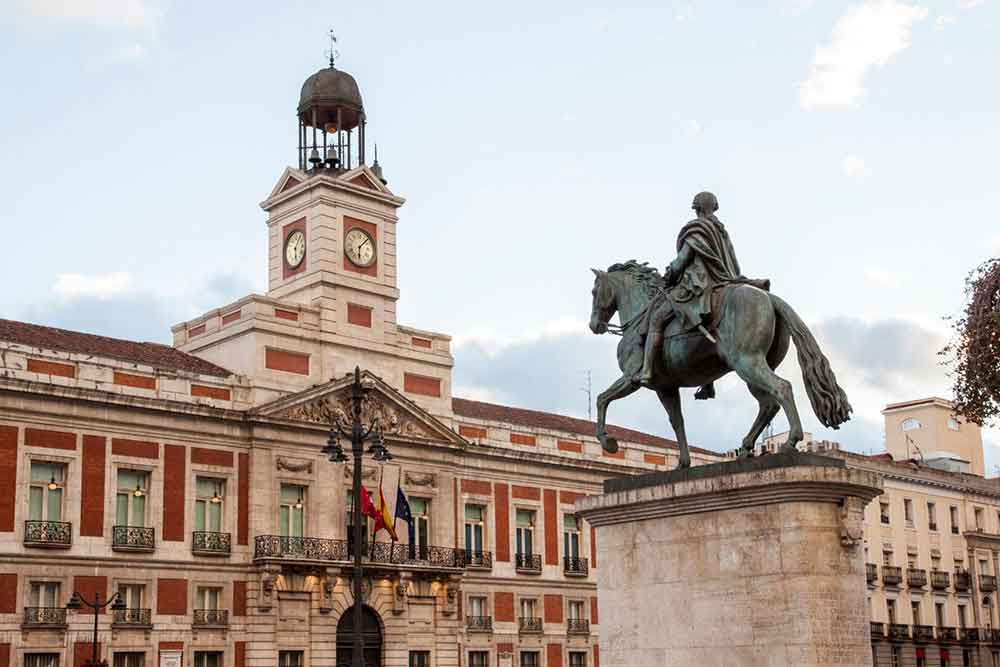
Puerta del Sol
Start early. Puerta del Sol is busy, loud, and chaotic, but it makes a great starting point because it’s basically Madrid’s centre of everything.
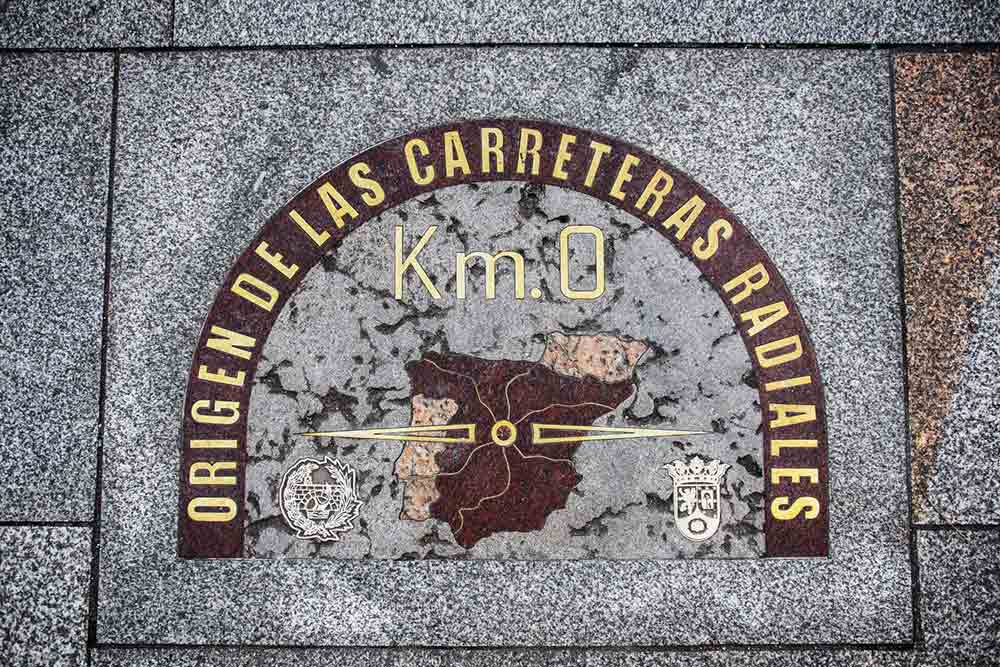
If you look up, you’ll see the iconic Tío Pepe sign. If you look down, you’ll probably spot a small crowd staring at the ground, which sounds odd until you realise they’re looking for the Kilometre Zero marker.
That’s the point where Spain’s roads measure from. Despite its tiny size, that little plaque is one of the most famous landmarks in Madrid, even if it’s literally just a marker in the ground.
Plaza Mayor
From Sol, it’s a short walk to Plaza Mayor.
This huge public square makes Madrid feel instantly familiar, even if it’s your first time here. The square is massive, the buildings are grand, and there’s always something going on, so it’s worth a slow lap just to take it all in.
You’ll see loads of cafés and places to eat around Plaza Mayor. Just manage your expectations.
This is tourist tapas central, so you’ll usually pay more for less, and it won’t be the best meal of your trip. That said, it’s a brilliant place for a quick coffee and a sit-down because there’s always something happening.
If you want genuinely good food, you’ll get better value the moment you wander a few streets away from the square.

Planning Tip
If you’re visiting Madrid in winter, Plaza Mayor is home to one of the city’s biggest Christmas markets. I recommend checking on the official Madrid tourism website to find out exact dates, but usually it’s open from the end of November through to the start of January.
Literary Quarter/ Las Letras
From Plaza Mayor, it’s about a 10 to 15 minute walk south, and it’s an easy one. Aim for Calle de las Huertas, and you’ll know you’re in the right place when you start spotting literary quotes set into the pavement in brass letters.
I’m an absolute sucker for neighbourhoods packed with history, so Barrio de las Letras is right up my street.

Madrid Old Town & Literary Quarter Guided Tour
An efficient way to make sure you don’t miss anything is to join a small group guided tour that covers the Historic Centre, Las Letras and the Royal Palace area.
This area is famous for its writers. Cervantes and Lope de Vega both lived around here, and you’ll see their names everywhere, including on street signs.
The area is made up of cobblestone lanes and little cafés, with plenty to stop and take photos of. If you’ve got time to pop into the Lope de Vega house museum, it’s worth it. It’s an easy little window into old Madrid.
Royal Palace
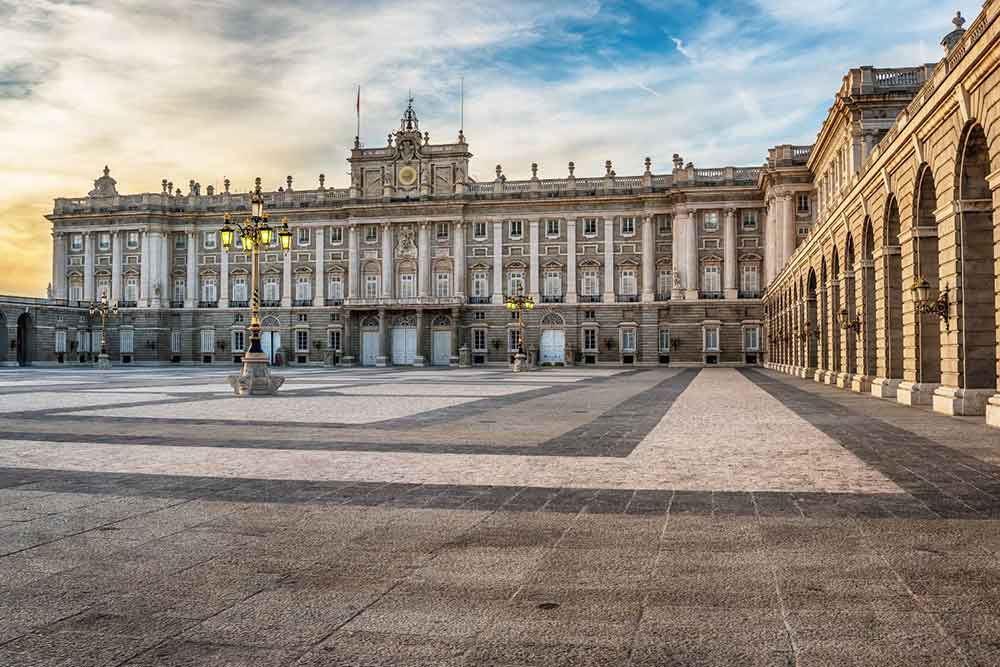
After the Literary Quarter, head over to the Royal Palace, another one of the big Madrid classics.
It’s about a 20-minute walk, and it’s an easy one if you’re happy to keep wandering on foot or hop on the metro.

Metro option (if you’re short on time or it’s too hot to walk)
- Start at Antón Martín (Line 1) or Tirso de Molina (Line 1)
- Go to Sol
- Change at Sol to Line 2
- Get off at Ópera
- Walk 5 to 10 minutes to the Royal Palace
This is the official residence of the Spanish Royal Family, even though it’s mainly used for state ceremonies now. The building itself was built between 1738 and 1755, on the site of a much older 9th century Moorish alcazar.
Inside, it’s bright, polished, and unapologetically opulent. Expect glistening chandeliers, ridiculous ceilings, and more gold detailing than feels necessary, but it’s also genuinely impressive to see up close.
Ticket-wise, book ahead if you can. It’s popular, and the time slots do sell out. If you want a tour in English, grab it as early as you can, especially in peak season.
Madrid Royal Palace Tickets & Tour
Skip the line tickets for the Royal Palace of Madrid, with an English-speaking tour guide.
If you’ve got a bit of time left after the palace, or you just need a breather before the next stop, go to the Sabatini Gardens. They used to be part of the palace grounds and were closed to the public until 1978.
They’re calm, pretty, and exactly what you want after being inside somewhere that’s very grand and very busy.
Almudena Cathedral
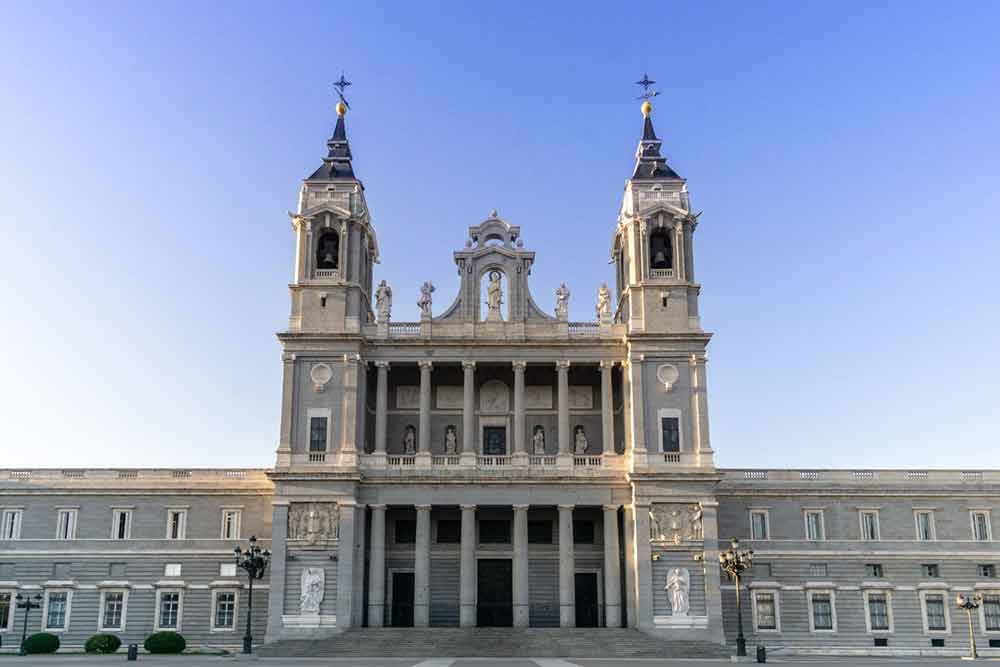
Almudena is a really easy add because it’s right next to the Royal Palace, and it looks great from the outside, even if you don’t go in.
If you want that classic photo of the cathedral with a proper view, head over to Parque del Emir Mohamed I, which gives you a great angle (it also has the remains of Madrid’s old Arab wall, which is a nice little bonus).
If you’ve got time, it’s worth stepping inside. It’s bright and airy, and the colourful ceilings and walls give it a slightly pop-art feel, which is not what most people expect.
If you’re rushed, though, don’t stress about going inside. This is one of those stops where the outside is a big part of the payoff anyway, and you can still get the classic photo from the park viewpoint. If you miss the interior, it won’t make or break your two days in Madrid.
Temple of Debod
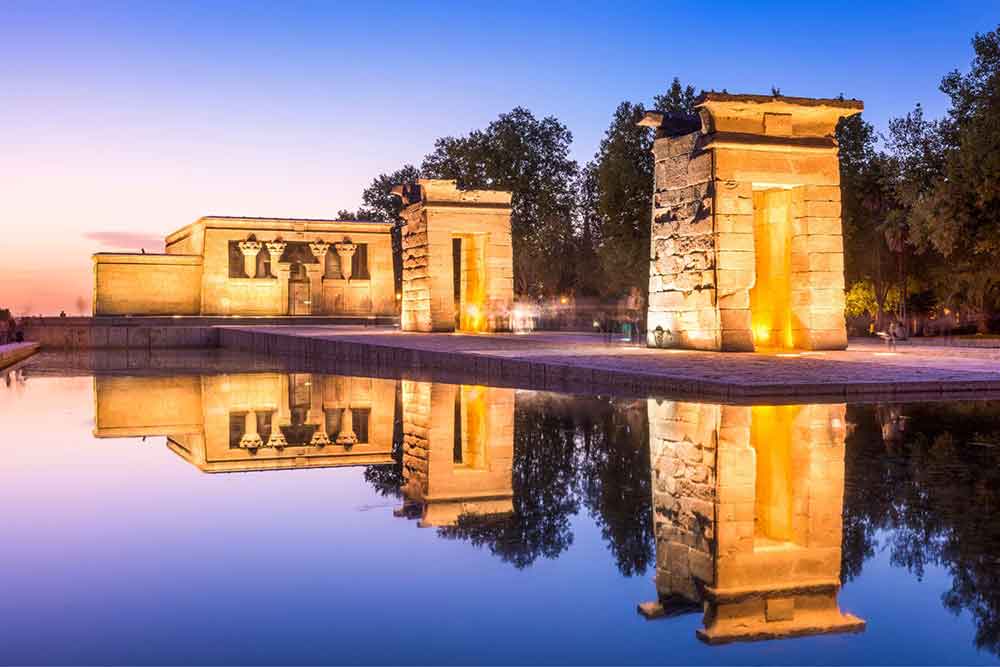
If you’ve been reading my blog for a while, you’ve probably figured out by now that ancient ruins are one of the things that make me tick. So, of course, I got a little bit excited when I found out there’s an actual Egyptian temple sitting right in the middle of Madrid city centre.
It’s quick to do, which is part of why I rate it. You can look around properly, take a few photos, then sit in the park for a minute and reset before you carry on. It’s a really nice break from the “go go go” bits of the day.
Plaza de España
From the Temple of Debod, you’ll basically drop straight into Plaza de España on your way over to Malasaña.
It’s a big open square, so treat it as a quick pass-through stop rather than a major attraction. The main thing to look for is the Miguel de Cervantes monument, featuring images from his book, Don Quijote.
Depending on what’s going on, the square can feel completely different. Sometimes it’s quiet, and you can just sit under the trees for five minutes. Other times, there’ll be some sort of event or pop-up happening, so it’s worth a quick check on the official Madrid listings if you’re curious
Malasaña
Malasaña is another one of my favourite neighbourhoods in Madrid, mainly because it always feels like there’s something to poke your head into. There are loads of boutique fashion shops, vintage stores, and plenty of street art.
If you’re even vaguely into coffee, this area is also a great place to find independently owned barista-level cafes.
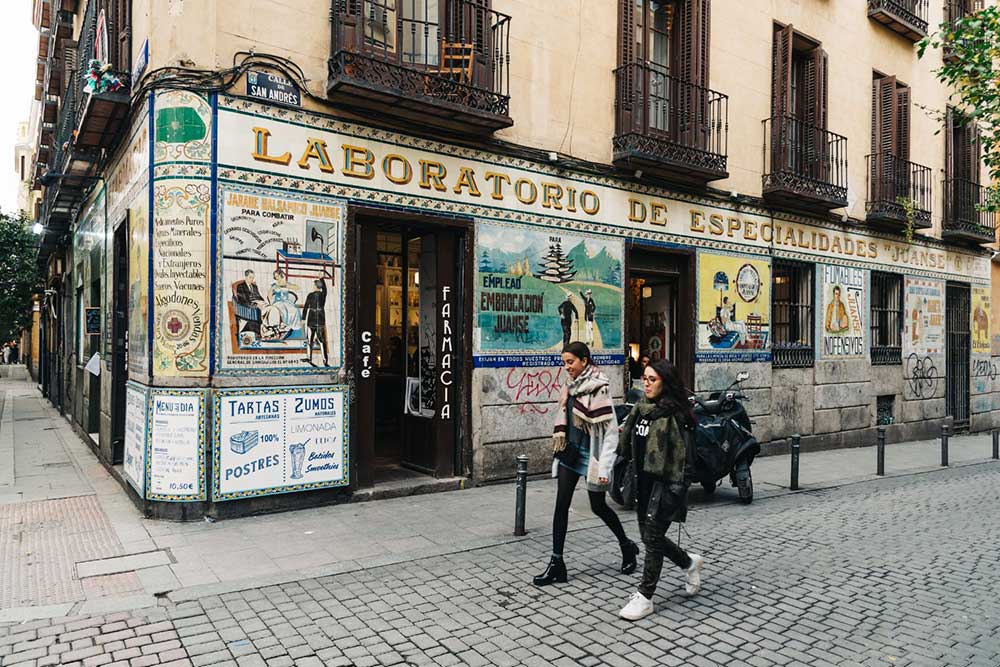
My favourite thing to do here is just wander around the streets. A lot of the older shopfronts still have their original tiled facades, and once you start noticing them, you’ll spot them everywhere.
The classic example is the old Farmacia Juanse facade on Calle de San Andrés, which is covered in gorgeous advertising tiles from the early 1900s.
If you want a simple anchor point, aim for Plaza del Dos de Mayo. It’s basically the neighbourhood’s living room, and it’s a good place to pause and decide what you feel like doing next.
Optional: Estación Museo Chamberí
If you’ve got time, and you’re even mildly interested in abandoned places, Estación Museo Chamberí is such a weirdly brilliant stop.
I love this sort of thing, but I also get that not everyone wants to spend part of their Madrid trip looking at an old metro station. If that’s you, feel free to skip it and carry on to the next place.
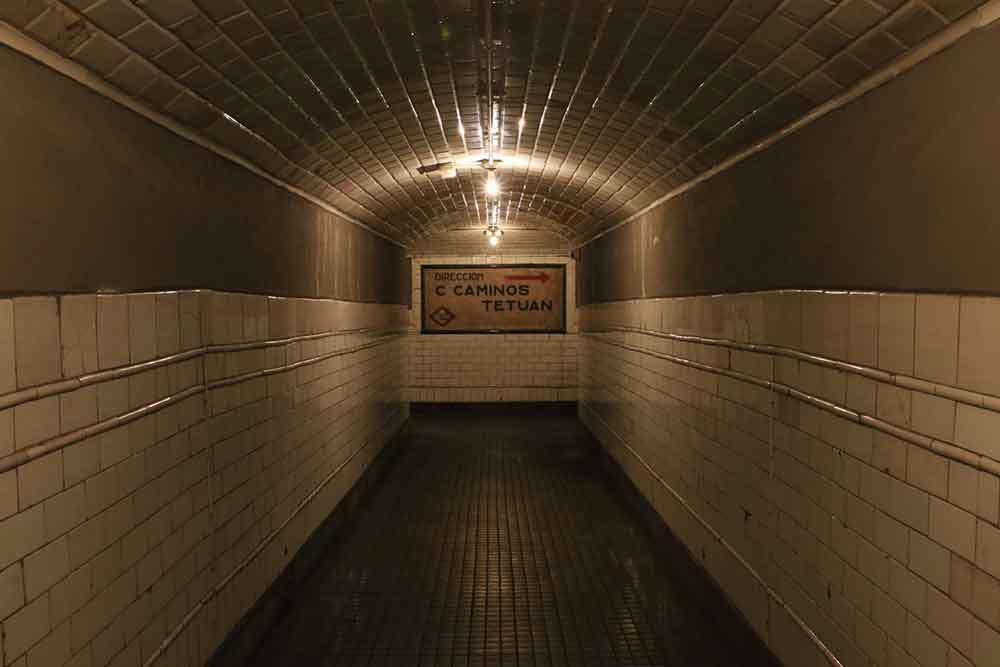
This used to be a working stop on Line 1, running from the early 1900s until the 1960s, and then it was closed off and basically forgotten about.
It stayed shut for decades before it was restored and opened as a museum, and walking through it now really does feel like stepping back in time. The old adverts, the original station details, the general vibe of it all being frozen in place, it’s real-life time capsule territory.
The slightly creepy part is that Line 1 is still running. So every so often, you’ll see the trains whirring past while you’re standing in this long-closed station. It’s a bit surreal, and it’s exactly why I rate it.
Planning Tip
One thing to know before you build your afternoon around it: the opening hours are oddly specific, and you do need to plan for them. Check the times before you go, then shuffle your itinerary around that, not the other way round.
Mercado de San Miguel
From Malasaña, this is an easy one to get to. If you’re walking, you’re looking at roughly 25 to 30 minutes, depending on how many shop windows distract you.
If you’d rather hop on the Metro, it’s quick. The nearest station to the market is Ópera, and then it’s a short walk.
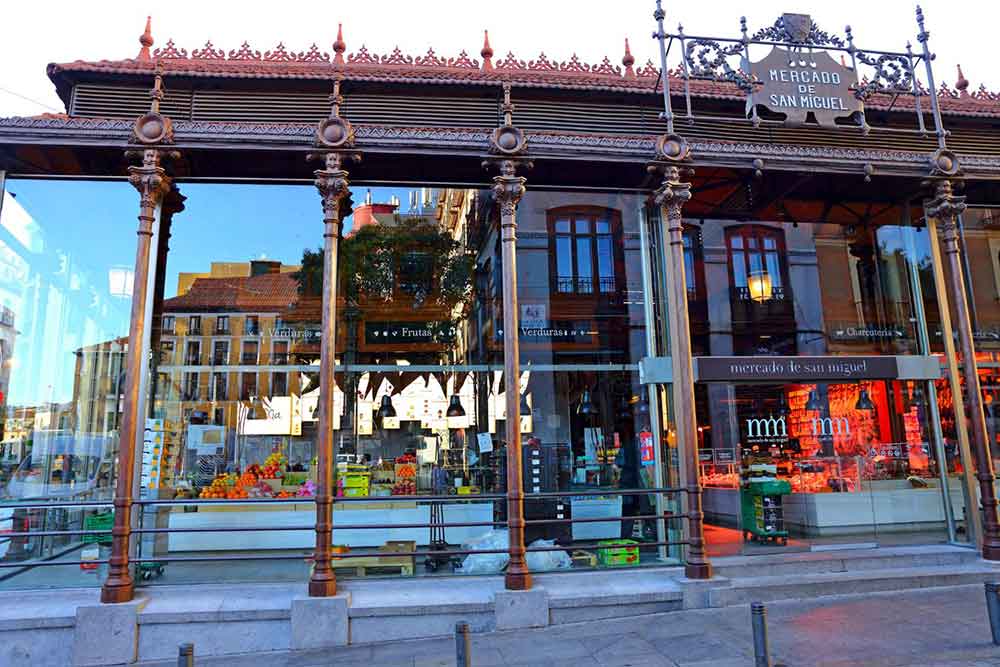
Mercado de San Miguel is basically Madrid’s easiest food stop when you can’t be bothered committing to one restaurant. It’s a covered market that first opened in 1916, and it later relaunched as a gourmet market in 2009, which explains why it’s equal parts beautiful and busy.
I also rate it as a vegetarian because you can just pick and choose bits as you go. No awkward main-course negotiations, just build your own tapas lineup and call it dinner.
Good To Know
Two quick realities: evenings can be chaos, and it’s been closed for restoration recently, so it’s worth checking before you commit. If San Miguel doesn’t work out, San Fernando (Lavapiés) is great for a more local market vibe, and San Antón (Chueca) is a good alternative for grab-and-go food.
Tapas Hop in the Historic Centre
If markets aren’t your thing, or San Miguel is heaving, do this instead.
Pick a couple of streets in the historic centre and just go bar to bar. Calle de la Cava Baja in La Latina is the classic for traditional tabernas, and it’s basically built for a tapas crawl.
If you want something a bit more old-Madrid and less of a theme park, head towards Calle de las Huertas and Calle de Echegaray in Barrio de las Letras. There’s always somewhere to grab a caña and something snacky without committing to a full sit-down meal.
If you want the easy version, book a small-group walking food tour. You get the backstory, a local guide who knows what they’re talking about, and you never have to do the slightly awkward solo dinner maths.
Madrid is totally fine for solo dining, but a tour is a great way to meet people and try loads of different things in one go.
Small Group Walking Food Tour
Explore the city, discover the best places and try loads of authentic Spanish food with wine pairings, all with a local English-speaking guide.
Day 2: Museums, Retiro, and Live Music
Day two is built to feel full, but not frantic.
Start with the Prado and/or Reina Sofía while you’ve got the energy for museums, then head to Retiro for a reset with some greenery and a wander.
After that, you’ll pass Cibeles and carry on down Gran Vía (with an optional stop at Espacio Fundación Telefónica), before ending the day in La Latina and finishing with live music at Café Berlín.
Morning
Afternoon
Evening
Museo Nacional del Prado
Start your second morning at one of Madrid’s most famous museums, the Prado Museum. It’s massive, it’s brilliant, and it’s very easy to underestimate how long you’ll spend in there.
The collection covers European art from roughly the 12th to the early 20th century, with heavy hitters like Velázquez, Goya, and Bosch.
If you want a few don’t-miss stops, go and find Las Meninas (Velázquez) and Bosch’s The Garden of Earthly Delights. You’ll also spot a small crowd gathered around Goya’s The Third of May 1808. It’s famous for a reason, even if you only half-know the history.
Prado Museum Tickets
Save time queing up and get skip-the-line tickets for Museo Nacional del Prado sent straight to your mobile.
One of my favourite bits is downstairs in the dimmer rooms with Goya’s Black Paintings. They’re on permanent display at the Prado, and are fascinatingly weird.
The Prado is part of Madrid’s Golden Triangle of Art, along with the Reina Sofía and the Thyssen-Bornemisza. You could absolutely spend your whole morning in the Prado and still not see everything, so don’t feel like you have to do all three museums in one day unless you’re a die-hard art fan.
Reina Sofía
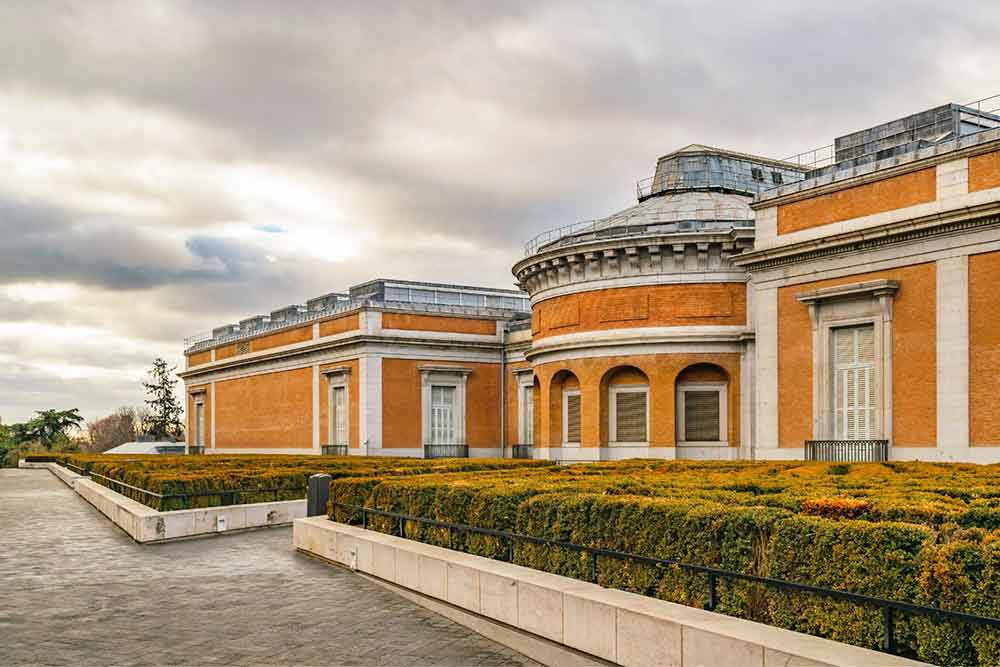
If the Prado is your classic European painting fix, the Reina Sofía is where Madrid gets a bit more modern and a bit more intense.
It focuses on Spanish art from the 20th century onwards, and it’s home to Picasso’s Guernica. Even if you think you’ve seen it a million times online, it hits differently in person.
You’ll also see pieces by Dalí and Miró. This was a bit of a full-circle moment for me. I studied art at college, and I still remember my teacher going on about them, so seeing the originals in real life felt oddly satisfying. Even if you’ve seen the images a hundred times, it’s different when you’re standing in front of the actual thing.
Insider Tip
Now, a quick reality check for a two-day trip: you can do both the Prado and Reina Sofía in one morning, but it can start to feel like you’re speed-walking through a place where you should be taking your time over.
Instead, I’d pick one and actually enjoy it. The Prado is best if you want the big, beautiful, classic masters. Reina Sofía is the one if you want modern Spain, surrealism, and Guernica. Either way, you’re not making a bad choice.
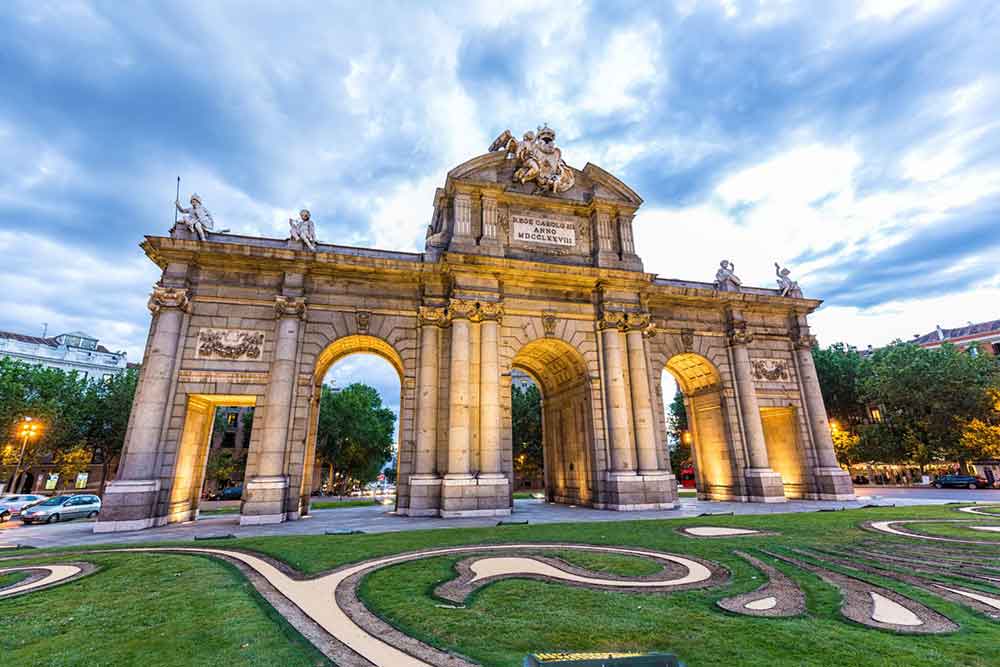
Puerta de Alcalá
After the Prado and Reina Sofía, walk up to Puerta de Alcalá. It’s around 10 to 15 minutes from the Prado, and it sits right by the edge of Retiro.
It’s basically a very grand gate in the middle of a roundabout, so you don’t need to overthink it. Have a quick look, grab the photo, then carry on into the park.
It’s about a 5 to 10-minute walk from Puerta de Alcalá to the Crystal Palace once you’re inside Retiro, depending on how direct you are.
Retiro Park and the Crystal Palace
Retiro is Madrid’s big green escape hatch. It’s massive, so a quick walk has a funny way of turning into an hour without you noticing.
There are maps all around the park, but the main highlights are easy to stumble upon.
There’s the Estanque Grande, the big boating lake with the grand monument to Alfonso XII looking over it. If you’re here in spring or summer, the Rosaleda (rose garden) is worth a quick wander too.
Now, the weird bit. Retiro is also home to the Fallen Angel fountain (Fuente del Ángel Caído), which is famous partly because it’s a Lucifer statue, and partly because it sits at 666 metres above sea level. Madrid doesn’t do subtle, apparently.
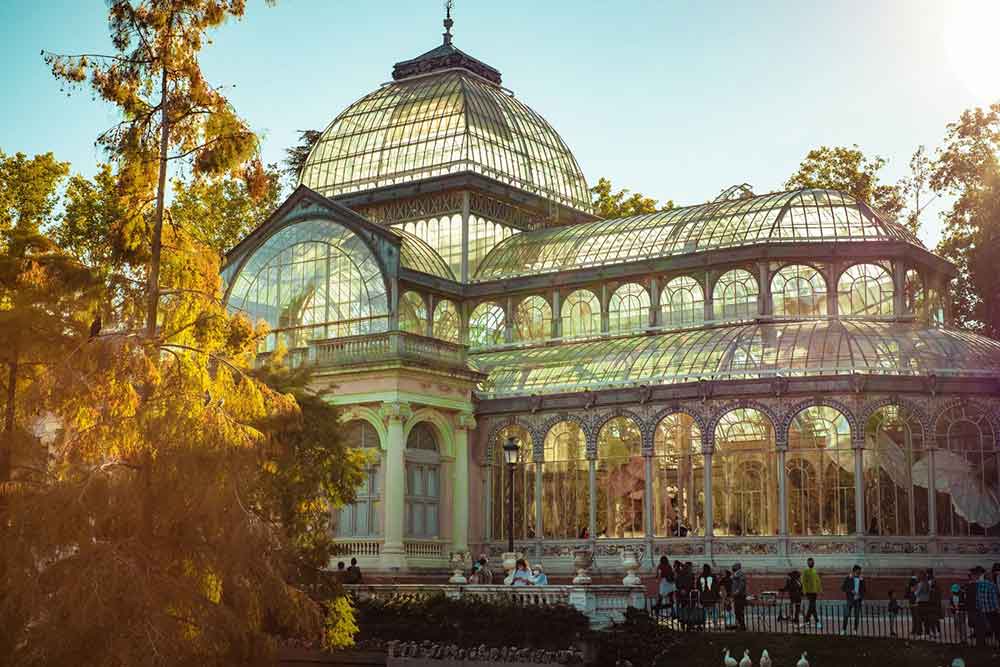
And then there’s the Crystal Palace (Palacio de Cristal), which is the most photogenic building in the park. It was built in 1887 as an exhibition space, and it still gets used for temporary exhibitions now, linked to the Reina Sofía.
Even if you don’t time it with an exhibit, it’s worth seeing from the outside.
Palacio de Cibeles
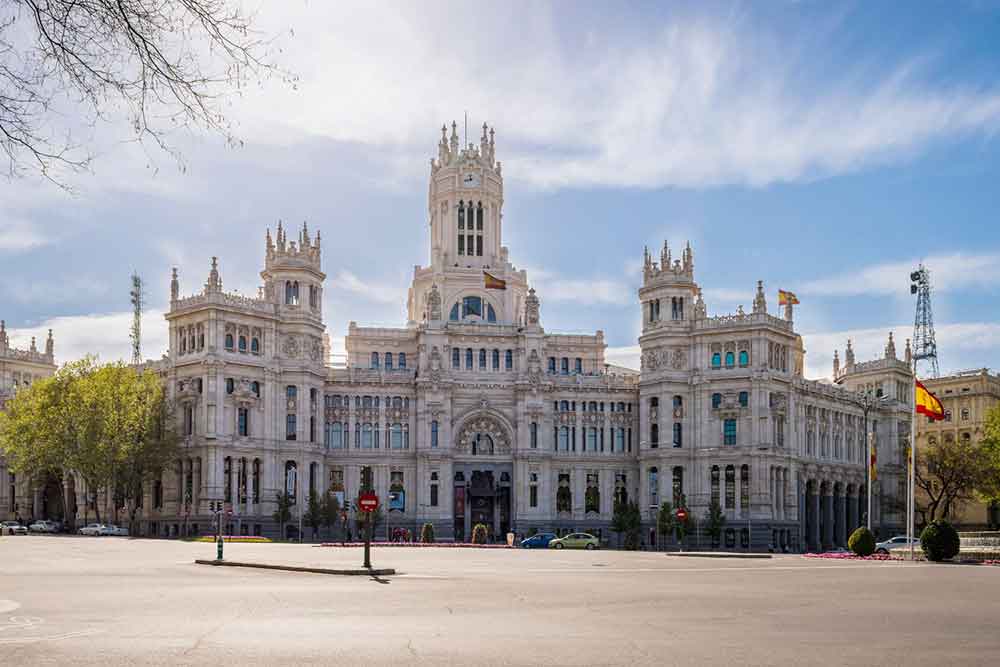
After Retiro, it’s an easy walk to Palacio de Cibeles. If you come out near Puerta de Alcalá and follow Calle de Alcalá, you’ll hit Cibeles in about 10 minutes.
The building looks impressive from a distance, then you get closer and realise it’s even more dramatic up close.
CentroCentro’s exhibitions change, and a lot of them are free, so it’s an easy add if something catches your eye.
Even if you don’t bother with the exhibitions, I still think it’s worth popping inside. I’m a sucker for historic buildings, and this one is packed with little details from its past life as Madrid’s communications headquarters for post, telegraphs and telephones.
Look out for the old lamps, the writing desks, and all the ornate details. It gives you that early 20th-century, money-was-no-object kind of opulence.
Gran Vía
From Palacio de Cibeles, head towards Gran Vía. It’s an easy 10 minute walk, and you’ll basically beeline up Calle de Alcalá.
When you cross the roundabout, it’s also a great chance to get a wider-angle photo of the Palacio. The only trick is timing it for that rare moment when the traffic actually stops. Good luck.
Gran Vía is Madrid’s big, slightly chaotic shopping street. Even if you’re not planning to buy anything, it’s worth walking it for the buildings alone.
Right at the start of Gran Vía is another one of my favourites, the Metrópolis Building.
It’s on the corner of Calle de Alcalá and Gran Vía, and it’s hard to miss because it looks like it was designed specifically to make you stop walking and stare.
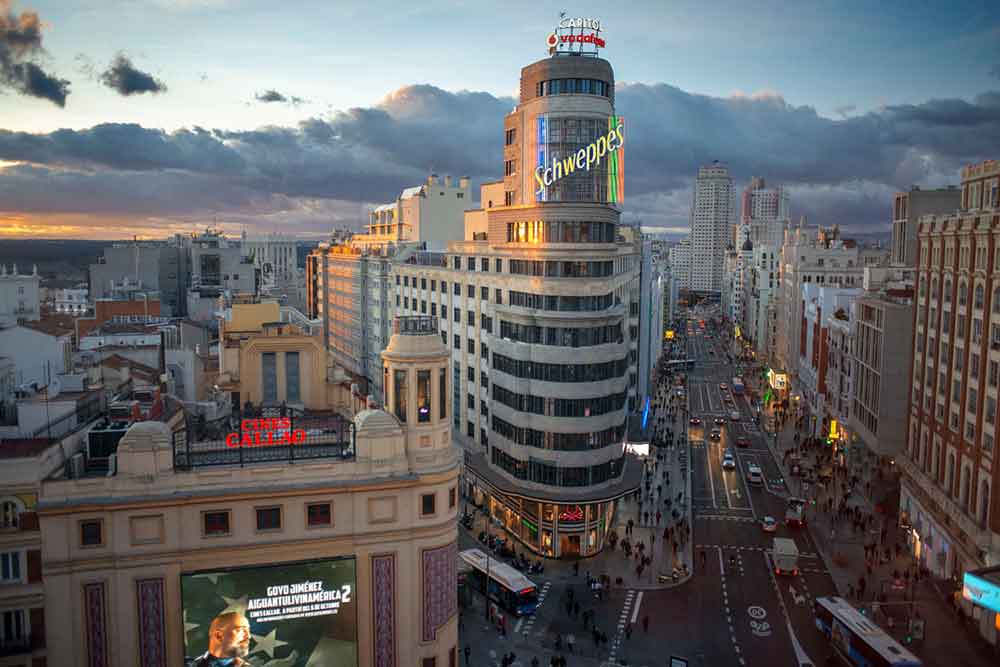
Keep going towards Callao, and you’ll hit the Capitol Building, the one with the giant Schweppes sign. It’s a classic Madrid landmark, and you’ll recognise it instantly.
If you want one more building that’s genuinely worth clocking as you go, look out for the Telefónica Building at number 28. It was one of Europe’s early skyscrapers, and it still stands out, even with all the newer signage trying to compete for attention.
Optional: Espacio Fundación Telefónica
If you want a quick, genuinely interesting stop on Gran Vía that somehow stays under the radar, go to Espacio Fundación Telefónica. It’s free to enter, and every time I’ve been in, it’s been weirdly quiet, which I will never understand because it’s actually a great museum.
There’s a permanent exhibition about the history of telecommunications, including a wall of old phones. This is where I realised several of the mobiles I used to own are now museum pieces, which was a slightly rude reminder of how fast time’s moving.
They also run rotating exhibitions that usually have a tech, science, or digital culture angle. I’ve seen everything from space travel to security to how AI is creeping into everyday life. Even if you only pop in for 20 minutes, it’s an easy win.
If you have zero interest in the exhibitions, at least go inside to see the staircase. Take the lift up to the top floor, then look down into the centre. It’s genuinely impressive, and it makes the whole place feel far grander than you’d expect from a free exhibition space on a shopping street.
La Latina
The historic neighbourhood of La Latina is another one of my favourite places to spend an evening in Madrid.
The area is a maze of narrow lanes full of tapas bars and little cantinas, and the kind of area where you can turn up with zero plan and still end up having a great night out.
Typically, I start with a vermouth and a small plate and then bar hop. The classic route is Calle de la Cava Baja (and Cava Alta just alongside it), where you can go from bar to bar and keep things simple.
One drink, one tapa, move on when you feel like it. That’s the whole strategy, and it works.
Café Berlín
To finish your 2 days in Madrid with something that isn’t in evey guide book, Café Berlín is a great shout.
It’s one of Madrid’s best-known live music venues, and it manages to feel lively without being enormous or soulless. Think small tables, low lighting, plush seats, and a stage that’s close enough that you actually feel part of it.
It’s also fine to turn up solo. I’ve perched at the bar, ordered a drink, and didn’t feel out of place at all.
The programme is varied, with regular nights that cover jazz, flamenco, funk, pop, and more, plus DJ sets later on depending on the night. Check what’s on and book tickets in advance.
Getting to Madrid
Flying into Madrid (MAD)
Most people arrive via Adolfo Suárez Madrid Barajas Airport (MAD). It’s about 18 km northeast of the centre, which sounds far, but Madrid’s public transport is easy to navigate.
Getting from the Airport to Madrid centre
Metro (Line 8): This is the option I go for because it’s usually the fastest and easiest. Line 8 runs from the airport stations Aeropuerto T1, Aeropuerto T2, Aeropuerto T3 and Aeropuerto T4, and the network runs roughly from 6:00 to 1:30 daily. You’ll usually change at Nuevos Ministerios to get wherever you’re actually staying.
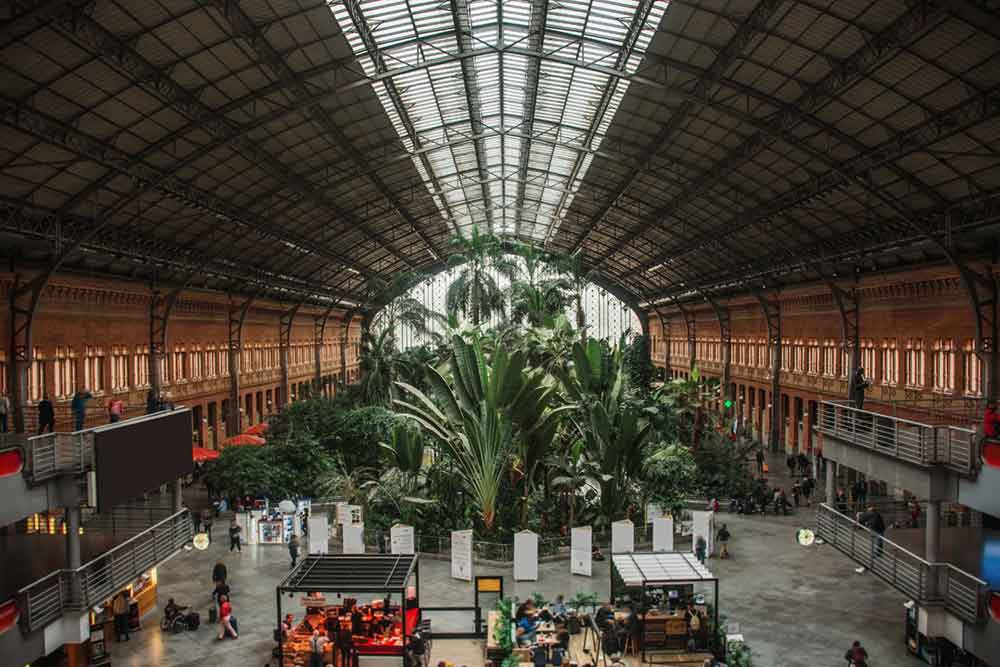
Airport Express bus (Line 203): If you want a simple, no-thinking option, the Airport Express is another great option. Plus, it runs 24 hours. During the day, it goes from the airport to Atocha, and overnight, it runs to Plaza de Cibeles instead. It’s especially handy if you land late, when the Metro is not running.
Taxi: If you’ve got lots of luggage, you’re arriving exhausted, or you just want to be delivered directly to your hotel with minimal effort, a taxi is the easiest choice. There’s a fixed fare of (€33 a time of writing) between the airport and destinations within the M 30 area, which is most of central Madrid.
Arriving in Madrid by Train
Madrid is very well connected by train, so if you’re coming from another Spanish city, you’ll probably arrive at Atocha (especially from the south) or Chamartín (often from the north).
From either station, you can jump straight on the Metro or Cercanías to get to your hotel without much fuss.
Best Travel Comparison App
If Madrid is just the starting point for onward travel, then my go-to, to compare prices and times for bus, train and flights, is with the Omio app.
Getting Around Madrid
Madrid’s a fairly spread-out city, but the good news is you don’t need to criss-cross it for this two-day Madrid itinerary.
I’ve picked these stops because they’re mostly central and cluster together nicely, so you can do a lot on foot without spending half your trip commuting.
If you’re running behind time or you just can’t be bothered to walk, here are your options for getting about.
- Metro: Fast, affordable, and the easiest way to hop between neighbourhoods when walking stops being fun.
- Buses: Handy for getting a bit further out, but they can feel slightly confusing at first. Totally doable once you’ve taken one. If you don’t want the hassle of navigating the public buses, then Madrid’s hop-on hop-off bus is a convenient way to get around.
- Taxis: Convenient, especially late at night or when you’re tired, but obviously pricier.
- BiciMAD bikes: Great if you fancy covering more ground, though you’ll need to sign up with the app before using them.
Easy Day Trips From Madrid
If you’ve got more than two days in Madrid, it’s a brilliant base for day trips.
The trains are fast, the stations are easy, and you can be somewhere completely different before your coffee has even worn off.
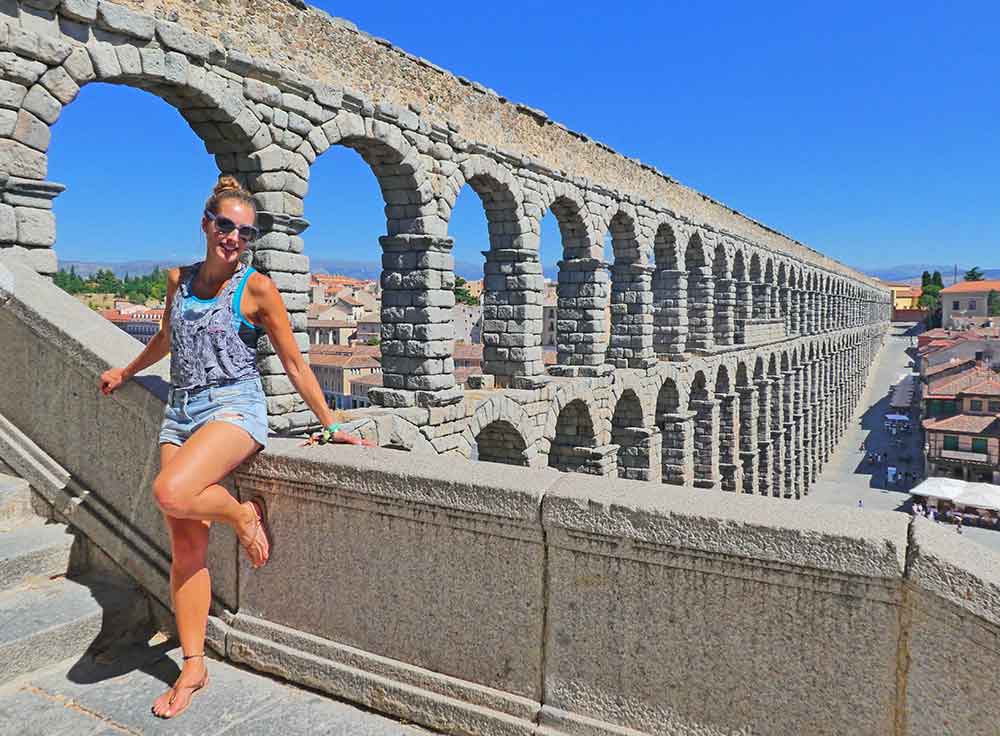
- Segovia: Come for the jaw-dropping Roman aqueduct, stay for the castle that inspired Walt Disney. It’s compact, easy to walk, and it feels like you’ve accidentally wandered into a history book.
- Toledo: Packed with medieval atmosphere, with winding cobbled lanes and viewpoints where you can just aim for the old town and let yourself get a bit lost.
- Ávila: Another ancient city, this one is famed for it’s near complete city walls that you can walk along.
If I had to choose one, my top pick would be Segovia, purely to see the Aqueduct, one of the most impressive landmarks in Spain.
Also, if you want to take the headache out of planning, you can also book a full-day tour that bundles all three cities together. It’s the easy option, especially if you’d rather not think about train times and logistics.
Full-Day Segovia, Ávila, and Toledo Guided Tour
Short on time? The easiest way to see these three cities in one go is with a full-day tour.
FAQs About this 2 Day Madrid Itinerary
Is 2 days in Madrid enough?
Yes for the highlights, no for everything. Two days is enough to see the big classics, eat well, and get a feel for the city without rushing too much. If you have longer, great. If you only have 48 hours, you can still do Madrid properly.
Is Madrid walkable?
Very. The central sights are close together, so you can cover a lot on foot without it feeling like a trek across town. You’ll still rack up steps, obviously. If it’s boiling or you’re short on time, the Metro is quick and easy for jumping between areas
Is Madrid safe for solo female travellers?
Overall, yes. Madrid is one of the easiest capitals to do solo. The main thing to watch for is pickpockets in busy tourist areas like Sol and Plaza Mayor. Keep your bag zipped, stay aware, and you’ll be fine. The Metro is also straightforward and feels safe.
Best area to stay for first-timers?
If it’s your first time, stay central. Gran Vía is the most convenient, with everything close by, but it’s busy and can be pricey. The Literary Quarter is my favourite alternative. Still central, more character, and it feels calmer while keeping you close to the main sights.
What if I only have 1 day in Madrid?
You can still have a great day, you just need to be picky. Stick to the historic centre and the Royal Palace area, then choose one big extra: either the Prado or Retiro. Finish with tapas in La Latina. It’ll be a full day, but it won’t feel like a race.
So You’ve Done Madrid in Two Days. Where Next in Spain
If you’ve followed this itinerary, you’ve hit the big Madrid classics and still had time for the bits that make the city feel more like a place, not just a checklist.
It’s also a brilliant city for solo travel. Everything’s walkable, the Metro is easy, and there’s enough culture to keep you busy without needing to plan every second like a military operation.
If you’ve only had two days in Madrid, don’t stress about what you didn’t see. You can always come back, and honestly, Madrid makes that easy. If you’ve got more time in Spain, I’d keep the momentum going.
I’ve got detailed guides packed with useful information to help you plan the rest of your Spain itinerary without overcomplicating it.
Have a question? then don’t forget to join our free Facebook Group and ask the community.
Want to discover more about Spain? then check out these other great articles to find out more.
General Spain Travel
- Ultimate 10 Days In Spain Itinerary
- 2 Week Spain and Portugal Itinerary
- How Many Days Should I Spend in Spain and Portugal?
- 50+ Best Experiences for Your Spanish Bucket List
- 38 Most Famous Landmarks in Spain
- Can You See Morocco From Spain?
Andalucia and South Spain
- Southern Spain Itinerary: Best 7 Days in Andalucia
- Local’s Guide To Seville in 3 Days
- 35+ Top Things To Do In Seville
- 23 Best Day Trips From Seville, Spain
- How to Do A Seville to Cordoba Day Trip
- Where Is the Nearest Beach to Seville?
- How To Spend One Day in Granada
- Best 2 Days in Granada Itinerary
- The Best Cordoba in One Day Itinerary
- 5 Places for the Best Glamping in Spain’s Southern Coast
Barcelona
- 32 Best Things to Do in Barcelona, Spain
- Barcelona 5 Day Itinerary for First-Time Visitors
- Should You Visit Barcelona or Lisbon?
- Montserrat Day Tour With Tapas and Wine From Barcelona
Madrid And Surrounding Area
- Is Madrid Worth Visiting?
- 28 Best Things to Do in Madrid, Spain
- Best Madrid 2 Day Itinerary By A Local!
- 30 Things to Do In Winter in Madrid
- Madrid vs Lisbon Comparison Guide
- How to Visit Segovia From Madrid in a Day
- A Day Trip to Toledo from Madrid
Basque Country and North Spain
- An Epic 5 Days Road Trip in Aragón Itinerary
- 15 Best Things to Do in Aragon, Spain
- Is Zaragoza Worth Visiting? Everything You Need To Know
- The Best Things to See in Zaragoza, Spain
- Is San Sebastian Worth Visiting? The Pros and Cons
- San Sebastian Food Tour Review With Devour Tours
- Is Bilbao Worth Visiting? 12 Reasons To Visit Bilbao