
Does It Snow in Spain? Everything You Need to Know
You’d be surprised how often I hear people ask, “Does it snow in Spain?” And honestly, it’s not a silly question. Most people picture sunshine, beaches and tapas year-round, but the reality of winter in Spain is a lot more nuanced.
After living here through multiple winters, I’ve seen firsthand how much it varies. One region might be buried in snow, while another is warm enough for lunch outside in a T-shirt. That unpredictability is part of what makes Spain so interesting. It also means you’ll need to plan ahead if you’re visiting during the colder months, especially as a solo traveller trying to pack smart and stay comfortable.
Whether you’re dreaming of ski slopes or just want to know if you’ll need more than a hoodie, this guide breaks down everything you need to know about where to see snow in Spain. I’ll also share how cold it really gets, and exactly what to pack to help you prepare for Spain’s surprising seasonal shifts.
Meet Me In Departures contains affiliate links and is a member of the Amazon Services LLC Associates Program. If you make a purchase using one of these links, we may receive compensation at no extra cost to you. See our Disclosure Policy for more information.
Does Spain Get Snow?
Yes, you can absolutely see snow in Spain, but probably not where you think.
Most people associate Spain with sunshine and sangria, but the country also has mountains, high plateaus, and even ski resorts that get proper, powdery snow in winter.
Whether or not you’ll see snow really depends on where you go.

Good To Know
I’ve lived in Andalucia long enough to have seen how crazy winters can be here. I could literally hit the Sierra Nevada slopes after a sunny morning coffee on the coast.
What’s Winter Like in Spain?
If you’re planning a trip to Spain in the wintertime, don’t expect just one kind of weather. This is a country where you might be scraping frost off your windscreen one day and sipping coffee in the sun the next.
Here’s what you need to know to plan for all the possibilities.
How Cold Is Spain in Winter?
Temperatures vary a lot depending on geography:
| Region | What to Expect in Winter |
| Inland cities (Madrid, Burgos) | Often drop below freezing at night, especially in Jan–Feb. Mornings can feel properly Baltic. Temps: ~-2°C to 10°C (28°F to 50°F) |
| Mountain regions | Cold, crisp, and snowy, ideal for skiing, snowshoeing, or frosty hikes. Temps: -5°C to 5°C (23°F to 41°F) |
| Coastal cities (Málaga, Valencia) | Mild during the day, but chilly in the shade or wind. Temps: 13–18°C (55°F to 64°F) |
| Canary Islands | Feels like spring. Loads of sunshine and beach-worthy days. Temps: 20–23°C (68°F to 73°F) |
What’s the Coldest Month in Spain?
The coldest month is usually January, but February can feel colder in some places due to the wind and damp.
Snow is more common in the highland and central areas during these two months, though it can arrive earlier in the mountains.
Is Spain Nice in the Winter?
Absolutely, as long as you’re not chasing the heat.
I actually really enjoy travelling around Spain in winter: fewer crowds, better deals, and crisp blue-sky days that are perfect for exploring without overheating.
Plus, if you like snow, there are plenty of places to find it.
Where Does It Snow in Spain?
Snow in Spain isn’t actually that uncommon; you just need to know where to look.
While most people head straight for Spain’s popular cities and coastlines, there’s a whole other side to Spain in winter: one filled with alpine peaks, snowy valleys, and mountain villages that feel like they belong in the Alps.
If you’re hoping to see snow, these are the best places to find it:
The Pyrenees (Aragón, Catalonia, Navarra)
- Best for: Skiing, snowboarding, snowshoeing
- When: December to March (often longer)
- Highlights: Baqueira-Beret, Formigal, Candanchú, Vall de Núria
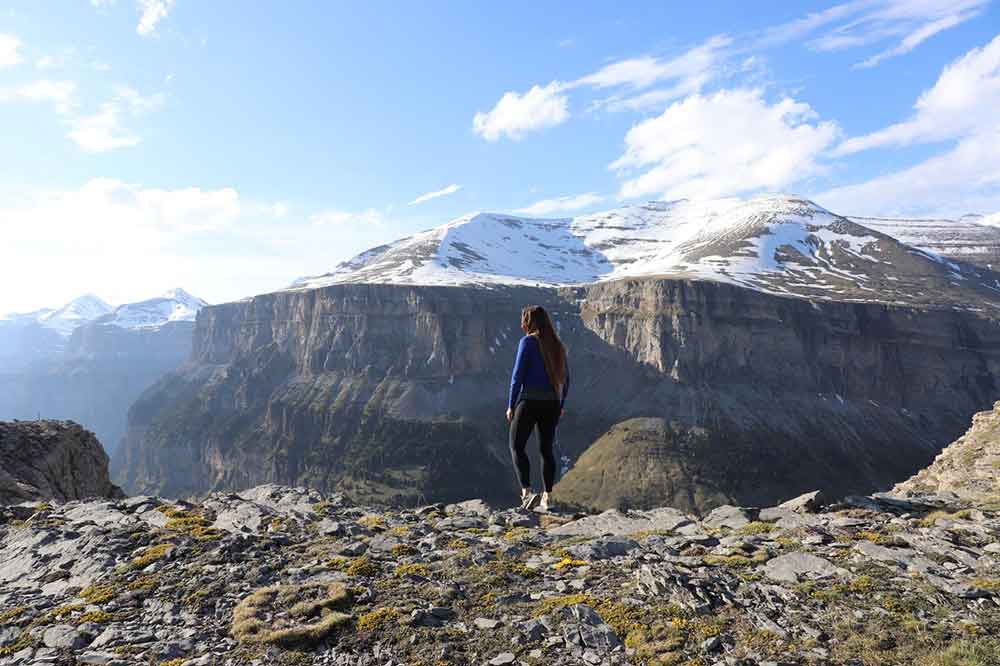
This is Spain’s snowiest region, and the most reliable. Stretching along the border with France, the Pyrenees are packed with ski resorts, snowy hiking trails, and postcard-perfect views. Think deep snow, frozen lakes, and high-altitude adventure.
Sierra Nevada (Andalucía)
- Best for: Skiing with sun, southern snow vibes
- When: Late November to early April
- Bonus: Often sunny and bright even when it’s snowy
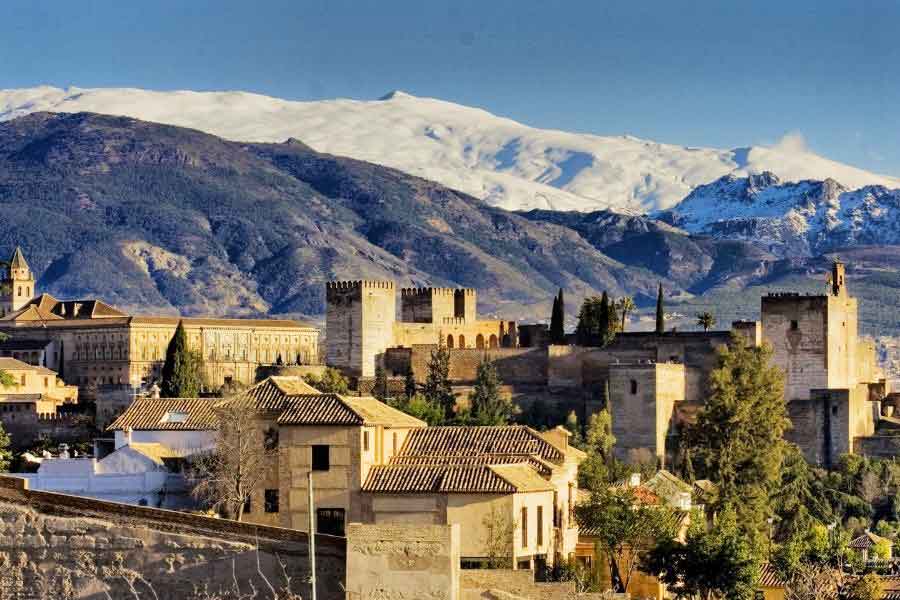
Yes, there’s snow in southern Spain, and it’s not just a dusting. The Sierra Nevada mountains tower above Granada and have one of the longest ski seasons in Europe. You could literally visit the Alhambra in the morning and be on the slopes by lunch.
Central Spain (Sierra de Gredos & Guadarrama)
- Best for: Winter walks, scenic drives, snow near the city
- When: January and February (sometimes earlier)
- Easy access: Puerto de Navacerrada and Rascafría are popular spots
These mountain ranges are within easy reach of the capital and often get a good covering of snow. It’s ideal if you’re visiting Madrid in winter and want a quick day trip to the white stuff.
Northern Spain (La Rioja, León, Asturias)
- Best for: Off-the-beaten-path winter escapes
- When: December to February
- Don’t miss: Somiedo Natural Park, Picos de Europa, Valdezcaray
The north gets overlooked for snow, but it shouldn’t be. These regions get a mix of Atlantic storms and cold inland air, which means regular snow in the hills and mountains. Plus, the landscapes here are stunning in winter.
Does it snow in Málaga?
Rarely. Málaga has a very mild coastal climate, so snow is extremely uncommon. The last time it snowed in Malaga was 1954!
That said, you can often see snow-capped peaks in the distance from the city. The Sierra de las Nieves and Sierra Nevada are both nearby if you want the real thing.
Does it snow in Valencia?
Very rarely. Valencia might get a light dusting once in a decade, and it melts almost instantly. You’ll need to head inland or toward the mountains for a proper winter experience.
Does it snow in Barcelona?
It can, but don’t count on it. Snow in Barcelona is rare and usually very light. If it does fall, it’s short-lived.
For more reliable snow, head an hour or two north into the Catalan Pyrenees.
Does it snow in Madrid?
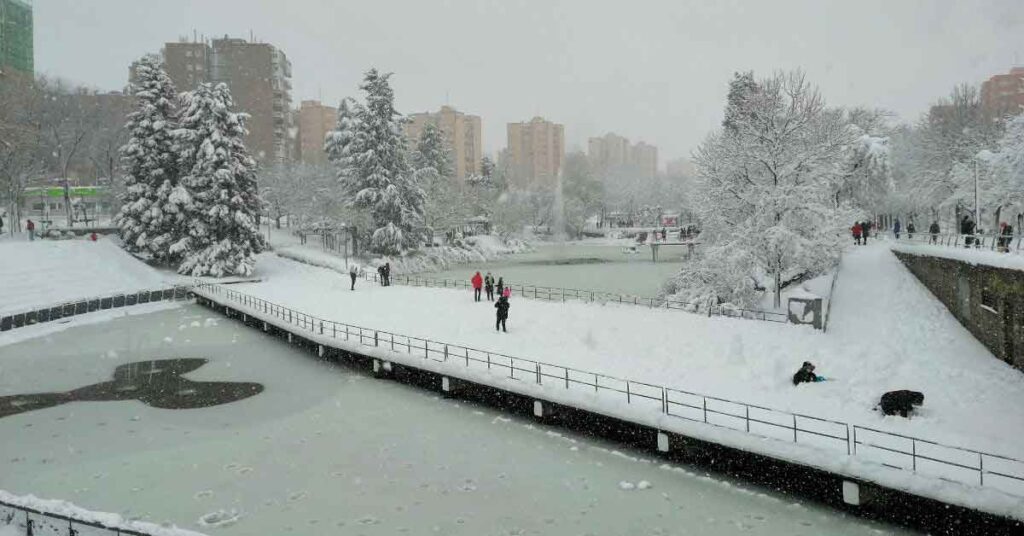
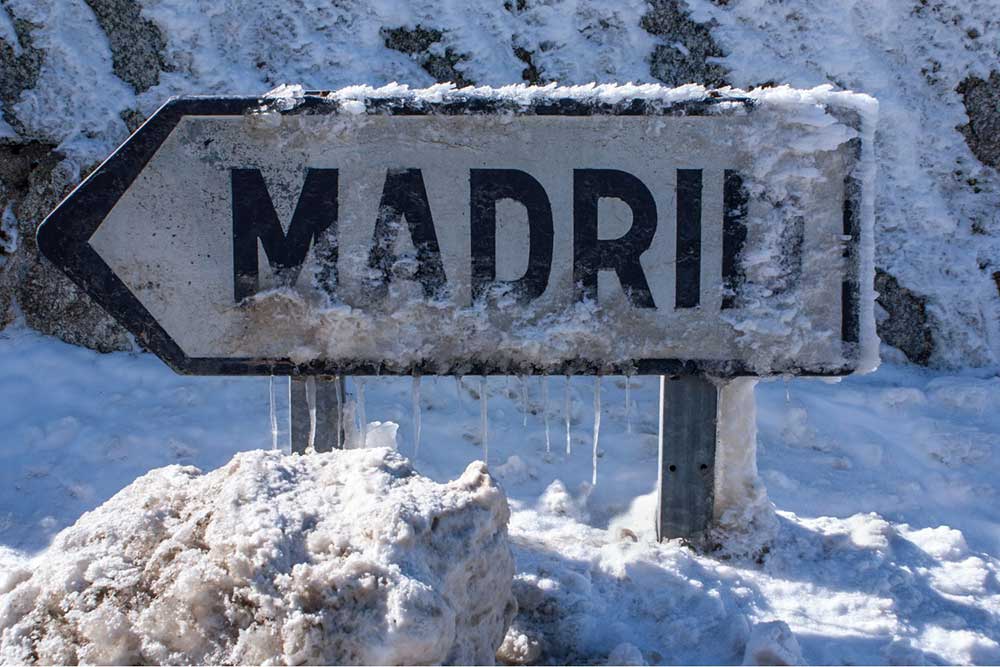
Sometimes. Madrid sits on a high plateau, so it can get quite cold in winter, and snow isn’t unusual, especially in January. It might only last a day or two, but you’ll often find proper snow in the nearby mountains.
Does it snow in Mallorca?
Not in the towns or coastal areas of Mallorca, but it can snow in the Tramuntana Mountains, especially around Puig Major. If you’re in Palma, though, it’s more likely to rain than snow.
Does it snow in Seville?
Almost never. Seville is one of the hottest cities in Spain year-round. The last major snowfall was in 1954, so no, you’re not likely to see snow there anytime soon.
If you’re visiting during the festive season, I wouldn’t bank on having a white Christmas in Seville!
Does it snow in the Canary Islands?
It can, but only on Mount Teide in Tenerife. It’s Spain’s highest peak, and in winter, it often gets snow on the summit. The rest of the islands stay warm and spring-like even in January.
Does it snow in Andalucía?
Yes, but not everywhere. While the coastal areas stay mild, places like Granada, the Sierra Nevada, and inland towns at higher elevations often get decent snow in winter.
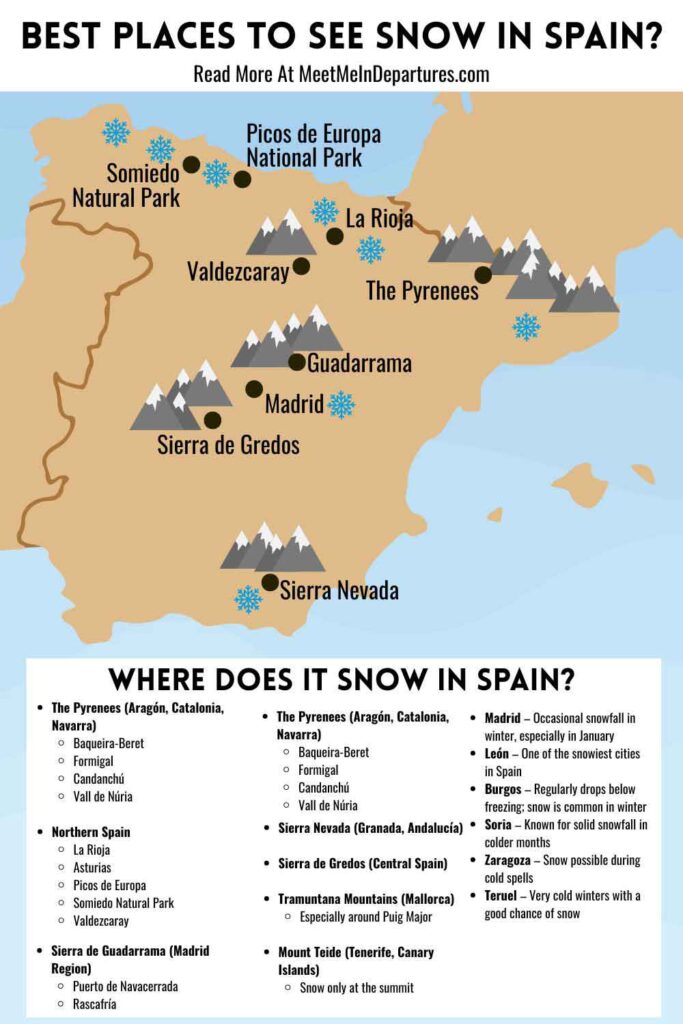
Best Place to Find Snow in Spain Map
What Are the Best Winter Destinations in Spain?
Not all of Spain is snowy in winter, and that’s part of the appeal.
Whether you’re after white mountains, crisp city breaks, or sunny getaways without the crowds, here are some of the best places to visit in Spain during the colder months.
- Granada: Snowy mountains + the Alhambra with fewer crowds. Ski in the morning, explore Moorish history in the afternoon.
- Madrid: Cold but vibrant. Perfect for museums, tapas bars, and easy day trips to the snowy Sierra de Guadarrama.
- Ronda: Crisp winter air, dramatic views, and great off-season hotel deals.
- Zaragoza: Traditional city with a good chance of snow. Often overlooked, Zaragoza is worth visiting for its affordability and local vibes.
- Vall d’Aran (Lleida): Deep snow, charming Pyrenean villages, and one of Spain’s top ski resorts: Baqueira-Beret.
- Teruel: Freezing cold, but in the best way. Mudéjar architecture, medieval vibes, and barely any tourists.
- Andorra: Quick cross-border trip for skiing, shopping, or snowy mountain views.
- Canary Islands: No snow, just sunshine. 20°C+ in winter. Great for a totally different kind of winter break.
Top Ski Resorts in Spain
Spain might not be the first place you think of for skiing, but it actually has some brilliant resorts, many of them far less crowded (and more affordable) than the Alps.
Here are some of the top picks:
- Baqueira-Beret (Lleida, Pyrenees) – Spain’s biggest and most popular resort. Reliable snow, varied slopes, and a favourite of the Spanish royal family.
- Formigal-Panticosa (Aragón, Pyrenees) – Big, lively, and great for groups. Loads of runs and decent après-ski too.
Sierra Nevada (Granada, Andalucía) – Southern Europe’s highest resort. You can ski in the morning and visit the Alhambra in the afternoon. - La Molina + Masella (Catalonia) – Great for families or beginners. Easy day trip from Barcelona, and accessible by train.
- Candanchú & Astún (Aragón) – Quieter resorts with beautiful mountain views. Perfect for a more relaxed, local feel.
- Puerto de Navacerrada (Madrid Region) – Small and weather-dependent, but ideal for a quick snow day if you’re staying in Madrid.
What to Wear in Spain in Winter
Packing for Spain in winter can be a bit of a balancing act. You might be walking through chilly mountain villages one day and sipping coffee in the sun the next.
The key? Layering.
Spain’s winter weather can swing between warm and mild on the coast to icy and windy inland, sometimes in the same week.
Good to Know
Heating in older buildings isn’t always reliable, and most of the time non-existent, especially in southern Spain. Even if it’s warmer outside, indoor spaces can still feel cold, so bring layers you’ll be comfortable lounging in, too.
Winter Packing Essentials for Spain
- Lightweight insulated jacket: A packable puffer works great for most places.
- Jumpers or fleeces: Something warm but easy to layer.
- Long-sleeve tops & thermals: Especially if you’re heading into the mountains.
- Scarf, gloves & beanie: You’ll thank yourself in places like Madrid or Teruel.
- Water-resistant ankle boots: Something comfy for walking, ideally with grip if there’s snow or rain.
- Fleece-lined leggings or thermal tights: – Easy to dress up or down.
- Smart-casual layers: For evenings out in the cities. A nice cardigan or sweater dress goes a long way.
- Swimwear: Sounds weird, but between hotel spas, hot springs, or the Canary Islands, you might end up using it.
City vs Snow: What to Pack
- City Breaks (e.g. Seville, Valencia, Madrid): Layers, ankle boots, scarf, and something a bit nicer for nights out. Days might feel spring-like, but evenings are cold.
- Snowy Spots (e.g. Pyrenees, Sierra Nevada): Add thermals, thicker socks, and gloves. If you’re skiing or heading up high, bring proper snow gear or rent it there.

Minimalist Packing Tip
If, like me, you’re a minimalist traveller, pack layers and reuse basics. One decent jacket, a few warm layers, and some weatherproof boots usually see me through, even when I go from beach to snow.
Fun Things to Do in Spain in Winter (Besides Skiing)
Skiing might be the big winter draw, but there’s plenty more to enjoy once the temperatures drop.
From festive fun to winter sun, here are a few of my favourite things to do in Spain in the colder months. No ski pass required.
Experience Holiday Markets & Festivities
Spain goes all out for the holidays. From late November through early January, city plazas fill with lights, nativity scenes, and market stalls selling churros, ornaments, and roasted chestnuts.
- Best spots: Madrid’s Plaza Mayor, Barcelona’s Fira de Santa Llúcia, and Seville’s Christmas lights.
- Don’t miss: Three Kings Day (Jan 6). It’s bigger than Christmas in many places, with colourful parades and city-wide celebrations.
Join Carnival
Carnival in Spain isn’t just for the Canary Islands (though they do it brilliantly).
February is carnival month, so expect colourful costumes, parades, music, and general chaos in cities across the country.
Top places to celebrate:
- Cadiz: Known for its witty, satirical performances
- Sitges: Big LGBTQ+ party vibe
- Santa Cruz de Tenerife: One of the world’s biggest carnival celebrations
Snowshoeing or Sledging
Even if you’re not skiing, there are plenty of snowy activities to enjoy. Most ski areas offer snowshoe rentals, sledging hills, and easy winter trails.
- Rent snowshoes in the Pyrenees or Sierra de Guadarrama near Madrid. It’s a peaceful way to see the mountains.
- Many resorts also have family-friendly sledging zones that require zero skill and maximum fun.
Relax on the Beach (Yes, Really)
Yep, Spain in winter still has beach days, especially if you head south.
The Costa del Sol, Murcia, and the Canary Islands regularly hit 20°C+ even in January.
- Think long beach walks, sunny café terraces, and yes, even the occasional swim.
- No need to pack your bikini just in case, bring it on purpose.
Winter in Spain FAQs
What is the coldest month in Spain?
January’s usually the coldest month in Spain, especially inland. Places like Madrid or Burgos regularly drop below freezing overnight. If you’re planning a winter trip, this is when you’ll feel it most. Pack layers and don’t expect central heating to be amazing everywhere.
What is the snowiest city in Spain?
It’s probably León, not the biggest place, but it gets solid snowfall most winters. Burgos and Soria are also strong contenders. If you’re chasing proper snow, you’ll have better luck heading up into the Pyrenees.
When does it snow in Spain?
Snow in Spain usually falls between December and February, though higher-up places can see it from November right through March. Cities get the odd flurry, but if you want real snow, aim for January and head for the mountains.
Is it worth wintering in Spain?
Definitely. Especially if you’re after fewer tourists, cheaper travel, and some actual sunshine. Parts of Spain still feel warm enough to eat outside, while others give you proper winter vibes. You can pretty much pick your weather depending on where you go.
Need help planning your winter trip to Spain?
Yes, it does snow in Spain. And if you’re planning a winter trip, that little detail can make a big difference.
Some places are buried in snow, while others are sunny enough for lunch by the sea, which is exactly what makes Spain so fun (and sometimes a bit confusing) to plan for this time of year.
Whether you’re chasing the snow, avoiding it completely, or trying to fit in a bit of both, I’ve pulled together more posts to help you figure out what suits your kind of trip. From cosy mountain towns to sun-soaked coastlines, there’s plenty to explore.
Check out these seasonal guides to start planning your perfect winter escape
- Discover the warmest places in Spain in winter
- What to pack for winter in Spain
- Best things to do in Madrid in wintertime
Have a question? then don’t forget to join our free Facebook Group and ask the community.
Want to discover more about Spain? then check out these other great articles to find out more.
General Spain Travel
- Ultimate 10 Days In Spain Itinerary
- 2 Week Spain and Portugal Itinerary
- How Many Days Should I Spend in Spain and Portugal?
- 50+ Best Experiences for Your Spanish Bucket List
- 38 Most Famous Landmarks in Spain
- Can You See Morocco From Spain?
Andalucia and South Spain
- Southern Spain Itinerary: Best 7 Days in Andalucia
- Local’s Guide To Seville in 3 Days
- 35+ Top Things To Do In Seville
- 23 Best Day Trips From Seville, Spain
- How to Do A Seville to Cordoba Day Trip
- Where Is the Nearest Beach to Seville?
- How To Spend One Day in Granada
- Best 2 Days in Granada Itinerary
- The Best Cordoba in One Day Itinerary
- 5 Places for the Best Glamping in Spain’s Southern Coast
Barcelona
- 32 Best Things to Do in Barcelona, Spain
- Barcelona 5 Day Itinerary for First-Time Visitors
- Should You Visit Barcelona or Lisbon?
- Montserrat Day Tour With Tapas and Wine From Barcelona
Madrid And Surrounding Area
- Is Madrid Worth Visiting?
- 28 Best Things to Do in Madrid, Spain
- Best Madrid 2 Day Itinerary By A Local!
- 30 Things to Do In Winter in Madrid
- Madrid vs Lisbon Comparison Guide
- How to Visit Segovia From Madrid in a Day
- A Day Trip to Toledo from Madrid
Basque Country and North Spain
- An Epic 5 Days Road Trip in Aragón Itinerary
- 15 Best Things to Do in Aragon, Spain
- Is Zaragoza Worth Visiting? Everything You Need To Know
- The Best Things to See in Zaragoza, Spain
- Is San Sebastian Worth Visiting? The Pros and Cons
- San Sebastian Food Tour Review With Devour Tours
- Is Bilbao Worth Visiting? 12 Reasons To Visit Bilbao